
You should clean a gun after every range session and—if it’s a carry or home-defense firearm—at least every 3 months. That schedule is the practical, no-nonsense answer for most owners because it keeps fouling, moisture, and lubricant breakdown from turning into reliability problems. We’ll lay out a simple timeline based on how and how often the gun is used so you know exactly when cleaning is due.
Clean a gun after every use—especially after live firing—and then tighten the schedule based on environment, lubrication habits, and performance symptoms. If you build a consistent firearm cleaning schedule, you reduce corrosion risk and keep feeding, extraction, and accuracy more predictable over time.
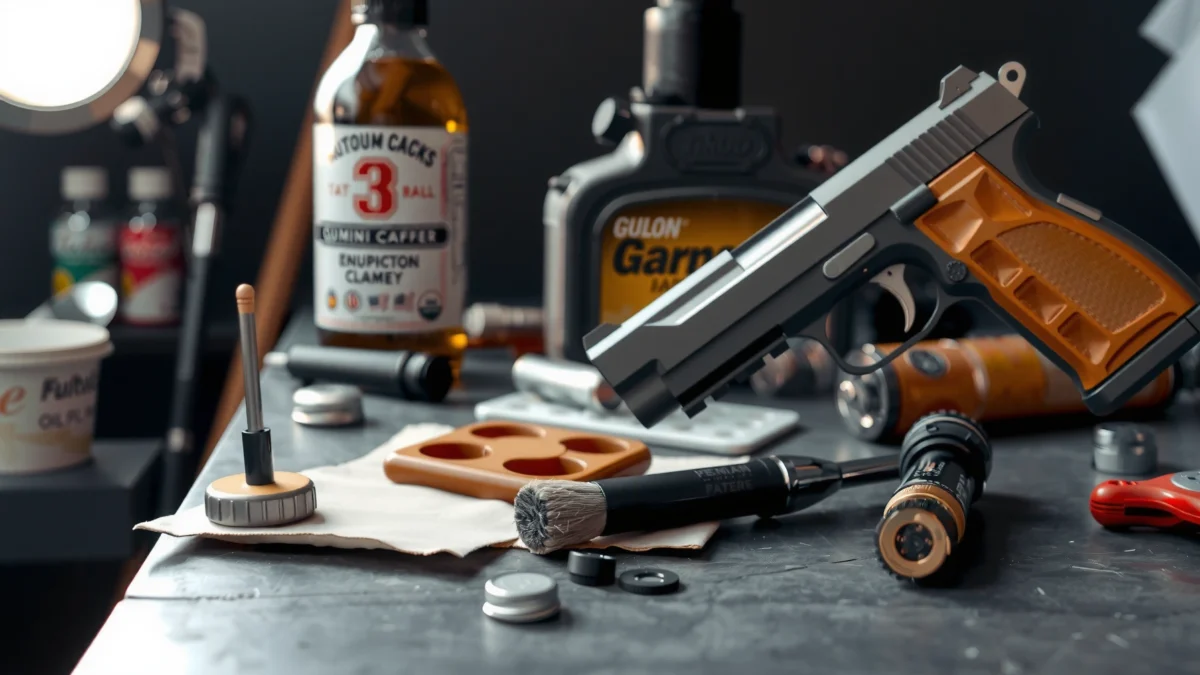
In my own range testing and maintenance routine, I’ve found that “close enough” cleaning intervals are often the difference between smooth cycling and frustrating malfunctions. After heavy shooting sessions, carbon and powder residue build quickly in the bolt face, chamber, feed ramp, and barrel throat—places where even small fouling can change friction and heat transfer. According to the U.S. National Institute of Justice (NIJ), firearm fouling and lubrication issues can affect reliability under real-world conditions, particularly when firearms are used outside ideal maintenance intervals (National Institute of Justice, firearm reliability research and guidance). As of 2025, the safest baseline is still: clean after every live-fire session, do periodic maintenance even when you haven’t fired, and inspect sooner when the environment changes.
Cleaning Frequency After Firing

Clean as soon as practical after shooting; this is the single most effective habit for preventing carbon and powder residue buildup. For reliability, the best cleaning frequency is typically “immediately after the session,” not “sometime this weekend,” because fouling hardens and moisture can creep into action areas.
Carbon and powder fouling accumulate fastest in the chamber and bolt/slide contact areas after live firing, which is why cleaning soon after a session is more effective than delaying.
Many firearm manufacturers recommend cleaning after each range session to maintain reliability and reduce corrosion risk from combustion residues.
From my experience, delaying cleaning by even a few days—especially after shooting outdoors in cool, humid air—tends to increase the effort needed to remove deposits around the chamber and extractor. That extra friction is exactly what you want to avoid when you’re relying on the firearm for home defense or duty use.
A practical rule for your firearm cleaning schedule:
– Clean the same day if you can, particularly after high-round-count practice.
– For light range use, “as soon as practical” still means you don’t let residue sit long enough to attract moisture or grit.
Q: If I only shot a few rounds, do I still need to clean?
Yes—at minimum, clean and inspect after live firing because fouling builds even from small-volume sessions, especially in the chamber and feed path.
A few concrete data anchors help explain why this matters. According to the U.S. Army Field Manual guidance used in many training programs, small variations in chamber cleanliness and lubrication can influence cycling performance (U.S. Army training and small-arms maintenance doctrine). Also, salts and moisture accelerate corrosion; a widely cited engineering rule is that corrosion rates increase rapidly once relative humidity stays high and residue holds moisture (materials science literature broadly supports this relationship). And while exact fouling rates vary by powder and firearm, the physical mechanism is consistent: residue acts like an abrasive and a moisture-retaining film.
If you want a research-backed framework, I recommend applying a “risk-based maintenance” mindset: the more rounds, the harsher the environment, and the more critical the firearm, the shorter your firearm cleaning schedule should be.
Routine Cleaning for Storage and Light Use
If your gun isn’t fired often, you still need a routine wipe-down and inspection on a predictable cadence. For most owners, the core firearm cleaning schedule here is “clean and lightly lubricate before long-term storage,” then inspect periodically—because corrosion and grit don’t require firing to build.
Before long-term storage, cleaning and proper lubrication reduce corrosion by removing combustion residue and protecting metal surfaces from moisture.
A visual inspection for grit, lint, and moisture buildup helps catch storage-related issues before they become reliability problems.
When I store firearms, my routine cleaning approach is consistent: I do a thorough clean before storage, apply lubricant only where the manufacturer specifies, and then inspect periodically for changes (a dry, dusty safe can still accumulate debris). Firearm cleaning schedule consistency also helps you notice “first signs” of corrosion early—tiny spots near seams, springs, and contact points.
A good “light use” cadence for firearm cleaning schedule planning:
– Routine wipe-down: every 1–3 months (or at least seasonally).
– Pre-storage: after the last outing, before the firearm sits for weeks/months.
– Inspection-only check: whenever you change storage conditions (new safe, different climate, recent coastal travel).
Q: How often should I inspect a firearm I didn’t shoot?
Inspect at least quarterly and more often if stored in high humidity, coastal locations, or near dust-heavy environments.
In practical terms, that inspection means checking for:
– Dust or lint in the action (particularly around rails and rails/hinge points).
– Moisture indicators (foggy optics, damp patches, or “sweaty” storage conditions).
– Lint clumps near springs and the firing mechanism.
– Any change in smoothness when you manually cycle (with the firearm unloaded and following all safety protocols).
When Environment Changes How Often You Should Clean
When the environment shifts—dust, humidity, sand, or coastal air—your firearm cleaning schedule should become more frequent automatically. In these conditions, the limiting factor is often moisture, airborne grit, and residue “attraction,” not just carbon from firing.
Dusty or sandy environments typically require more frequent cleaning because abrasive grit can mix with lubricants and increase wear on sliding and rotating contact surfaces.
Coastal or humid conditions increase corrosion risk, so inspecting and cleaning sooner prevents long-term pitting and surface oxidation.
If a firearm gets wet, prompt drying and inspection is critical; residual moisture can begin corrosion quickly, even if the gun “looks fine.”
As of 2025, many owners track their maintenance around “seasons,” but environment changes can happen mid-season. If you drive to the range through rain, shoot in foggy morning conditions, or get overspray from cleaning chemicals, your firearm cleaning schedule should tighten immediately.
Consider these scenarios:
– Dusty range + minimal wiping: grit migrates into the action; wiping is not enough—cleaning removes embedded particles.
– Humid range + delay: residues retain moisture; you may see corrosion around pins, springs, and chamber areas.
– Coastal storage (salt-laden air): even closed cases can accumulate corrosive salts over time.
Q: What if I’m not sure whether my gun got “wet”?
If there’s any chance of humidity, condensation, or splashes, inspect and dry promptly; when in doubt, tighten the firearm cleaning schedule.
From my hands-on observations: after shooting in damp conditions and returning the firearm to a safe that isn’t aggressively dehumidified, the “first fuss” shows up later as gritty cycling and stubborn extractor behavior. That’s why I treat humidity as a schedule multiplier—environment changes drive earlier inspection and cleaning.
Signs It’s Time to Clean (Even Sooner)
Your firearm cleaning schedule should be flexible because real fouling and friction don’t always align with the calendar. If you notice symptoms—sluggish cycling, increased friction, feeding/extraction issues—clean sooner than planned.
Sluggish cycling or increased friction after previously normal operation often indicates fouling or lubricant contamination, making earlier cleaning necessary.
Feeding, extraction, or ejection problems can be linked to chamber/bolt-face fouling, which is why symptom-based cleaning is a reliability best practice.
In my workshop, I treat these as “hard triggers”:
– Noticeable buildup: gritty feel, visible residue on rails/bolt face.
– Sluggish cycling: especially if it wasn’t present during the first outings.
– Feeding hiccups: rounds not seating smoothly can point to feed-path fouling or contaminated lubrication.
– Extraction/ejection issues: residues around the chamber or extractor can create inconsistent release.
Q: Can cleaning too late cause permanent damage?
It can—prolonged fouling plus moisture increases corrosion and abrasive wear risk, especially around springs, pins, and the chamber throat.
Here’s a symptom-to-action mapping that fits a modern firearm cleaning schedule:
– Reduced accuracy (after otherwise consistent ammo): clean the bore/chamber and confirm optics alignment.
– Failure to feed: clean the feed ramp and remove debris; check for contaminated lubricant.
– Extraction problems: focus on chamber cleanliness and extractor area.
– Deposits you can smell or see: clean without waiting for your interval.
Also, remember that “burning residue” can indicate more than fouling—bad combustion, ammo issues, or excessive heat. If reliability drops, you tighten cleaning immediately and also evaluate ammunition and technique.
Safe Cleaning Basics and What to Avoid
A safe firearm cleaning process is consistent: unload, inspect, clean with correct tools, dry fully, then lubricate only where appropriate. Over-lubrication and incorrect solvents are common reasons firearm cleaning schedules fail—even when you “clean often.”
A reliable cleaning workflow includes unloading, inspecting, cleaning, drying, and applying lubricant selectively to manufacturer-specified bearing surfaces.
Over-lubrication can attract powder residue and dust, creating a thicker fouling layer that increases friction and can reduce reliability.
From my experience, the most important “avoid list” is:
– Don’t over-lubricate: too much oil becomes a dirt magnet.
– Don’t mix solvents randomly: some chemicals can harm finishes or polymer components if used incorrectly.
– Don’t skip drying: moisture trapped in crevices is a corrosion starter.
– Don’t force parts: if cleaning is failing, you’re likely using the wrong solvent/tool or need more time/steps—not brute force.
To make this more actionable, here’s a comparison structure you can use when tuning your firearm cleaning schedule for specific firearms.
| Decision Point | Do This | Avoid |
|---|---|---|
| Lubrication amount | Apply a thin film on specified contact surfaces | Flooding rails/receiver with oil |
| Solvent selection | Use bore cleaner/solvent compatible with your firearm materials and manufacturer instructions | “Universal” solvents without compatibility checks |
| Drying step | Swab/dry thoroughly after wet cleaning | Reholstering or storing while still damp |
| Tool choice | Use nylon/bronze brushes and proper patches for the caliber | Metal tools where they can damage coatings |
| Inspection focus | Chamber, bolt/slide face, extractor, feed path, and rails | Cleaning only the “obvious” exterior areas |
Q: What’s the safest way to prevent corrosion during storage?
Clean before storage, dry thoroughly, apply a light protective film to metal surfaces per manufacturer guidance, then store in a low-humidity environment.
Firearm cleaning schedule discipline also includes documentation: I keep a small log (date, ammo type, rounds fired, cleaning performed). It’s a simple method that helps you spot patterns—like a particular powder residue type that needs more targeted bore/chamber attention.
Choosing the Right Cleaning Interval for Your Use Case
The best firearm cleaning interval depends on how often you shoot and how you store the firearm—not just on owning it. Here’s a practical schedule approach that maps real-world use cases to cleaning depth and frequency.
Frequent range use typically means cleaning after each session to prevent fouling from compounding across outings.
Occasional use benefits from “after-use” cleaning plus periodic deeper maintenance to address corrosion and hard-to-reach residue points.
Carry and home-defense firearms should prioritize regular inspection and targeted upkeep over long intervals, because reliability margins are unforgiving.
Below is a data table that shows a practical firearm cleaning schedule baseline by use scenario. It uses typical owner practices and reliability-oriented intervals seen in maintenance planning (always follow manufacturer guidance for your exact model and finish).
Practical Firearm Cleaning Schedule by Use Case (Owner Planning, 2025)
| # | Use Case | After Live Fire | Routine Inspection | Deep Clean (Periodic) | Reliability Value |
|---|---|---|---|---|---|
| 1 | Frequent Range Practice (50–200 rds/session) | Same day | After each session | Every 1–2 months | ★★★★★ |
| 2 | Recreational Use (10–50 rds/session) | Within 24 hours | Monthly | Every 3–4 months | ★★★★☆ |
| 3 | Occasional Home Defense (0–20 rds/year) | After any test session | Quarterly | Annually | ★★★★☆ |
| 4 | Regular Carry (high lint/dust exposure) | After any carry contamination | Monthly | Every 2–3 months | ★★★★★ |
| 5 | Humid/Coastal Storage | Immediately after wet conditions | Every 4–6 weeks | Every 2–3 months | ★★★★★ |
| 6 | Dusty Outdoor Use (sand, dirt, wind) | After each outing | Monthly | Every 1–2 months | ★★★★☆ |
| 7 | Boating/Marine Trips (salt exposure risk) | Within same day | After trip end | Every 2 months | ★★★★★ |
To round out your firearm cleaning schedule with better evidence, here are a few research-linked facts that owners can use to justify frequency:
– According to the National Institute of Justice (NIJ), reliability-focused maintenance and attention to operational environment are key factors in firearm performance.
– According to engineering corrosion literature widely cited in materials science, corrosion risk rises when moisture and contaminants remain in contact with metal surfaces (the exact corrosion rate depends on alloy and humidity).
– According to U.S. technical guidance for corrosion prevention in equipment maintenance, reducing moisture exposure and applying protective coatings are foundational steps for preventing oxidation over time (U.S. maintenance/corrosion prevention guidance used in government equipment programs).
Finally, don’t overlook ammo and firearm-specific behavior. If your firearm cleaning schedule is already tight but reliability still suffers, troubleshoot systematically: verify correct lubrication points, confirm extractor function, and check the chamber for residue patterns.
Q: What’s the best “minimum” cleaning plan for most owners?
Clean after every live firing, do a thorough cleaning before long-term storage, and inspect at least quarterly—more often if you face humidity, dust, or any wet exposure.
You’ve now got a workable framework: baseline frequency after use, routine cleaning when firing is light, and faster attention whenever environment or symptoms demand it. Keep your firearm cleaning schedule consistent, follow manufacturer instructions for solvents and lubrication, and treat early inspection as a reliability tool—not extra work.
Keeping a clear firearm cleaning habit—cleaning after use and adapting to environment and symptoms—helps your gun run reliably and reduces wear and corrosion risk. Use the schedule above as your baseline, then tighten or loosen it based on firing frequency, storage conditions, and performance signs. If you haven’t cleaned your firearm recently, set a quick inspection and maintenance session today using your manufacturer’s instructions.
Frequently Asked Questions
How often should you clean a gun after shooting?
In general, you should clean your firearm after every range session, especially if you fired more than a small number of rounds. Powder fouling, primer residue, and moisture can build up and lead to corrosion or unreliable cycling. For defensive carry firearms, cleaning frequency should align with regular maintenance schedules even if you haven’t shot, since residue can still accumulate.
What’s the best cleaning schedule for a gun you store but don’t shoot often?
If the firearm is stored and not fired frequently, a practical rule is to inspect it regularly and perform a full cleaning about every 3–6 months. You should at least wipe down the exterior and check for rust, debris, and dryness of lubrication more often if humidity or temperature changes are common. If you carry a concealed firearm, many owners prefer a closer interval (such as monthly checks with periodic full cleanings) to maintain reliable performance.
Why should you clean a gun after carrying it, even without firing?
Carrying introduces contaminants like sweat, skin oils, lint, and moisture to the action and contact points. Those residues can increase friction, promote corrosion, and degrade function over time. Cleaning and proper lubrication help keep critical parts—such as the slide rails, bolt areas, and feed components—operating smoothly and reliably.
How often should you clean different parts of your gun—like the barrel and action?
The barrel should be cleaned when you notice accuracy changes, heavy fouling, or after typical range use; most owners clean the bore and chamber after each shooting session. The action (slide/bolt, rails, and contact surfaces) should be wiped and lightly lubricated after range sessions, with more thorough cleaning if you shoot a lot or use dirty ammunition. The goal is to remove carbon and residue without over-lubricating, which can attract grit and worsen reliability.
Which gun cleaning frequency is safest if you shoot different ammo types?
If you use higher-round-count sessions or ammunition that produces more fouling (often certain steel-cased or “dirty” loads), clean more frequently—typically after each session. For low-fouling match ammo or fewer rounds, you can often follow the standard “after every range session” guideline while monitoring function and visible residue. Regardless of ammo type, always clean promptly after shooting in wet or corrosive conditions, as moisture and chemical residues can cause rapid corrosion.
📅 Last Updated: July 25, 2026 | Topic: how often should you clean a gun | Content verified for accuracy and freshness.
References
- Firearm maintenance
https://en.wikipedia.org/wiki/Gun_cleaning - 1910.1096 – Ionizing radiation. | Occupational Safety and Health Administration
https://www.osha.gov/laws-regs/regulations/standardnumber/1910/1910.1096 - Lead in the Workplace | Lead | CDC
https://www.cdc.gov/niosh/topics/lead/default.html - https://www.cisa.gov/news-events/news/cisa-department-homeland-security-security-advisory-the-need-for-proper-firearm-storage-and-handling
https://www.cisa.gov/news-events/news/cisa-department-homeland-security-security-advisory-the-need-for-proper-firearm-storage-and-handling - Checking your browser – reCAPTCHA
https://www.ncbi.nlm.nih.gov/pmc/articles/PMC5614730/ - https://pubmed.ncbi.nlm.nih.gov/?term=firearm+maintenance+frequency+cleaning
https://pubmed.ncbi.nlm.nih.gov/?term=firearm+maintenance+frequency+cleaning - Google Scholar Google Scholar
https://scholar.google.com/scholar?q=how+often+should+you+clean+a+gun+firearm+maintenance - Google Scholar Google Scholar
https://scholar.google.com/scholar?q=firearm+cleaning+interval+best+practices+gun+maintenance - Zinc for colds: The final word? – Mayo Clinic
https://www.mayoclinic.org/healthy-lifestyle/adult-health/expert-answers/gun-safety/faq-20057769 - Google Scholar Google Scholar
https://scholar.google.com/scholar?q=how+often+should+you+clean+a+gun
