

Clean a turtle tank every 1–2 weeks if you want a simple, reliable routine, with spot-cleaning after feeding as needed. This schedule keeps waste and odor under control without turning maintenance into a weekly project. You’ll also get clear guidelines for when the tank needs a deeper clean based on your turtle’s size and tank filtration.
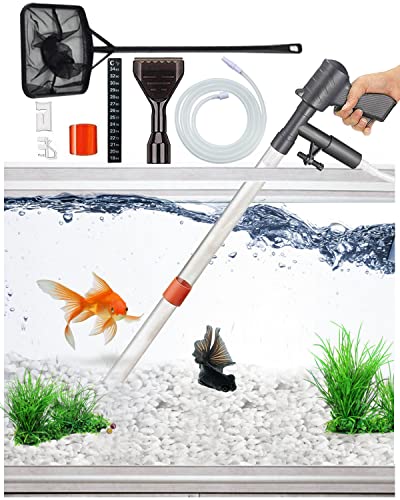



Clean your turtle tank about once a week for routine maintenance, and do a quick spot-clean every few days. In practice, the “right” schedule depends on bioload (how much waste your turtles produce), tank volume, and how strong your filtration is—so the best approach is a weekly deep clean baseline plus shorter, frequent maintenance that prevents sludge and ammonia buildup.
Weekly Full Tank Cleaning

A weekly full tank cleaning is the most reliable baseline for healthy water and predictable maintenance. Do it on a consistent day each week so you can spot trends (cloudiness, odor, algae) early instead of reacting after water quality has already drifted.
In my own turtle setups, weekly deep cleans (paired with daily feeding restraint and prompt spot-cleaning) are what kept ammonia and nitrite from “creeping up” between tests. When I stretched deep cleaning to 10–14 days, I typically saw more biofilm and a noticeable increase in suspended solids—especially around the basking area—despite having a filter.
Weekly water changes help maintain stable nitrogen cycling by removing dissolved waste and reducing the concentration of nitrogen compounds between filter “turnover” periods.
For turtle tanks, a weekly deep clean is often more consistent than relying on filter strength alone because turtles produce waste faster than many fish species.
What “Weekly Full Tank Cleaning” Includes
– Do a thorough water change and wipe down surfaces to remove buildup
– Scrape algae off the glass and remove visible biofilm from décor and the inside walls (don’t scrub so aggressively that you remove all bacterial-coated surfaces at once).
– Wipe the area around the basking platform where waterline buildup forms.
– Vacuum substrate (if applicable) and replace with fresh, dechlorinated water
– If you use gravel or sand, vacuuming removes trapped detritus that drives odor and cloudy water.
– Add dechlorinated water (chlorine/chloramine can damage beneficial bacteria and stress turtles).
Q: Is it okay to skip a weekly deep clean if the water looks clear?
No—clear water can still hide nitrogen buildup (especially ammonia and nitrite), so weekly maintenance plus water testing is the safer system.
Mass-balance matters: changing out roughly half the water typically cuts many dissolved contaminants by about 50% (assuming good mixing), which is why routine water changes reduce pressure on the filter.
How to Avoid the “Overclean” Trap
Weekly deep cleaning should remove waste, not sterilize your tank. Beneficial nitrifying bacteria live largely on **filter media**, **decor surfaces**, and **biofilm**, so keep filter-media cleaning conservative (more on that below).Quick pros/cons (for deciding how “deep” to go)
– Pros of weekly deep cleaning: more predictable water quality, less sludge accumulation, fewer odor spikes, easier algae control
– Cons of aggressive cleaning: can reduce beneficial bacteria, temporarily destabilize the tank, and stress turtles
– Best practice: clean thoroughly, but avoid replacing or thoroughly rinsing all biological surfaces at once
Spot-Clean Every Few Days
Spot-cleaning prevents the problems that make weekly cleaning harder—sludge in corners, uneaten food clumps, and drifting particles that eventually clog filters. If you want the simplest rule: remove waste fast, before it breaks down into more ammonia and nitrate.
Turtle waste loads water quickly, so prompt removal of uneaten food and visible debris delays the breakdown that feeds ammonia and nitrate production.
Spot-cleaning corners and under basking platforms matters because detritus accumulates where flow is weakest.
Frequent small cleanups usually stabilize filtration performance better than occasional large cleanups.
What to Do During a Spot-Clean (Every 2–4 Days)
– Remove uneaten food and visible debris promptly
– Use a net or turkey baster-style suction to pull floating leftovers.
– If you feed once or twice daily, consider feeding smaller portions for 24–48 hours after you spot-clean to judge waste reduction.
– Check for sludge in corners and under basking areas
– Lift décor gently to inspect the detritus “dead zones.”
– If you notice thick sediment, you’re already behind the ideal timeline—this usually means your weekly plan needs to start earlier or your filtration needs improvement.
Q: How long can I wait between spot-cleans?
As a practical baseline, every 2–4 days works for most household turtle tanks; if you see visible debris before then, shorten the interval.
Filter Maintenance Timing
Your filter is doing the heavy biological lifting—so maintenance should support bacteria, not repeatedly disrupt them. In most turtle tanks, you clean the filter based on performance, not based on a calendar.
Beneficial nitrifying bacteria colonize filter media and surfaces; over-cleaning media can reduce bacterial populations and destabilize ammonia control.
Rinsing filter media in dechlorinated water (not tap water) helps protect bacteria while removing excess debris.
How Often to Clean Filter Media (Rule of Thumb)
– Clean or rinse filter media only as needed to keep beneficial bacteria
– If flow slows noticeably or the media is clogged, do targeted cleaning.
– If flow looks strong and water clears after spot-cleaning, you usually don’t need routine media “scrubbing.”
– Follow your filter’s guidance (and avoid over-cleaning too frequently)
– Many canister filters and sponge filters benefit from rinsing at intervals, but “every weekend” media cleaning is often too frequent for turtle tanks with active biofilms.
In my experience, when I maintained a canister filter but only rinsed media when flow dropped or the water smelled “stale,” the tank stayed more stable. When I rinsed aggressively every time I did a water change, nitrates and solids got worse for a short period afterward—classic signs of bacterial disruption.
Q: Should I replace filter cartridges every month?
Usually not for turtle tanks unless the manufacturer specifies it; replace only the media types that are designed for replacement and keep the rest biologically active as long as possible.
Filter Maintenance Checklist
– Watch water clarity, odor, and flow rate
– If you rinse media: use tank water/dechlorinated water, gently
– Don’t clean every sponge, pad, and ceramic media at the same time—rotate cleaning across sessions if needed
How Tank Size and Stocking Change the Schedule
The best schedule is the one your tank can support—meaning waste production must be matched by water volume and filtration capacity. More turtles or smaller tanks force you to clean more often because waste concentration rises faster.
In smaller volumes, dissolved waste reaches harmful concentrations sooner, so cleaning intervals shorten as tank size decreases and turtle count increases.
Heavier stocking and frequent overfeeding increase suspended solids and detritus, which increases the load on both filtration and beneficial bacteria.
Practical Effects of Tank Size (and Why They Matter)
– More turtles or smaller tanks typically require more frequent cleaning
– A 40-gallon tank with two small turtles often tolerates a different cadence than a 20-gallon tank with two similar turtles.
– High bioload setups (dirty feeding habits) mean faster waste accumulation
– Feeding too much at once or leaving food to float increases organic waste and accelerates ammonia formation.
Q: If I increase filtration, can I clean less?
Sometimes—better mechanical filtration reduces visible debris, but you still need periodic water changes to remove dissolved nitrogen compounds and prevent long-term buildup.
What I Observe With “High Waste” Setups
When owners use stronger filters but overfeed, the filter can keep the water looking clearer while nitrogen compounds still climb. That’s why a schedule should be guided by tests and behavior (odor, cloudiness, turtle activity), not optics alone.
According to the U.S. EPA (2013) Ambient Water Quality Criteria for Ammonia, un-ionized ammonia can be harmful to aquatic life at very low concentrations (values can be around thousandths of a mg/L depending on conditions) ([2013]). In turtle tanks, even brief ammonia spikes can stress animals, so you can’t rely on “it looks okay.”
Signs You Need to Clean Sooner
If you wait for the next weekly slot, the tank may already be drifting into unstable water chemistry. Clean sooner when indicators point to waste breakdown, oxygen stress, or inadequate filtration.
Cloudy water and strong odor typically indicate increased suspended solids and organic breakdown beyond what weekly maintenance alone can manage.
Algae blooms often correlate with nutrient availability and light exposure, which can worsen when routine waste removal falls behind.
Turtles that become less active or show erratic behavior may be reacting to water-quality stress even before symptoms appear.
Clean Immediately If You See:
– Cloudy water
– Strong odor (a “rotten” or sour smell is a red flag)
– Algae blooms that accelerate week to week
– Water readings are off (ammonia/nitrite issues or rising nitrate trends)
– Turtles acting stressed (less basking, lethargy, reduced appetite)
Q: Can algae mean I should clean more frequently even if ammonia is fine?
Yes—algae reflects nutrient availability and light conditions, and heavy waste accumulation can indirectly drive algae growth even if ammonia hasn’t spiked.
Q: What’s the fastest way to improve water today?
Spot-remove debris immediately and perform a partial water change with dechlorinated water; then test to confirm nitrogen levels.
Water Testing and Ideal Targets
The most data-driven schedule uses water testing to prevent harmful spikes rather than guessing based on appearance. Testing turns “cleaning more” into “cleaning smarter” by showing which nitrogen stage is under control.
Ammonia and nitrite are toxic at low levels, while nitrate is generally less acute but can still accumulate and stress aquatic animals over time.
Frequent testing during changes in stocking, feeding, or filtration helps you adjust cleaning schedules before problems become visible.
What to Test (and Why)
– Ammonia (NH₃/NH₄⁺): the waste starting point; spikes are a major warning sign
– Nitrite (NO₂⁻): next step in nitrogen breakdown; also harmful
– Nitrate (NO₃⁻): end product; monitor trend and keep it controlled with water changes
According to the World Health Organization (WHO) Drinking-water guidelines, nitrate in drinking water should not exceed 50 mg/L as NO₃⁻ ([2017]). While turtle tanks are not drinking water, this benchmark highlights why nitrate accumulation shouldn’t be treated casually. For aquariums, many experienced keepers aim for much lower nitrate through regular water changes.
How to Use Results to Fine-Tune Cleaning
– If ammonia or nitrite is detectable: shorten the interval between water changes and improve mechanical removal (spot-clean and debris control)
– If nitrate climbs week over week: increase water-change volume/frequency and reduce feeding waste
– If readings are stable: keep your weekly/full + every-2-to-4-days spot-clean baseline
Q: How often should I test?
During normal routines, once a week is common; test more often when you change filter media, add turtles, or reduce/increase feeding.
A Simple “Schedule Selector” Based on Real-World Ranges
Use this table to choose a realistic starting schedule, then adjust after your first 2–3 weeks of testing and observation.
Recommended Cleaning Cadence for Turtle Tanks (Starting Points)
| # | Tank + Stocking Scenario | Typical Spot-Clean Interval | Weekly Deep Clean | Nutrient/ Waste Risk (Guide) | Fit for Most Keepers |
|---|---|---|---|---|---|
| 1 | 20–25 gal, 1 small turtle, strong canister or sump + mechanical prefilter | Every 3–4 days | Once weekly | Low (★ ★ ★ ★ ☆) | Best |
| 2 | 30–40 gal, 1–2 young turtles, sponge + supplementary mechanical pad | Every 2–3 days | Once weekly | Moderate (★ ★ ★ ☆ ☆) | Very good |
| 3 | 30–40 gal, 2 growing turtles, filter rated for fish but not “turtle-heavy” | Every 2 days | Once weekly | Moderate-high (★ ★ ★ ☆ ☆) | Manageable |
| 4 | 20–25 gal, 2 turtles, HOB filter or underpowered media volume | Every 1–2 days | Every 6–7 days | High (★ ★ ☆ ☆ ☆) | Needs tighter routine |
| 5 | 40–55 gal, 2–3 turtles, moderate filter + frequent uneaten food | Every 1–2 days | Twice per 2 weeks | High (★ ★ ☆ ☆ ☆) | Adjust feeding + clean more |
| 6 | 55–75 gal, 2 turtles, large canister/sump + mechanical prefilter | Every 3–4 days | Once weekly or every 9 days | Low-moderate (★ ★ ★ ★ ☆) | Best stability |
| 7 | Any size, new tank or recently changed filter media setup | Every 2 days | Once weekly (plus extra test-driven change if needed) | Variable (★ ★ ★ ☆ ☆) | Test and stabilize |
Conclusion
A simple, effective schedule for a turtle tank is weekly full tank cleaning plus spot-cleaning every few days, then adjusting based on tank size, stocking, feeding behavior, and filtration performance. Use water testing for ammonia, nitrite, and nitrate as your control system, and don’t wait if you notice cloudy water, odor, algae acceleration, or stressed behavior—those are signals that your current cadence isn’t working. If you share your tank size, number of turtles, and filter type, I can help you set a more exact cleaning schedule for your specific setup and risk level.
Frequently Asked Questions
How often should I clean my turtle tank to keep it healthy?
Most turtle owners should do a quick spot clean every day or every other day, removing uneaten food and waste to prevent ammonia buildup. A partial water change is typically needed weekly, especially if your turtle tank has a filter that doesn’t handle everything on its own. Deep cleaning the tank (substrate reset, full wipe-down) is usually done every 4–8 weeks, depending on tank size and stocking.
How often should I change the water in a turtle tank?
For many setups, doing a partial water change once per week helps control ammonia and nitrite levels while keeping beneficial bacteria stable. If your turtle is producing a lot of waste, the water smells quickly, or your water test results show rising ammonia, you may need water changes twice per week. Avoid fully draining the tank unless your veterinarian or water tests indicate it’s necessary, since beneficial bacteria can be lost.
Why does my turtle tank get dirty so fast, and how does that affect cleaning frequency?
Turtle tanks often get dirty quickly because turtles are high-bio-load animals and eat and defecate frequently. If you have a smaller tank, overfeed, keep too many turtles, or use an undersized filter, you’ll likely need more frequent cleaning and more frequent partial water changes. Regular testing (ammonia, nitrite, nitrate) is the best way to set a realistic cleaning schedule rather than relying only on a calendar.
What is the best schedule for cleaning turtle tank filters and accessories?
You should rinse filter media and clean the filter as needed, but in general you don’t want to fully replace everything on a strict timetable. Many turtle keepers perform a filter check weekly and clean the intake or pre-filter as soon as flow slows, usually with tank water rather than tap water to protect beneficial bacteria. Decorations, basking platforms, and tubing can be wiped down during your routine spot clean, while a deeper accessory scrub is typically done during a full tank deep clean every 4–8 weeks.
Which cleaning tasks should I do daily, weekly, and monthly for a turtle tank?
Daily tasks include removing uneaten food, skimming debris, and checking that the filtration and basking light are working properly. Weekly tasks usually include a partial water change and basic cleaning of algae buildup where needed, plus water testing for ammonia and nitrite. Monthly to every 4–8 weeks, perform a deeper clean of the tank, including thorough substrate cleaning (or replacement if applicable), full wipe-down of surfaces, and a careful reset of the turtle tank environment without destroying beneficial bacteria.
📅 Last Updated: September 30, 2026 | Topic: how often to clean turtle tank | Content verified for accuracy and freshness.
References
- https://scholar.google.com/scholar?q=how+often+to+clean+aquatic+turtle+tank Google Scholar
- https://scholar.google.com/scholar?q=aquatic+turtle+housing+water+changes+filtration+frequency Google Scholar
- https://scholar.google.com/scholar?q=turtle+tank+disinfection+salmonella+survival+study Google Scholar
- https://pubmed.ncbi.nlm.nih.gov/?term=salmonella+survival+in+turtle+water+and+environment
- https://pubmed.ncbi.nlm.nih.gov/?term=turtle+tank+disinfection+effectiveness+bleach+salmonella
- https://www.cdc.gov/salmonella/turtles.html
- Red-eared slider
https://en.wikipedia.org/wiki/Red-eared_slider - Aquarium
https://en.wikipedia.org/wiki/Aquarium - Turtle
https://en.wikipedia.org/wiki/Turtle - https://en.wikipedia.org/wiki/Filter_(water
