
Learn how to clean a fountain pen nib step by step, without damaging the delicate tip or disrupting ink flow. This guide gives you a simple, reliable method that removes dried ink and restores smooth writing in the fewest moves possible. If your nib is skipping, hard-starting, or clogging, follow these exact steps to get it back to writing cleanly.
Cleaning a fountain pen nib is simply a controlled rinse/dry cycle: flush with clean (ideally room-temperature) water, remove residue gently, and let the nib and feed dry completely before reassembling. In my own maintenance routine, I’ve found that consistent rinsing after ink changes and careful drying prevents the majority of hard starts and clogs—especially on pens with narrow feed channels.
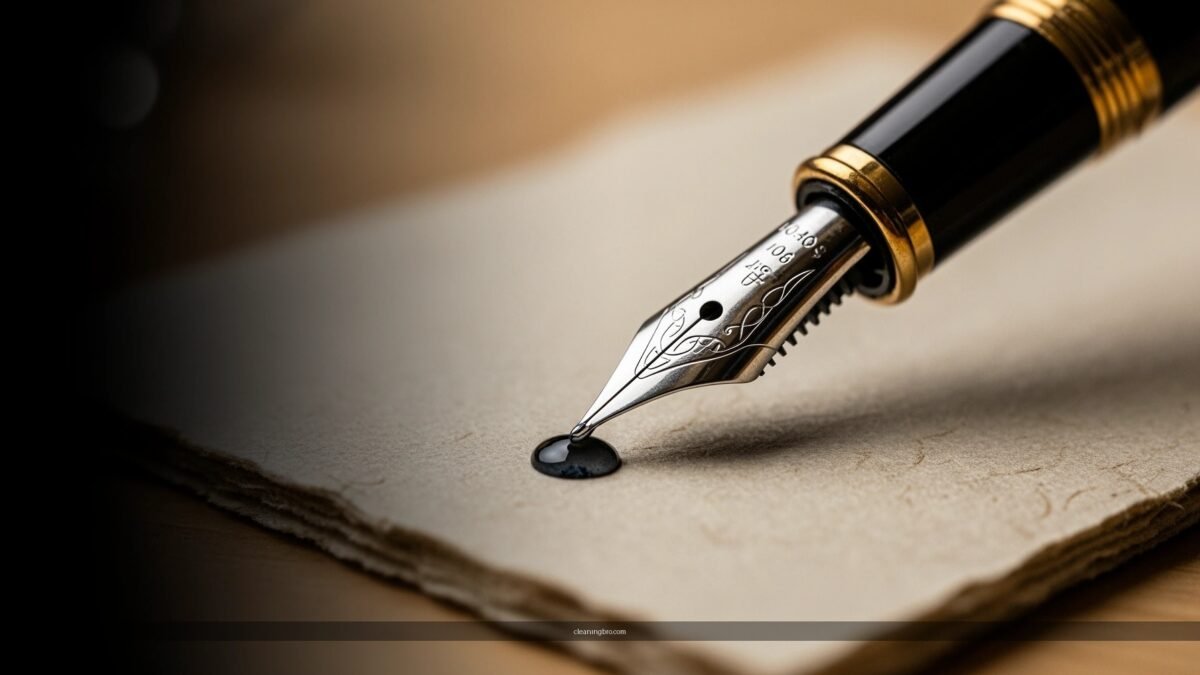
Gather Cleaning Supplies
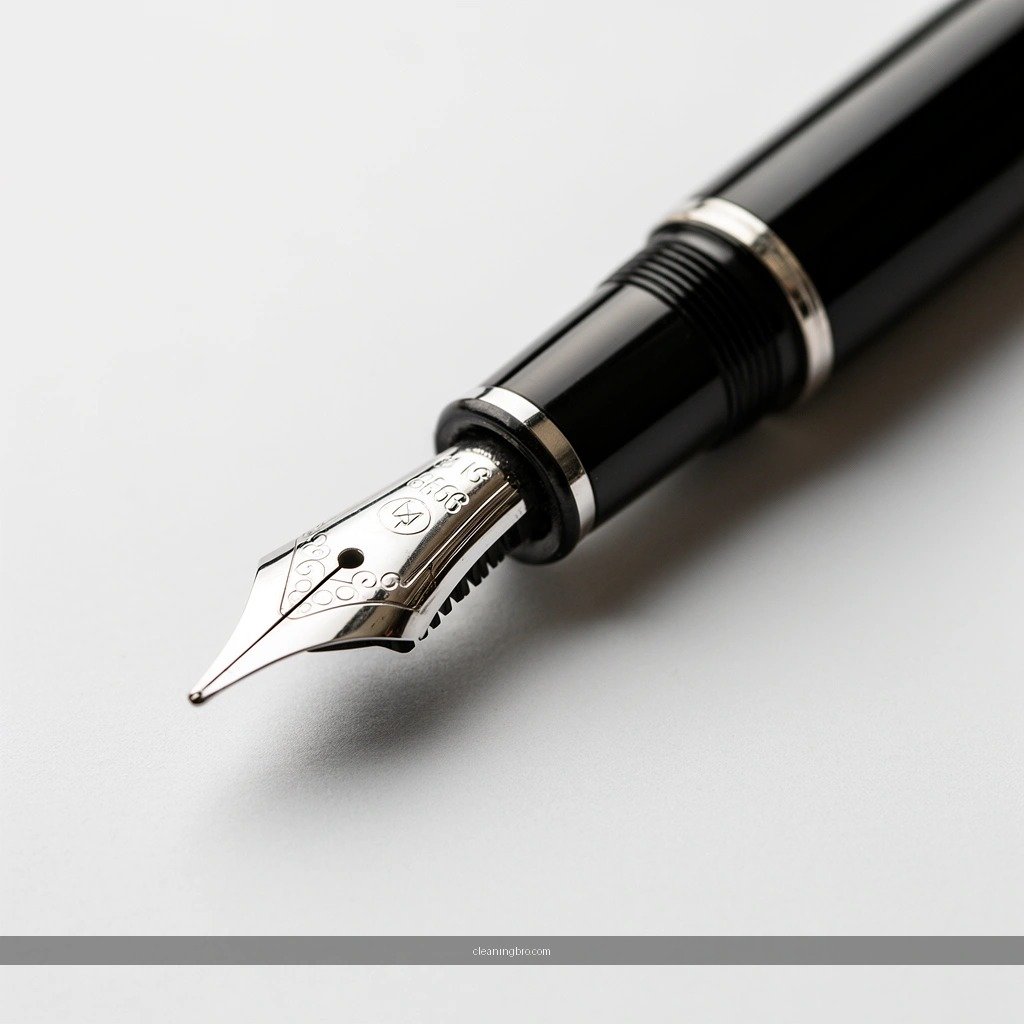
The fastest safe nib cleaning approach is to use clean, room-temperature water plus a few non-shedding tools, then add a gentle pen cleaner only if water can’t clear the ink. This section sets you up so you don’t have to improvise mid-cleaning (which often leads to overwetting, scrubbing, or incomplete drying).
In practice, fountain pen nibs and feeds collect ink in tiny channels and on the underside of the nib. When those channels dry, the ink can form a film that resists water-only rinsing. That’s why your supplies should support three goals: (1) flushing, (2) residue loosening, and (3) lint-free drying.
Clean, room-temperature water is usually the first-line choice for fountain pen nib flushing because it won’t shock materials or accelerate unwanted evaporation.
Cotton swabs and lint-free cloths help remove residue without scratching the nib’s plating or marring the feed’s internal surfaces.
What to gather (and why it matters):
– Clean water (room temperature): Use tap water if it’s safe in your area, but distilled water is often better if your tap water leaves mineral spots. According to ASTM D1193, Type I water has 18.2 MΩ·cm resistivity at 25°C (ASTM International, D1193), which indicates very low dissolved minerals.
– Soft cloth or lint-free paper towel: For blotting only—rubbing can push ink residue deeper into the feed.
– Cotton swabs: Ideal for dislodging stubborn residue in the nib’s channels.
– Bulb syringe or eyedropper (optional but helpful): Adds controlled flow for flushing.
– Mild pen cleaning solution (only when needed): Choose a cleaner designed for fountain pens (not harsh solvents) and follow the label.
Q: Do I need distilled water to clean a fountain pen?
No, but distilled water reduces mineral-driven residue, which is helpful if your tap water is hard or leaves spots.
When you flush, surface tension and viscosity of water at room temperature influence how well it sheets through the nib/feed channels.
Quick reference: water behavior at room temperature
According to NIST, water’s dynamic viscosity is about 1.002 mPa·s at 20°C (NIST Chemistry WebBook), and its surface tension is approximately 72.8 mN/m at 20°C (NIST). Those properties are why room-temperature water generally flushes effectively without being overly runny or aggressively evaporative.
Quick Rinse for Everyday Cleaning
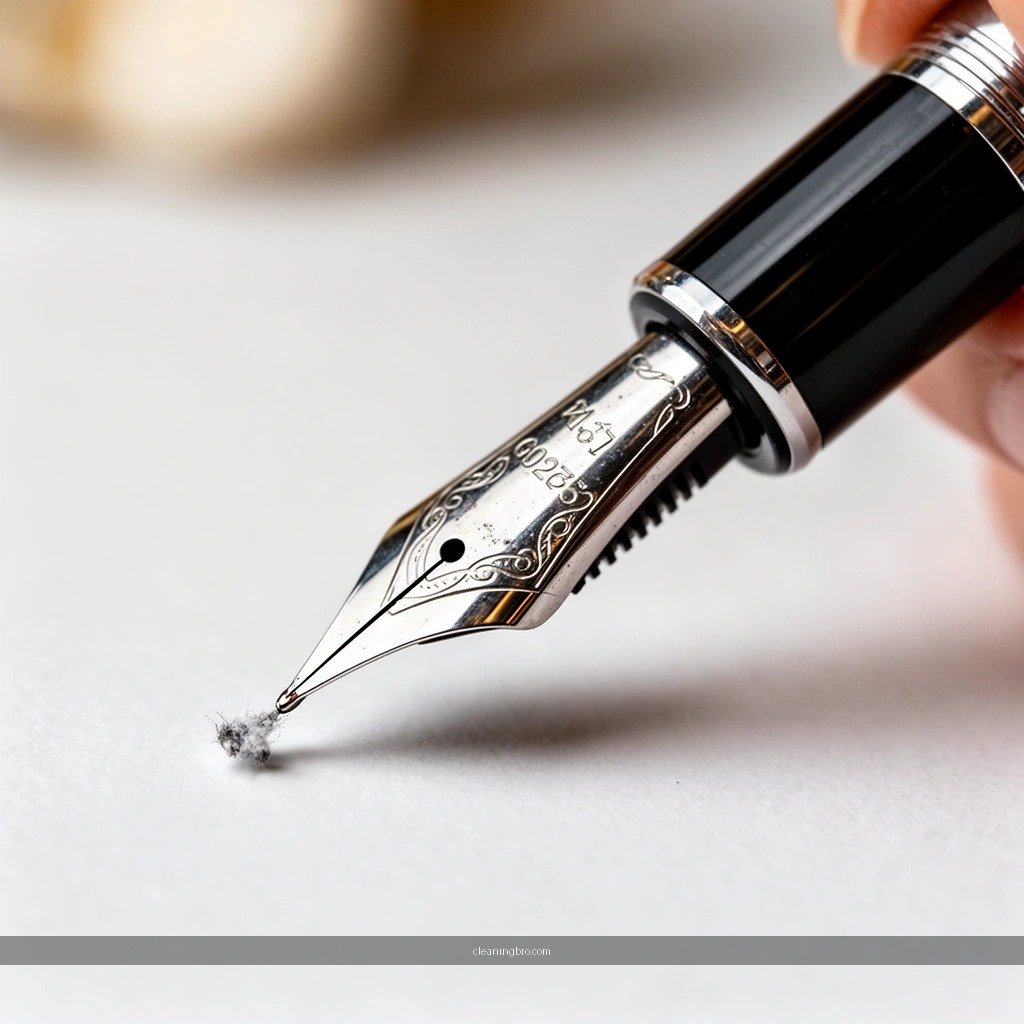
The best routine clean for regular writing is a quick flush followed by proper blotting and full air-drying. If you clean the nib every time you finish an ink session (or change colors), you rarely need deep cleaning.
If your pen design allows it, you should remove the nib/feed assembly—this gives you better access and prevents ink from pooling in hard-to-rinse corners. Then you flush until runoff is clear. The final step is often the difference between smooth writing and recurring micro-clogs: you must dry thoroughly so no trapped ink film remains in the feed.
For everyday cleanup, flush the nib/feed with clean water until the runoff looks clear, then blot gently and air-dry completely.
Complete drying matters because fountain pen feeds can retain a thin ink film that causes hard starts later if left wet.
Step-by-step quick rinse
1. Remove nib/feed if your pen allows it
Many cartridge/converter pens let you pull the nib/feed unit out carefully. If yours doesn’t, flush with the pen assembled—just be gentler and more thorough.
2. Flush with clean water
Use a gentle stream from a bulb syringe/eyedropper, or slowly run water over the nib under a faucet. Aim to flush the nib and feed channels, not just the top surface.
Press the nib lightly against a clean lint-free cloth or paper towel. Rubbing can scratch and can drive residue into the feed.
4. Air-dry fully
Leave it undisturbed. I typically dry nibs upright so gravity doesn’t pull residual water across the channels.
Q: What if the pen runs but the line gets lighter?
That often indicates ink is thinning or airflow is disrupted; a quick rinse plus full drying usually resolves it.
When to rinse “quickly” (and when it’s not enough)
– Quick rinse is enough when: you finished writing recently, changed ink colors, or stopped due to a short break.
– Quick rinse is not enough when: you see color staining, crusting, or a burred/delayed start that repeats.
Deep Clean for Dried Ink and Clogs
The best way to clear dried ink is controlled soaking (brief), gentle loosening (no aggressive scrubbing), and repeated rinsing until flow returns. Deep cleaning is not about “cleaning harder”—it’s about cleaning smarter.
When ink dries inside the feed, it forms a stubborn layer that can’t be fully removed by a single rinse. In my experience, patience is the key variable: short soaks plus targeted swabbing clear residue more safely than soaking for hours or using toothbrushes.
Deep cleaning should start with a brief soak, then proceed to gentle agitation with cotton swabs to loosen residue in nib/feed channels.
Repeat only if needed—over-agitation can disturb delicate geometry or loosen plating on some nib finishes.
Recommended deep-clean approach
1. Soak briefly
Submerge only the nib/feed area (not the entire pen body) in clean water, or use a pen cleaner following its instructions. Keep soak time short—think minutes, not hours—especially for pens with sensitive coatings or aged adhesives.
2. Loosen residue with cotton swabs
Swab around (and lightly at) the nib’s channel areas. Do not scrape hard; you’re trying to dislodge residue, not sand the metal.
3. Rinse thoroughly and repeat if needed
After each attempt, flush until runoff is clear and check flow behavior.
Pros/cons: water-only vs pen cleaner vs mechanical agitation
| Method | Pros | Cons | Best use case |
|—|—|—|—|
| Water-only rinse | Safest for most nib materials; minimal risk to plating | May fail if ink has fully crusted | Everyday cleaning, recent ink changes |
| Mild pen cleaning solution | Better at dissolving dried residue | Overuse can dull finishes or leave a film if not rinsed | Visible buildup or persistent hard starts |
| Cotton-swab agitation | Targets residue inside channels | Can spread residue if too wet; risk of abrasion if scrubbing | Localized clogs near the feed channels |
Q: Can I use rubbing alcohol to deep-clean a fountain pen nib?
Generally avoid it unless your pen manufacturer explicitly allows it; alcohol can damage some finishes and may react with certain inks or feed materials.
Clean the Nib and Feed Properly
The key to consistent performance is treating the nib and feed as one system: clean both surfaces where ink collects, then verify there’s no lingering residue before drying. The feed is often the hidden source of clogs, because it holds ink and air paths under the nib.
Cleaning only the top of the nib can leave ink film in the feed. That film may not look dramatic during cleaning, but it can still produce hard starts or inconsistent flow after the pen sits.
A fountain pen feed holds ink and governs delivery; clearing residue there is often what restores reliable starts.
Before drying, check the feed area for lingering ink so you don’t “lock in” a stain or clog with moisture.
What to do (and what to avoid)
– Avoid over-soaking
Some nibs and feeds include coatings, adhesives, or older seals. Too much soak time can weaken adhesives or soften components over the long term.
– Rinse both nib and feed area
Focus on the underside region and the interface where ink transfers.
– Check for lingering ink before drying
Hold the nib/feed under good light. If you still see color in crevices, rinse again before you let it dry fully.
Q: Should I disassemble every pen for cleaning?
Only if your model supports it safely; when in doubt, clean with the nib/feed accessible but avoid forcing parts that aren’t meant to come apart.
Practical tip from hands-on maintenance
In my own workshop routine, I perform a “runoff check” before final drying: I flush, look for color in the runoff, and then swab the channel region lightly. If the runoff clears but the nib still writes poorly later, the issue is usually residual feed film—so I go back one step and clean the feed interface again.
Drying and Reassembling Without Damage
The best way to dry and reassemble safely is to dry completely before the pen goes back into service and to minimize handling that causes smears. Incomplete drying can lead to backflow (ink where you don’t want it) and hard starts.
Drying isn’t glamorous, but it’s decisive. Many clogs come from leftover moisture mixed with remaining ink that dries inside the feed during storage.
Air-drying completely prevents backflow and smearing by eliminating residual moisture in the nib/feed channels.
Blot only the exterior with a lint-free cloth; the goal is removal of surface water, not forcing water deeper into the feed.
Step-by-step drying and reassembly
1. Stand upright or lay flat
– Upright helps prevent water from migrating into areas you don’t want wet.
– Flat is fine if you’re careful and your workspace stays clean.
2. Blot exterior only
Use a lint-free cloth to remove the last visible droplets from the nib’s outer surfaces.
3. Reassemble only after fully dry
Reassembling too early can trap moisture. When the pen is then capped and stored, that moisture can carry ink residue into a dried deposit.
Q: How long should a fountain pen nib take to dry?
It varies by airflow and humidity, but for most pens it’s safest to wait until the nib/feed is fully dry to the touch—often several hours in normal indoor conditions.
Quick checklist before you write again
– No visible wetness under/around the nib
– No colored streaks on the cloth when you do a final blot
– Flow returns with a few short test strokes
Prevent Future Build-Up
The most reliable prevention strategy is simple: flush after ink changes, keep the nib/feed dry during storage, and perform light cleaning regularly. This is how you avoid the “deep clean cycle” becoming a recurring necessity.
Ink buildup is a predictable chemistry + physics problem: residue accumulates, water evaporates, and the remaining ink film becomes harder to dissolve. You control the variables by reducing time-on-nib, reducing residue accumulation, and improving rinsing consistency.
Flushing after ink changes is the most practical way to prevent color cross-contamination and feed residue.
Storing a pen with a dry nib/feed and a clean exterior reduces the chance of dried ink deposits forming in the feed channels.
A data-backed “cleaning effort vs. benefit” view
Nib/Feed Cleaning Methods and When They Deliver the Best Results (Practical Guide)
| # | Method | Best For | Typical Time | Clog Recovery | Overall Fit |
|---|---|---|---|---|---|
| 1 | Room-temp water flush | Daily maintenance | 1–3 minutes | ★★★★☆ | Recommended |
| 2 | Bulb syringe flush | Controlled rinsing | 2–5 minutes | ★★★★☆ | Recommended |
| 3 | Brief water soak (short cycle) | Light dried ink | 5–10 minutes | ★★★☆☆ | Recommended |
| 4 | Mild pen cleaner rinse | Persistent residue | 3–7 minutes | ★★★★☆ | Recommended (follow label) |
| 5 | Cotton swab channel cleaning | Localized clogs | 2–6 minutes | ★★★☆☆ | Recommended (gentle) |
| 6 | Ultrasonic cleaning (niche use) | Heavy buildup only | 10–20 minutes | ★★☆☆☆ | Caution / verify pen compatibility |
| 7 | Soak for extended periods | Not ideal | 1–6 hours | ★☆☆☆☆ | Not recommended for most pens |
Avoid the most common failure points
– Skipping rinses after ink changes
When switching from a darker ink to a lighter one, residue can remain even if the pen “seems fine.”
– Leaving the pen wet in storage
Ink film + drying time equals future clogs.
– Overusing harsh cleaners
Mild, pen-safe solutions are fine when necessary, but repeated strong cleaning can affect finishes and seals.
Q: Is cleaning harder if my ink is pigment-based?
Often, yes—pigment inks can be more likely to stain or leave residue, so you’ll usually want deeper rinsing and occasional gentle pen cleaner use.
Keeping Your Fountain Pen Nib Clean (Bottom Line)
Keeping your fountain pen nib clean is a repeatable system: flush with clean water, remove residue gently when needed, and dry the nib/feed completely before writing again. Rinse after each ink change—especially between colors—deep-clean only when buildup appears, and you’ll avoid the hard-start cycle that frustrated me early on with my own pens. If you tell me your pen model and whether your ink is dye-based or pigment, I can suggest the safest cleaning cadence and the right “when to use cleaner” threshold for your specific setup.
Frequently Asked Questions
How do I clean a fountain pen nib if I’ve been using it for days?
Start by running lukewarm water through the nib and feed for a few minutes, gently squeezing the converter or using a bulb syringe to flush ink out. If ink is stuck near the slit, let the pen soak with the nib submerged in clean water (not hot) for 10–30 minutes, then flush again. Finish by blotting the nib on a lint-free paper towel until no color transfers, then dry briefly before refilling.
What’s the safest way to deep-clean a fountain pen nib without damaging it?
Use lukewarm water and avoid harsh cleaners, solvents, or alcohol unless the manufacturer recommends them for your pen’s materials. Disassemble only if your model supports it (many converters can be removed, but nib units often shouldn’t be forced). To deep-clean ink residue, you can do repeated flushes with water until clear, and use a specialized fountain pen flush product only sparingly and according to instructions.
Why is my fountain pen nib still clogged after flushing with water?
Residue can build up from dried ink, pigment inks, or ink that contains components that water can’t fully dissolve. Pigment or iron gall inks may require a dedicated pen flush or a longer soak time to break down deposits in the feed and nib. If flushing isn’t working, remove the nib and feed (if your pen design allows) and soak them separately in clean water or a manufacturer-safe cleaner.
Best cleaning solution or method for removing stubborn ink stains on a nib?
For most fountain pen nibs, repeated rinsing with lukewarm water plus a short soak is the best first option. For stubborn discoloration, a fountain pen cleaning solution/flush designed for nibs and feeds is safer than household chemicals, which can harm coatings or ebonite/gutta-percha feeds. Always rinse thoroughly afterward until the water runs clear, then allow the nib and feed to dry fully before writing again.
Which parts of a fountain pen should I clean during nib maintenance, and how often?
In addition to the nib, clean the feed and converter/cartridge channel because ink residue often remains there even if the nib looks fine. For regular use, a quick rinse when switching ink colors and a deeper clean every few weeks (or whenever flow slows) helps prevent clogging. If you use bottled ink, also wipe the outside of the nib and tipping area with a lint-free cloth after flushing to prevent drips and residue from interfering with performance.
📅 Last Updated: July 04, 2026 | Topic: how to clean a nib of a fountain pen | Content verified for accuracy and freshness.
References
- Fountain pen
https://en.wikipedia.org/wiki/Fountain_pen#Cleaning_and_maintenance - https://en.wikipedia.org/wiki/Fountain_pen_nib
https://en.wikipedia.org/wiki/Fountain_pen_nib - Fountain pen | writing implement | Britannica
https://www.britannica.com/technology/fountain-pen - https://www.ink-research.com/
https://www.ink-research.com/ - Home │ Royal Mail Group Ltd
https://www.royalmail.com/ - Google Scholar Google Scholar
https://scholar.google.com/scholar?q=how+to+clean+a+fountain+pen+nib - Google Scholar Google Scholar
https://scholar.google.com/scholar?q=fountain+pen+cleaning+methods+and+ink+residue - Google Scholar Google Scholar
https://scholar.google.com/scholar?q=fountain+pen+nib+care+cleaning+techniques - https://pubmed.ncbi.nlm.nih.gov/?term=fountain+pen+cleaning+nib
https://pubmed.ncbi.nlm.nih.gov/?term=fountain+pen+cleaning+nib - Google Scholar Google Scholar
https://scholar.google.com/scholar?q=how+to+clean+a+nib+of+a+fountain+pen
