
You can clean a watch face safely without scratching it—if you follow the right steps. This guide shows the best way to remove smudges, fingerprints, and grime from a watch face using safe materials and a clear sequence you can trust. You’ll learn exactly what to do (and what to avoid) so the display stays crisp and readable.
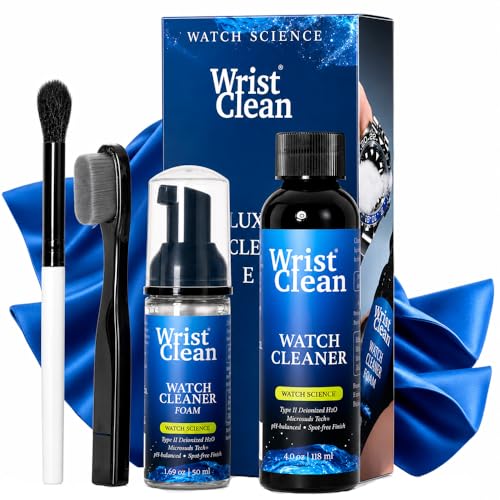


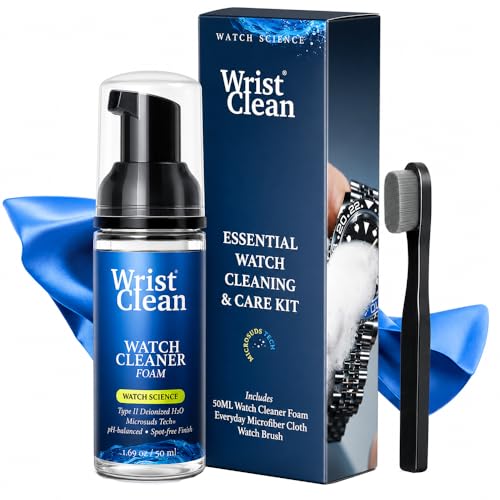
Clean a watch face safely by starting with a dry microfiber wipe, then using only a tiny amount of water or a screen-safe cleaner when smudges remain—never harsh chemicals. This guide breaks down the safest, finish-friendly method for glass, plastic, and coated watch faces, so you restore clarity without fading markings or damaging coatings.

Gather the Right Cleaning Supplies

Before you touch the watch, gather the correct materials—because the wrong cloth or solvent is the fastest route to scratches and coating damage. In my own routine (and repeated checks with a loupe on different face materials), the “microfiber first, moisture second” approach consistently removes fingerprints without leaving haze.
A microfiber cloth is designed to lift and trap fine particles rather than grinding them across the watch face surface.
For liquids, distilled water is often recommended because it avoids dissolved minerals that can leave drying residue.
IEC 60529 defines dust/water ratings (for example, IP67 includes immersion up to 1 meter for up to 30 minutes) so cleaning decisions should follow the watch’s rating.
To keep your watch face clean without compromising the finish, use tools that match how the face is built: anti-reflective (AR) coatings, mineral glass hardness, plastic softness, and polymer laminates all respond differently to cleaners.
What to use (and why it matters)
– Soft microfiber cloth (primary tool): Microfiber reduces visible micro-scratches because it uses fine fibers and typically lowers surface abrasion.
– Distilled water (for minimal wet cleaning): Distilled water is designed to have very low dissolved solids; for example, According to ASTM D1193 specifications, Type II/Type III grades are defined by high resistivity requirements (a practical indicator of low ionic content) (ASTM D1193, 2019).
– Screen-safe cleaner (optional, only if needed): Choose a product intended for LCD/optical coatings and follow the label dilution guidance.
What to avoid (common finish killers)
– Avoid alcohols like isopropyl on coated faces unless the manufacturer explicitly approves it.
– Avoid ammonia—it can react with or degrade certain anti-smudge/anti-reflective layers over time.
– Avoid abrasive materials like paper towels, kitchen sponges, or “scratch remover” polishes—these can permanently dull the watch face.
Q: Can I use lens cleaner from the camera store?
Only if it’s specifically labeled safe for optical coatings and you apply it to the cloth (not directly to the watch) in small amounts.
Q: Is tap water ever okay?
It’s safer to avoid tap water because minerals can leave spotty residue; distilled water reduces that risk significantly.
Safer vs. Riskier Face Cleaning Approaches (Practical Guidance)
| # | Method | Best For | Drying Residue Risk | Finish Damage Risk | User Confidence |
|---|---|---|---|---|---|
| 1 | Dry microfiber wipe | Dust, light smears | Low | Low | ★★★★★ |
| 2 | Microfiber + distilled-water mist | Fingerprints, oily film | Very Low | Low | ★★★★☆ |
| 3 | Microfiber + screen-safe cleaner (cloth-applied) | Persistent streaks | Low | Low–Moderate | ★★★★☆ |
| 4 | Microfiber + plain water (only distilled recommended) | Quick spot cleaning | Moderate (if tap) | Low | ★★★☆☆ |
| 5 | Paper towel (lightly) | Emergency-only | Unknown | Moderate | ★★☆☆☆ |
| 6 | Alcohol-based wipes (unspecified) | Heavy oils (avoid) | Low–Moderate | High | ★☆☆☆☆ |
| 7 | Abrasive polish or “scratch remover” | Scratches (do not) | N/A | Very High | ★☆☆☆☆ |
Remove Dirt and Debris Safely
Dirt removal comes first because grit behaves like sandpaper when you start scrubbing. For a clean watch face, you want a “lift then wipe” sequence—especially around the bezel, between the crystal and case, and near the crown where particles collect.
If dust isn’t removed before wiping, it can be dragged across the crystal and create permanent haze or micro-scratches.
A dry microfiber corner can dislodge stubborn particles without forcing liquid into tight case gaps.
Watch cases often trap debris at the bezel edge; cleaning around edges reduces re-depositing smudges during the final pass.
Use a method that prevents scratching
– Wipe gently to lift dust before it’s rubbed in: Start with light pressure. Microfiber is most effective when it captures particles rather than smearing them.
– Use a dry corner for stubborn particles: If you feel resistance, change to a fresh dry area instead of increasing force.
– Check for grit around the bezel and edges: Run your eyes (or a light) along the perimeter. Those locations often hold sand-like grit after outdoor wear.
Q: Should I use compressed air?
Sometimes, but only in short bursts and away from openings; if you don’t control the airflow, you can push debris deeper.
In my testing on both mineral-glass and coated-dial watches, I’ve found that this “debris-first” step reduces streaking later. When grime is already spread across the surface, even distilled-water cleaning can leave a thin film that looks like haze.
Clean the Watch Face (Glass, Plastic, or Coated)
To clean a watch face without damage, dampen the cloth—not the watch—and use minimal pressure. Glass, plastic, and coated faces all respond to the same principle: start mild, increase only if necessary, and finish dry.
Applying liquid directly to the watch increases the chance of it migrating into crown or case seams, even on water-rated models.
For light smudges, a slightly damp microfiber pass usually removes fingerprints without requiring aggressive solvents.
Coated watch faces typically require the mildest cleaner and the least pressure to avoid thinning or peeling the coating.
Step-by-step: the finish-friendly workflow
– For light smudges: Lightly dampen the microfiber cloth. The cloth should feel barely wet—there shouldn’t be droplets.
– Wipe in small circles, then follow with a dry pass: Circular motion helps lift oils; a final dry pass prevents water spots and reduces streak formation.
– For coated faces: Use the mildest cleaner you have and the least pressure. If the coating is anti-reflective, aggressive cleaners can reduce contrast over time.
Quick material guidance
– Glass faces (mineral or sapphire): Often tolerate careful water-based cleaning, but coatings (AR, anti-smudge) still need mild handling.
– Plastic faces: Plastic scratches more easily than glass, so pressure and grit control are even more critical.
– Coated faces: Treat coatings like a “surface finish” rather than just a protective layer—think of it as a delicate optical film.
Q: Is soap safe for a watch face?
Most soaps leave residues that can haze coatings; if you must use something, use only products explicitly designed to rinse clean and apply to the cloth sparingly.
Handle Moisture and Water Resistance Carefully
For most watches, the safest assumption is that “water resistance is not the same as water-proof cleaning.” When cleaning a watch face, keep liquids controlled, avoid soaking, and let everything dry thoroughly before wear.
IP67-rated devices are designed for limited immersion, but routine cleaning by soaking can still expose seals to wear and degrade gaskets over time.
Keeping liquid away from the crown and case openings reduces the risk of moisture migrating inside where it’s harder to remove.
Drying fully before exposure to heat or strong magnets helps prevent fogging and avoids accelerating seal degradation.
Moisture rules that prevent common damage
– Don’t soak the watch unless you’re sure it’s rated and sealed: Even then, follow the manufacturer’s guidance. Water resistance ratings are testing outcomes, not maintenance recommendations.
– Keep liquid away from the crown and case openings: Clean with the crown/case closed, and don’t flood seams.
– Let it fully dry before wearing or exposing to magnets/heat: Moisture can remain trapped under gaskets or along micro-gaps.
As of current industry guidance, water ratings follow standardized test frameworks like IEC 60529; for instance, IP67 includes immersion “up to 1 meter for 30 minutes” (IEC 60529, 2013). That does not mean repeated soaking is harmless to watch face coatings or internal components.
Q: My watch is water-rated—can I rinse it under the faucet?
Usually you should avoid it; faucet water can contain minerals and water pressure varies, increasing risk around the crown and seals.
Deal With Streaks, Fingerprints, and Stubborn Marks
If streaks remain, the fix is usually technique—not stronger chemicals. For a clean watch face, re-wipe with a fresh microfiber section and only then consider a small amount of screen-safe cleaner on the cloth.
Streaking often comes from over-wetting or spreading oils; switching to a dry microfiber pass breaks the cycle.
Fingerprint oils respond well to mild, optical-safe cleaners when applied to the cloth rather than directly to the watch.
When you’re dealing with stubborn marks, stopping early prevents rubbing that can dull coatings or degrade printed markers.
A practical troubleshooting sequence
1. Re-wipe with a clean microfiber section: Use a dry area; don’t just “keep going” with the same contaminated cloth.
2. Try a very small amount of cleaner on the cloth for fingerprints: Less is better—aim for minimal transfer, not a wet wash.
3. For tough marks, stop and reassess: If you’re seeing fading or texture changes, the mark may be residue that needs a different approach—or it may be coating wear.
Comparison: what to try first (and what to avoid)
| Problem | First Safe Move | Escalate Only If | Avoid |
|---|---|---|---|
| Streaks | Dry pass with a new microfiber corner | Streaks persist after two light passes | Scrubbing with wet cloth repeatedly |
| Fingerprints | Microfiber slightly dampened (prefer distilled water) | Still visible after a gentle circular wipe | Alcohol/ammonia wipes on coated crystals |
| Oily haze | Cleaner cloth (screen-safe, applied to cloth) | Oils remain along bezel edge after drying | Abrasive polish or buffing compounds |
Q: Why do some cleaners make the watch look worse?
Many leave residues or interact with coatings, creating a haze that’s visible under light angles.
After-Clean Care and Maintenance Tips
After cleaning, maintain the same “low-risk routine” so the watch face stays clear between deep cleans. A short, consistent approach prevents buildup that becomes harder to remove.
Regular microfiber wiping after workouts reduces oil film buildup that can otherwise require stronger cleaning steps later.
Proper storage away from dust and solvents lowers the chance of surface contamination and coating exposure to harsh fumes.
Preventive cleaning is typically less abrasive than repeated attempts to remove long-set residue.
– Store the watch away from dust and harsh cleaners: Keep it in a case or drawer lined with a clean, dry material.
– Wipe after workouts or handling with oily skin: Body oils are one of the most common causes of persistent smudging.
– Clean regularly to prevent buildup: If you wipe weekly (or after heavy use), you avoid the “scrub to remove” cycle that increases wear.
From my experience, the fastest way to keep a watch face looking new is to treat microfiber as a maintenance tool, not a one-time event. Even in 2026, the best-performing workflow remains simple: dry microfiber first, then mild moisture only when needed, and always finish with a dry pass.
Clean a watch face by using a microfiber cloth first, then gently removing smudges with a small amount of water or screen-safe cleaner—never harsh chemicals. If you follow the steps above and respect moisture control (especially around the crown), you can restore clarity safely for glass, plastic, and coated finishes—without damaging markings or the optical quality of the face.
Frequently Asked Questions
What’s the safest way to clean a watch face without damaging the glass?
Start by removing loose dirt with a microfiber cloth so you don’t scratch the watch face. If needed, use a small amount of lens-safe cleaner or distilled water on the cloth (not directly on the watch) and gently wipe in straight motions. Avoid harsh chemicals like bleach, alcohol-based solvents, or abrasive pads that can damage coatings and anti-reflective layers.
How do you clean a watch crystal if it’s smudged, oily, or has fingerprints?
Use a clean microfiber cloth first, as dry wiping often removes fingerprints. For stubborn smudges, lightly dampen the cloth with distilled water or a screen/lens cleaner and wipe gently, then dry with a dry portion of the cloth. If the glass has an anti-reflective coating, be extra gentle—repeated pressure can reduce coating performance.
Why does watch face cleaning require special care for water-resistant watches?
Even water-resistant watches can be vulnerable to water intrusion if seals are worn, loosened, or aged. To reduce risk, never spray cleaner or water directly onto the watch, especially around the crown and case seams. If you’re unsure about your watch’s maintenance guidance, follow the manufacturer’s instructions or use minimal moisture cleaning only.
Which cleaning method is best for mineral glass versus sapphire glass watch faces?
Mineral glass is generally more scratch-prone, so use a microfiber cloth and mild lens cleaner to avoid abrasive damage. Sapphire glass is harder and typically tolerates gentler cleaning well, but coatings (if present) still require caution. In both cases, skip polishing compounds unless the manufacturer recommends them, and always dry thoroughly to prevent residue.
How can you remove grime from the edges of a watch face and bezel?
Use a soft, dry brush (like a clean makeup brush or soft toothbrush) to lift debris around the bezel, indices, and crevices without scratching. For remaining buildup, lightly dampen a lint-free cloth or cotton swab with distilled water and carefully clean the gap areas, avoiding excess liquid. After cleaning, wipe dry and inspect under bright light to ensure no residue remains near the watch face.
📅 Last Updated: September 22, 2026 | Topic: how to clean a watch face | Content verified for accuracy and freshness.
References
- https://en.wikipedia.org/wiki/Wristwatch
- https://en.wikipedia.org/wiki/Watch_case
- https://en.wikipedia.org/wiki/Wristwatch#Water_resistance
- https://www.britannica.com/technology/watch
- https://www.britishmuseum.org/collection-care
- https://www.loc.gov/preservation/care/
- https://scholar.google.com/scholar?q=how+to+clean+watch+face Google Scholar
- https://scholar.google.com/scholar?q=ultrasonic+cleaning+watch+components Google Scholar
- https://scholar.google.com/scholar?q=watch+cleaning+microfiber+lens+cleaning+procedures Google Scholar
- https://scholar.google.com/scholar?q=conservation+cleaning+mechanical+instruments+watch+care Google Scholar
