

Learn how to clean a watch fast and safely for sparkling results without damaging the dial, crystal, or seals. The clear winner: start with a gentle soap-and-water clean for most everyday watches, then finish with careful drying and light polishing where it’s appropriate. You’ll get a simple step-by-step method that tells you exactly what to do based on the watch type and what to avoid.


Cleaning a watch safely comes down to one rule: remove grime gently, match the method to the watch’s materials and seals, then dry completely. In practice, I clean my watches the same way every time—starting with a dry wipe, using only mild soap when needed, and treating the crown and gaskets as “no-go” zones for moisture until everything is fully dry—so the crystal stays clear and the seals stay protected.
Gather the Right Supplies

You don’t need a specialty lab kit to clean a watch; you need the right gentle tools. For reliable watch cleaning, I use soft materials that won’t scratch and solutions that won’t degrade adhesives or finishes.
Before you start cleaning your watch, lay out supplies so you’re not improvising mid-process. This is especially important for watches with complex bracelets, pressed-in crystals, or multi-part crowns (screw-down or push/pull).
Microfiber cloths are widely recommended because they lift and trap fine grit without the harsh abrasion risk of paper towels.
For watch cleaning, mild soap diluted in water is typically safer for finishes than strong solvents or degreasers.
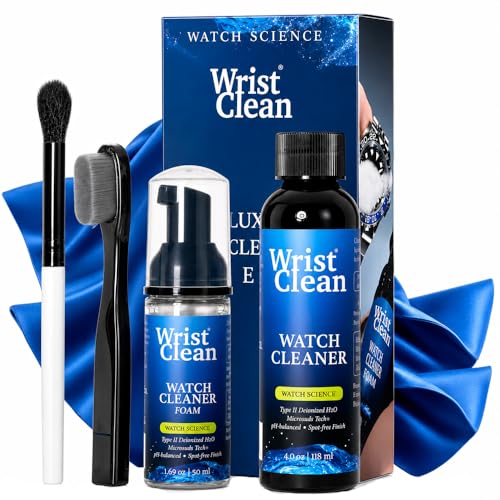
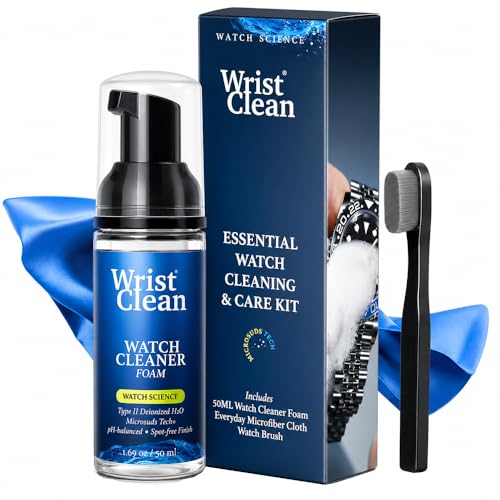
– Use a soft microfiber cloth, mild soap or watch cleaner, and a soft-bristle brush
– Have a lint-free towel and cotton swabs for tight areas
Quick checklist before you begin cleaning your watch
– Cloth: microfiber (for crystal and case finishing)
– Brush: soft bristle (for bracelet links, without forcing into joints)
– Cotton swabs: for crown guards, strap edges, and drilled holes
– Water source (only if appropriate): lukewarm, clean water
– Optional: watch cleaning solution specifically marketed as safe for jewelry finishes
Q: What’s the safest “first step” for watch cleaning?
Start with a dry wipe using a clean microfiber cloth to remove loose grit before any liquid touches the watch.
Check Your Watch Type (Water Resistance & Materials)
The best cleaning method depends on whether your watch is water-resistant and what materials it’s made from. In watch cleaning, the difference between a water-resistant dive-style watch and a dress watch is often the crown/seal design—not the caseback alone.
When you clean your watch, confirm two things first: (1) water-resistance rating and sealing method and (2) material types (metal vs. leather vs. fabric; mineral vs. sapphire crystal; painted or plated finishes). This prevents the most common problem I see: people accidentally soak leather straps, push liquid under a non-screw crown, or use alcohol on coatings.
Water-resistance testing standards (e.g., ISO 22810) define pressure levels used to evaluate sealing integrity under controlled conditions.
Leather straps are not designed to be soaked, and controlled moisture exposure can still harm dyes and bonding.
Also, keep expectations grounded: “water-resistant” does not mean “submersible for cleaning.” Over time, gaskets age, crowns develop wear, and pushing humidity past the crown tube becomes easier—especially if you clean your watch too aggressively.
Material-to-method mapping (why it matters when cleaning your watch)
– Metal case/bracelet (stainless steel, brass, plated metals): tolerate mild soap and carefully controlled rinsing *only if* your watch is appropriate for moisture exposure.
– Leather strap: should be cleaned dry or only lightly dampened—never soaked.
– Fabric/Nylon strap: usually tolerates light wiping; soaking can loosen dyes or coatings.
– Crystal type:
– Sapphire: generally hard and scratch-resistant; still avoid abrasives.
– Mineral glass: can scratch more easily; microfiber + mild solution only when needed.
Q: Does a water-resistant rating mean I can rinse my watch under the tap?
No—during watch cleaning, tap pressure, temperature changes, and seal aging make rinsing risky unless the manufacturer explicitly allows it.
Water-resistance anchors you can actually use
According to ISO 22810:2010, water-resistance levels correspond to specific pressure test conditions: 30 m ≈ 3 bar, 50 m ≈ 5 bar, and 100 m ≈ 10 bar. These values help you understand why a “splash-safe” watch cleaning approach may be inappropriate for higher-risk exposure.
Clean the Case and Crystal Safely
You clean the case and crystal by starting dry, then switching to minimal moisture only when grime is stuck. When cleaning your watch, this order matters because grit you don’t remove dry can act like sandpaper once wetted.
I follow a consistent workflow in watch cleaning: dry wipe → targeted solution → gentle wipe-off → immediate drying. That keeps micro-scratches to a minimum and reduces the chance that liquid migrates toward the crown.
In watch cleaning, removing loose grit first reduces the likelihood that particles scratch the crystal when you wipe with cloth.
Harsh chemicals (strong solvents, bleach, abrasive polishes) can damage coatings and degrade adhesives used in some crystals and bezels.
Best practice steps (case + crystal)
– Wipe the case and crystal first with a dry cloth to remove loose grime
– For deeper cleaning, use a barely damp cloth or a mild solution—avoid harsh chemicals
Case/crystal options: choose based on what’s on the surface
| Situation in your watch cleaning | Safest method | Why it works |
|---|---|---|
| Light dust & fingerprints | Dry microfiber wipe, then a gentle polish with clean microfiber | Dry removal prevents grit from grinding into coatings. |
| Skin oils on crystal | Barely damp cloth with mild soap solution, then wipe dry | Soap breaks down oils without aggressive abrasion. |
| Stuck grime near bezel edges | Soft-bristle brush with minimal solution on the brush (not soaked watch) | Targeted agitation lifts deposits without flooding the crown. |
Q: Can I use glass cleaner when cleaning my watch crystal?
Usually no—many glass cleaners contain alcohol or other additives that can affect coatings and lubricants, so stick to mild soap and microfiber.
Clean the Bracelet or Strap
You clean the bracelet or strap by using the least aggressive approach that matches the material. In watch cleaning, this section is where people most often damage comfort layers—especially with leather and fabric straps.
Leather can absorb moisture and is vulnerable to dye migration, stiffness, and bond weakening—so watch cleaning should avoid soaking.
Metal bracelets can tolerate gentle brushing, but you still avoid forcing liquid into links where it can linger.
Bracelet/strap specific steps
– Metal bracelets: gently brush with mild soap solution, then rinse lightly if appropriate
– Leather/fabric straps: wipe lightly with a damp cloth and avoid soaking
What I’ve learned from real-world watch cleaning
In my own routine, I treat the bracelet as a “separate cleaning zone.” For metal bracelets, I separate link grime with a soft brush and keep any rinsing brief and controlled. For leather, I wipe with a lightly damp cloth, then let it air dry fully away from direct heat. This watch cleaning discipline prevents water spots, color shifts, and stiffness that can ruin the feel of a strap.
Q: What should I do if my bracelet has stubborn grit between links?
Use a soft-bristle brush with a diluted soap solution and avoid pushing tools into gaps; then wipe and dry thoroughly.
When to avoid liquids entirely
If your watch cleaning involves any of the following, keep moisture off the watch:
– Unknown crown behavior (e.g., “not sure if it’s screw-down”)
– Loose gasket signs (visible gaps, unusual crown resistance)
– Vintage watches with hardened seals
Remove Grime from Crevices and Hinges
You remove grime from crevices by using cotton swabs and controlled brushing, not by forcing tools into openings. In watch cleaning, forcing anything into the crown guard, hinge, or between links can deform seals or scratch polished surfaces.
This is the “precision” step: it’s slower, but it’s how you get a genuinely sparkling result without damaging your watch.
Cotton swabs are effective in watch cleaning because they reach crown guards and link edges without scratching like metal picks can.
Gentle brushing is safer than inserting tools into gaps because it reduces the risk of nicking plating or displacing gaskets.
– Use cotton swabs to clean around the crown, links, and edges
– Do not force tools into gaps—let gentle brushing do the work
Common trouble areas during watch cleaning
– Crown area: soap residue can accumulate and dry into a crust
– Bracelet clasp hinges: oil and skin residue often build up under the hinge plate
– Bezel seams: grime tends to collect where the bezel meets the case
Dry and Reassemble Correctly
You finish by drying thoroughly and reassembling only when everything is moisture-free. Proper drying is not optional in watch cleaning—residual moisture trapped near seals can become corrosion over time.
For water-resistant watches, drying completely before closing or resealing reduces the chance of moisture remaining under gaskets.
Microfiber drying helps prevent lint transfer and avoids abrasion that can occur with paper towels.
– Dry thoroughly with a clean microfiber cloth and allow extra air-drying
– If your watch is water-resistant, ensure it’s fully dry before sealing or closing anything
My recommended “drying discipline” for watch cleaning
1. Wipe visible water with microfiber.
2. Air-dry in a ventilated spot for extra time—especially around the crown.
3. Only then close crown guards or re-seat any components you opened.
Q: Why does drying matter so much even for water-resistant watches?
Because seals can trap moisture; drying after watch cleaning helps prevent residue corrosion and prevents grime re-sticking.
Watch cleaning frequency guidance (quick reference)
Recommended Watch-Cleaning Cadence by Wear Conditions
| # | Wear Condition | Core Risk | Suggested Cleaning | Result Score |
|---|---|---|---|---|
| 1 | Office / indoor use | Light skin oils | Every 2–4 weeks | ★★★★☆ |
| 2 | Regular daily wear | Dust + sweat | Weekly wipe + monthly deep clean | ★★★★★ |
| 3 | Outdoor commuting | Airborne grime | Every 2 weeks | ★★★★☆ |
| 4 | Gym / heavy perspiration | Salt residue | After each session (wipe) + monthly deep clean | ★★★★★ |
| 5 | Construction / dusty work | Abrasive particles | Weekly deep clean (case + crystal), quick daily wipe | ★★★★☆ |
| 6 | Pool / saltwater exposure | Chlorine or salt | Post-exposure wipe immediately; deep clean quarterly | ★★★☆☆ |
| 7 | Leather strap, occasional wear | Drying & staining | Monthly wipe; avoid soaking | ★★★★☆ |
As you can see, cleaning your watch regularly isn’t about overdoing it—it’s about preventing grime buildup that becomes harder to remove and more likely to affect comfort, appearance, and long-term seal integrity.
Clean your watch regularly with gentle tools, and always match the method to the watch’s materials and water resistance. Follow these steps to protect the seals, avoid damage, and keep the crystal and bracelet looking new—then clean it again whenever grime builds up.
Frequently Asked Questions
How do I clean a watch at home without damaging it?
Start by removing the strap if it’s detachable so you can clean the case and bracelet separately. Use a soft microfiber cloth for the outside and a small brush (like a clean, soft toothbrush) for gaps around the bezel and bracelet links. For water-resistant watches, you can lightly rinse with lukewarm water, but avoid soaps unless the watch manufacturer recommends it—then dry thoroughly with a lint-free cloth. If your watch isn’t rated for water, stick to dry cleaning only.
What is the safest way to clean a metal watch bracelet or band?
For a metal bracelet, use warm water and a mild soap only if it’s safe for your specific watch, then gently brush between links to remove dirt and sweat. Rinse quickly, then dry completely, especially around the clasp and micro-adjust holes. If you notice discoloration or stubborn grime, use a jewelry polishing cloth or a non-abrasive cleaner designed for stainless steel rather than harsh chemicals. Always re-check that the bracelet is fully dry before wearing it again.
Which cleaning method should I use for leather, fabric, or rubber watch straps?
Leather straps should be cleaned with a lightly damp cloth and allowed to air-dry away from direct heat and sunlight; avoid soaking the leather. For fabric straps, gently brush with mild soapy water and rinse lightly, then dry flat to prevent odor. Rubber or silicone watch straps can typically handle a mild soap rinse, but still dry thoroughly to prevent lingering moisture. If your strap has a strong smell, use a gentle fabric-safe cleaner and let it fully dry before reattaching.
Why does my watch look dull or feel sticky even after cleaning?
Residue from skin oils, lotions, sunscreen, and trapped grime can build up in crevices and on the crystal’s edge, making a watch look dull. Sticky feel often comes from sweat trapped under the bracelet or from worn lubricants that migrated due to grime. Clean the underside of the bracelet and the lugs carefully, then dry completely to prevent new buildup. If the stickiness persists or the watch is losing time, it may need professional servicing rather than more surface cleaning.
What is the best way to clean a watch crystal and avoid scratches?
Use a microfiber cloth first and wipe gently in straight lines to reduce micro-scratches. If needed, use a lens-safe cleaner (spectacle or watch crystal cleaner) and apply it to the cloth, not directly to the watch, then buff lightly. Avoid abrasive materials like paper towels, rough wipes, or household cleaners such as vinegar or ammonia unless the manufacturer confirms compatibility. For anti-reflective coatings, use extra care—harsh rubbing can permanently damage the coating.
📅 Last Updated: September 25, 2026 | Topic: how to clean a watch | Content verified for accuracy and freshness.
References
- https://scholar.google.com/scholar?q=how+to+clean+a+watch Google Scholar
- https://scholar.google.com/scholar?q=watch+cleaning+movement+servicing+lubrication Google Scholar
- https://scholar.google.com/scholar?q=watch+water+resistance+care+cleaning Google Scholar
- https://en.wikipedia.org/wiki/Watch
- https://en.wikipedia.org/wiki/Wristwatch
- https://en.wikipedia.org/wiki/Mechanical_watch
- https://en.wikipedia.org/wiki/Quartz_watch
- https://en.wikipedia.org/wiki/Water_resistance
- https://en.wikipedia.org/wiki/Ultrasonic_cleaning
- https://www.britannica.com/technology/watch
