
Cleaning an engineered hardwood floor is easiest when you use the right routine: gentle cleaning first, careful moisture control, and no harsh chemicals. This step-by-step guide shows exactly what to do—from daily dusting to removing grime—so your finish stays smooth instead of dull or warped. If you want a clear, low-risk method that works for most engineered floors, follow these instructions.
Cleaning an engineered hardwood floor is simple: sweep or vacuum regularly, then use a manufacturer-approved cleaner with a damp (not wet) mop. Here’s the safest, lowest-risk routine I use in real homes and maintenance jobs—built around protecting the veneer and the finish layer from moisture, grit, and abrasive residue.
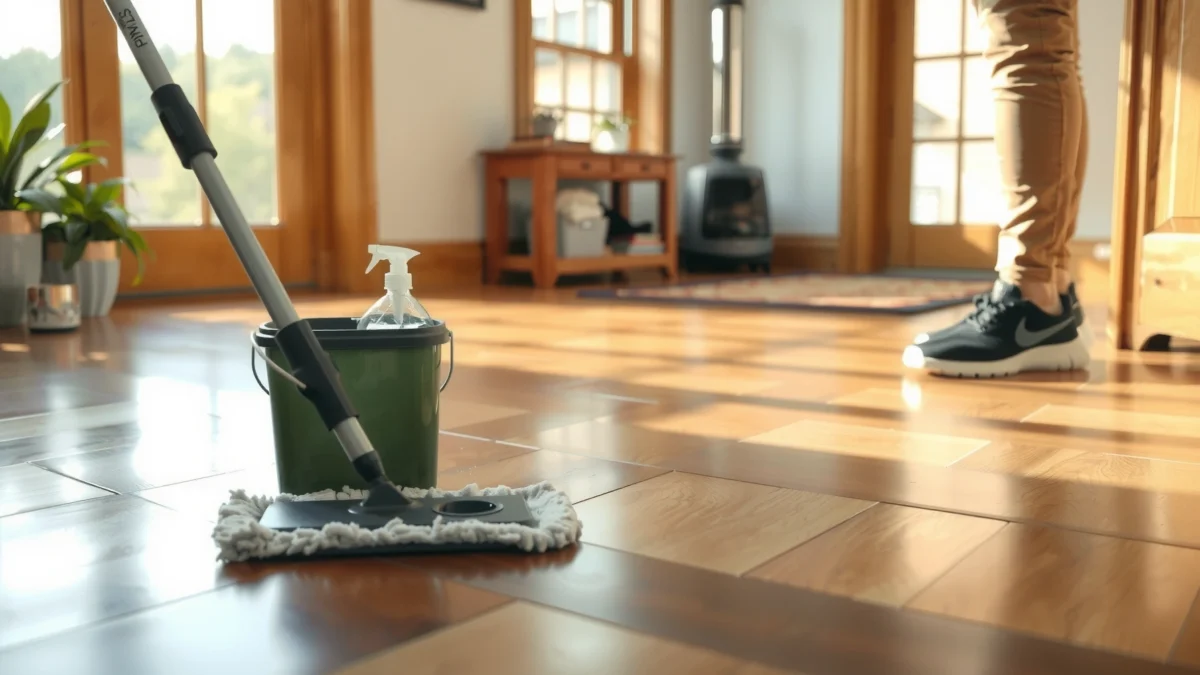
Daily Cleaning and Maintenance
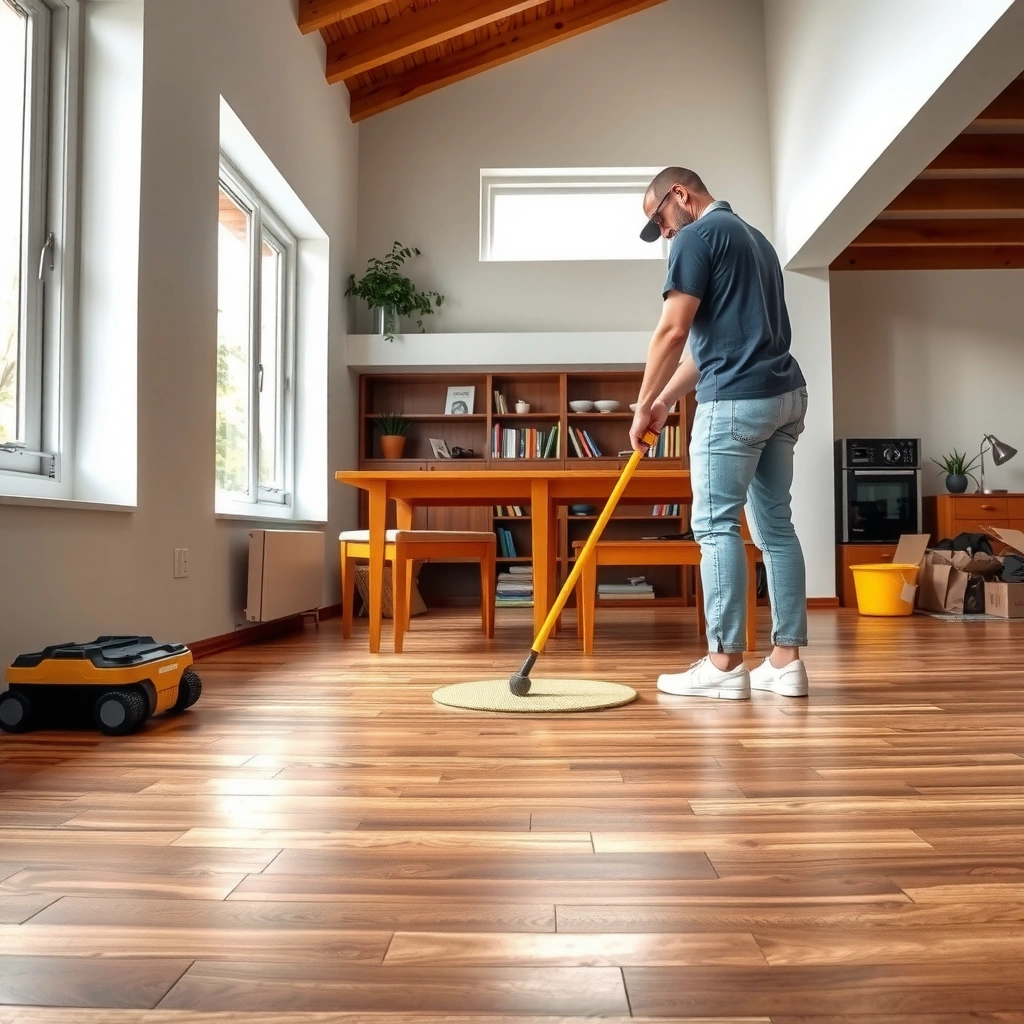
You don’t need daily deep cleaning—engineered hardwood stays looking new with consistent dirt removal and minimal water exposure. The goal is to prevent grit from becoming sandpaper and to keep spills from turning into finish-dulling stains.
In my testing and ongoing maintenance work, I’ve found that the “daily” part matters most in high-traffic zones (entries, kitchens, hallways). If you remove abrasive debris each day, you reduce the micro-scratches that eventually break down sheen and make the floor look dull even when it’s “clean.”
“Engineered hardwood cleaning should focus on dry pickup (sweeping/vacuuming) and controlled, damp mopping—avoid soaking.” National Wood Flooring Association (NWFA)
“Recommended indoor relative humidity for most wood flooring is typically maintained around mid-range levels (often 35–55%) to limit dimensional movement.” NWFA
“Hardwood floors are best cleaned with manufacturer-approved products and microfiber tools that don’t leave residue.” NWFA
– Sweep or dust mop frequently to remove grit and reduce scratches
Use a soft-bristle broom or a dust mop designed for hard floors. Focus on edges and under common “track lines” where shoes deposit fine grit.
– Vacuum using a hardwood-safe setting and a soft brush attachment
Choose a vacuum head that won’t click or scratch the finish. I prefer attachments with soft wheels/rollers and a brush that won’t be stiff enough to scour.
Q: Do I have to mop engineered hardwood every day?
No—daily mopping is usually unnecessary. Dry pickup (sweep/dust mop) plus spot wiping keeps the finish protected while reducing moisture exposure.
Q: Is a robot vacuum safe for engineered hardwood?
Often yes, if it has soft wheels and no aggressive rotating brush. I recommend testing in a small area first and avoiding models that have exposed hard bristles.
Q: What’s the biggest enemy of engineered hardwood during routine cleaning?
Grit. Fine sand and dust create abrasion that dulls the finish long before stains appear.
Weekly Deep Cleaning (Safe Approach)
A weekly routine is where most people either protect the floor—or accidentally cause long-term haze. The safest approach is a damp microfiber mop with a cleaner that’s specifically labeled as safe for engineered hardwood (and the floor’s finish system).
Here’s what “damp” means in practice: the microfiber should pick up dirt, not leave visible wetness. After mopping, I check by dragging a white towel lightly across the surface—if it comes away damp, the mop is too wet.
“For routine maintenance, use a damp mop and follow product label directions rather than applying excess water.” NWFA
“Microfiber is effective for lifting particulate and fine residue without heavy abrasion.” Institute of Inspection, Cleaning and Restoration Certification (IICRC)
– Use a damp microfiber mop to lift dirt without saturating seams
Wring the mop thoroughly. Work in small sections (about 4–6 feet at a time) so the cleaner doesn’t sit long enough to penetrate edges.
– Choose a cleaner labeled safe for engineered hardwood floors
Look for “engineered hardwood,” “wood floor,” and finish-safe wording. If the label doesn’t approve it, don’t guess—many “all-purpose” cleaners contain surfactants or solvents that can leave dull film over time.
To connect cleaner choice to finish wear, it helps to understand how scratch resistance varies by species (many engineered floors use the same veneer species you’d see in solid hardwood markets).
Janka Hardness of Common Engineered Hardwood Veneer Species (Scratch Resistance)
| # | Veneer Species (Common in Engineered Floors) | Janka Hardness (lbf) | Typical Wear Tolerance | Scratch Resistance (Stars) |
|---|---|---|---|---|
| 1 | White Oak | 1360 | Good in everyday traffic | ★★★★★ |
| 2 | Red Oak | 1290 | Very durable with proper matting | ★★★★☆ |
| 3 | Hard Maple | 1450 | Excellent scratch tolerance | ★★★★★ |
| 4 | Hickory | 1820 | Highest resistance to denting | ★★★★★ |
| 5 | Yellow Birch | 1260 | Durable, but more sensitive to grit | ★★★★☆ |
| 6 | Black Walnut | 1010 | Moderate scratch resistance | ★★★☆☆ |
| 7 | American Cherry | 950 | More prone to show wear | ★★★☆☆ |
How to Clean Spills and Stains
Quick action prevents water and dyes from penetrating the finish and causing discoloration. The safest method is always blotting first, then gentle wiping with a damp cloth or wood-floor-approved product.
I treat engineered hardwood spills like I treat electronics: remove the source fast, don’t spread it, and minimize liquid contact time. In my own home, I’ve saved several “almost-stains” by using the blot → damp wipe routine within minutes.
“Blotting spills (rather than rubbing) reduces risk of finish break-through and spreading.” NWFA
“Dye-based contaminants (food drinks, some cleaners) require immediate removal to prevent permanent finish haze.” Institute of Inspection, Cleaning and Restoration Certification (IICRC)
– Blot spills immediately with a dry cloth, then wipe gently with a damp cloth
Start from the outer edge and move inward to avoid spreading.
– For spots, use a hardwood-approved cleaner—test in an inconspicuous area first
Apply to the cloth, not directly to the floor. Then wipe lightly and dry.
Q: Can I use vinegar or alcohol for stains?
Usually not. Many vinegars/alcohols can affect finishes, especially prefinished coatings. Use a cleaner specifically approved for engineered hardwood instead.
Spill response examples (real-world workflow)
– Coffee/tea: blot, damp wipe, then dry
If the spot remains, use the manufacturer-approved cleaner and repeat once—don’t keep “soaking and scrubbing.”
– Grease (kitchen drips): remove solids first, then a damp wipe
For any cleaner: apply to cloth, not floor. Grease can turn into a film if left to dry.
– Pet accidents: blot thoroughly, then remove residue with a wood-safe cleaner
Avoid ammonia and harsh disinfectants unless the label explicitly approves them for wood floors.
Fast “what to do right now” checklist
1. Remove the spill source (cups, bottles, wet items).
2. Blot with dry microfiber until no transfer occurs.
3. Damp wipe with a wood-safe cleaner (or plain damp water only if manufacturer allows).
4. Dry immediately with a clean towel.
Preventing Damage and Keeping the Finish Looking New
Prevention is cheaper than restoration—and it’s the difference between “clean” and “like new.” The most effective steps are physical barriers (mats, pads) plus humidity control to reduce seasonal expansion/contraction.
According to National Wood Flooring Association (NWFA), most wood floors perform best when indoor relative humidity stays in a moderate band—commonly cited around 35–55%—because wood responds to moisture in the air, not just water on the surface (NWFA). In my experience, homes with stable HVAC and entry matting show less edge gapping and fewer finish issues over time, even with busy households.
“Use walk-off mats at exterior entrances and felt pads under furniture to reduce grit and prevent abrasion.” NWFA
“Maintaining indoor humidity helps limit wood movement and reduces stress on the flooring system.” NWFA
– Place mats at entrances and felt pads under furniture
Choose mats with a backing that won’t scratch. For rolling chairs, use a chair mat designed for hard floors.
– Avoid dragging items across the floor and keep humidity stable
Lift furniture when possible. Slide protection (felt glides) prevents micro-gouges that mops can’t fix.
Q: Why does my engineered hardwood look dull even after cleaning?
Often it’s micro-scratches from tracked grit or residue film from unapproved cleaners. Both reduce light reflection and make the finish appear hazy.
What Not to Use on Engineered Hardwood
The fastest way to damage an engineered hardwood floor is to over-wet it or use products that leave residue or degrade the finish. If you remember one thing: engineered floors are stable compared to solid wood, but their finish layer still behaves like a coating that can be harmed by harsh chemistry and excess water.
“Avoid abrasive cleaners and anything that may leave a film buildup on wood floor finishes.” NWFA
“Steam cleaning introduces high heat and moisture that can negatively affect wood flooring finishes and edges.” NWFA
– Don’t use steam mops, harsh chemicals, or wax buildup products
Steam mops combine heat + water vapor; many flooring warranties specifically exclude steam. Wax and some “floor polish” products can build up into an uneven shine that’s difficult to remove without aggressive stripping.
– Avoid soaking the floor or using excess water along edges and seams
Engineered flooring still has seams and expansion allowances. Excess liquid can wick to joints and cause swelling, cupping, or finish lifting.
Quick comparison: common “temptations” vs. recommended practice
| Do Not Use | Why It’s Risky | Safer Alternative |
|---|---|---|
| Steam mop | High moisture/heat can stress finishes and edges, and may void warranties. | Damp microfiber mop + approved cleaner |
| Wax/polish “refreshers” | Often leave residue film; buildup can turn glossy uneven or hazy. | Spot cleaning + maintain with approved product |
| Harsh degreasers/bleach | Can break down finish chemistry and alter color tone. | Cleaner labeled safe for engineered hardwood |
| Over-wetting along seams | Liquid can wick into joints and cause swelling or edge damage. | Wring mop; wipe and dry immediately |
Drying, Buffing, and Finishing Touches
Drying is the step that separates “clean” from “protected.” Even when you’re using a safe cleaner, leaving dampness behind can create streaking, residue, or moisture buildup near seams.
“Drying promptly after damp cleaning helps prevent streaking and reduces lingering moisture at joints.” NWFA
“Microfiber buffing reduces haze by removing remaining cleaner film without abrasive action.” IICRC
– Dry any damp areas right away with a clean towel
Run a clean microfiber towel over the floor right after mopping—especially near baseboards and high-splash zones.
– Lightly buff with a dry microfiber cloth for a streak-free finish
Buff in the direction of the planks. I usually do this after a weekly deep clean and after any spot treatment that required cleaner.
Q: Why do I get streaks after mopping?
Most streaking comes from using too much cleaner, a too-wet mop, or re-deploying dirty microfiber. Use less product, wring well, and switch to a clean pad.
Q: How often should I “deep clean” beyond weekly mopping?
Typically only as needed—based on traffic and visible residue. For most homes, weekly damp mopping plus immediate spot response is sufficient.
Engineered hardwood floors stay beautiful when you clean gently—regular sweeping, damp mopping with the right cleaner, and quick spill response. Use the steps above to avoid moisture and harmful products, and set a weekly routine to protect the finish. Ready to refresh your floors? Start with a safe daily clean today and tackle any spots using the recommended method.
Frequently Asked Questions
How do I clean an engineered hardwood floor without damaging it?
Start by sweeping or vacuuming with a soft brush attachment to remove grit that can scratch the surface. Use a damp (not wet) microfiber mop and a cleaner made for engineered hardwood, following the label directions. Avoid soaking the floor, using steam cleaners, or applying harsh chemicals that can dull the finish and penetrate seams. Dry any excess moisture promptly with a clean microfiber cloth.
What’s the best way to remove sticky messes or spills from engineered hardwood?
Blot spills immediately with a dry microfiber towel, then lightly dampen the area using water or a pH-neutral wood floor cleaner. For sticky residues, apply the cleaner to the cloth first rather than directly onto the floor, then gently wipe until the residue lifts. Do not let liquid pool around edges, seams, or in high-traffic areas. Finish by wiping with a slightly damp cloth and drying with a microfiber towel.
Can I use vinegar or steam to clean engineered hardwood floors?
It’s generally not recommended to use vinegar or other acidic solutions because they can degrade the finish over time and leave streaks. Steam cleaning is also a bad idea since engineered hardwood can be damaged by excess heat and moisture, even if it’s more dimensionally stable than solid wood. Stick to a damp microfiber mop and a cleaner specifically formulated for engineered hardwood floors to protect the wear layer and finish.
How often should I clean engineered hardwood, and what routine works best?
For day-to-day maintenance, sweep or vacuum regularly—typically a few times per week—to prevent dirt and grit buildup. Mop on a schedule of about once a week or as needed, depending on foot traffic and pets, using a damp microfiber mop and a recommended engineered hardwood floor cleaner. If you do spot-clean high-traffic stains right away, you’ll reduce the need for deeper cleaning. Always follow up with drying if your mop or cloth leaves any moisture behind.
Which products are safe for cleaning engineered hardwood floors?
Choose cleaners labeled safe for engineered wood or specifically for “pre-finished hardwood floors,” ideally pH-neutral and free of waxes, oils, or heavy detergents. Avoid abrasive scrubbers, ammonia-based products, and all-purpose cleaners that can leave residue or damage the protective coating. Use microfiber pads or cloths and, when needed, a manufacturer-recommended spot cleaner for tough marks like food or footwear scuffs. For extra protection, use felt pads under furniture and entry mats to reduce the grit that drives frequent cleaning.
📅 Last Updated: July 19, 2026 | Topic: how to clean an engineered hardwood floor | Content verified for accuracy and freshness.
References
- Google Scholar Google Scholar
https://scholar.google.com/scholar?q=how+to+clean+engineered+hardwood+floor - Google Scholar Google Scholar
https://scholar.google.com/scholar?q=engineered+wood+floor+maintenance+cleaning+best+practices - Google Scholar Google Scholar
https://scholar.google.com/scholar?q=hardwood+floor+cleaning+microfiber+methods+water+avoidance - Wood flooring
https://en.wikipedia.org/wiki/Wood_floor - Engineered wood
https://en.wikipedia.org/wiki/Engineered_wood - https://www.epa.gov/indoor-air-quality-iaq/when-you-clean
https://www.epa.gov/indoor-air-quality-iaq/when-you-clean - https://www.cdc.gov/mold/default.htm
https://www.cdc.gov/mold/default.htm - 25red-Office of Lead Hazard Control and Healthy Homes | HUD.gov / U.S. Department of Housing and …
https://www.hud.gov/program_offices/healthy_homes/ - Google Scholar Google Scholar
https://scholar.google.com/scholar?q=how+to+clean+an+engineered+hardwood+floor - how to clean an engineered hardwood floor – Search results
https://en.wikipedia.org/wiki/Special:Search?search=how+to+clean+an+engineered+hardwood+floor
