How to Clean and Deodorize Your Allergens
To clean and deodorize allergens, start by identifying sources like pet dander and mold. Vacuum carpets and furniture weekly with a HEPA filter and damp-dust surfaces regularly to reduce airborne particles. Wash bedding and curtains in hot water frequently and keep humidity below 50% to prevent mold. Use natural deodorizers like baking soda or carefully selected chemical cleaners suited for allergies. Enhancing ventilation and using HEPA air purifiers further improves air quality. For a thorough approach, deeper strategies can provide even better relief.
Identifying Common Household Allergens
Before you can effectively clean and deodorize allergens, you need to identify the most common types present in your home. Two primary allergens to evaluate are pet dander and mold spores. Pet dander consists of microscopic skin flakes shed by animals, which easily become airborne and settle on surfaces, triggering allergic reactions. Mold spores, on the other hand, are fungal reproductive units that thrive in damp environments and can proliferate unnoticed in hidden areas like behind walls or under flooring. Both allergens compromise indoor air quality and cause respiratory distress. Recognizing these allergens’ presence requires targeted observation and sometimes professional testing, enabling you to tailor your cleaning strategies. Understanding the specific allergens affecting your environment empowers you with the freedom to pursue effective remediation measures that safeguard your health and comfort. Maintaining clean air quality through air purification systems helps reduce airborne allergens and improve respiratory health.
Effective Cleaning Techniques to Reduce Allergens
Although identifying allergens is crucial, applying targeted cleaning techniques is essential to effectively reduce their presence. Begin by pinpointing allergen sources such as dust mites, pet dander, and mold. Establish rigorous cleaning schedules tailored to these sources—vacuum carpets and upholstered furniture weekly using a vacuum with a HEPA filter to trap microscopic particles. Damp-dust surfaces regularly to prevent airborne allergens from resettling. Wash bedding and curtains in hot water at least once a week to eliminate dust mites. For hard floors, use a microfiber mop to capture fine particles without scattering them. Maintain ideal humidity levels below 50% to inhibit mold growth. By integrating these precise methods into your routine, you’ll greatly reduce allergen accumulation, promoting a cleaner, freer living environment. Additionally, using damp microfiber cloths instead of dry dusters helps trap dust effectively and prevents allergens from becoming airborne.
Natural and Chemical Deodorizers for Allergy Relief
Once you’ve minimized allergen buildup through targeted cleaning, addressing lingering odors becomes the next step in enhancing indoor air quality. You can rely on natural remedies like baking soda, activated charcoal, or essential oils, which neutralize odors without introducing harsh chemicals. These options provide allergen relief while preserving your indoor environment’s freedom from synthetic irritants. Alternatively, chemical alternatives such as enzymatic cleaners or air purifiers with HEPA filters can break down odor-causing particles more aggressively. However, it’s vital to select chemical solutions formulated specifically for allergy sufferers to avoid exacerbating sensitivities. By balancing natural remedies and carefully chosen chemical alternatives, you maintain a healthier, fresher space free from both allergens and unwanted odors, empowering you to breathe easier and enjoy greater comfort indoors. Using air purifiers with true HEPA filters is especially effective in trapping airborne allergens and improving overall air quality.
Maintaining Allergen-Free Surfaces and Fabrics
To keep allergens from accumulating on surfaces and fabrics, you’ll need a consistent cleaning regimen tailored to the materials involved. Prioritize surface sanitization by using EPA-registered disinfectants effective against common allergens like dust mites and pet dander. Wipe hard surfaces with microfiber cloths to trap particles without dispersing them. For fabric maintenance, regularly wash removable covers and linens in hot water—above 130°F—to eliminate allergens thoroughly. Employ allergen-proof encasements on mattresses and pillows to prevent accumulation. Vacuum carpets and upholstery with HEPA filter-equipped vacuums to capture fine particles without re-releasing them. Avoid harsh chemicals that may cause irritation or degrade fabric fibers. By applying these precise techniques, you maintain allergen-free environments that support your freedom from allergy symptoms and promote healthier living spaces. Additionally, daily disinfection of high-touch areas helps reduce allergen buildup and maintain overall cleanliness.
Air Quality Improvement and Ventilation Tips
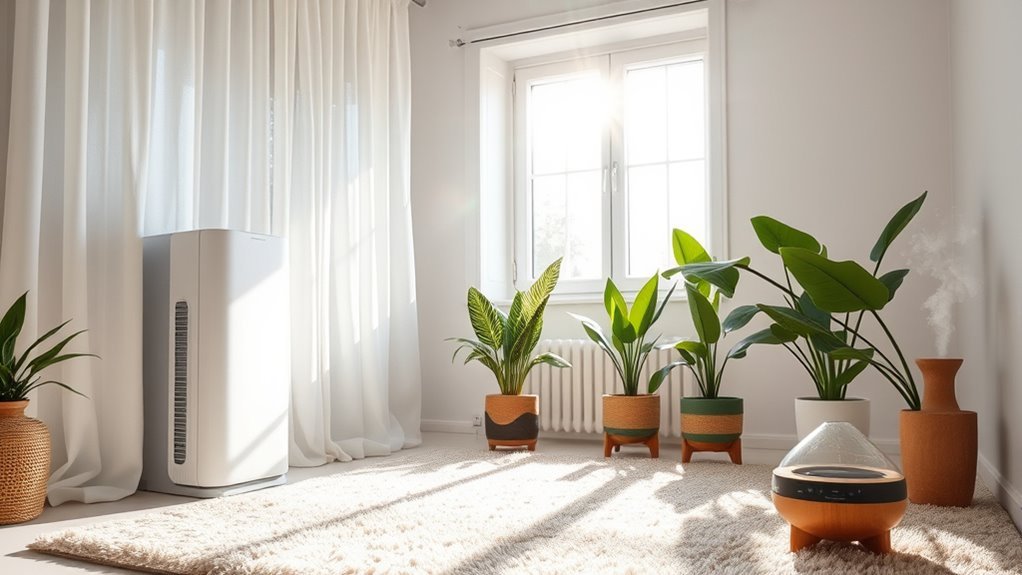
Maintaining allergen-free surfaces and fabrics considerably reduces indoor allergen levels, but controlling the air you breathe is equally important for overall air quality. Efficient ventilation systems and targeted air purifiers work together to minimize airborne allergens, granting you freedom from respiratory irritants. Proper ventilation exchanges stale indoor air with fresh outdoor air, diluting pollutants, while air purifiers capture microscopic particles, including pollen and pet dander.
| Method | Benefit |
|---|---|
| Mechanical Ventilation | Continuous fresh air supply |
| Natural Ventilation | Cost-effective air exchange |
| HEPA Air Purifiers | Removes 99.97% of airborne particles |
| Activated Carbon Filters | Eliminates odors and VOCs |
Integrating these strategies optimizes your indoor environment, ensuring cleaner, allergen-reduced air and enhanced comfort. Regular maintenance and cleaning of ventilation systems are essential to preserve air quality improvement and prevent the buildup of contaminants.
Frequently Asked Questions
Can Pets Contribute to Household Allergens?
Yes, pets can considerably contribute to household allergen triggers. Pet dander, which consists of tiny skin flakes, is a common allergen that easily becomes airborne and settles on furniture, carpets, and bedding. If you’re sensitive, exposure to pet dander can provoke allergic reactions like sneezing, itching, or respiratory issues. Understanding this helps you take targeted steps to minimize allergen presence while maintaining the freedom to enjoy your pets at home.
Are Certain Plants Helpful in Reducing Indoor Allergens?
Imagine you’re in a medieval castle, relying on herbs for air purification; similarly, your modern plant choices can impact indoor allergens. Certain plants like spider plants and peace lilies actively filter airborne toxins and reduce allergens by trapping dust and mold spores. While they won’t eliminate allergens entirely, incorporating these botanical allies supports cleaner air. You’ll enjoy a fresher environment, enhancing your freedom to breathe easier without heavy reliance on chemical purifiers.
How Often Should HVAC Filters Be Replaced for Allergy Sufferers?
For allergy sufferers, changing HVAC filters every 1 to 3 months is essential. Depending on filter types, like HEPA or electrostatic, replacement frequency may vary; HEPA filters often last longer but need regular checks. Incorporate HVAC maintenance tips such as inspecting filters monthly and sealing ducts to enhance air quality. Staying proactive with these steps helps you maintain a cleaner, allergen-reduced environment, giving you the freedom to breathe easier year-round.
Do Allergies Worsen With Seasonal Changes Indoors?
Much like a Victorian scholar pondering the mysteries of nature, you should know allergies often worsen with seasonal changes indoors. Variations in seasonal humidity impact indoor air quality, promoting mold and dust mite proliferation. When humidity rises, allergens thrive, and when it drops, dry air can irritate your respiratory tract. To maintain freedom from symptoms, monitoring indoor humidity and ensuring proper ventilation or air filtration is essential to minimize allergen buildup.
Are Hypoallergenic Products Always Effective for Allergen Control?
Hypoallergenic materials can greatly reduce allergen exposure, but their product effectiveness varies. You shouldn’t assume all hypoallergenic products fully eliminate allergens; some may only minimize them. Effectiveness depends on factors like material quality and your specific sensitivities. To truly control allergens, you’ll need an all-encompassing approach, combining hypoallergenic items with regular cleaning and environmental adjustments tailored to your needs. Don’t rely solely on labels to guarantee allergen control.