How to Clean and Deodorize Your Rug
To clean and deodorize your rug, start by identifying its material to choose the right care. Vacuum regularly to remove dirt, then treat stains with a mix of baking soda and vinegar for natural freshness without harsh chemicals. For deep cleaning, use gentle detergents or steam based on fiber type, and always dry thoroughly to avoid mold. Rotating your rug can prevent uneven wear. Keep these basics in mind, and you’ll find even more helpful tips to keep your rug looking and smelling great.
Assessing the Type and Material of Your Rug
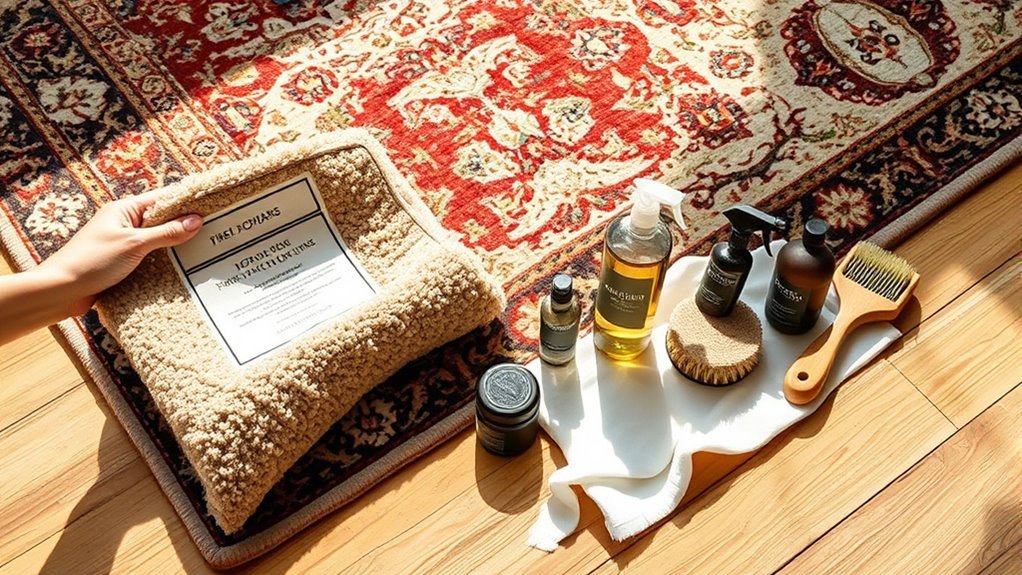
Before you begin cleaning, you need to identify your rug’s type and material since different fibers require different care methods. Knowing your rug materials is vital because synthetic fibers like nylon or polyester handle water and detergents differently than natural fibers such as wool, cotton, or silk. Each fiber type demands unique attention—wool, for example, is delicate and prone to shrinking, while synthetic rugs are often more durable and stain-resistant. By understanding your rug’s fiber types, you can choose cleaning products and techniques that protect its integrity and extend its life. Take a moment to check labels or research if you’re unsure. This step sets you free from damaging your rug and guarantees your cleaning efforts restore its beauty without complications.
Removing Loose Dirt and Debris
Before you start deep cleaning, make sure to remove loose dirt and debris by vacuuming your rug thoroughly and regularly. For smaller rugs, take them outside to shake and beat out dust that vacuuming can miss. These simple steps help keep your rug fresh and ready for a deeper clean.
Vacuum Thoroughly and Regularly
Make vacuuming your rug a regular habit to keep dirt and debris from settling deep into the fibers. Sticking to a consistent vacuuming frequency is key to freeing your space from hidden grime and maintaining your rug’s fresh appearance. Don’t wait for dirt to build up—treat vacuuming as an essential part of your rug maintenance routine. By doing so, you’ll extend your rug’s life and maintain a clean, inviting environment. Remember to vacuum both sides if possible and use appropriate settings to avoid damaging delicate fibers. Staying on top of this simple task means you’ll enjoy a vibrant, dirt-free rug without hassle, giving you the freedom to relax and live without worrying about hidden messes lying beneath your feet.
Shake and Beat Outdoors
Give your rug a good shake and beat it outdoors to loosen and remove dirt that vacuuming might miss. Outdoor shaking is a freeing way to rejuvenate your rug without being tied down indoors. Here’s how you can master the beating technique:
- Take your rug to an open space where dust can fly freely.
- Hold the rug firmly and shake it vigorously to dislodge loose debris.
- Use a sturdy stick or rug beater to rhythmically beat the rug, driving out stubborn dirt trapped deep inside.
This simple outdoor shaking and beating technique releases dirt, dust, and allergens, giving your rug a refreshing change. It’s a liberating step in rug care, letting you connect with your cleaning routine while reclaiming your space.
Spot Cleaning Stains With Household Ingredients
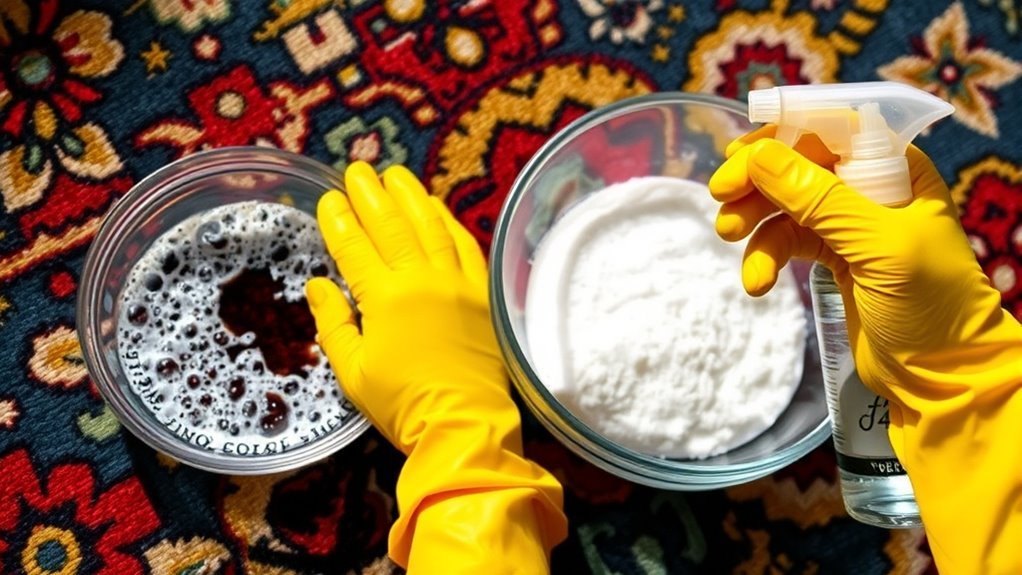
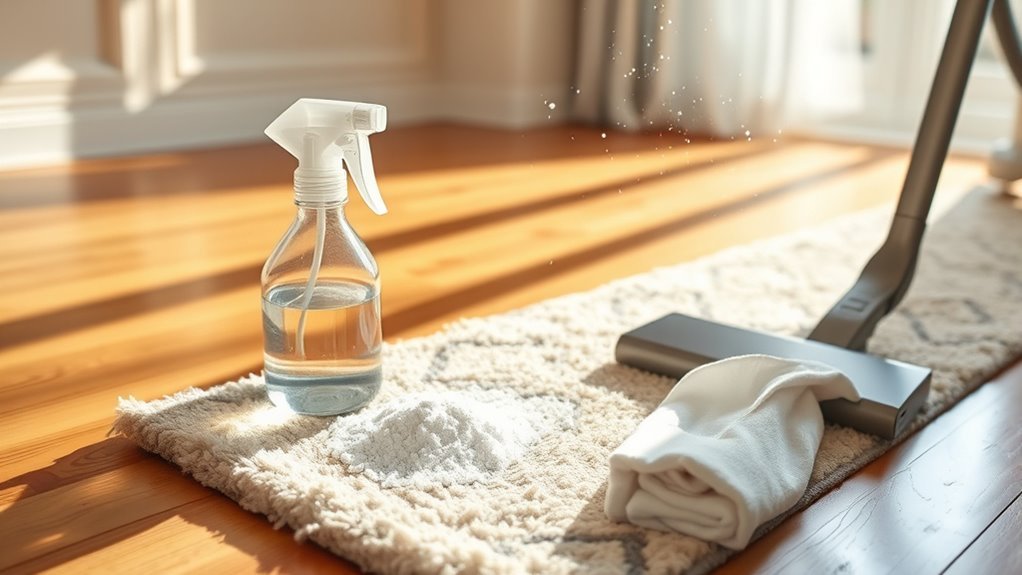
If you spot a stain on your rug, you don’t need fancy cleaners to tackle it. Start by sprinkling baking soda directly on the stain to absorb moisture and loosen dirt. Let it sit for 10-15 minutes, then vacuum it up. Next, mix a vinegar solution—equal parts white vinegar and water—in a spray bottle. Lightly spray the stain and blot with a clean cloth, working from the outside in to prevent spreading. This natural combo breaks down stubborn spots without harsh chemicals. Repeat if necessary, but avoid soaking the rug. Using household ingredients like baking soda and vinegar solution gives you a simple, effective way to freshen your rug and keep it looking great, all while enjoying the freedom of DIY cleaning.
Deep Cleaning Methods for Different Rug Types
When it comes to deep cleaning, wool and synthetic rugs each need a different approach to keep them looking their best. You’ll want to use gentle techniques for wool to avoid damage, while synthetic rugs can usually handle stronger cleaning methods. Let’s explore the best practices for both types so you can refresh your rug effectively.
Wool Rug Cleaning
Since wool rugs are delicate and prone to shrinking or damage, you’ll need to approach deep cleaning with care and the right techniques. Wool rug benefits include natural stain resistance and durability, contributing to wool rug longevity when properly maintained. To keep your rug fresh and vibrant:
- Vacuum regularly to remove dirt without damaging fibers.
- Use a mild detergent mixed with cold water and gently blot stains—never rub.
- Air dry your rug flat, avoiding direct sunlight to prevent fading and shrinking.
Synthetic Rug Care
Three common types of synthetic rugs—nylon, polyester, and olefin—each require specific deep cleaning methods to keep them looking their best. Since synthetic materials vary in durability and stain resistance, you’ll want to adjust your cleaning frequency accordingly. For nylon rugs, a thorough vacuuming followed by a gentle shampoo with warm water and mild detergent works well. Polyester rugs respond best to spot cleaning and occasional steam cleaning to maintain their vibrant colors. Olefin rugs, being moisture-resistant, can handle more frequent deep cleanings but dry quickly, so you won’t have to wait long before using them again. By understanding the unique needs of each synthetic rug type, you gain the freedom to keep your space fresh without damaging your investment.
Homemade Solutions for Deodorizing Your Rug
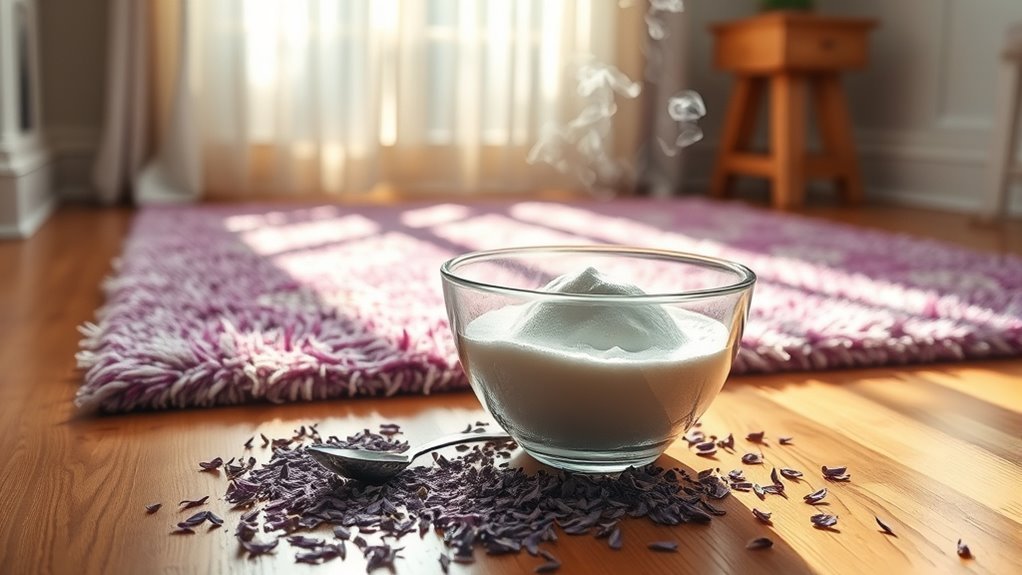
Although commercial products are effective, you can easily freshen your rug using simple homemade solutions. These natural remedies give you freedom from harsh chemicals while keeping your space smelling clean. Try these:
- Sprinkle baking soda generously over your rug. Let it sit for at least 30 minutes to absorb odors, then vacuum thoroughly.
- Mix a vinegar solution with equal parts water and white vinegar in a spray bottle. Lightly mist your rug to neutralize smells without soaking it.
- Combine a few drops of your favorite essential oil with baking soda before sprinkling. This adds a personalized, fresh scent.
These easy, homemade fixes let you maintain a fresh rug effortlessly and on your terms, using ingredients you probably already have at home.
Drying Techniques to Prevent Mold and Odors
When you clean your rug, making sure it dries properly is essential to stop mold and odors from developing. To master effective drying techniques, start by hanging your rug outdoors in a sunny, breezy spot. Sunlight naturally kills mold spores, while air circulation speeds up drying, preventing moisture from lingering. If outdoor drying isn’t an option, use fans and dehumidifiers indoors to keep air moving around the rug. Avoid folding or rolling the rug while wet, as trapped moisture encourages mold growth. You can also gently blot excess water with towels to speed things up. By following these drying techniques, you’re actively preventing mold and keeping your rug fresh and odor-free—giving you the freedom to enjoy a clean, healthy space without worry.
Maintaining Your Rug’s Freshness Between Cleanings
Proper drying sets the stage for keeping your rug fresh long after cleaning. To maintain that freshness, you’ll want to adopt some simple freshness tips and routine maintenance habits that let you enjoy freedom from odors and dirt buildup. Here’s how:
Proper drying is key to lasting rug freshness and odor-free, clean fibers.
- Vacuum regularly to lift dust and debris before they settle deep into fibers.
- Rotate your rug weekly to guarantee even wear and prevent dirt concentration in one spot.
- Use baking soda occasionally—sprinkle it, let it sit for 15 minutes, then vacuum to neutralize odors naturally.
When to Seek Professional Rug Cleaning Services
How do you know if your rug needs professional cleaning? Watch for signs urgency like persistent stains, lingering odors, or excessive wear that home methods can’t fix. If your rug’s fibers look dull or matted, or if allergies flare up despite regular upkeep, it’s time to contemplate expert help. Seeking professional rug cleaning services offers benefits you can’t get on your own: deep cleaning that reaches embedded dirt, specialized treatments tailored to your rug’s material, and restoration that prolongs its life. Don’t wait until damage is irreversible; acting on these signs urgency means you maintain your rug’s beauty and hygiene effortlessly. Choosing professional care lets you enjoy the freedom of a fresh, vibrant rug without the hassle.
Frequently Asked Questions
Can Cleaning Rugs Improve Indoor Air Quality?
Absolutely, cleaning rugs can improve your indoor air quality. When you regularly clean your rugs, you reduce airborne particles like dust mites and allergens trapped in the fibers. This means you’re breathing fresher, cleaner air, giving you the freedom to enjoy your space without sneezing or irritation. Keeping rugs clean is a simple way to create a healthier, more comfortable environment for you and your loved ones.
Are There Specific Rug Cleaning Tips for Pet Owners?
Did you know 65% of pet owners struggle with pet stains and lingering odors? If you’re one of them, you’ll want to act fast—blot stains immediately and avoid rubbing. Use enzymatic cleaners designed for odor removal; they break down proteins causing smells. Regular vacuuming and occasional deep cleaning keep your rugs fresh, letting you enjoy your space freely without worrying about pet messes holding you back.
How Often Should Rugs Be Professionally Cleaned?
You should follow frequency recommendations based on your lifestyle and rug type. Generally, a professional cleaning every 12 to 18 months keeps your rug fresh and vibrant. If you have pets or heavy foot traffic, you might want to stick to a more frequent cleaning schedule, like every 6 to 12 months. This way, you’re free to enjoy your space without worrying about dirt and allergens building up over time.
Can Rug Cleaning Remove Allergens Effectively?
Yes, rug cleaning can effectively remove allergens if you use the right cleaning techniques. Regular vacuuming helps, but deep cleaning methods like steam cleaning or professional services offer better allergen removal by reaching deep into the fibers. By choosing these techniques, you free yourself from airborne irritants, creating a healthier environment. So, keeping your rug clean isn’t just about looks—it’s about reclaiming your space from allergens too.
What Are the Environmental Impacts of Rug Cleaning Products?
When you choose traditional rug cleaning products, they often leave behind chemical residues that can harm the environment and your health. But you don’t have to be tied down to these harsh options. Eco friendly alternatives are available that reduce pollution and keep your home safer. By opting for natural, biodegradable cleaners, you’re embracing freedom from toxins and supporting a cleaner planet without compromising on cleanliness.