How to Clean and Store Reusable Coffee Filters
To clean your reusable coffee filters, discard grounds immediately and rinse with warm water daily, avoiding soap to keep flavors pure. For metal mesh, soak in soapy water and scrub gently; use vinegar or baking soda for tough stains. Cloth filters need cold rinses and air drying. Store filters in a dry, breathable container to prevent moisture buildup. Proper care extends their life and your coffee’s taste. You can also discover tips to keep your filters performing at their best.
Choosing the Right Type of Reusable Coffee Filter
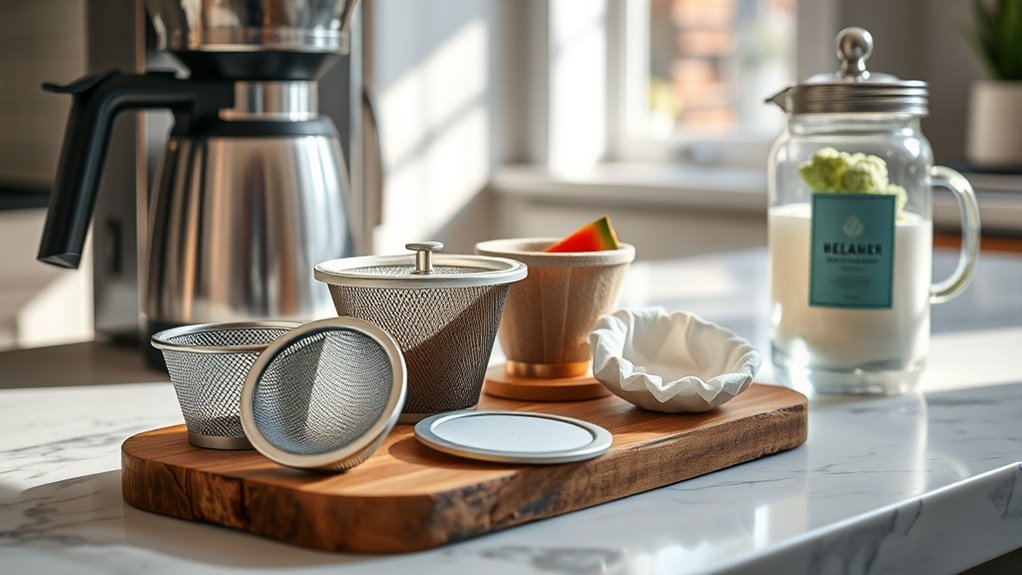
When choosing the right reusable coffee filter, you’ll want to contemplate the material, size, and compatibility with your coffee maker. Filter materials like stainless steel, nylon, and gold mesh each offer unique benefits. Stainless steel is durable and easy to clean, while nylon is lightweight and flexible. Gold mesh tends to provide a smoother taste by filtering fine coffee grounds effectively. Filter sizes matter too, as they need to match your coffee maker’s basket to guarantee a snug fit and proper extraction. Picking the right size prevents grounds from slipping through or water from flowing too quickly. By selecting the ideal filter materials and sizes, you gain freedom from disposable filters while enjoying consistent, flavorful coffee brewed your way.
Daily Cleaning Routine for Reusable Coffee Filters
Selecting the right reusable coffee filter sets you up for a better brew, but keeping it clean is just as important to maintain flavor and performance. Your daily rinsing routine should be simple: right after brewing, discard the grounds and rinse the filter thoroughly under warm water. This prevents residue build-up and keeps your coffee tasting fresh. Avoid using soap daily, as it can leave behind odors that affect flavor. Instead, focus on quick, thorough rinses to remove oils and particles. Consistent filter maintenance like this not only prolongs the life of your filter but also gives you freedom from stale tastes. Make daily rinsing a habit, and you’ll always enjoy a smooth, clean cup with minimal effort.
Deep Cleaning Methods for Metal Mesh Filters

To keep your metal mesh filter performing at its best, a deep clean once a week is essential. For effective metal filter maintenance, start by soaking the filter in a solution of warm water and a few drops of mild dish soap. Let it sit for 20-30 minutes to loosen trapped oils and coffee residues. Next, use a soft brush or toothbrush to gently scrub both sides of the mesh, focusing on clogged areas. Rinse thoroughly under running water to remove all soap and debris. For stubborn stains, try soaking the filter in a mixture of vinegar and water or use a baking soda paste as part of your deep cleaning techniques. Regular deep cleaning frees your filter from buildup, ensuring a pure, unrestricted coffee flow every time.
How to Clean Cloth Coffee Filters Effectively
Metal and cloth coffee filters both need regular care to keep your brew tasting great, but cloth filters require a gentler approach. To maintain their integrity and flavor clarity, stick to careful cleaning techniques that preserve the fabric’s natural qualities. After each use, rinse your cloth filter under cool water to remove coffee grounds without scrubbing. For deeper filter maintenance, soak it occasionally in cold water to loosen oils.
Here’s a quick guide:
- Rinse immediately after brewing to prevent stains.
- Avoid harsh detergents; mild soap works best if needed.
- Let it air dry completely to prevent mildew and odors.
Using Vinegar and Baking Soda for Stubborn Residue
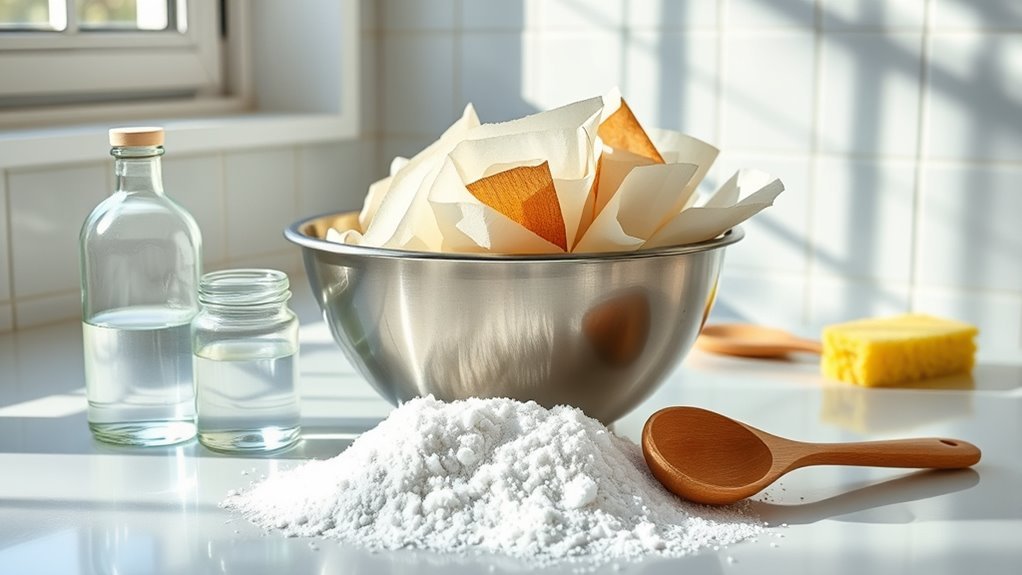
If your reusable coffee filter has stubborn residue, soaking it in vinegar can help break down mineral buildup and oils. After soaking, you can use baking soda as a gentle scrub to lift away any remaining stains without damaging the filter. This combo is a simple, effective way to keep your filter clean and working well.
Vinegar Soak Benefits
When stubborn coffee residue won’t budge with regular cleaning, soaking your reusable filter in vinegar can make a big difference. Vinegar benefits include breaking down oils and mineral buildup, freeing your filter from leftover grime without harsh chemicals. Using vinegar solutions is simple and effective, letting you reclaim a clean, fresh filter with minimal effort.
Here’s why vinegar soaks work so well:
- Naturally dissolves tough coffee stains and oils
- Acts as a mild disinfectant, keeping your filter fresh
- Safe for most filter materials, preserving their lifespan
Baking Soda Scrub Techniques
Two simple ingredients—baking soda and vinegar—can tackle the toughest coffee stains on your reusable filter. When stubborn residue won’t budge, sprinkle baking soda on the filter, then add a splash of vinegar. The fizzing action loosens grime, making scrubbing easier. Use gentle scrubbing methods with a soft brush or sponge to avoid damage while freeing your filter from buildup. Here’s a quick guide:
| Step | Action |
|---|---|
| 1 | Sprinkle baking soda evenly |
| 2 | Add vinegar to activate fizz |
| 3 | Let sit 5 minutes |
| 4 | Gently scrub with a brush |
| 5 | Rinse thoroughly and dry |
This combo is your ticket to freedom from stubborn stains, keeping your filter fresh and ready.
Drying Techniques to Prevent Mold and Odors
Because moisture lingers on reusable coffee filters after washing, drying them properly is essential to prevent mold and unpleasant odors. You want to guarantee your filters stay fresh and ready for your next brew, so adopting effective drying techniques is key for mold prevention.
Here’s how you can do it right:
- Air dry your filters by placing them on a clean, dry rack where air circulates freely.
- Pat them gently with a clean, dry towel to remove excess water before air drying.
- Avoid stacking or sealing damp filters together, as trapped moisture encourages mold growth.
Proper Storage Solutions for Reusable Filters
Once your reusable coffee filters are completely dry, how you store them makes a big difference in keeping them clean and ready to use. To maintain freedom from hassle, choose a dedicated spot for filter storage—a clean, dry container or drawer works perfectly. Avoid airtight containers that trap moisture, which can cause odors or mold. Instead, opt for breathable options like mesh bags or open baskets. For filter organization, stack them neatly or use divider trays to prevent damage and save space. Labeling your storage area helps keep things orderly, so you always know where they are. By setting up a simple, accessible system, you’ll enjoy quick access to fresh filters every morning without clutter or confusion.
Tips for Maintaining Filter Longevity
To keep your reusable coffee filter lasting longer, you’ll want to clean it thoroughly after each use. Make sure to use gentle techniques that don’t damage the mesh or material. Also, drying it completely before storing prevents mold and preserves its quality.
Proper Cleaning Techniques
Although reusable coffee filters are designed to withstand regular use, proper cleaning is essential to keep them functioning well and extend their lifespan. Your cleaning frequency depends on the filter materials—metal mesh filters need more frequent attention than cloth ones due to trapped oils and grounds. To maintain freedom from clogs and off-flavors, here’s what you can do:
- Rinse immediately after each use to prevent residue buildup.
- Use a soft brush or sponge with mild dish soap to gently clean without damaging delicate mesh or fabric.
- Occasionally soak metal filters in a vinegar-water solution to dissolve stubborn oils.
Effective Drying Methods
Three key drying methods can help you maintain your reusable coffee filter’s longevity while preventing mold and odors. First, air drying is the simplest—just place your filter on a clean rack or dish towel in a well-ventilated area. This method guarantees effective drying without extra effort. Second, using a dedicated drying rack designed for coffee filters enhances moisture control by allowing airflow from all angles. Finally, if you’re in a hurry, gently pat your filter dry with a lint-free cloth before air drying; this speeds up moisture removal without causing damage. Avoid sealing your filter in a container while damp, as trapped moisture invites mold. By mastering these methods, you’re taking control of your coffee routine and extending your filter’s freedom to deliver great brews.
Signs It’s Time to Replace Your Reusable Coffee Filter
Even if you take great care of your reusable coffee filter, it won’t last forever. Recognizing the signs of wear is key to keeping your coffee tasting fresh and avoiding any unwanted flavors. Watch for filter discoloration, which often signals buildup that can’t be cleaned away. Over time, the mesh might weaken or develop holes, letting grounds sneak through.
Here are clear signs it’s time to replace your filter:
- Persistent staining or filter discoloration that doesn’t fade after cleaning
- Noticeable tears or holes in the mesh
- A change in brewing performance, like slower drainage or more sediment
Replacing your filter when you see these signs keeps your coffee experience liberating and hassle-free.
Frequently Asked Questions
Can Reusable Coffee Filters Affect the Taste of My Coffee?
You might wonder if reusable coffee filters affect your coffee’s taste. They actually can enhance taste improvement by allowing more natural oils to pass through, boosting flavor retention. Unlike paper filters, they don’t absorb those rich oils, giving you a fuller, bolder brew. If you want freedom from bland coffee and a richer cup, reusable filters let you enjoy your coffee’s true essence every morning. Just keep them clean!
Are Reusable Coffee Filters Compatible With All Coffee Makers?
You might think reusable coffee filters fit every coffee maker, but that’s not always true. Filter compatibility varies with coffee maker types—some use cone filters, others basket-shaped. To enjoy your freedom in brewing, you’ll want to check if your filter matches your machine’s design. Choosing the right filter means no compromises on taste or convenience, letting you savor every cup exactly how you like it, hassle-free.
How Often Should I Replace My Reusable Coffee Filter?
You can expect your reusable coffee filter’s lifetime expectancy to be quite long if you take good care of it. With regular maintenance tips like rinsing immediately after use, avoiding harsh soaps, and occasionally deep cleaning with vinegar, you’ll keep it in top shape. Replace it only when you notice damage or reduced performance. This way, you enjoy freedom from constant replacements and a consistently great brew.
Can I Use Reusable Filters for Tea or Other Beverages?
Yes, you can definitely use reusable filters for tea brewing and herbal infusions. They give you the freedom to explore different flavors without relying on disposable products. Just make sure to clean the filter thoroughly after each use to avoid mixing tastes. Using them for tea or herbal blends lets you customize your experience while being eco-friendly and saving money in the long run—perfect for anyone who values versatility and sustainability.
Are Reusable Coffee Filters Environmentally Friendly Compared to Paper Filters?
You’ll find reusable coffee filters offer significant sustainability benefits compared to paper ones. By choosing reusable filters, you’re cutting down on single-use waste, which means less landfill overflow and fewer trees felled. This waste reduction plays a key role in protecting the environment. Plus, using them gives you freedom from constantly buying replacements, making your coffee routine eco-friendly and hassle-free. It’s a simple way to enjoy your brew while supporting the planet.