How to Clean Car Upholstery
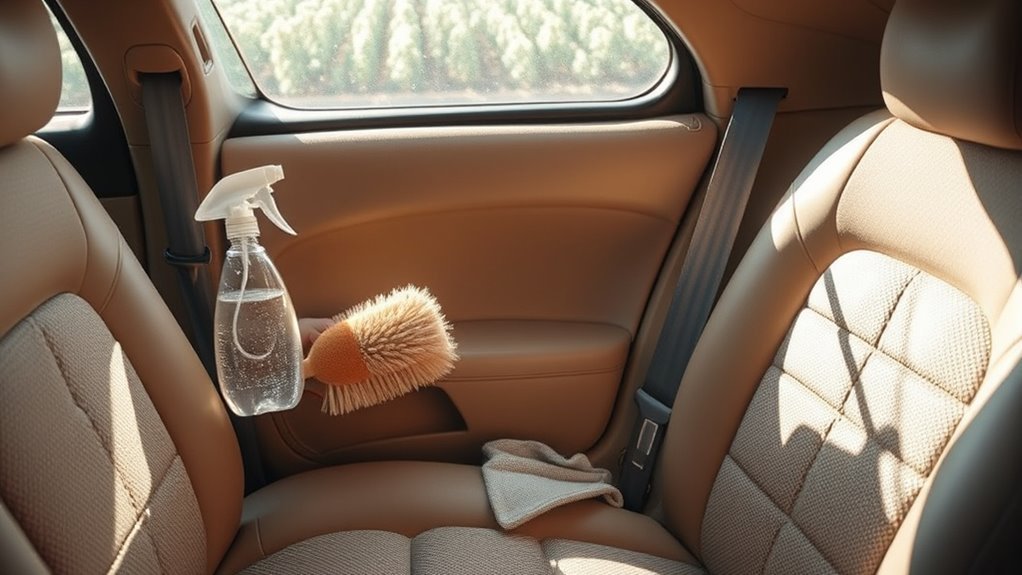
To clean your car upholstery, first identify if it’s fabric or leather so you can use the right products. Gather supplies like upholstery cleaner, soft brushes, and microfiber cloths. Remove loose debris and vacuum thoroughly. For fabric, blot spills quickly and use mild detergent mixtures for stains. For leather, use leather-specific cleaner and follow with conditioner. Keeping up with these steps helps your upholstery stay fresh and protected. Keep exploring to learn the best tips for maintaining your car’s interior.
Identifying Your Upholstery Material
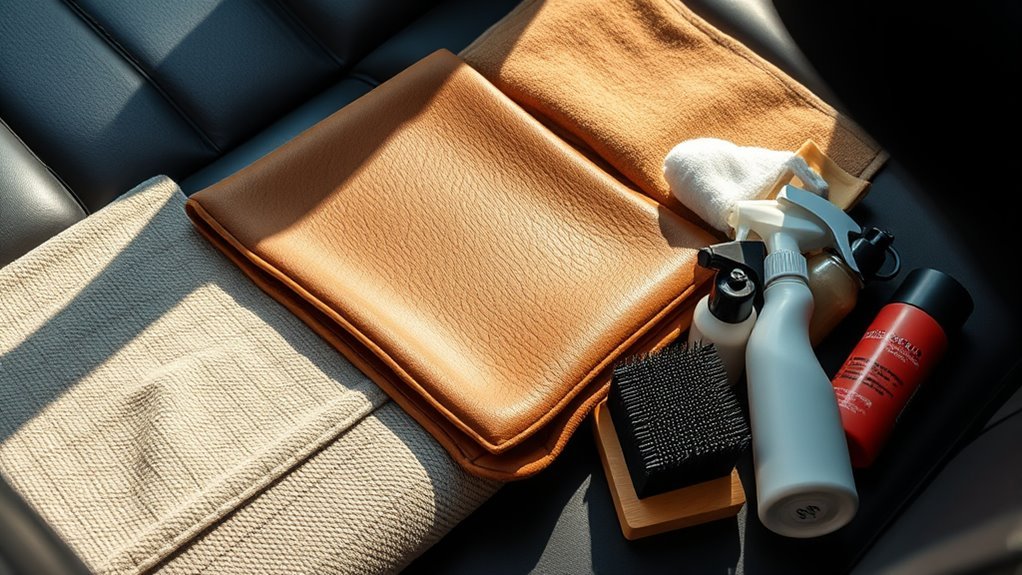
How can you tell what kind of upholstery your car has? Start by checking your vehicle’s manual or looking for tags on the seats—these often specify fabric types. You might find leather, vinyl, cloth, or synthetic blends, each requiring different upholstery care for lasting freedom on the road. Leather offers a smooth feel but needs gentle cleaning and conditioning to prevent cracks. Cloth seats, made from woven fabric types, can be more breathable but attract stains, so prompt cleaning is key. Vinyl is durable and easier to wipe down but can crack if neglected. Identifying your upholstery helps you choose the right cleaning methods, protecting your car’s interior and preserving your independence to explore without worry. Knowing your fabric types empowers you to maintain your ride’s comfort and style.
Gathering Cleaning Supplies
Once you know what type of upholstery your car has, you can gather the right cleaning supplies to match. Having the right tools gives you the freedom to tackle the job efficiently. Here’s what you’ll need:
- Cleaning solutions – Choose one specifically designed for your upholstery type, whether fabric, leather, or vinyl. This guarantees effective cleaning without damage.
- Upholstery brushes – These help loosen dirt and stains without harming the material. Opt for soft-bristle brushes for delicate fabrics and stiffer ones for tougher surfaces.
- Microfiber cloths – Perfect for wiping away excess moisture and cleaning residues, leaving your upholstery fresh and streak-free.
With these essentials in hand, you’re set to take control of your car’s interior care and enjoy a cleaner, more comfortable ride.
Preparing the Car Interior
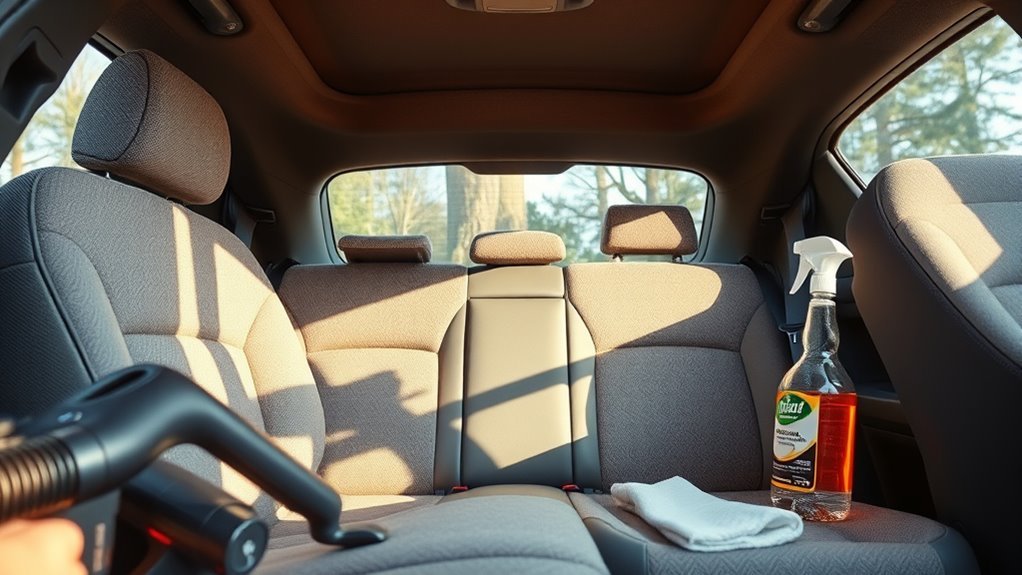
Before you start cleaning, make sure to remove any loose debris like crumbs or dirt from the seats and floor. Next, thoroughly vacuum all surfaces, including under the seats and in crevices. This will give you a clean slate to work with and help your cleaning efforts be more effective.
Remove Loose Debris
Start by removing all loose debris from your car’s upholstery to create a clean workspace. You’ll want to identify common debris types like crumbs, leaves, and pet hair, each requiring different approaches. Here’s how to take charge:
- Use a soft brush or your hand to sweep away larger pieces like leaves and crumbs.
- Grab a lint roller or a damp cloth to lift pet hair effectively.
- Collect debris in a trash bag to keep your space clutter-free and ready for deeper cleaning.
Vacuum All Surfaces
Vacuuming all surfaces thoroughly is the next essential step to prepare your car interior for deep cleaning. Grab your vacuum and switch to the right upholstery attachments to reach every corner. Use precise vacuuming techniques—slow, deliberate strokes—to lift dirt trapped deep in the fibers without damaging the fabric. Don’t rush; focus on seats, floor mats, and crevices where debris hides. Using specialized attachments lets you clean hard-to-reach areas effortlessly, giving your upholstery a fresh start. This step clears away grit that can wear down fabric and guarantees your cleaning products work effectively. By mastering vacuuming techniques, you control your space and keep your car’s interior looking and feeling free, clean, and inviting every time you hit the road.
Techniques for Cleaning Fabric Upholstery
When tackling fabric upholstery, you’ll want to focus on removing stains quickly and effectively to prevent permanent marks. Using the right cleaning methods and products can make a big difference in both stain removal and fabric care. After cleaning, proper drying and regular maintenance will help keep your seats looking fresh and extend their lifespan.
Stain Removal Tips
Although fabric upholstery can be delicate, you can tackle most stains effectively with the right approach. To keep your car’s interior looking fresh and free, consider these stain removal tips:
- Act fast—blot, don’t rub—any spills immediately to prevent stains from setting. Using stain prevention methods like quick response can save you time and effort.
- Use upholstery protection products before stains occur. These create a barrier that repels liquids and dirt, giving you more freedom to enjoy your ride without worry.
- For existing stains, try a gentle mix of water and mild detergent. Apply with a soft cloth, then blot dry. Avoid harsh chemicals that can damage fabric fibers.
With these steps, you’ll maintain your upholstery’s freedom and freshness, no matter what life throws inside your car.
Drying and Maintenance
Since moisture can lead to mold and odors, it’s important to dry your fabric upholstery thoroughly after cleaning. To speed up drying, roll down your car windows or park in a sunny, well-ventilated area. You can also use a portable fan or a wet/dry vacuum to extract excess moisture. Avoid jumping back in the car until the fabric feels completely dry to prevent mildew.
For ongoing fabric protection, consider applying a fabric protector spray once your upholstery is dry. This creates a barrier against future stains and spills, giving you more freedom to enjoy your ride without worry. Regular vacuuming and prompt spot cleaning keep your upholstery fresh, making maintenance simple and effective. Mastering these drying techniques guarantees your car stays comfortable and odor-free.
Methods for Cleaning Leather Upholstery
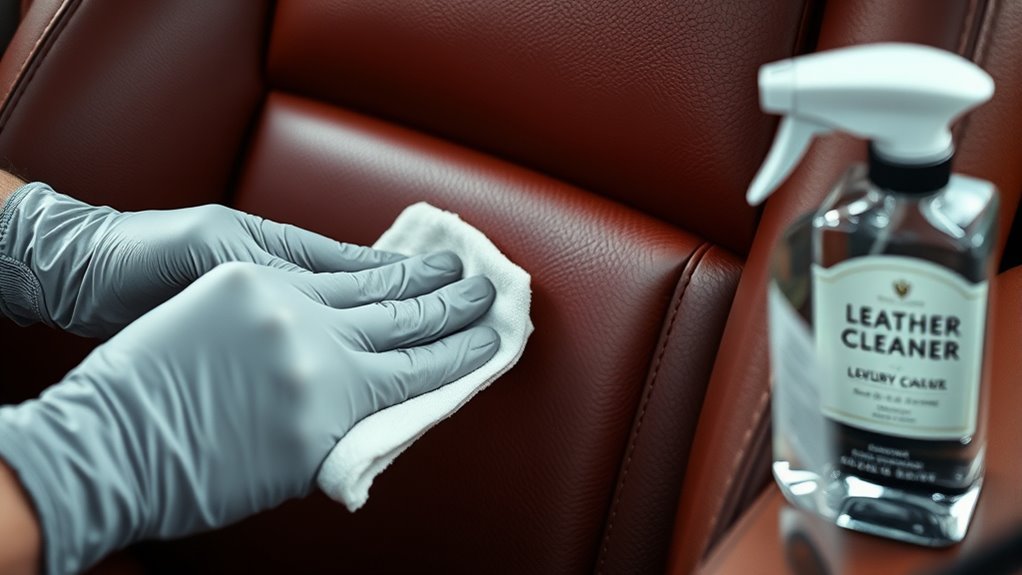
If you want to keep your leather upholstery looking its best, knowing the right cleaning methods is essential. Leather needs gentle care to maintain its natural beauty and durability. Here’s how you can do it:
Proper cleaning is key to preserving leather upholstery’s beauty and durability with gentle care.
- Vacuum first: Remove dust and debris with a soft brush attachment to avoid scratching.
- Use a mild cleaner: Apply a leather-specific cleaner with a soft cloth, gently wiping away grime without soaking the leather.
- Condition and protect: After cleaning, apply a leather conditioner to keep the material supple and finish with an upholstery protectant to guard against spills and UV damage.
Tips for Maintaining Upholstery Cleanliness
To keep your car upholstery looking fresh, you’ll want to develop simple habits that prevent dirt and stains from settling in. Start by using upholstery protection sprays that create a barrier against spills and grime. These products can save you time and effort by making cleaning easier down the road. Next, set a cleaning frequency that fits your lifestyle—ideally, a quick vacuum and wipe-down every couple of weeks keeps debris at bay. Don’t forget to address spills immediately to avoid permanent stains. Also, avoid eating or drinking in your car whenever possible to minimize messes. By staying consistent with these habits, you maintain your freedom to enjoy a clean, inviting ride without the hassle of deep cleaning sessions. Your upholstery will thank you for the care.
Frequently Asked Questions
Can I Use Household Cleaners on Car Upholstery?
Imagine your car’s upholstery as a delicate canvas, craving gentle care. You might wonder about household cleaner safety, but be cautious—these cleaners can be like wild storms, harsh on your fabric’s soul. Not all upholstery material compatibility is guaranteed with everyday products. To keep your freedom from costly damage, always check labels or opt for products made specifically for your car’s interior. That way, you protect your ride’s comfort and style without compromise.
How Often Should I Deep Clean My Car Seats?
You should follow frequency recommendations that fit your lifestyle, but generally, deep cleaning your car seats every 3 to 6 months works well. Sticking to cleaning schedules helps keep your ride fresh and inviting without the hassle of constant upkeep. If you’re someone who loves freedom and spontaneity, just adjust based on how much you use your car or if spills happen. That way, your seats stay clean without cramping your style.
Are Steam Cleaners Safe for All Upholstery Types?
You’ll want to know if steam cleaners are safe for all upholstery types before diving in. The truth is, it depends on the steam cleaner types and the upholstery fabric you’ve got. Some delicate fabrics, like silk or velvet, might not handle high heat well, while synthetic materials usually do fine. You’ve got the freedom to choose, but always test a small spot first to avoid any damage and keep your upholstery looking great.
What Should I Do About Pet Hair on Seats?
If you’re dealing with pet hair on seats, start by using a vacuum with a brush attachment for effective pet hair removal. You can also try a rubber glove or a lint roller to lift stubborn hairs. For upholstery maintenance, regularly clean and condition your seats to keep them fresh and durable. This way, you can enjoy your ride without worrying about lingering fur, giving you the freedom to travel comfortably with your furry friends.
Can Upholstery Cleaning Remove Cigarette Smoke Odors?
You might think cigarette smoke odors are impossible to escape, like they’re tattooed into your car’s very soul. But don’t worry! With the right smoke removal techniques and upholstery deodorizing methods, you can reclaim your freedom from that stubborn stench. Using specialized cleaners, steam treatments, and odor neutralizers, you’ll breathe fresh air again and enjoy your ride without the ghost of smoke clinging to every fiber. Keep your space yours!