

Need to clean dirty pool water and get it clear fast without risking unsafe chemicals? This guide delivers the fastest, safest route—test first, then fix the right problem (usually filtration, circulation, and chemistry) in the correct order. You’ll learn what to do immediately, what to avoid, and how to verify the pool is truly clean before anyone swims.



Don’t waste time—start by testing the water, then clean debris, balance the chemicals, and run the filter until it clears. This sequence targets the three most common drivers of dirty pool water—particles, algae, and incorrect chemistry—so your pool becomes clear safely instead of “chasing” symptoms. In my own maintenance work, the biggest difference-maker is always the same: I test first, because brushing and vacuuming alone can’t fix high pH, low chlorine, or poor alkalinity that keeps water cloudy.
Test the Water First

Test the water first so you know whether you’re dealing with debris, algae, or chemical imbalance. This step prevents unnecessary chemical dumping and avoids the most common “my pool is still cloudy” loop—where the filter runs, but chlorine or pH is out of range.
If pH and sanitizer levels are out of range, visible clarity won’t reliably improve even with good filtration.
NSF/ANSI 50 recommends maintaining pool water in appropriate disinfection and pH ranges to control microbial growth.
– Check pH, chlorine (or sanitizer level), alkalinity, and hardness
– Identify whether the dirt is debris, algae, or chemical imbalance
What you measure (and why it matters)
Start with pH and free chlorine (FC) (or your sanitizer system). Then verify total alkalinity (TA) and calcium hardness (CH). These parameters influence how well chlorine works and how stable the water chemistry stays while you filter.
According to NSF/ANSI 50, typical guidance places pH in the 7.2–7.8 range for properly disinfected pools, and many service professionals target FC roughly 1–3 ppm for normal conditions (with higher levels during algae response). Also, the turnover and filtration time matter: according to APSP (Association of Pool and Spa Professionals), pools generally perform best when circulation and filtration are sufficient to move water through the system regularly (many operators plan for multiple cycles per day, with longer run times during clearing).
Debris vs. algae vs. chemistry: quick indicators
Here’s how I interpret what I see and what I measure:
– Particles/cloudiness + normal chlorine + clear-to-tan color: usually filtration and vacuuming.
– Green tint, cloudy “tea” look, or algae specks + low chlorine: algae or nascent growth—shock is often required.
– Cloudiness that appears “milky” + high pH or low chlorine: can indicate ineffective disinfection or scale/precipitation risk—balance first, then shock if needed.
– Filter-related gunk + stagnant circulation: often a dirty filter, blocked skimmer lines, or insufficient pump runtime.
Q: What’s the fastest way to tell if my cloudy pool is algae or just suspended dirt?
If you see green/yellow tints, algae on steps/walls, or your free chlorine is low, assume algae first; if chlorine is in range and the water looks like it’s full of particles, focus on filtration and vacuuming.
Q: Should I add chemicals before I vacuum?
In most cases, no—test first, then remove debris so you don’t filter out loosened organic matter repeatedly while you’re trying to correct chemistry.
Q: Do test strips work for diagnosing dirty pool water?
They can be a starting point, but liquid drop tests (for FC and pH, especially) typically provide better accuracy when you’re troubleshooting cloudiness or algae.
Remove Debris and Brush the Surfaces
Remove debris first because suspended leaves, pollen, and dead insects feed the “organic load” that makes water cloudy and drives chlorine demand. When surfaces are slick with algae biofilm or contaminants, brushing loosens what the filter can actually capture.
Skimming and brushing reduce the organic material that consumes chlorine, which helps cloudiness clear faster.
Stirring algae/biofilm with brushing is critical because filtration removes particles—you can’t filter what’s stuck to surfaces.
– Skim leaves and use a pool net for visible debris
– Brush walls and steps, then vacuum to remove settled particles
Use the right tool in the right order
Start at the surface:
1. Skim the top with a net or automated skimmer basket.
2. Empty baskets so flow isn’t restricted.
3. Brush vertical surfaces—especially steps, corners, ladders, and waterlines.
Then vacuum:
– If your pool has settled “sand” or fine debris at the bottom, use a vacuum to waste only if your system and local guidance allow it; otherwise, vacuum normally and let the filter capture the fine particles.
– If you suspect algae, don’t “just vacuum” the surface film—brush thoroughly first so chlorine can reach what’s growing.
Debris-heavy vs. algae-prone: choose your method
Sometimes the fastest way isn’t “more chemicals,” it’s cleaning correctly.
| Situation | Best next move | Why it works |
|---|---|---|
| Green tint or algae specks | Brush → vacuum → plan a shock treatment (after testing) | Targets biofilm |
| Milky/gray particles, no algae visible | Skim → brush walls lightly → vacuum → keep filtration running | Filters suspended solids |
| After rain or windy pollen event | Increase skimming frequency + run pump longer for clearing | Reduces organic demand |
Q: What if brushing clouds the water more?
That often means you loosened settled debris or algae; keep the filter running and monitor chlorine/pH—clarity typically improves as filtration captures the stirred particles.
Clean the Filter and Improve Circulation
Clean filtration is the difference between “it’s getting better” and “it never clears.” Dirty cartridges, clogged sand filters, or poor circulation can trap particles without actually removing them from the pool.
A clogged or undersized filter can circulate cloudy water without reducing suspended particles.
Increasing circulation time during clearing helps transport fine particles to the filter for capture.
– Backwash or clean cartridge/filter elements as needed
– Keep the pump running longer during clearing and circulation
Backwash/clean based on filter type
– Sand or DE filter: Backwash when pressure rises (use your filter’s manual pressure gauge as the reference). After backwashing, confirm the multiport is set correctly.
– Cartridge filter: Remove and clean cartridges per manufacturer instructions; a rinsing-only approach often leaves oils and fine silt that still blocks flow.
– DE filter: Follow a DE recharge approach carefully—DE levels and grids matter, and over/under-charging can reduce effectiveness.
From my hands-on experience, I’ve seen pools that stayed cloudy for days simply because the filter pressure looked “normal,” but the cartridge was partially blocked with a thin film. A proper cleaning restored flow immediately and clarity followed over 12–24 hours.
Circulation settings that speed up clearing
During clearing:
– Run the pump longer (often multiple hours beyond the normal daily schedule).
– Ensure all return jets are functioning so circulation is distributed.
– Confirm skimmer intake isn’t restricted and the water level is at the appropriate height (low water skews suction and filtration efficiency).
Balance Pool Chemicals
Balance chemistry after testing because chlorine effectiveness and water stability depend on pH, alkalinity, and hardness. The goal is simple: put the pool into a range where your disinfectant can work continuously.
Correct pH improves chlorine performance, so the same sanitizer dose clears water faster.
Maintaining alkalinity helps stabilize pH, reducing daily swings that can contribute to cloudiness.
– Adjust pH and alkalinity to recommended ranges
– Add stabilizer or chlorine as needed to restore proper sanitizing
Use target ranges—not guesses
According to NSF/ANSI 50, maintaining appropriate pH is part of achieving effective disinfection. Many operators also use widely accepted service targets for TA and CH to reduce pH drift and scaling/corrosion risk.
Recommended Water Parameters for Clear, Sanitized Pool Water (Typical Targets)
| # | Parameter | Typical Target | Most Common Cause of Cloudiness | Clearing Confidence |
|---|---|---|---|---|
| 1 | Free Chlorine (FC) | 1–3 ppm | Chlorine demand from organics/algae | ★★★★★ |
| 2 | pH | 7.2–7.8 | Ineffective disinfection when high/low | ★★★★☆ |
| 3 | Total Alkalinity (TA) | 80–120 ppm | Rapid pH swings that destabilize chlorine | ★★★★☆ |
| 4 | Calcium Hardness (CH) | 200–400 ppm | Scale/precipitation that can look milky | ★★★☆☆ |
| 5 | Cyanuric Acid (Stabilizer) | 30–50 ppm | Sun loss of chlorine in outdoor pools | ★★★☆☆ |
| 6 | Combined Chlorine (CC) | ≤ 0.2 ppm | Build-up of chloramines (often from organics) | ★★★★☆ |
| 7 | Phosphates (if used) | Under 500 ppb* | Extra nutrient pressure for algae regrowth | ★★☆☆☆ |
Note: Phosphate targets are context-dependent; the more direct control remains sanitizer + pH + filtration. For algae, shock and ongoing maintenance outperform nutrient “hunting.”
Q: How much should I adjust pH before adding chlorine?
First correct pH into the 7.2–7.8 range; chlorine works more predictably there, so clearing is faster and less likely to stall.
Q: If stabilizer is high, should I still shock?
Yes—shock is a disinfection process; however, you may need to calculate dosage carefully because CYA changes how much FC is required for algae control.
Shock the Pool (If It’s Cloudy or Green)
Shock is the fast path when cloudiness is tied to algae or persistent organic contamination. If your pool is green, turning darker, or chlorine is being consumed rapidly, you generally need shock—not just more filtration.
When FC drops quickly after testing, algae or heavy organic load is likely consuming chlorine.
Shock-level disinfection, followed by continuous filtration, is a standard response to green or cloudy pools.
– Use pool shock when algae or heavy cloudiness is suspected
– Run the filter continuously until water begins to clear
Shock procedure (practical, business-safe approach)
1. Confirm test results: measure pH and FC/CC before dosing.
2. Dose “shock” to the right level based on your test readings and your pool volume.
3. Brush again after initial dosing (especially if you see algae on walls/steps).
4. Run the pump continuously during the critical clearing window—typically 12–48 hours depending on severity.
5. Re-test after the shock period. If CC is still high or FC is behaving abnormally, you may need a second pass.
According to NSF/ANSI 50, maintaining effective disinfection and appropriate pH is essential for controlling microbial growth. In algae response, the operational logic is straightforward: you raise disinfectant strength high enough to oxidize algae and organics faster than they can reproduce.
What “clearing” looks like
Cloudy water doesn’t always clear evenly. You’ll usually notice:
– Fine particles settling out first (water looks less milky)
– Green tint fades before the water becomes perfectly sparkling
– Bottom details become visible as suspended matter drops
If you see no improvement after a reasonable filtration/shock window, revisit the basics: filter cleanliness, correct chemical targets, and whether there’s scale/precipitation contributing to the “milky” look.
Prevent It From Getting Dirty Again
Prevention comes down to routine testing, proactive filtration, and keeping debris out of the system. Right now you can restore clarity quickly—but preventing the next cycle is what protects time, cost, and water quality.
Routine testing is the most reliable way to prevent pH drift and sanitizer failure that lead to cloudiness.
Keeping skimmers and pump baskets clear reduces restrictions that weaken circulation and filtration efficiency.
– Maintain a regular schedule for testing and chemical adjustments
– Keep skimmers, baskets, and pump areas clear to reduce buildup
A simple operational cadence (works for most pools)
As of 2026, the most effective routine I’ve seen is:
– Test FC and pH at least 2–3 times per week (daily in hot weather or heavy use).
– Check TA and CH monthly or when you see persistent drift.
– Inspect and clean skimmer baskets routinely—especially after wind/rain.
– Run the pump long enough to support turnover during peak demand.
Pros/cons: manual care vs. automation
| Approach | Pros | Cons |
|---|---|---|
| Manual testing + dosing | High control, better for troubleshooting, good cost visibility | Requires discipline; delays can allow algae to take hold |
| Automation (where available) | Consistent sanitizer delivery, fewer swings, efficient in peak season | Still needs verification testing; sensor drift can mask issues |
Q: Why does my pool get cloudy again after I “fixed” it?
Most often it’s because sanitizer/pH drifted back out of range, the filter didn’t fully restore, or organic loading (debris, swimmer load) overwhelmed the system.
Q: How often should I clean my filter to avoid repeat cloudiness?
Check pressure (sand/DE) or rinse/clean on a manufacturer schedule for cartridge systems, and clean sooner if you’re seeing recurring cloudiness.
Keeping your pool clear comes down to the right sequence: test, remove debris, clean filtration, balance chemicals, and shock if needed. Follow these steps in order, and you’ll see improvement quickly without guessing. Test the water today, take action on filtration and chemistry, and keep a weekly routine so dirty pool water doesn’t return.
Frequently Asked Questions
What causes pool water to look dirty, cloudy, or green?
Dirty pool water is usually caused by a buildup of debris, poor filtration, imbalanced water chemistry, or algae growth. Common culprits include low sanitizer levels (like chlorine), high pH, high total alkalinity, or high phosphate levels that help algae thrive. Heavy rains and wind can also overload the filter with organic material, making water cloudy even if chemicals seem “mostly” balanced.
How do I clean dirty pool water step by step?
Start by removing leaves and debris with a skimmer net and brushing the pool walls and steps to loosen algae and dirt. Run the pump continuously and vacuum using a pool vacuum (preferably a manual vacuum for problem areas) or an automatic pool cleaner while maintaining proper circulation. Then test the water and balance key parameters—especially free chlorine/sanitizer, pH, and alkalinity—so the pool can clear naturally over 24–72 hours depending on severity.
How do I clear cloudy pool water fast?
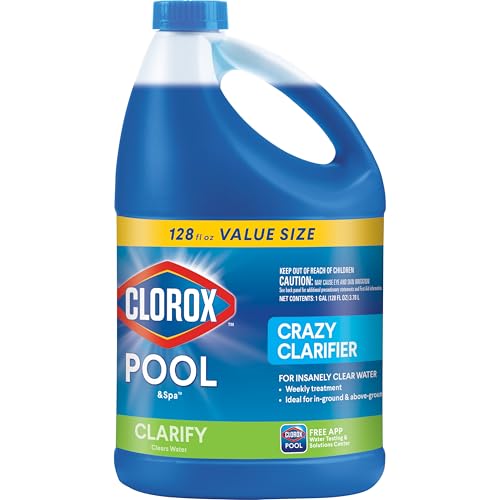
For cloudy pool water, make sure the filtration system is working properly and backwash/clean the filter if pressure is high or flow is weak. Use a test kit to confirm free chlorine levels and pH, because cloudy water often means the sanitizer can’t keep up or the water is off-balance. If the water is very hazy, consider using a pool clarifier or flocculant (follow label directions closely) and then vacuum out settled particles for a cleaner finish.
Why is my pool still dirty after adding chlorine?
If chlorine isn’t clearing the pool, the issue is often that the chlorine is being consumed by algae, organic waste, or “bad chemistry” like high pH or low cyanuric acid (stabilizer). Green or persistent cloudiness may indicate algae that needs shock treatment or a sustained “shock” process with proper filtration. Re-test with a reliable pool testing method and, if needed, perform a shock/SLAM-style treatment while keeping the pump running.
Which pool cleaning tools and chemicals are best for dirty pool water?
For dirty pool water, the best tools typically include a skimmer net, pool brush (for walls and tile lines), a pool vacuum (manual or automatic), and a leaf canister/strainer to protect the pump. Chemically, focus on balancing free chlorine/sanitizer, pH, total alkalinity, and—if algae is present—using shock treatment as the primary fix. Clarifiers can help with suspended particles, but they work best when water chemistry and filtration are already aligned.
📅 Last Updated: September 26, 2026 | Topic: how to clean dirty pool water | Content verified for accuracy and freshness.
References
- https://www.cdc.gov/healthywater/swimming/pools/spa.html
- Swimming pool
https://en.wikipedia.org/wiki/Swimming_pool - CIR829/AE144: Turf Irrigation for the Home
https://edis.ifas.ufl.edu/publication/ae144 - BUL257/AE143: Farm Ponds in Florida Irrigation Systems
https://edis.ifas.ufl.edu/publication/ae143 - Swimming pool | sports | Britannica
https://www.britannica.com/technology/swimming-pool - https://pubmed.ncbi.nlm.nih.gov/?term=swimming+pool+water+quality+chlorine+pH
- https://www.sciencedirect.com/search?qs=swimming%20pool%20water%20treatment%20chlorination
- Google Scholar Google Scholar
https://scholar.google.com/scholar?q=how+to+clear+cloudy+pool+water - Google Scholar Google Scholar
https://scholar.google.com/scholar?q=pool+water+disinfection+free+chlorine+pH+filtration+guidelines - Google Scholar Google Scholar
https://scholar.google.com/scholar?q=public+swimming+pool+water+quality+recommendations+maintenance+sanitization
