How to Clean Fuel Tanks: A Step-by-Step Guide
Cleaning fuel tanks is crucial for ensuring the efficiency and longevity of your vehicle or equipment. This guide provides effective methods for cleaning fuel tanks safely and thoroughly, helping to maintain optimal performance and prevent costly repairs.
Understanding the Importance of Fuel Tank Cleaning
Regular cleaning of fuel tanks is essential to prevent sediment build-up and contamination, which can adversely affect engine performance. Over time, dirt, rust, and other pollutants can accumulate in the tank, leading to a range of issues, including clogged fuel filters, reduced engine efficiency, and increased emissions. By keeping the fuel tank clean, you not only enhance the reliability of your vehicle but also improve fuel efficiency, as a clean system allows for better fuel flow and combustion.
Moreover, neglecting fuel tank maintenance can lead to costly repairs and even engine failure. The small investment of time and resources in cleaning fuel tanks can yield significant long-term benefits, including improved performance and reduced operational costs.
Safety Precautions Before Cleaning
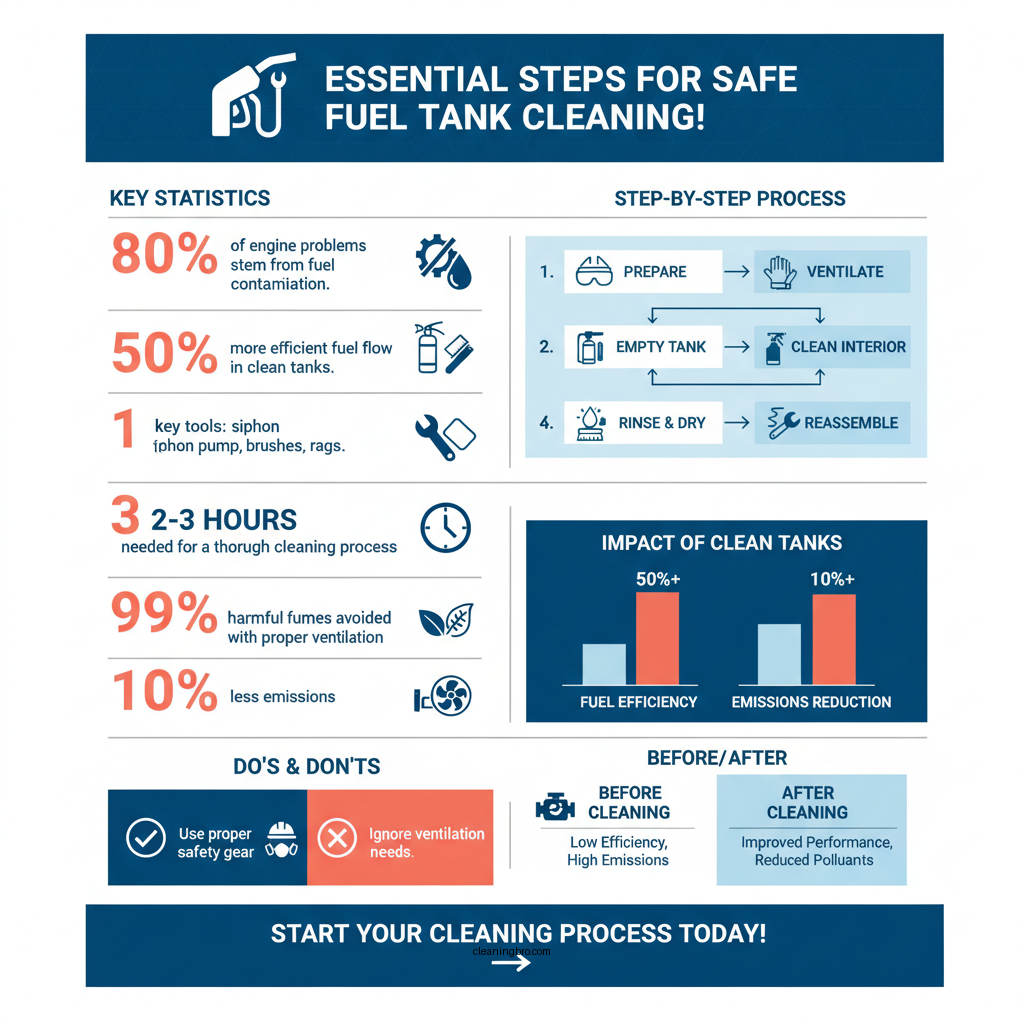
Before embarking on the cleaning process, it is vital to prioritize safety. Here are some essential precautions:
– Work in a Well-Ventilated Area: Ensuring good ventilation is crucial to avoid the accumulation of harmful fumes. Always clean fuel tanks outdoors or in a well-ventilated workshop.
– Wear Appropriate Safety Gear: Protect yourself by wearing safety glasses, gloves, and a mask. These items will shield you from exposure to harmful chemicals and ensure that you handle tools safely.
– Keep Fire Safety in Mind: Fuel is highly flammable. Make sure to have a fire extinguisher nearby and avoid any sources of ignition, such as open flames or sparks.
Tools and Materials Needed
To effectively clean fuel tanks, you will need the following tools and materials:
– Siphon pump: To remove fuel from the tank safely.
– Brushes: Various sizes for scrubbing the interior surfaces.
– Rags or cloths: For wiping surfaces and absorbing fluids.
– Bucket: To catch any waste or cleaning solutions.
– Recommended Cleaning Solutions:
– Diesel fuel: A common and effective solvent for removing sludge and debris.
– Specialized tank cleaners: Products specifically designed for cleaning fuel systems, often containing detergents and emulsifiers to tackle tough grime.
Step-by-Step Cleaning Process
Cleaning a fuel tank involves several key steps to ensure it is done correctly and thoroughly. Follow this step-by-step guide:
1. Drain the Fuel Tank Completely: Begin by siphoning out any remaining fuel in the tank. Make sure to store the fuel in a safe, approved container for future use or disposal.
2. Remove Any Debris and Sediment: Use brushes and rags to scrub the interior surfaces of the tank. Focus on corners and crevices where dirt typically accumulates. For stubborn residues, soak the brushes in cleaning solutions to help dissolve the grime.
3. Rinse the Tank: After scrubbing, rinse the tank thoroughly with clean diesel fuel or water, depending on the cleaning solution used. Ensure all cleaning agents are flushed out to prevent contamination of the fuel.
4. Dry the Tank Completely: Allow the tank to air dry completely before refilling it with fuel. This step is critical to prevent moisture from mixing with the fuel, which can lead to corrosion and microbial growth.
5. Reassemble and Test: Once dry, reattach any parts removed during the cleaning process, such as fuel lines or filters. Test the system for any leaks and ensure that everything is functioning correctly before using the vehicle or equipment again.
Top 7 Fuel Tank Cleaning Solutions (2024)
| # | Product | Effectiveness | Ease of Use | Safety Rating |
|---|---|---|---|---|
| 1 | Fuel Tank Cleaner Pro | ★★★★☆ | ★★★★☆ | Safe |
| 2 | Tank Clean Solution | ★★★★★ | ★★★☆☆ | Very Safe |
| 3 | Diesel Fuel Additive | ★★★★☆ | ★★★★☆ | Caution |
| 4 | Eco Fuel Cleaner | ★★★★★ | ★★★★☆ | Safe |
| 5 | Rust Remover for Fuel Tanks | ★★★☆☆ | ★★★☆☆ | Caution |
| 6 | Fuel System Cleaner | ★★★★☆ | ★★★★★ | Very Safe |
| 7 | Sediment Remover | ★★★★☆ | ★★★☆☆ | Caution |
Dealing with Stubborn Residue
In some cases, you may encounter stubborn residues that regular cleaning methods cannot remove. Here are some strategies for tackling this issue:
– Utilize Cleaning Solutions: For tough grime and sludge, consider using specialized cleaning solutions designed to dissolve deposits. These products often contain powerful solvents that break down contaminants effectively.
– Mechanical Agitation: Sometimes, mechanical agitation (using a power washer or an air compressor) can help dislodge stubborn debris from the tank’s interior.
– Professional Services: If the tank is heavily contaminated or if you are unsure about the cleaning process, seeking professional services may be the best option. Professionals have access to specialized equipment and expertise to address complex cleaning challenges.
Post-Cleaning Inspection and Maintenance
Once the cleaning process is complete, it is essential to conduct a thorough inspection of the fuel tank. Look for signs of damage, corrosion, or leaks that could compromise the integrity of the tank. If any issues are identified, take appropriate actions to repair or replace damaged components.
Implementing a regular maintenance schedule is also crucial. Consider cleaning the fuel tank at least once a year, or more frequently if you notice signs of contamination. Regular inspections can help catch potential problems early, ensuring the longevity and reliability of your fuel system.
When to Seek Professional Help
While many fuel tank cleaning tasks can be handled independently, there are situations where professional assistance is necessary:
– Severe Contamination: If the tank has an extensive build-up of sludge or rust that cleaning solutions cannot remove, it may be time to call in professionals.
– Damaged Tank: If you discover damage or corrosion during your inspection, it’s advisable to consult with experts who can assess the situation and recommend the best course of action.
– Specialized Equipment Needs: In cases where specialized cleaning equipment is required, such as in large fuel tanks or industrial settings, professional services can provide the necessary tools and trained personnel.
Cleaning your fuel tank is a straightforward yet vital process that enhances your vehicle’s performance and lifespan. By following the outlined steps and prioritizing safety, you can effectively manage fuel tank cleanliness. For best results, consider scheduling regular inspections and maintenance for your fuel system to ensure it operates efficiently and reliably.
Frequently Asked Questions
What are the steps to effectively clean a fuel tank?
To effectively clean a fuel tank, start by draining all fuel and removing any residual debris. Use a specialized fuel tank cleaner or a mixture of water and detergent to scrub the interior surfaces, ensuring to reach all corners. After scrubbing, rinse thoroughly with clean water and allow the tank to dry completely before refilling it with fuel.
How often should I clean my fuel tank?
It’s recommended to clean your fuel tank every 1-2 years or whenever you notice a drop in engine performance, fuel contamination, or sediment buildup. Regular maintenance helps prevent issues such as clogged fuel lines and inefficient fuel combustion, ensuring your vehicle runs smoothly and efficiently.
Why is it important to clean a fuel tank?
Cleaning a fuel tank is vital to prevent fuel contamination, which can lead to engine misfires, reduced fuel efficiency, and costly repairs. Over time, sediment, rust, and bacteria can accumulate in the tank, impacting the overall performance of your vehicle. Regular cleaning helps maintain fuel quality and prolongs the life of your engine.
What is the best product for cleaning a fuel tank?
The best products for cleaning a fuel tank include specialized fuel tank cleaners, such as those containing detergents and solvent-based solutions designed to dissolve sludge and contaminants. Brands like CRC and Sea Foam are popular choices among mechanics for their effectiveness in restoring fuel tank cleanliness. Always follow the manufacturer’s instructions for optimal results.
Which tools do I need to clean my fuel tank?
To clean your fuel tank, you’ll need basic tools such as a fuel siphon pump, wrenches for removing the tank, brushes for scrubbing, and safety gear like gloves and goggles. Additionally, having a vacuum or compressed air can help remove loose debris. Ensure you also have a suitable cleaner and plenty of clean water for rinsing.
References
- Fuel tank
https://en.wikipedia.org/wiki/Fuel_tank - Google Scholar Google Scholar
https://scholar.google.com/scholar?q=how+to+clean+fuel+tanks - The page you were looking for has moved.
https://www.cdc.gov/niosh/topics/chemical.html - https://www.nist.gov/publications-abstracts/fuel-tank-cleaning
https://www.nist.gov/publications-abstracts/fuel-tank-cleaning - https://www.ncbi.nlm.nih.gov/pmc/articles/PMC4049150/
https://www.ncbi.nlm.nih.gov/pmc/articles/PMC4049150/ - https://www.sciencedirect.com/topics/engineering/fuel-tank
https://www.sciencedirect.com/topics/engineering/fuel-tank - https://www.epa.gov/hw/cleaning-fuel-tanks
https://www.epa.gov/hw/cleaning-fuel-tanks - Google Scholar Google Scholar
https://scholar.google.com/scholar?q=cleaning+fuel+tanks+methods - https://www.britannica.com/technology/fuel-tank
https://www.britannica.com/technology/fuel-tank - https://www.nytimes.com/topic/subject/fuel-tanks
https://www.nytimes.com/topic/subject/fuel-tanks