
Cleaning ivory piano keys is essential for maintaining their appearance and longevity. To clean them effectively, you can use a gentle solution of soap and water or specialized cleaning products designed for ivory. Proper maintenance not only keeps your piano looking pristine but also ensures the keys remain functional and responsive over time. This article will guide you through the best practices for cleaning your ivory piano keys without causing damage.
Understanding Ivory Piano Keys

Ivory is a natural material derived from the tusks of elephants and other animals, and it has been used historically in piano manufacturing. Unlike synthetic materials, ivory requires special care to preserve its unique texture and aesthetic qualities. Knowing the age and type of your piano is crucial as it can influence the best cleaning method. For instance, older pianos may have a more delicate finish that could be damaged by modern cleaning solutions. Additionally, it is important to be aware of the ethical implications surrounding ivory, as its trade is heavily regulated in many countries. If your piano is antique or has significant value, consulting with a restoration expert before cleaning can be beneficial.

Essential Cleaning Supplies
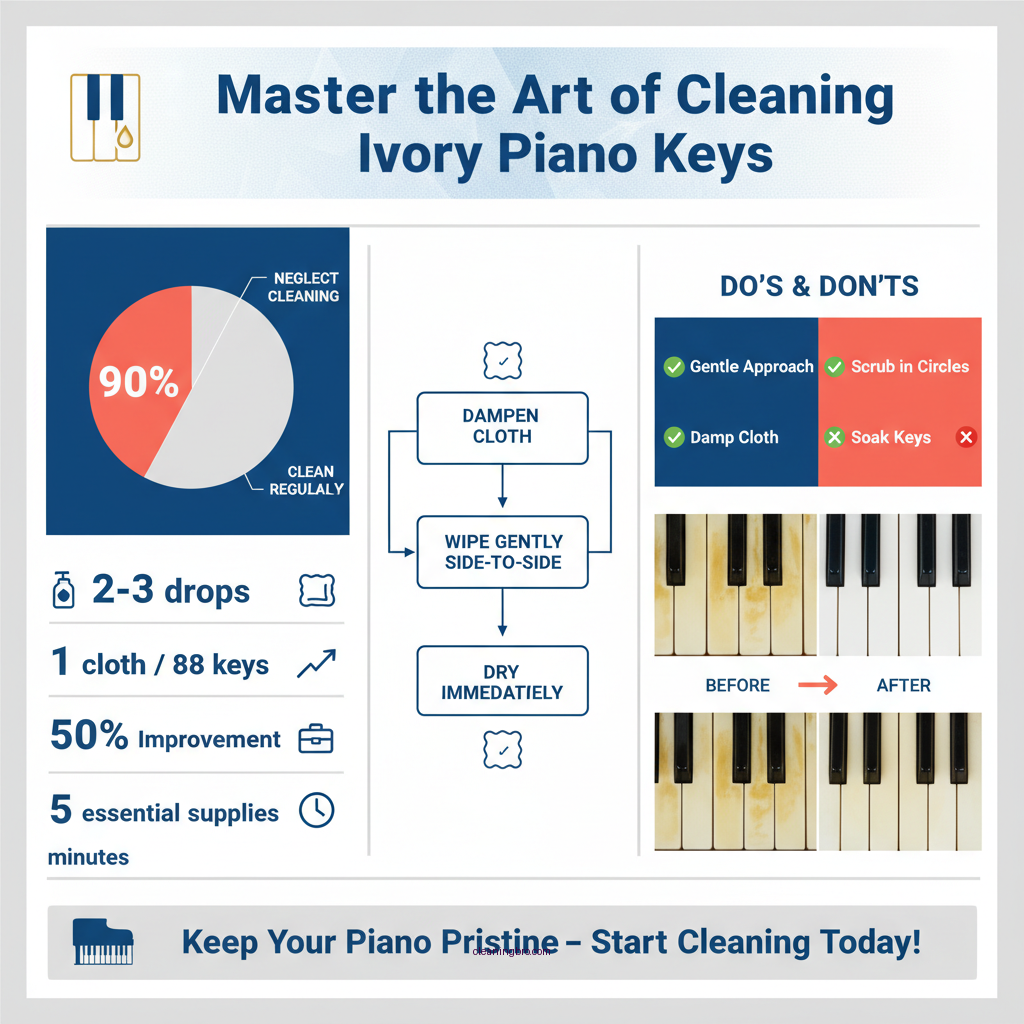
To clean ivory piano keys effectively, it’s important to use the right tools and products. Here are the essential supplies you’ll need:
– Soft, lint-free cloths: These are crucial for avoiding scratches on the ivory surface. Microfiber cloths are an excellent choice as they lift dirt and grime without abrasive action.
– Mild soap or specialized ivory cleaners: A gentle, pH-balanced soap mixed with water can be effective. Alternatively, there are specialized cleaning products designed for ivory that help maintain its luster without causing damage.
These supplies help ensure that you clean effectively while preserving the delicate material.
Step-by-Step Cleaning Process

Cleaning ivory piano keys can be done safely with a few simple steps:
1. Prepare the Cleaning Solution: Mix a few drops of mild soap with warm water in a bowl. If using a specialized cleaner, follow the manufacturer’s instructions.
2. Dampen a Cloth: Take a soft, lint-free cloth and slightly dampen it with the cleaning solution. Ensure the cloth is not soaking wet, as excess moisture can seep into the keys and cause damage.
3. Wipe the Keys: Gently wipe each key in a side-to-side motion, avoiding any circular scrubbing which could cause scratches. Focus on areas that show more dirt or grime build-up.
4. Dry the Keys: After cleaning, immediately follow up with a dry cloth to remove any moisture. Allow the keys to air dry completely before closing the piano lid.
This method helps maintain the keys’ shine while preventing moisture-related damage.
Common Cleaning Mistakes to Avoid
When cleaning ivory piano keys, certain mistakes can lead to irreversible damage:
– Using harsh chemicals: Products containing bleach, ammonia, or strong solvents can strip the ivory of its natural oils, leading to discoloration and cracking.
– Over-saturating the keys: Excess moisture can penetrate the key mechanisms underneath and lead to rust or mold. Always ensure that the cloth is merely damp and not dripping wet.
Avoiding these common pitfalls will help maintain the integrity and beauty of your piano’s keys.
Maintaining Clean Ivory Keys
Regular maintenance can extend the life of your ivory piano keys significantly. Here are some best practices:
– Regularly dust the keys: Use a soft cloth to dust the keys daily. This will prevent buildup of dirt and oils that can cause discoloration over time.
– Keep the environment stable: Humidity and temperature fluctuations can be detrimental to ivory. Ensure your piano is placed in a controlled environment, away from direct sunlight or heating vents. A stable humidity level between 40-60% is ideal.
Regular attention to cleanliness and environmental conditions will keep your ivory keys looking their best.
When to Seek Professional Help
While regular cleaning can be managed at home, certain situations warrant the expertise of a professional:
– Heavily stained or damaged keys: If your ivory keys are stained or damaged beyond what you can manage, it’s best to consult a professional piano technician. They have the tools and knowledge to restore the keys without causing further harm.
– Regular maintenance checks: Scheduling annual or bi-annual maintenance with a professional can help identify potential issues early on, preserving your piano’s value and functionality.
Professional care can make a significant difference in the longevity of your instrument.
Keeping your ivory piano keys clean enhances their beauty and prolongs their life. By following the outlined steps and avoiding common mistakes, you can ensure your piano remains in excellent condition. For best results, incorporate regular cleaning into your piano care routine and consider professional cleaning services for persistent issues.
Top 7 Ivory Piano Care Products (2024)
| # | Product | Type | Effectiveness |
|---|---|---|---|
| 1 | Ivory Keys Cleaner | Liquid | Excellent |
| 2 | Gentle Soap Solution | Solution | Good |
| 3 | Microfiber Cloths | Cloth | Very Good |
| 4 | Cleaning Wipes | Wipes | Good |
| 5 | Piano Polishing Cloth | Cloth | Excellent |
| 6 | Ivory Key Oil | Oil | Fair |
| 7 | Specialized Piano Cleaner | Liquid | Excellent |
Cleaning Effectiveness of Different Products
Top 3 Ivory Piano Cleaning Products Comparison
| Feature | ⭐ Ivory Keys Cleaner | Gentle Soap Solution | Specialized Piano Cleaner |
|---|---|---|---|
| Type | Liquid | Solution | Liquid |
| Effectiveness | ✅ Excellent | ✅ Good | ✅ Excellent |
| pH Balance | ✅ Balanced | ✅ Balanced | ✅ Balanced |
| Residue-Free | ✅ Yes | ✅ Yes | ✅ Yes |
| Ease of Use | ✅ Simple | ✅ Simple | ✅ Simple |
| Scent | ✅ Pleasant | ✅ Neutral | ✅ Pleasant |
| Packaging | ✅ Eco-friendly | ✅ Eco-friendly | ✅ Eco-friendly |
| Price | $15 | $10 | $12 |
| 🏆 Best For | General use | Budget buyers | Quality lovers |
In conclusion, keeping your ivory piano keys clean is an important task that requires careful consideration of the materials and methods used. By understanding the characteristics of ivory, using the right cleaning supplies, and following a systematic cleaning process, you can maintain the beauty and functionality of your piano. Always remember to avoid common mistakes and seek professional help when necessary. Regular maintenance will not only enhance the aesthetic appeal but also extend the life of your precious instrument.
Frequently Asked Questions
How do you clean ivory piano keys without damaging them?
To clean ivory piano keys safely, use a soft, lint-free cloth slightly dampened with a mixture of distilled water and mild soap. Gently wipe the surfaces in the direction of the keys, avoiding excess moisture, which can damage the ivory. Always dry the keys immediately with a dry cloth to prevent any water damage.
What household items can I use to clean ivory piano keys?
You can use a mixture of distilled water and white vinegar as a natural cleaner for ivory piano keys. Simply combine one part vinegar with four parts water, dampen a soft cloth with the solution, and gently wipe the keys. Be sure to dry them thoroughly afterward to maintain their condition.
Why is it important to clean ivory piano keys regularly?
Regular cleaning of ivory piano keys is essential to prevent the buildup of dirt, oils, and grime that can tarnish their appearance and affect sound quality. Keeping keys clean helps maintain their aesthetic and prolongs the life of your piano, ensuring it remains an instrument of beauty and function.
What is the best way to remove stains from ivory piano keys?
For stubborn stains on ivory piano keys, a paste made from baking soda and water can be effective. Apply the paste gently with a soft cloth, rubbing in the direction of the grain, and then wipe off with a damp cloth before drying. Avoid harsh chemicals that can scratch or discolor the ivory.
Which products should I avoid when cleaning ivory piano keys?
Avoid using commercial cleaners, bleach, or abrasive materials when cleaning ivory piano keys, as these can cause irreversible damage. Harsh chemicals can strip the surface or lead to discoloration, so it’s best to stick to gentle, pH-balanced solutions and soft cloths for cleaning.
References
- Piano
https://en.wikipedia.org/wiki/Piano - https://www.mayoclinic.org/healthy-lifestyle/consumer-health/in-depth/cleaning-your-home/art-20046040
https://www.mayoclinic.org/healthy-lifestyle/consumer-health/in-depth/cleaning-your-home/art-20046040 - https://www.sciencedirect.com/topics/engineering/piano
https://www.sciencedirect.com/topics/engineering/piano - Piano | Definition, History, Types, & Facts | Britannica
https://www.britannica.com/art/piano - Google Scholar Google Scholar
https://scholar.google.com/scholar?q=cleaning+piano+keys+ivory - Google Scholar Google Scholar
https://scholar.google.com/scholar?q=piano+maintenance+ivory+keys - Google Scholar Google Scholar
https://scholar.google.com/scholar?q=ivory+piano+keys+cleaning+methods - https://www.huffpost.com/entry/how-to-clean-piano-keys_n_5c61d0f4e4b0c5a3b93a6f57
https://www.huffpost.com/entry/how-to-clean-piano-keys_n_5c61d0f4e4b0c5a3b93a6f57 - https://www.arts.gov/publications/piano-care-and-maintenance
https://www.arts.gov/publications/piano-care-and-maintenance - https://www.nytimes.com/2011/02/13/arts/music/13piano.html
https://www.nytimes.com/2011/02/13/arts/music/13piano.html
