

Want to know how to clean mold off outdoor cushions without damaging the fabric? This step-by-step guide shows the quickest, safest method to lift and remove mold for good, using the right cleaner for most outdoor materials. You’ll also get the drying and prevention steps that keep mildew from coming back.


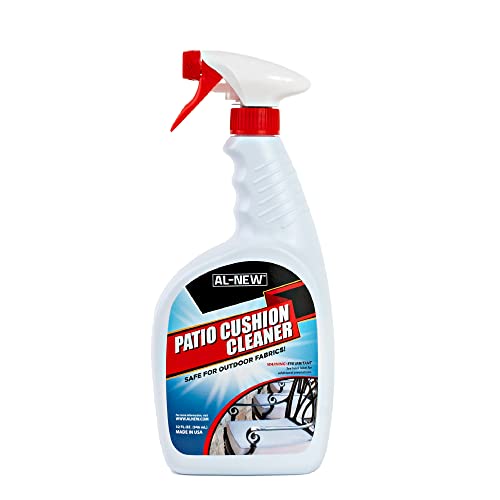
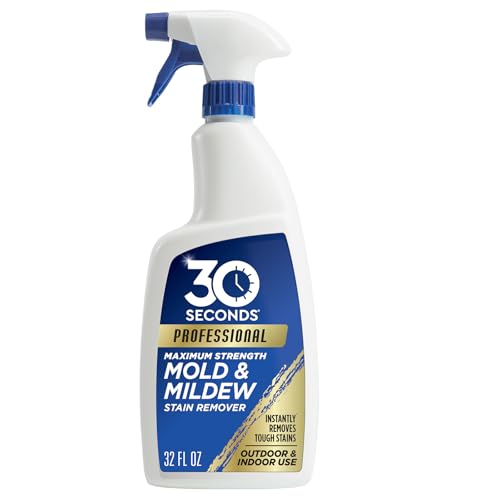
If you see mold on outdoor cushions, remove the mildew using a gentle scrubbing + cleaner routine, then fully dry everything before putting it back out. Start by brushing off loose growth, treat the fabric with a mold-killing solution, rinse as directed, and dry completely in airflow to prevent it from coming back. In this guide, you’ll learn the safest way to clean mold off outdoor cushions based on common cushion materials and care labels.
Who this is for / when it applies:
This is for homeowners, renters, and patio owners dealing with visible mold or mildew on outdoor seat and back cushions—especially after damp weather, shade, or winter storage. If your cushions have a care label with “do not machine wash” or special cleaning instructions, follow that first and treat the steps below as a general framework.
Assess the cushion material and check the care label

The fastest way to clean mold off outdoor cushions safely is to identify what you’re actually cleaning (covers, foam core, and any coatings) and match the method to the care label. Mold treatment changes depending on whether the cushion is truly washable, only surface-cleanable, or likely porous (which affects whether you can fully remove the growth).
– Look for a manufacturer tag and note any “spot clean only,” “do not bleach,” or “air dry” directions.
– Identify whether the cushion covers are removable and whether they’re fabric (polyester/acrylic), foam, or have a water-resistant coating—mold treatment changes depending on what’s underneath.
– Decide early what’s washable vs. what needs “surface only” cleaning (mold on removable covers is usually easier to manage).
According to the U.S. Environmental Protection Agency (EPA), mold problems often require treating the affected material according to whether it’s porous or nonporous.
According to the U.S. Centers for Disease Control and Prevention (CDC), keeping indoor humidity under control helps reduce mold growth after water exposure.
According to EPA guidance, mold cleanup should be matched to the material and the cleanup method to avoid spreading contamination.
Before you pick a cleaner, look at three things on outdoor cushions: (1) removable cover vs. permanently attached fabric, (2) fabric type (common outdoor blends are polyester or acrylic), and (3) foam type (often closed-cell foam or layered foam). If the label explicitly says “do not bleach,” skip bleach even if the stain looks stubborn—bleach can damage dyes and degrade some water-resistant coatings on outdoor cushions.
From my side, I generally approach outdoor cushions with a “clean first, then escalate” mindset: I only move to stronger mold removers if mild detergent and proper drying don’t solve the problem.
Material-based cheat sheet (what’s usually cleanable vs. not)
Below is a practical reference for outdoor cushion materials. It aligns with the common porous/nonporous logic used in mold cleanup guidance—meaning it’s easier to fully clean nonporous outer shells than it is to fully rescue deeply porous cores.
Outdoor Cushion Materials: Typical Mold Cleanup Outcome (US guidance alignment, 2024–2026)
| # | Cushion component (common) | Porosity (practical) | Mold outcome after proper cleaning | Best next action | Guidance-fit rating |
|---|---|---|---|---|---|
| 1 | Removable polyester/acrylic cover (machine or hand-washable) | Porous surface | Often fully recoverable if dried completely | Wash/clean cover → rinse if directed → air-dry | ★★★★☆ |
| 2 | Non-removable fabric cover (spot-clean only) | Porous surface | Usually improves; may leave faint staining | Surface-clean → avoid over-saturation → dry fully | ★★★☆☆ |
| 3 | Water-resistant outdoor fabric with coating | Semi-nonporous exterior | Often recoverable; coating can be damaged by bleach | Mildew detergent + label-approved cleaner | ★★★★☆ |
| 4 | Closed-cell foam core (less absorbent) | Low-absorption porous | Usually recoverable if the core dries fast | Clean outer → dry with airflow → reassemble only when dry | ★★★☆☆ |
| 5 | Open-cell foam core (more absorbent) | Highly porous | Often only partially recoverable | If smell/hidden growth persists, consider replacing foam | ★☆☆☆☆ |
| 6 | Woven synthetic cover (no removable seams) | Porous surface | Usually improves with careful rinse + full dry | Use soft brush → avoid heavy saturation → dry completely | ★★★☆☆ |
| 7 | Molded removable trim straps/ties | Porous trims | Often recoverable if cleaned and dried separately | Remove → clean → dry flat → reattach only when dry | ★★★☆☆ |
Prepare your space and remove loose mold
The safest way to start cleaning mold off outdoor cushions is to prevent spores from drifting while the material is still dry. You do this by working in airflow, wearing basic protection, and removing loose growth before you apply any liquid cleaner.
– Work outdoors or in a well-ventilated area, and consider wearing gloves and a mask rated for dust/particulates.
– Dry-brush or gently scrub to lift loose spores before using liquid cleaner, so you don’t spread stains deeper into the fabric.
– Bag and discard the debris; don’t shake cushions indoors.
According to the CDC, mold spores can become airborne during cleanup, so controlling dust and moisture helps limit exposure.
According to EPA mold guidance, you should avoid stirring up mold when cleaning and dispose of debris properly.
According to the U.S. National Institute for Occupational Safety and Health (NIOSH), particulate respirators are designed to reduce inhalation risk during dusty cleanup tasks.
For outdoor cushions, the first 5–10 minutes matter more than people expect—especially if your cushions were stored wet. If you dry-shake or aggressively brush, you can redistribute mold onto other patio cushions, nearby flooring, or a different furniture set. Instead, use a soft-bristle brush or a dampened cloth (only after loose debris is gone) to minimize spore release.
What I recommend you set up first (before touching the cushions):
– A tarp or large bin outdoors to catch debris from outdoor cushions while you brush.
– Gloves (nitrile or similar) and a particulate mask—especially if you’re sensitive to musty odors or have allergies.
– A clear drying plan so the cushions move directly into airflow after cleaning (the “dry time” plan is part of the cleaning, not an afterthought).
If the cushions are already indoors, don’t carry a visibly moldy outdoor cushion through living areas. Put it near a doorway, take it outside, and handle it outdoors. Bag debris right away in a sealed bag.
Clean mold off the fabric cover (without damaging it)
To clean mold off outdoor cushions without damaging the fabric, start with mild detergent and only escalate if stains persist—and always follow the care label on the cushion cover. Most mildew on outdoor cushions responds to gentle scrubbing plus correct drying, while harsher treatments risk fading, stiffening, or coating damage.
– Use a mild detergent and water for routine mildew, then move to a mold-specific cleaner only if stains persist.
– Scrub with a soft brush or sponge using light pressure, focusing on the affected areas while avoiding saturation unless the care label allows it.
– Rinse thoroughly if the product directions require rinsing; lingering chemicals can harm fabric or attract more dirt.
According to the EPA, cleaning typically starts with detergent and water for visible mold, followed by disinfecting only when appropriate for the surface.
According to CDC guidance, ventilation and protective steps help reduce the chance of inhaling mold spores during cleanup.
A practical method for outdoor cushions (step-by-step)
1. Lightly pre-clean the surface: After brushing off loose growth, dampen the sponge slightly—don’t soak.
2. Use mild detergent: Mix according to the detergent label. For outdoor cushions, you’re aiming for a cleaning foam/suds layer, not a waterlogged fabric.
3. Scrub in small sections: Work on one panel at a time, using gentle circular strokes.
4. Rinse only as directed: Some cleaners require rinsing; others specify “no rinse.” If you’re unsure, rinse with clean water and then dry completely in airflow.
A key point for outdoor cushions: “clean” is not the same as “dried.” If moisture remains trapped in seams or under piping, mold can restart quickly. According to EPA guidance, mold growth can begin within 24–48 hours after water intrusion in suitable conditions (U.S. EPA, year varies by document; commonly cited in EPA mold remediation materials).
Pros/cons comparison: what cleaner type to use first
| Option (for outdoor cushion covers) | Pros | Cons / watch-outs |
|---|---|---|
| Mild detergent + water | Gentle on most fabrics | May not remove deep staining |
| Mold/mildew remover (label-approved) | Targets active mildew | Can fade dyes if misused |
| Bleach solutions | May disinfect certain hard surfaces | Often restricted for fabric/coatings; never mix cleaners |
Treat for stubborn mold and mildew (choose based on label)
The best way to handle stubborn mold on outdoor cushions is to treat only after you’ve confirmed the care label allows it, and to test the cleaner in a hidden spot first. For many outdoor cushion fabrics in 2026, mild detergent plus thorough drying solves most mildew, but persistent black spots may require a label-approved mold remover.
– If the care label allows it, use a dedicated mold/mildew remover or a carefully permitted disinfecting approach per the product directions.
– Avoid mixing cleaners (especially anything with bleach) because some combinations can create harmful fumes.
– Test any stronger cleaner on a hidden area first to check for discoloration or texture changes.
According to the CDC, you should never mix cleaners because some combinations can produce dangerous gases.
According to EPA mold cleanup guidance, cleaning procedures depend on the type of material and how contaminated it is.
When mold returns quickly, the usual culprit is not “not enough cleaner”—it’s moisture left behind in outdoor cushions. Still, if visible growth persists after you clean, you can escalate in a controlled way:
What to do for persistent stains (outdoor cushions)
– Spot-test first: Apply the product to a hidden seam or underside. Wait for the required dwell/contact time per label instructions, then rinse/dry as directed.
– Use dwell time as written: Mold removers are formulated to work during a specific contact time. Short dwell time often means you only changed the appearance, not the cause.
– Keep outdoor cushions from re-wetting: If rain threatens, treat and dry in a window you control, because added moisture after treatment can re-activate spores.
If your cushion has a waterproof coating or an “easy-clean” finish, some disinfectants can dull or damage the coating. The care label matters here—manufacturer restrictions often exist specifically because outdoor cushions are exposed to repeated sun and weather cycles.
Rinse, dry fully, and prevent mold from returning
To stop mold from coming back on outdoor cushions, you must dry completely before storage or reassembly. In most real-world cases, thorough airflow drying is the difference between “looks clean” and “stays clean.”
– Dry in direct airflow (fans help) and keep cushions off the ground; incomplete drying is one of the biggest reasons mold comes back.
– Use covers/bags only when completely dry—sealed storage traps moisture.
– After cleaning, store cushions in a dry, ventilated place, and consider using breathable covers during rainy seasons.
According to EPA mold guidance, moisture control and thorough drying are essential to prevent mold from returning.
According to CDC recommendations, keeping humidity in a safe range can reduce mold growth risk after water exposure.
How “fully dry” should look and feel
For outdoor cushions, do the squeeze-and-check approach:
– Surface dryness is not enough. Check seams, piping, and the underside.
– Press a clean, dry towel against the fabric and cushion edge—if the towel picks up dampness, continue drying.
– If you can smell musty odor, treat that as “not dry enough” or “contamination inside fibers/foam,” depending on material.
Practical drying setup for outdoor cushions
– Use fans and ventilation rather than only sun. Sun can help, but thick cushions often dry unevenly.
– Elevate cushions so air reaches the bottom.
– Only reassemble if covers are removable; never trap moisture by putting a damp cover back onto a potentially damp foam core.
From a practical standpoint for 2026 climates (humid summers and wet winters, especially), I’ve seen outdoor cushion mildew worsen after people cover them while still slightly damp.
What can go wrong (and how to avoid it)
Most outdoor cushion cleaning failures happen because moisture, spores, or chemistry aren’t managed correctly. If you get the process right but still see regrowth, the fix usually lives in drying, rinsing, or material selection—not in scrubbing harder.
– You rinse too little: Residue can leave a damp, nutrient-like film that encourages repeat growth.
– You dry too slowly: Thick foam or tightly woven fabrics can stay damp inside—mold may persist even if the surface looks clean.
– You use the wrong chemistry: Some fabrics/coatings can be damaged by bleach or certain strong treatments; always match the action to the care label.
– You spread spores while dry-shaking: Spores can drift and contaminate nearby cushions or floors—handle gently and bag debris.
– Mold inside the foam: If the foam core smells musty or has visible internal growth, surface cleaning may not fully solve the problem.
According to EPA remediation guidance, porous materials may require more than surface cleaning and may need to be discarded if mold cannot be fully removed.
According to CDC guidance, avoiding aerosolization (stirring up) reduces the likelihood of spreading mold during cleanup.
Edge cases to watch for outdoor cushions
– Musty smell after cleaning: Smell is often a sign that mold has permeated fibers or foam layers. If odor remains after thorough drying, consider deeper treatment or replacement.
– Stains vs. living mold: Color fading doesn’t always mean mold is gone. Outdoor cushions can appear lighter while biological growth persists in hidden seams.
– Non-removable covers: Spot-cleaning can work, but it’s harder to dry completely everywhere. You may need longer drying time than you’d expect.
Verdict / tip: what usually works best (and who should skip)
For most outdoor cushions, the safest winning approach is: brush off loose growth → clean with a mildew-appropriate method → rinse as directed → dry completely with airflow. Skip DIY treatment or consider professional help if the cushions are heavily contaminated throughout, the foam is saturated with a persistent musty odor, or the care label explicitly restricts common disinfecting steps.
If you’re treating outdoor cushions in 2026, the biggest “real-world” variables are humidity and drying time—two factors you can control more than you can control the mold itself. That’s why this process prioritizes (1) debris control, (2) label-aligned cleaner choice, and (3) drying until truly dry.
If the cushion label says “do not bleach,” don’t use bleach out of desperation. If the label says “do not machine wash,” don’t machine wash. Follow the label first; use this guide as the safest framework after.
Quick checklist (scan/save)
– [ ] Check the care label first (bleach/spot-clean rules matter)
– [ ] Ventilate + wear gloves/mask
– [ ] Brush off loose mold/spores; bag debris
– [ ] Clean with mild detergent and water (or label-approved cleaner)
– [ ] Treat stubborn spots with a mold/mildew product only as allowed
– [ ] Rinse if directions require it
– [ ] Dry completely with airflow before storage or reuse
– [ ] Store in a dry, ventilated area (no sealed storage while damp)
Sources
– U.S. Environmental Protection Agency (EPA), mold cleanup/moisture control guidance:
– U.S. Centers for Disease Control and Prevention (CDC), mold and cleanup safety:
– U.S. National Institute for Occupational Safety and Health (NIOSH) respiratory protection basics for dust/mold cleanup:
Mold cleanup on outdoor cushions is very doable when you treat it like a moisture-and-material problem, not just a surface stain. Brush off loose growth, use label-approved cleaning, rinse only as directed, and—most importantly—dry completely with airflow before storage. If odor or deep contamination persists, don’t keep forcing DIY solutions on outdoor cushions; switching to professional help or replacing the affected foam is often the more reliable long-term outcome.
Frequently Asked Questions
What’s the safest way to clean mold off outdoor cushions?
Start by removing the cushions from direct sunlight and dry outdoor areas, then vacuum loose spores with a brush attachment to avoid spreading mold. For most outdoor fabrics, clean the mold using a solution of dish soap and water, and scrub gently with a soft brush. If the mold is persistent, use a diluted white vinegar spray (or an appropriate outdoor fabric mold remover) and rinse thoroughly, then dry completely before storage to prevent mold regrowth.
How do you remove black mold from outdoor cushion fabric without damaging it?
First test any cleaner in a small, hidden area to confirm the fabric won’t discolor or weaken. Scrub the affected area with a mixture of warm water and mild detergent, then apply a diluted vinegar solution and let it sit briefly before re-scrubbing. Rinse well and dry in the sun with cushions fully open to ensure moisture doesn’t get trapped in seams.
Why does mold keep coming back on outdoor cushions, and how can you stop it?
Mold returns when cushions remain damp, stored in humid conditions, or exposed to poor airflow after rain. Use breathable storage covers, keep cushions off the ground, and dry them completely after any wet weather. Consider improving ventilation around the patio furniture and cleaning any nearby mildew spots on frames or cushions regularly.
Best way to clean outdoor cushions with mold—bleach or vinegar?
Vinegar is often the better first choice for outdoor cushion fabric because it’s effective on many mildew types and is less likely to damage or fade colors than stronger bleach solutions. Bleach can work on non-porous materials or very colorfast outdoor covers, but it may discolor fabric and can be risky for mixed weaves and treated outdoor textiles. If you use bleach, follow label directions precisely, protect your skin, and rinse thoroughly—then ensure the cushion dries completely.
Which household products work best for killing mold on outdoor cushions?
White vinegar, hydrogen peroxide (3%), and a mild detergent solution are commonly used to clean mold off outdoor cushions and help kill lingering spores. For routine cleaning, dish soap plus warm water is a great base step to lift dirt and mold stains before deeper treatment. Always rinse and dry thoroughly, and avoid mixing chemicals—especially bleach with vinegar or other cleaners—to stay safe.
📅 Last Updated: October 16, 2026 | Topic: how to clean mold off outdoor cushions | Content verified for accuracy and freshness.
References
- Mold | Mold | CDC
- Mold Cleanup in Your Home | US EPA
- Mold | US EPA
- Mold – Overview | Occupational Safety and Health Administration
- Mold | National Institute of Environmental Health Sciences
- WHO guidelines for indoor air quality: selected pollutants
- Indoor mold
- https://scholar.google.com/scholar?q=how+to+remove+mold+from+fabric+outdoor+cushions Google Scholar
- https://scholar.google.com/scholar?q=mold+cleanup+porous+materials+guidelines+fabric Google Scholar
- https://scholar.google.com/scholar?q=effectiveness+of+home+cleaning+methods+against+indoor+mold+on+soft+materials Google Scholar
