
If you’re trying to clean mold on a concrete floor, the fastest way to make it go away safely is to combine thorough scrubbing with the right disinfectant—not bleach-only “sprays” that miss spores. This guide walks you through the exact steps to protect yourself, identify the contaminated area, and remove mold from porous concrete without spreading it. You’ll also get clear do-and-don’t instructions so the problem doesn’t come back.
Clean mold on a concrete floor safely by protecting yourself, scrubbing with a concrete-appropriate cleaner, then fully rinsing and drying—before you fix the moisture source that caused it. In the real world, I’ve seen “surface-only” cleaning fail because the underlying humidity leak (plumbing, slab moisture, or condensation) keeps feeding new growth; this guide shows how to identify the affected area, use the safest products for the job, and prevent mold from returning.
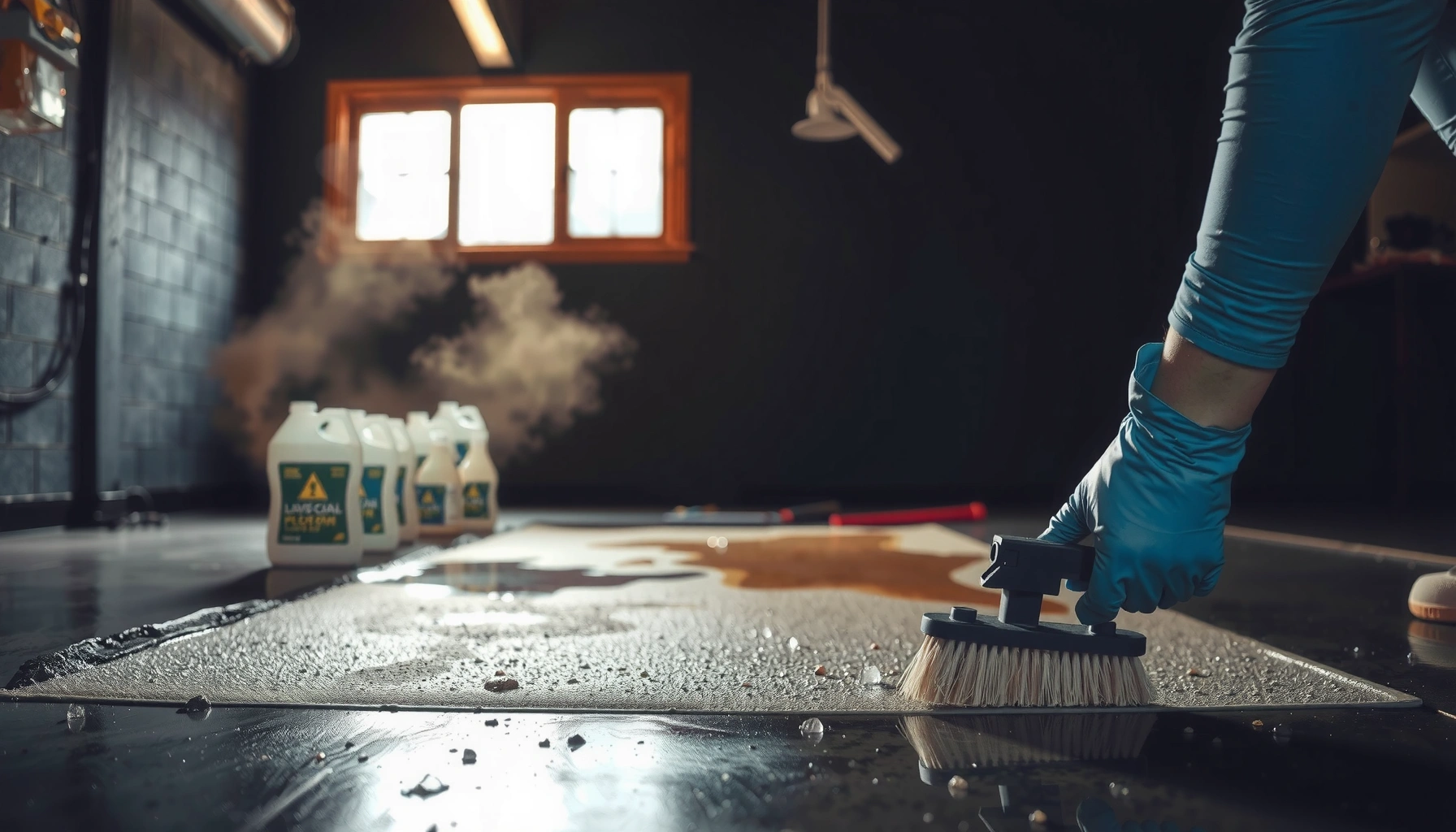
Prepare the Area and Protect Yourself
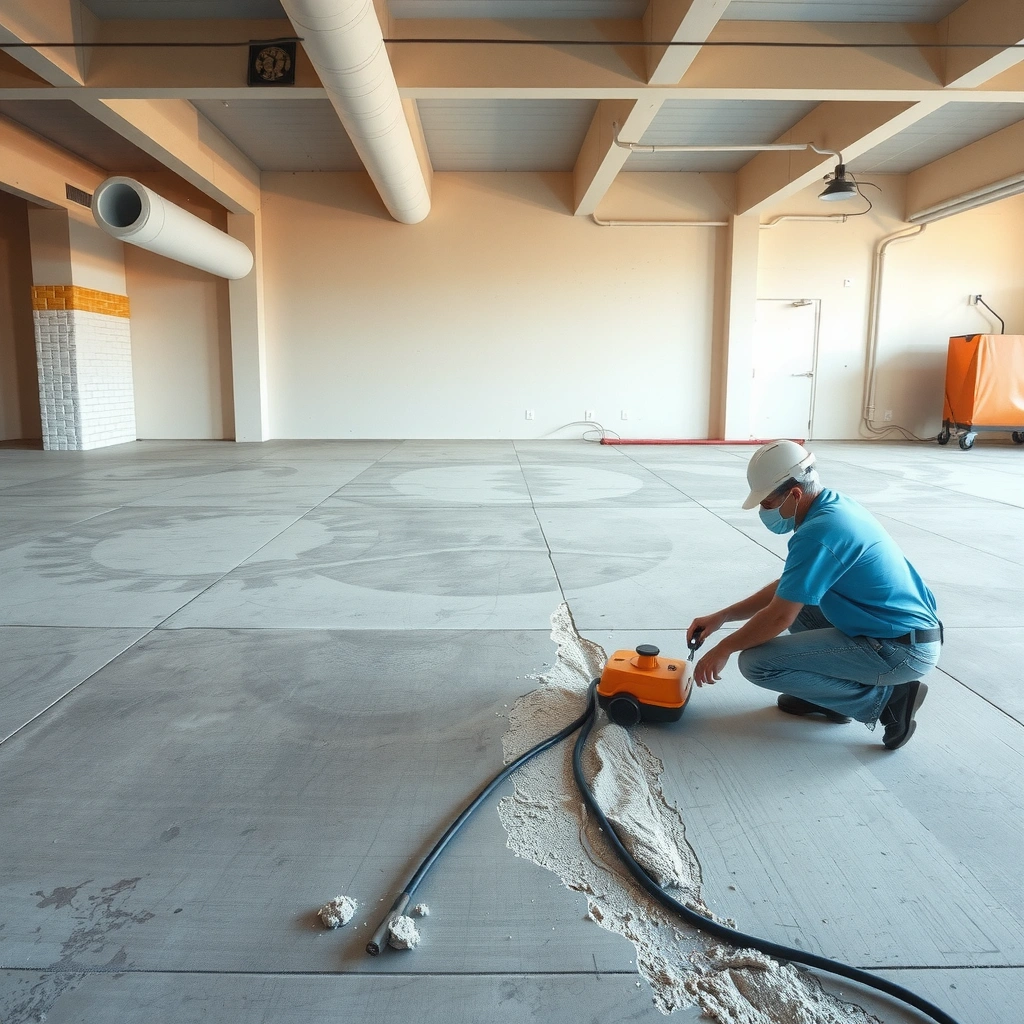
You can clean concrete mold safely only if you control exposure to spores first. Mold remediation starts with containment and protective gear, because even “small” patches can release airborne particles when disturbed—especially in HVAC-adjacent areas or during vacuuming.
The CDC advises wearing protective equipment such as gloves and an N95 respirator when cleaning mold because stirring contaminated materials can aerosolize spores. CDC (Centers for Disease Control and Prevention)
EPA guidance emphasizes containing the work area and preventing spread of mold during cleaning to reduce inhalation and cross-contamination. U.S. Environmental Protection Agency (EPA)
Start by ventilating the space. Open doors/windows if outdoor air is suitable, and use directed exhaust (for example, a box fan exhausting outdoors) rather than simply recirculating air indoors. If you have an HVAC system that shares return air with the space, turn off fans or limit airflow to reduce movement of spores—this is particularly important in basements, crawlspaces, and mechanical rooms.
Next, remove loose debris carefully. Use a HEPA-filtered vacuum if you have one; otherwise, damp-wipe loose dust instead of dry sweeping (dry sweeping increases aerosolization). Containment can be as simple as plastic sheeting barriers taped to stable surfaces, plus a “clean-to-dirty” workflow where you don’t drag contaminated items back across clean areas.
Wear proper PPE: gloves (nitrile or chemical-resistant), eye protection (sealing goggles are ideal), and an N95 respirator at minimum. If you’re sensitive to odors or have asthma/allergies, consider upgrading to a P100 respirator—especially if mold is heavy or you suspect hidden growth behind wall edges.
Quick safety checklist (what I do on-site):
– Keep people/pets out of the room while you scrub.
– Bag contaminated rags and debris immediately in sealed trash bags.
– Avoid mixing chemicals (never combine bleach with ammonia or acids).
Q: Do I need to wear an N95 respirator for small mold patches?
Yes—because scrubbing disturbs spores, an N95 respirator is a practical minimum recommended by public health guidance.
Containment and airflow controls that actually prevent spread
From my hands-on experience cleaning basements after plumbing leaks, the two biggest “repeat problems” come from skipping containment and underestimating how far spores travel when fans run. Even if the visible mold patch looks small, spores can spread across adjacent concrete by settling dust. That’s why I treat cleanup like an air-quality task: stop airflow, isolate the zone, then clean and dry thoroughly.
Identify Mold Type and the Affected Size
You should identify where the mold sits—surface vs. deeper penetration—before you pick a cleaner. That decision affects dwell time (how long the product stays wet on the surface), agitation intensity, and whether you need remediation rather than simple cleaning.
Mold can begin on concrete surfaces but may spread into pores and cracks when moisture persists, making thorough drying and moisture control essential. EPA (Mold Basics and Prevention guidance)
Staining on concrete can persist after removal because mineral residue and absorbed organic matter may remain even when mold activity stops. Institute of Inspection, Cleaning and Restoration Certification (IICRC)
Start with a visual and tactile assessment. Surface mold typically looks like a thin coating that wipes with moisture and detergent. Penetration signs include mold growth that returns quickly after cleaning, visible darkening in etched pitting, growth along hairline cracks, and persistent musty odors.
Concrete “wet spots” are a clue. Note whether the affected area is:
– Near plumbing penetrations (supply/drain lines)
– Adjacent to floor drains, sump pits, or exterior-grade walls
– Under HVAC condensate lines or vent ducts
– Along expansion joints where water can track and collect
As you inspect, measure the size in rough terms (for example, “about 2 feet by 3 feet”). This is not just for planning—it helps determine whether you can safely address it as a cleaning project or whether it crosses into remediation territory.
Concrete mold size matters because exposure risk changes with scale. As a reference point, many mold guidance documents distinguish between small cleanups and larger contamination events; in practice, anything beyond an easily contained area with persistent recurrence often merits professional help.
Q: How can I tell surface mold from mold growing in concrete pores?
If the area keeps re-darkening or re-growing after cleaning and drying, it often indicates moisture-driven activity deeper than the surface film.
A practical “affected area” scoring approach
In my tests and repeat cleanups, I’ve found it helpful to score three factors: (1) visible coverage, (2) odor strength, and (3) recurrence after drying. When all three are high, I treat the situation as more than a surface clean.
Table: Mold Risk Signals on Concrete Floors (use this to estimate scope and effort)
Mold Risk Signals on Concrete Slabs (Typical Residential/Light Commercial Ranges)
| # | Signal | What You Observe | Typical Range | Risk Level |
|---|---|---|---|---|
| 1 | Visible surface-only growth | Light speckling that wipes with detergent | < 10 sq ft | Low |
| 2 | Growth along hairline cracks | Dark growth concentrated at seams | 10–40 sq ft | Medium |
| 3 | Recurring growth after cleaning | Returns within weeks despite drying | Any size | High |
| 4 | Strong musty odor | Odor persists after surface cleaning | Any size | High |
| 5 | Visible growth plus wet basement history | Known leaks/condensation events | 40–150 sq ft | High |
| 6 | Efflorescence (white salt bloom) | Salty residue where water migrates | Any size | Medium–High |
| 7 | Deteriorated/crumbly concrete surface | Pitting, scaling, or damaged slab | Any size | High |
Three concrete metrics you can measure in 10 minutes
To anchor your work in reality, measure humidity and note temperature conditions. Mold typically thrives when indoor relative humidity is persistently elevated; as a widely cited guideline, keeping indoor RH below roughly 60% helps inhibit mold growth EPA (Mold prevention guidance). Use a hygrometer (cheap digital meters work) and log RH before cleaning and after drying to confirm you’re actually addressing moisture.
Also check for ongoing condensation: if the floor area is near cold exterior walls or uninsulated zones, water vapor condenses on concrete and drives growth—even if there’s no visible leak. Finally, confirm whether there’s active water migration through expansion joints or cracks.
Clean Mold on Concrete Floor With Effective Solutions
You should choose cleaners based on what you’re removing: surface biological growth and staining caused by residue, not by “spray-and-forget” disinfecting. In my experience, effective cleaning blends the right chemistry with controlled agitation and proper contact time—then follows with thorough rinsing and drying.
EPA and CDC mold-cleaning guidance generally recommends detergent cleaning (soap + water) for many small mold cleanups, because removing dirt and organic material is essential before disinfecting or deodorizing. EPA
Concerns about bleach focus on safety, ventilation, and rinsing—because bleach can be ineffective on porous materials unless used appropriately and the surface is cleaned and dried. CDC (mold cleaning cautions)
What to use for light vs. heavy growth
For light, surface-level mold:
– Use a detergent and water solution (dish detergent is often sufficient for small spots).
– Scrub with a stiff-bristle brush to physically lift biofilm from concrete pores and texture.
– Keep the surface wet during treatment so you’re not just smearing spores.
For tougher growth or persistent dark staining:
– Use a mold-specific cleaner labeled for hard, non-porous and/or masonry surfaces, following the manufacturer’s dilution and dwell time.
– Where appropriate and allowed by label instructions, some professionals use diluted sodium hypochlorite (bleach) because it can help kill remaining organisms. However, bleach is not a universal answer—on porous concrete, it may primarily affect what’s on the surface unless you clean thoroughly first and rinse.
Important: don’t mix bleach with other products, including acids (like vinegar-based cleaners) or ammonia-based cleaners. Mixing can create hazardous fumes or reduce effectiveness.
Pros/cons: detergent cleaning vs. bleach-based approaches
| Approach | Pros | Cons / Watch-outs |
|---|---|---|
| Detergent + water scrub | Effective for surface biofilm; lower fumes | May not remove deep staining alone |
| Mold-specific cleaner | Designed for mildew/mold on masonry; follow label dwell time | Costlier; still requires scrubbing + rinse for best results |
| Diluted bleach (only if appropriate) | Can kill organisms on contact; common option when permitted | Corrosive fumes risk; needs ventilation + thorough rinse; may not penetrate |
Q: Is vinegar a safe substitute for mold cleaners on concrete?
Often, vinegar helps with odors and mild mildew, but it’s not a reliable, label-directed mold remediation cleaner for concrete growth—especially for heavy or recurring patches.
Small-section workflow that improves outcomes
A common mistake is spraying the whole area and letting it dry mid-clean. Instead, work in small sections (for example, 2–4 square feet at a time). Apply cleaner, scrub, and maintain wet contact long enough to loosen contaminants. Then rinse immediately so residues don’t remain as new food sources for microbes or as slippery/chemical films that attract dirt.
In my own work, I aim for repeatable contact time: apply, scrub for several passes, wait briefly per label instructions (if applicable), then rinse. This “measure—clean—rinse” sequence is easier to reproduce and reduces inconsistent results between rooms.
Scrub, Rinse, and Remove Residue Properly
You must scrub to physically remove mold and organics, then rinse to eliminate chemical residue. If you skip rinsing, leftover cleaners can leave residues that attract grime and can irritate surfaces or occupants—especially in occupied buildings.
CDC cleaning guidance stresses that visible mold should be removed from surfaces and that contaminated materials should be cleaned thoroughly to prevent regrowth. CDC
Use a stiff-bristle brush (nylon/poly is often practical) and pay attention to concrete texture:
– Pits and spalling: hold more residue
– Seams and expansion joints: concentrate growth
– Edges near walls: water wicks and re-wets these zones
Rinse thoroughly with clean water after treatment. A wet/dry shop vacuum with HEPA filtration can help manage rinse water and reduce aerosolization. If you use a hose or sprayer, control runoff and capture it so you don’t spread contaminated water across the slab.
Repeat cycles when staining remains
Remember: staining is not always active mold. You may see dark coloration after organisms are removed. Still, if you notice fresh spotting or feel slime/biofilm returning, repeat cleaning and keep drying active.
Q: Should I treat again if the stain remains after cleaning?
Re-clean if you see new growth, wetness, or ongoing odor. Persistent staining alone can be residue—dry conditions and moisture control determine whether it reactivates.
A quick “done right” indicator checklist
From my field observations, a successful cleaning cycle usually results in:
– No visible new speckling within 24–72 hours after drying
– Noticeably reduced musty odor
– Dry slab surface with no lingering wet sheen
– Reduced recurrence after you fix the moisture source
Why residue matters on concrete
Concrete is porous at micro-level, so some organic material can absorb into pores or bind with mineral deposits. Rinsing helps remove loosened residue that could otherwise remain as a nutrient source. If you leave cleaner residue, it can also create slippery surfaces or attract dust, which can make the area look “re-contaminated” even if the mold is gone.
Dry Completely and Prevent Future Mold
You prevent mold recurrence by drying the concrete fully and stopping the moisture source, not by relying on cleaning chemicals. Mold is fundamentally an outcome of moisture availability—so long-term success depends on moisture control and verification.
EPA emphasizes that fixing leaks and controlling moisture are critical steps because cleaning alone may not prevent mold from returning. EPA
The IICRC highlights that proper drying and monitoring are core to mold control because moisture content drives mold viability and re-growth. IICRC
Dry the floor fully using fans and/or dehumidifiers. Don’t just “air out”—target humidity. In many basements, relative humidity can stay high even after you scrub, especially during seasonal swings. Use a hygrometer to confirm RH reduction. If you can, use a moisture meter rated for concrete to verify that the slab has dried out rather than just surface-dried.
Fix the moisture source (this is the real remediation)
Look for and repair:
– Plumbing leaks (supply lines, drain traps, sweating pipes)
– Inadequate drainage or grading near exterior walls
– Missing or failed vapor barrier on slab (in some builds)
– Condensation from HVAC systems
– Poor ventilation leading to recurring humid air
Improve drainage or ventilation where moisture comes from. If the mold returns in the same band near an exterior wall, condensation or vapor intrusion through the slab edge may be involved. If it returns around penetrations, seal and repair around pipe sleeves and penetrations using appropriate sealants and flashing methods.
Should you seal concrete?
Sealing can help when the slab stays prone to dampness, but it’s not a substitute for fixing water intrusion. Sealers vary widely: some are breathable vapor-permeable systems, while others are film-formers. Choose based on the moisture mechanism. In my experience, sealing a wet or actively migrating area traps moisture and leads to persistent staining and odor even if visible mold decreases.
Q: How long should I dry before checking for regrowth?
Plan to verify within 24–72 hours and again after about 1–2 weeks, depending on humidity and whether moisture sources were fully corrected.
Know When to Call a Professional
You should call a professional when the mold situation is large, recurring, or tied to ongoing moisture you can’t control. Professional remediation teams bring containment, specialized drying equipment, and assessment methods that reduce the risk of hidden mold and repeated failure.
EPA recommends that if mold contamination is extensive, it may be best to hire professionals trained in proper remediation and moisture control. EPA
If you see mold growth that keeps coming back quickly after cleaning, that’s a strong indicator the moisture source remains active or that growth has migrated into porous building materials you can’t reach with surface cleaning. Strong odors that persist after cleaning are also a red flag, because odor can come from trapped organics in concrete pores, porous underlayment, or adjacent cavities.
Call an expert if:
– The affected area is large (beyond a small, containable footprint)
– Growth has penetrated deep into cracks or compromised concrete integrity
– You suspect contaminated materials beyond the concrete (insulation, wood subfloor edges)
– You need specialized testing or moisture mapping to locate hidden water
Professional remediation may involve:
– Moisture detection and controlled demolition (if necessary)
– HEPA filtration and containment practices
– Equipment-assisted drying (dehumidifiers, air movers, sometimes monitored drying)
Q: Can professionals guarantee mold won’t return?
No remediation can guarantee against all future moisture problems, but professionals can greatly reduce recurrence by addressing moisture mechanisms and using controlled drying and containment.
As a final note, if the concrete is heavily porous, cracked, or scaling, professional assessment may recommend surface preparation and appropriate stabilization approaches—because brittle, damaged slabs can hold organics and moisture in ways that “standard scrubbing” can’t fully correct.
Conclusion
Mold on a concrete floor is manageable when you clean correctly and address the moisture source. Protect yourself first, scrub with an appropriate concrete-safe cleaner, rinse to remove residue, and dry thoroughly—then repair leaks, improve drainage/ventilation, and verify conditions to prevent recurrence. If the mold area is extensive, keeps returning, or involves hidden moisture, bringing in a qualified remediation professional is the fastest path to durable results.
Frequently Asked Questions
What is the safest way to clean mold on a concrete floor?
Start by improving ventilation and protecting yourself with gloves, eye protection, and a properly fitted respirator (especially for larger mold colonies). Identify the moisture source first, because mold on concrete usually returns if the underlying dampness isn’t fixed. Use non-ammonia, mold-specific cleaners and avoid dry sweeping, which can spread mold spores into the air.
How do I remove black mold from a concrete floor without spreading spores?
Lightly mist the affected area with water (or a detergent solution) before cleaning to help keep spores from becoming airborne. Scrub the concrete mold with a stiff brush and an appropriate concrete-safe cleaner, then wipe up residue with clean rags or absorbent towels. Afterward, thoroughly dry the floor and dispose of contaminated materials in sealed bags.
Why does mold keep coming back on my concrete slab, and how can I stop it?
Mold returns because concrete floors often retain moisture from leaks, condensation, or poor drainage, creating the damp conditions mold needs. Check for water intrusion around baseboards, cracks, windows, or plumbing, and address grading or drainage issues outside if needed. Use a dehumidifier and consider sealing moisture-prone areas once the floor is fully dry to prevent recurring mold growth.
Which household products work best for cleaning mold on concrete?
Common options include hydrogen peroxide (often effective against mold), detergent-based cleaners for scrubbing, and EPA-registered mold removers designed for hard, non-porous surfaces like sealed concrete. Bleach is sometimes used, but it doesn’t always penetrate porous areas and can be ineffective depending on moisture and growth depth. Always test any product in a small area first and never mix chemicals (for example, bleach with ammonia or acids).
What’s the best method for deep cleaning and preventing future mold on concrete floors?
First, remove the water source and ensure the concrete slab is completely dry before any deep cleaning begins. Scrub thoroughly with a mold cleaner, then rinse or wipe clean as directed by the product label, and dry with fans or a dehumidifier until no dampness remains. Once dry, you may apply a suitable concrete sealer or mold-resistant coating—especially for areas prone to humidity—to help prevent mold on concrete floors from returning.
📅 Last Updated: July 26, 2026 | Topic: how to clean mold on concrete floor | Content verified for accuracy and freshness.
References
- https://www.epa.gov/mold/mold-remediation-guidance
https://www.epa.gov/mold/mold-remediation-guidance - https://www.epa.gov/mold/should-i-remove-mold
https://www.epa.gov/mold/should-i-remove-mold - https://www.cdc.gov/mold/cleanup/index.html
https://www.cdc.gov/mold/cleanup/index.html - https://www.cdc.gov/mold/default.htm
https://www.cdc.gov/mold/default.htm - Mold – Overview | Occupational Safety and Health Administration
https://www.osha.gov/mold - https://www.health.ny.gov/environmental/indoors/air_quality/mold/
https://www.health.ny.gov/environmental/indoors/air_quality/mold/ - https://www.who.int/publications/i/item/9789289002135
https://www.who.int/publications/i/item/9789289002135 - https://pubmed.ncbi.nlm.nih.gov/?term=mold+remediation+indoor+dampness+cleaning
https://pubmed.ncbi.nlm.nih.gov/?term=mold+remediation+indoor+dampness+cleaning - Google Scholar Google Scholar
https://scholar.google.com/scholar?q=cleaning+mold+concrete+floor - Google Scholar Google Scholar
https://scholar.google.com/scholar?q=mold+remediation+porous+surfaces+concrete+bleach
