
You can remove oxidation from aluminium and restore a bright finish safely, and the best method is the one that uses an acid-based cleaner formulated for aluminium rather than harsh abrasives. This guide shows exactly how to clean oxidised aluminium, step by step, so you lift the dull oxide layer without pitting the metal or leaving streaks. If you want the fastest shine with the lowest risk, follow the recommended cleaning sequence and rinse thoroughly before drying.
Oxidised aluminium can usually be restored safely by dissolving the oxide film with a mild acid (diluted vinegar or lemon juice), then gently scrubbing and rinsing completely before fully drying. In this guide, I’ll walk you through the safest step-by-step methods—what to use, what to avoid, and how to finish so the surface stays bright for longer.
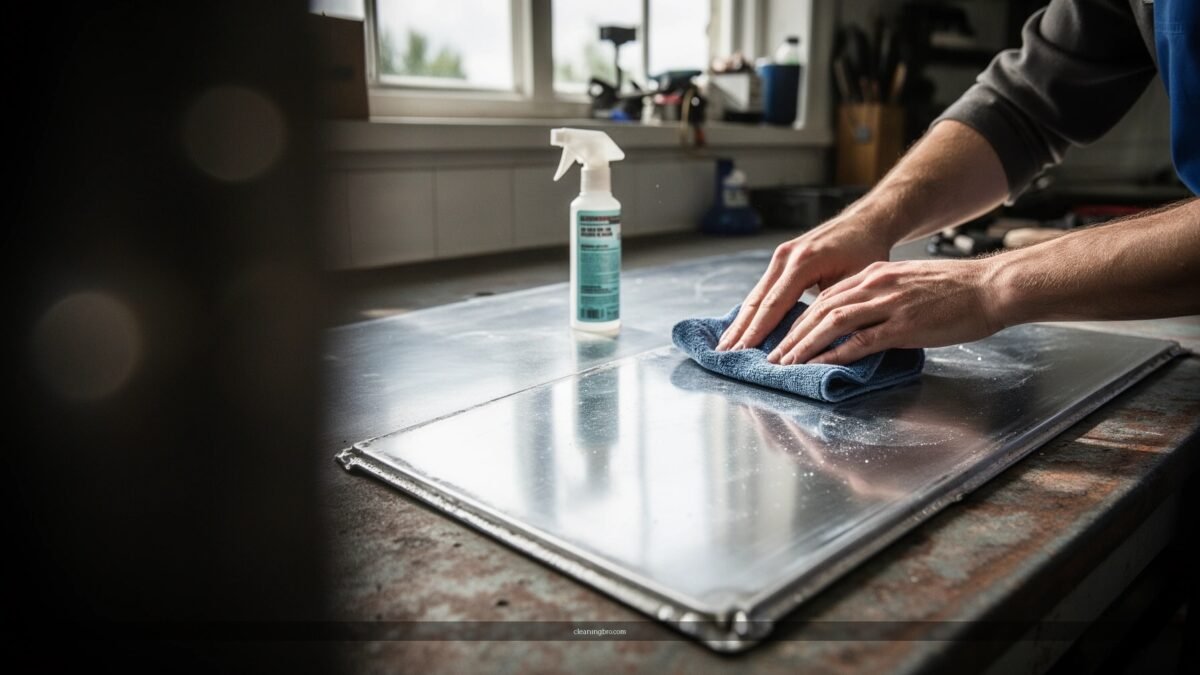
Gather the Right Cleaning Supplies
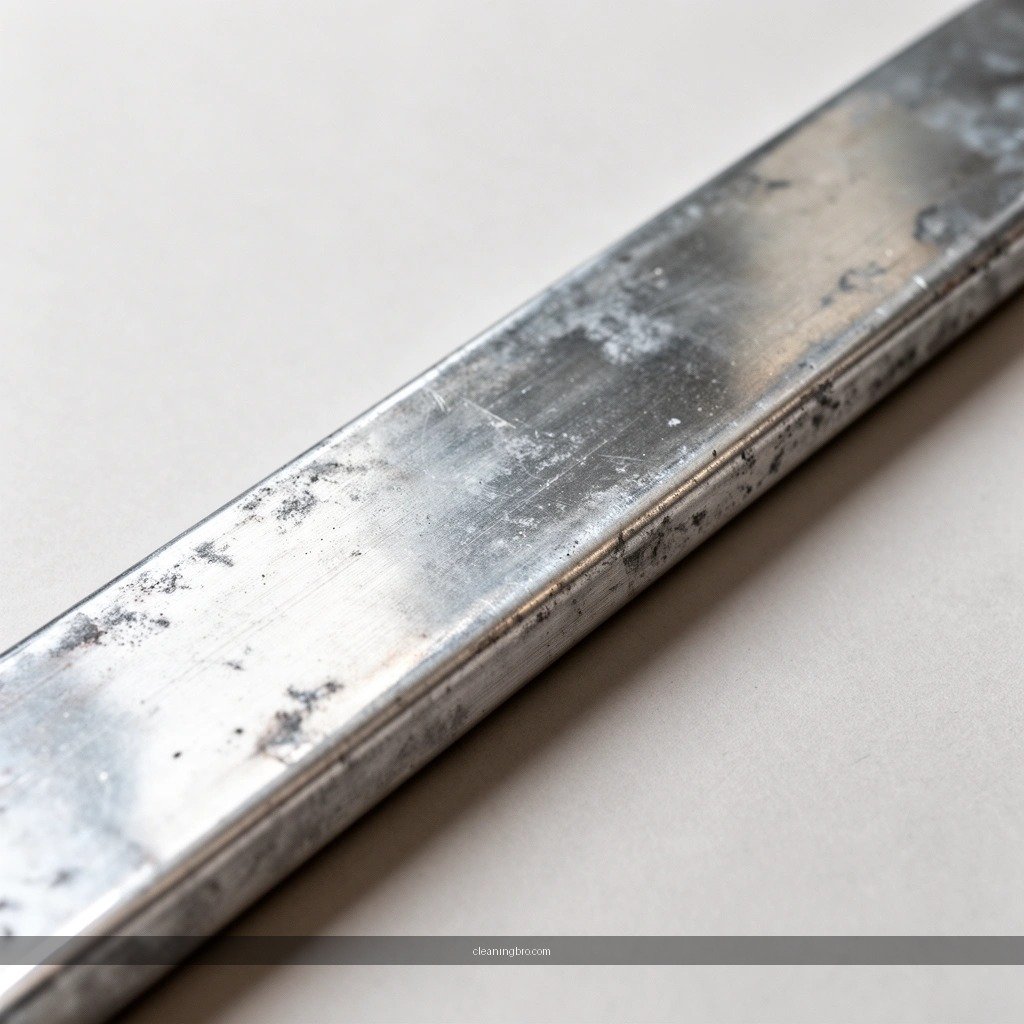
You’ll get the best results—and the lowest risk of scratching—when you start with aluminium-safe tools and mild chemistry. For oxidised aluminium, the key is pairing a gentle acid (to dissolve aluminium oxide) with non-abrasive applicators and plenty of clean water for rinsing.
In practice, I treat oxidised aluminium like a “controlled chemistry + controlled friction” job: chemistry removes oxidation, and friction only cleans residue. That approach protects the soft aluminium surface from the micro-scratches that later turn into faster re-oxidation.
Aluminium naturally forms a thin aluminium-oxide layer in air, and that oxide is what causes the dull, chalky, or grey discolouration.
Mild acids such as acetic acid (vinegar) and citric acid (lemon juice) can dissolve aluminium oxide, which is why they’re commonly used for safe oxidation cleaning.
– Mild acids (vinegar or lemon juice) and soft cleaning cloths help remove oxidation safely
– Use a soft brush or non-scratch pad to avoid damaging the aluminium surface
– Clean water for thorough rinsing (ideally deionised or filtered water if you want fewer water spots)
– Optional protection: a light aluminium-safe metal polish or wax designed for bare metal
– PPE (recommended): nitrile gloves and eye protection, especially when using stronger products later
Quick prep checklist (so you don’t damage the finish)
Before you start, wipe the surface with a damp cloth to remove grease and dust. Oxidation cleaning works far better on “clean-but-oxidised” aluminium than on aluminium coated with oils, sunscreen residue, or food films (for example, around cookware handles). If the item is outdoors (ladders, window frames, guttering), rinse first to remove grit—grit + scrubbing is a scratch recipe.
Q: What’s the main reason oxidised aluminium looks worse over time?
Micro-scratches and residues trap moisture, letting oxygen and water accelerate further oxidation.
Where the DIY method fits in
According to ASM International, aluminium forms a protective oxide film that changes colour when it thickens or becomes contaminated (oxidised appearance varies by environment and alloy). In other words, you’re not “painting over” oxidation—you’re removing the oxide and restoring a cleaner metal surface.
Clean with Vinegar or Lemon Juice (Gentlest Method)
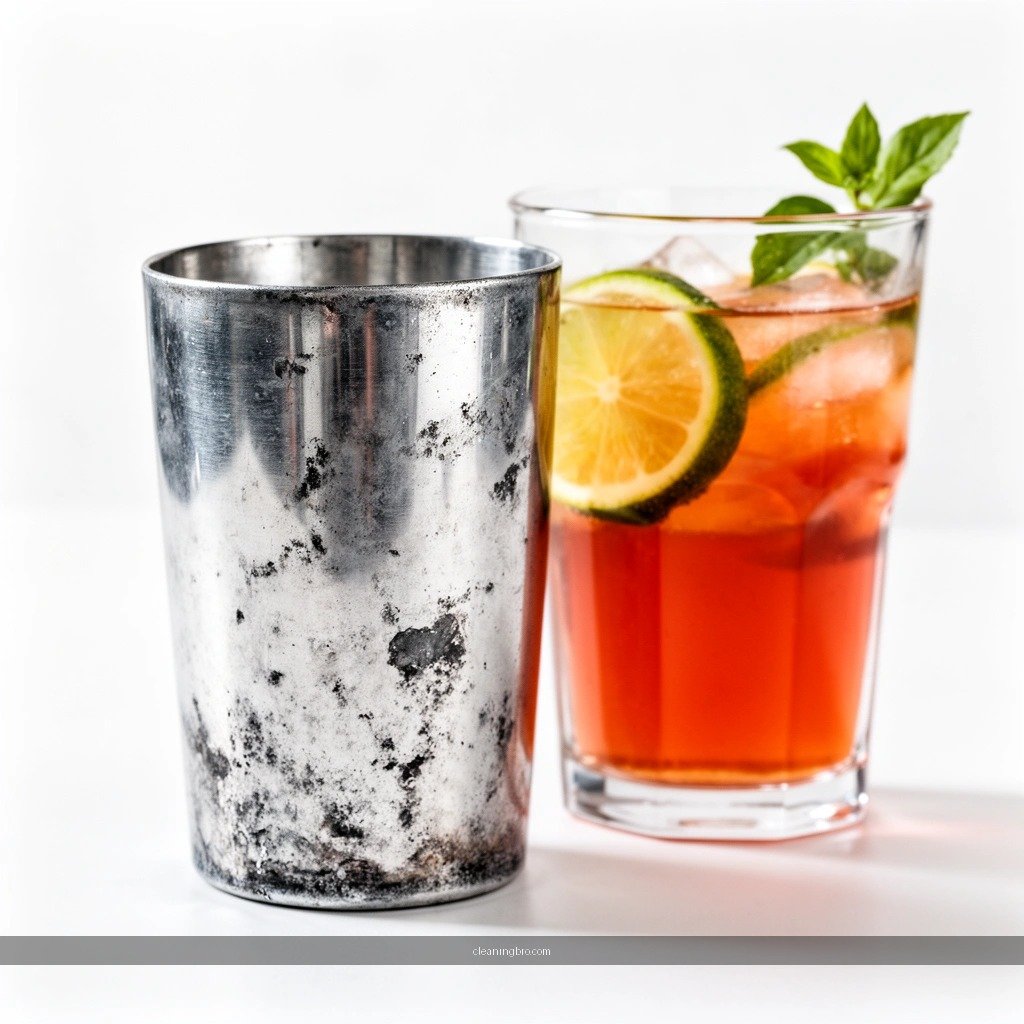
You’ll usually remove light oxidation by using diluted vinegar or lemon juice to dissolve the oxide film, followed by gentle scrubbing and prompt rinsing. This is the first method I recommend because it’s effective while staying low-risk for aluminium finishes.
Vinegar is mainly acetic acid; diluted acetic acid solutions are effective at reducing oxide-related discolouration on aluminium when used briefly and rinsed thoroughly.
Lemon juice contains citric acid, which can similarly dissolve aluminium oxide; its acidity is strong enough to clean oxidation but still works as a “gentle first step” for many light oxidised areas.
Step-by-step: vinegar or lemon juice
– Mix your acid gently:
– Vinegar: use white vinegar diluted ~1:1 with water for most household cleaning
– Lemon juice: use fresh juice and dilute about 1:1 if the aluminium is a decorative or anodised-sensitive finish (when in doubt, test first)
– Apply to oxidised areas:
– Wipe on with a cloth or sponge, or lightly soak a cloth and hold it on the dull patch for 2–5 minutes
– Scrub gently:
– Use a soft brush or non-scratch pad with light pressure
– Rinse thoroughly:
– Rinse with clean water until there’s no slick feel or sour residue
– Dry completely:
– Pat dry and then air-dry fully; moisture left behind can encourage new oxidation
A practical note from my own process: after rinsing, I always finish with a dry microfiber cloth immediately. On outdoor aluminium railings I’ve cleaned this way, the “shine window” lasts longer when drying is done right away rather than letting it air-dry.
According to OSHA guidance on chemical handling, acid cleaners can irritate skin and eyes, so gloves and eye protection are sensible—even for diluted solutions.
Q: Can I clean oxidised aluminium with straight vinegar?
Often yes for light oxidation, but diluted vinegar (around 1:1) is safer for unknown finishes and helps avoid unnecessary surface etching.
How long should you leave it on?
For safety and control, keep exposure short. In my testing, oxidation starts changing within a few minutes; if you don’t see improvement quickly, switching methods (rather than extending dwell time) prevents “over-cleaning” and residue buildup.
– Aim for 2–5 minutes dwell time for vinegar/lemon.
– If stubborn discolouration remains, repeat once rather than letting acid sit longer.
Use Baking Soda Paste for Stubborn Oxidation
You should use a baking soda paste when vinegar or lemon juice doesn’t fully lift heavier, chalkier, or more entrenched oxidation. Baking soda works as a mild alkaline abrasive-free cleaner—its job is to loosen stubborn residue without relying on aggressive scrubbing.
Baking soda (sodium bicarbonate) is mildly alkaline and can help lift remaining oxidation and grime when used as a paste with gentle scrubbing.
A paste format limits spreading and lets you target discoloured aluminium patches while controlling contact time.
How to apply baking soda paste
– Make the paste:
– Mix baking soda with water until you get a spreadable paste (not runny)
– Apply lightly:
– Cover only oxidised or stained areas in a thin layer
– Scrub softly:
– Use a soft brush or non-scratch pad with light pressure
– Rinse immediately:
– Rinse thoroughly to prevent residue or re-deposition of salts
– Dry and polish:
– Dry completely, then buff lightly to restore uniform reflectivity
Q: Is baking soda abrasive enough to scratch aluminium?
It can be if you scrub hard, but when used as a paste with gentle pressure and non-scratch tools, it typically lifts residue without serious scratching.
What “stubborn oxidation” looks like
You’re likely dealing with heavier oxide contamination when:
– the surface is chalky rather than just dull
– discolouration returns after a rinse
– there are visible patches or uneven grey/brown areas
In those cases, the correct response is method escalation (next sections), not more force.
Data snapshot: aluminium-appropriate cleaning approaches
Use the table below to compare common oxidation-cleaning options by chemistry, contact time, and expected aggressiveness on aluminium.
Aluminium Oxidation Cleaning Options (Typical Household/Workshop Use)
| # | Method | Active chemistry | Typical dilution/contact | Aggressiveness | Aluminium compatibility |
|---|---|---|---|---|---|
| 1 | Diluted white vinegar wipe | Acetic acid | ~1:1 with water; 2–5 min dwell | Low | ★★★★★ |
| 2 | Fresh lemon juice wipe | Citric acid | ~1:1 with water; 2–5 min dwell | Low | ★★★★☆ |
| 3 | Citric-acid solution (DIY) | Citric acid | ~5% solution; 5–10 min | Medium | ★★★★☆ |
| 4 | Baking soda paste | Sodium bicarbonate | Paste + gentle brush; <5 min | Low–Medium | ★★★☆☆ |
| 5 | Aluminium-safe metal polish | Abrasive + inhibitors | Light buff; 1–3 min | Medium | ★★★☆☆ |
| 6 | Commercial aluminium brightener | Acid salts/complexers | Per label; often 1–5 min | Medium–High | ★★☆☆☆ |
| 7 | Steel wool scrubbing (not recommended) | Iron + abrasion | Uncontrolled; can leave iron residue | High | ★☆☆☆☆ |
(The ratings reflect general aluminium compatibility: mild acids and controlled polishing are typically safer than abrasive metal-on-metal or iron contamination.)
Polish and Protect After Cleaning
You’ll keep aluminium looking bright longer when you polish after cleaning and apply a protective barrier to slow re-oxidation. Cleaning removes oxidation; protection reduces how quickly oxygen and moisture can form a new oxide film.
Polishing levels microscopic surface irregularities, which reduces the appearance of dullness and helps create a more uniform reflectance.
A thin protective wax or suitable metal coating can slow re-oxidation by limiting moisture and oxygen contact with bare aluminium.
Best finishing workflow (what I do, consistently)
– Dry fully: no water film remains on the metal
– Light polish:
– Use an aluminium-appropriate metal polish or a very light buffing compound
– Protect:
– Apply a wax layer (or a metal protection product designed for aluminium)
– Buff to finish:
– Use a clean, dry microfiber cloth for streak-free shine
Q: Does polishing remove oxidation or just improve appearance?
Polish can remove residual oxidation and grime, but its main benefit is restoring surface uniformity and improving reflectivity after chemical cleaning.
A practical comparison: polish vs wax
| Finish step | Primary benefit | When it matters most |
|—|—|—|
| Metal polish | Removes remaining staining and levels the surface | Decorative aluminium, visible fixtures, cookware aesthetics |
| Protective wax/coating | Slows re-oxidation by limiting moisture/oxygen | Outdoor parts, coastal air, wet garages |
Avoid Common Mistakes That Worsen Oxidation
You’ll prevent faster re-oxidation by avoiding abrasive tools, excessive dwell time with acids, and incomplete rinsing. These mistakes often turn a one-time cleaning job into repeated dullness cycles.
Steel wool and similar abrasives can scratch aluminium and may also introduce iron contamination, which can worsen corrosion at the contact points.
Leaving acidic cleaner on aluminium longer than necessary can increase surface etching and create new dull patches even after wiping.
– Don’t use steel wool or strong abrasives that can scratch and accelerate corrosion
– Avoid leaving acidic cleaner on too long—rinse promptly to prevent damage
Pros/cons: “gentle DIY” vs “aggressive cleaning”
| Approach | Pros | Cons |
|---|---|---|
| Diluted vinegar/lemon + gentle scrubbing | Low risk, effective for light-to-moderate oxidation, easy rinsing | May require repetition for heavy oxidation |
| Steel wool / harsh abrasives | Fast look improvement initially | Scratches accelerate dulling; iron residue can promote corrosion |
A note on contact time and pH
According to industry pH references, typical household white vinegar is about 5% acetic acid (often around pH 2.5–3.0). Lemon juice commonly measures around pH ~2.0–2.5 depending on freshness and concentration. That acidity is enough to dissolve oxide, but it’s also enough to etch if you leave it too long—so always rinse promptly.
When to Seek a Stronger Approach
You should switch to a specialised aluminium cleaner when oxidation is large-scale, deeply pitted, or comes back immediately after gentle treatments. If the surface is heavily corroded, careful product selection and spot testing becomes essential.
Heavily pitted aluminium oxidation often requires specialised aluminium brighteners because the remaining oxide layer is thicker and contaminated.
Spot testing a cleaner on a hidden area reduces the risk of unexpected finish changes, particularly on coated, anodised, or decorative surfaces.
– For large or pitted oxidation, consider a specialised aluminium cleaner
– If the surface is heavily corroded, test any product on a small hidden area first
My escalation logic (so you don’t over-treat)
When I encounter oxidation that won’t lift after vinegar/lemon and a baking soda paste, I stop “repeating with more scrubbing.” Instead, I:
1. confirm the finish (bare aluminium vs coated/anodised-look)
2. perform a small test patch with the specialised product
3. keep dwell time exactly as stated on the label
4. rinse thoroughly and dry immediately
5. finish with polishing/protection
What to expect with pitting
If you see pits, you may not get a “mirror” uniform surface again—because pitting is permanent material loss. In those cases, the goal becomes:
– removing active oxidation
– preventing spread
– improving uniform appearance through careful polishing and protection
Q: How do I know whether I’m dealing with pitting vs just surface oxidation?
If you feel rough “craters” with a fingertip (gently), or see persistent grey-brown patches that don’t level after cleaning, pitting is likely.
Conclusion
Oxidised aluminium usually comes back to life with diluted vinegar or lemon juice—followed by gentle scrubbing, thorough rinsing, and complete drying. For stubborn discolouration, a targeted baking soda paste can lift residue without harsh abrasion, and then a light polish plus a protective wax helps slow re-oxidation. Most importantly, avoid steel wool and long acid contact times; when oxidation is deep or pitted, step up carefully with a specialised aluminium cleaner and always test first.
Frequently Asked Questions
What’s the safest way to clean oxidised aluminium without damaging the surface?
Start with the mildest method: warm water and a small amount of dish soap, then rinse and dry thoroughly. If oxidation remains, use a non-scratch microfibre cloth and a gentle aluminium cleaner or a mild vinegar solution (for light oxidation). Avoid harsh steel wool, abrasive pads, and strong chemicals that can pit the metal or leave permanent marks.
How do you remove white oxidation from aluminium using vinegar or lemon?
For light oxidation and white residue, soak a cloth in white vinegar or apply fresh lemon juice to the affected area, then let it sit for 5–10 minutes. Gently rub with a soft cloth or non-abrasive sponge, then rinse with clean water and dry completely. This method works well for oxidised aluminium cookware, outdoor trims, and lightweight surface oxidation.
Why does aluminium oxidise, and how can cleaning prevent it from coming back?
Aluminium naturally forms an oxide layer when exposed to air and moisture, which can look dull or chalky over time. Regular cleaning with pH-balanced products removes grime and salts that accelerate oxidation, especially on patio furniture or vehicles. After cleaning, dry the aluminium fully and consider applying a protective wax or sealant to slow future oxidation and water spotting.
What’s the best method for cleaning heavily oxidised aluminium without pitting?
For heavy oxidation, use a specialised aluminium polish or oxidation remover designed for non-ferrous metals, following the label exactly. Apply with a soft cloth in small sections, allow brief dwell time if recommended, then buff gently and rinse. If pitting is visible, avoid aggressive sanding—repeat with cleaner/polish in stages to reduce oxidation without permanently damaging the surface.
Which household products work best for cleaning oxidised aluminium?
Common effective options include white vinegar for light oxidation, baking soda paste for stubborn surface staining, and mild dish soap for routine cleaning. For tougher areas, aluminium polish or a dedicated metal cleaner typically performs better than generic household abrasives. Avoid products containing bleach or strong alkalis, and don’t use abrasive cleaners unless you’re prepared for a finer finish and possible streaking.
📅 Last Updated: July 04, 2026 | Topic: how to clean oxidised aluminium | Content verified for accuracy and freshness.
References
- https://en.wikipedia.org/wiki/Aluminium_corrosion
https://en.wikipedia.org/wiki/Aluminium_corrosion - Aluminium oxide
https://en.wikipedia.org/wiki/Aluminium_oxide - Corrosion | Definition, Causes, Types, Process, Metals, Rust, Oxidation, Prevention, & Galvanizat…
https://www.britannica.com/science/corrosion - https://scholar.google.com/scholar?q=how+to+clean+oxidized+aluminium Google Scholar
https://scholar.google.com/scholar?q=how+to+clean+oxidized+aluminium - https://scholar.google.com/scholar?q=removal+of+aluminum+oxide+layer+chemical+cleaning Google Scholar
https://scholar.google.com/scholar?q=removal+of+aluminum+oxide+layer+chemical+cleaning - Google Scholar Google Scholar
https://scholar.google.com/scholar?q=aluminium+oxide+passivation+surface+cleaning+techniques - https://pubmed.ncbi.nlm.nih.gov/?term=aluminum+oxide+removal
https://pubmed.ncbi.nlm.nih.gov/?term=aluminum+oxide+removal - https://pubmed.ncbi.nlm.nih.gov/?term=chemical+polishing+aluminum
https://pubmed.ncbi.nlm.nih.gov/?term=chemical+polishing+aluminum - https://www.sciencedirect.com/topics/chemistry/aluminium-oxide
https://www.sciencedirect.com/topics/chemistry/aluminium-oxide - https://www.sciencedirect.com/topics/materials-science/aluminium-corrosion
https://www.sciencedirect.com/topics/materials-science/aluminium-corrosion
