
Want to clean a pebble concrete driveway and get it looking like new? This step-by-step guide walks you through the fastest, safest method to remove grime, stains, and embedded dirt without damaging the pebble surface. You’ll know exactly what to do, what to use, and when to rinse so you get real results in the right order.
Cleaning a pebble concrete driveway is straightforward: sweep and pre-rinse, remove stains with the gentlest effective chemistry (detergent, then targeted stain removers), and finish with a thorough rinse to protect the pebble texture. In this guide, you’ll follow a practical, step-by-step workflow I use on real pebble concrete driveway surfaces—because the difference between a “fresh” look and a damaged finish usually comes down to choosing the right cleaner and controlling water pressure.
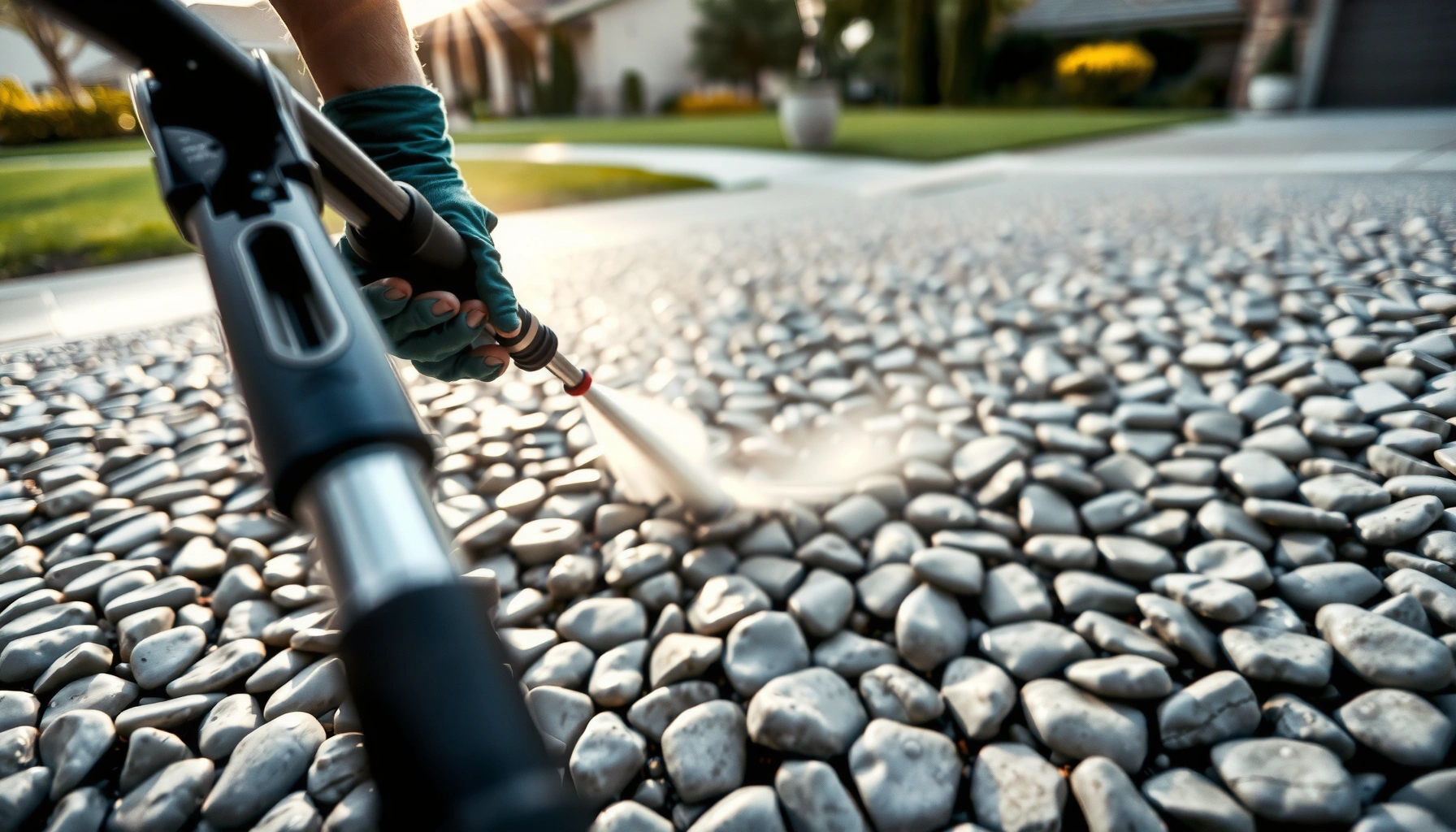
Assess the Dirt and Identify Stains
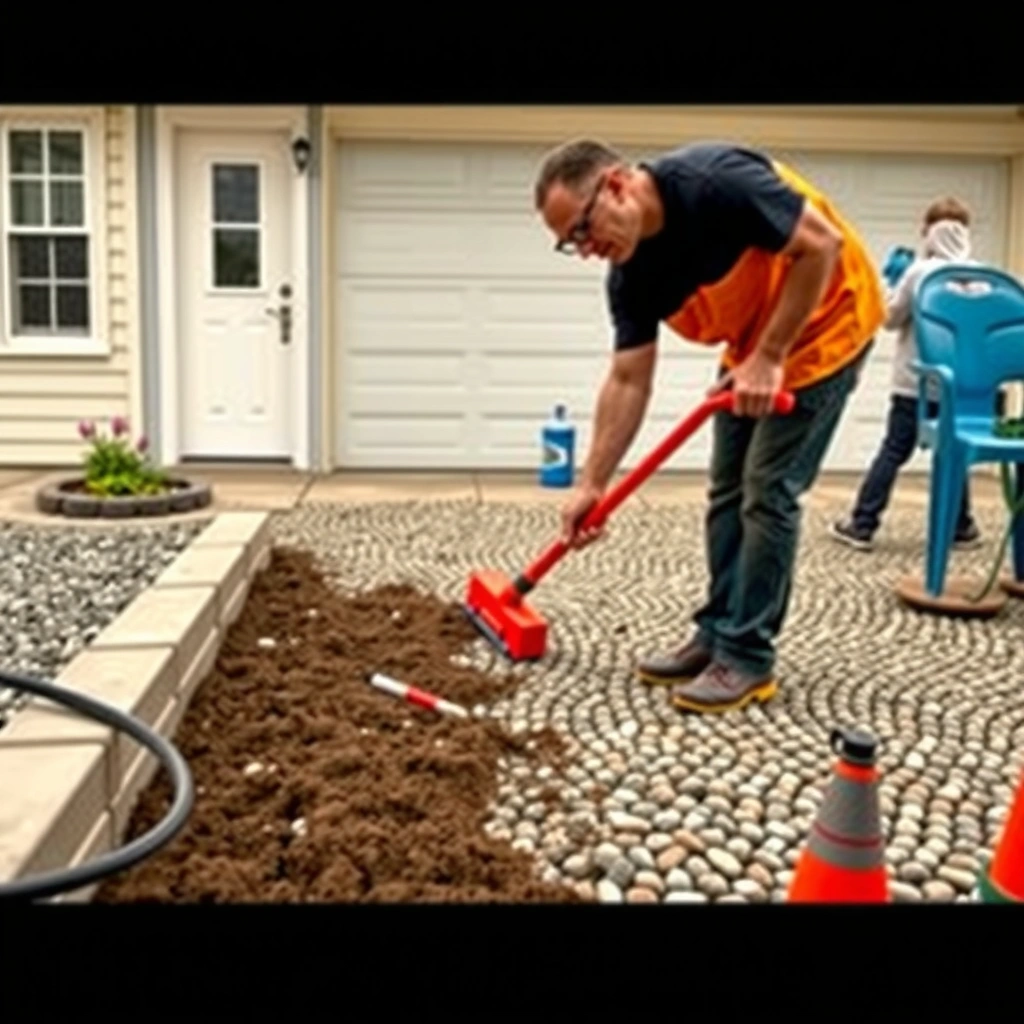
Start by identifying what’s on your pebble concrete driveway, because the “best” cleaner depends on whether you’re dealing with organic growth, oil, rust, or general grime. When I first cleaned my own pebble concrete driveway years ago, I tried an all-purpose degreaser on algae—turns out that mismatch is how you end up with discoloration and stubborn streaks that return faster.
Oil stains on pebble concrete are best addressed with an oil-degreasing chemistry before any heavy scrubbing or pressure washing.
Algae and mold on exterior concrete typically require a concrete-safe cleaner specifically formulated for organic growth, not just soap and water.
Rust and mineral staining are usually not removed by detergent alone; they require targeted removers and careful rinsing.
Before you apply anything to a pebble concrete driveway, do a quick visual diagnostic across the whole area:
– Oil/grease: Dark, rainbow-tinted, or glossy patches—often near vehicle entrances, trash cans, or spots where drips land.
– Algae/mold (organic growth): Dark green/black speckling, slimy patches, or “speckled” streaks that appear in shaded damp zones.
– Rust/mineral stains: Orange-brown streaks, especially near metal items (lawn equipment, planters) or where irrigation water drips.
– General grime: Gray film, tire dust, and embedded road residue that dulls the pebble texture.
Then verify surface integrity:
– Check for loose pebbles or damaged areas. Pebble concrete can wear unevenly at edges. If you see pebbles that lift easily with light pressure, you’ll need gentler methods (more detergent + brushing, less aggressive pressure washing).
– Look for sealant condition. A sealed pebble concrete driveway cleans differently: sealed surfaces often release dirt more easily, but some sealers can be sensitive to strong chemicals.
Finally, do product discipline:
– Test in a hidden area (like near the garage wall) and wait for drying. Pebble concrete driveway discoloration often becomes obvious only after moisture evaporates.
– Read the active ingredient section on labels. This matters because “bleach,” “acid,” “oxalic acid,” and “surfactant” behave differently on concrete and can affect the final color.
Q: What should I do first when cleaning a pebble concrete driveway—sweep or apply cleaner?
Sweep first and pre-rinse, because caked debris prevents chemicals from contacting the actual stains.
Q: Will pressure washing remove all stains on pebble concrete?
No—pressure washing helps grime, but oil, rust, and organic staining typically require chemistry first.
Q: How can I avoid discoloration on my pebble concrete driveway?
Always spot-test products in a small hidden area and wait for full dry before committing to the full driveway.
Clear Debris and Pre-Rinse
You get better cleaning on a pebble concrete driveway when you remove loose debris first and pre-rinse away mud before applying any detergent or stain chemistry. Pre-rinsing is not “skipping steps”—it’s how you prevent cleaners from working against packed grit and how you avoid turning muddy runoff into permanent staining.
Sweeping removes grit and leaves that can scratch pebble concrete and interfere with detergent contact.
A pre-rinse reduces mud and road film so your cleaner can focus on stains instead of embedded debris.
Letting standing water drain slightly helps prevent diluted chemicals from streaking as they dry on a pebble concrete driveway.
Work in a simple order that protects the surface:
1. Sweep thoroughly (stiff broom). Focus on joints and textured recesses where debris sits.
2. Remove loose pebbles if they’re truly loose. If a pebble lifts, don’t blast water under it—note the area for later patching or extra gentle cleaning.
3. Hose-rinse from the top of the slope downward (if the driveway slopes). You’re trying to reduce mud, not fully clean yet.
4. Manage runoff. If possible, rinse so dirty water doesn’t flow toward landscaping or storm drains without control. (Local rules vary.)
If heavy standing water remains:
– Pause and allow a short dry/drain window (e.g., 10–30 minutes depending on sun/wind). On a pebble concrete driveway, fully saturated surfaces can cause diluted cleaners to streak and settle.
Optional but useful prep:
– Cover nearby plants (or rinse them promptly afterward) if you’ll use stronger cleaners.
– Use a garden sprayer for targeted wetting on oily spots so you don’t spread contamination across the entire pebble concrete driveway.
Choose the Right Cleaning Method
Use the gentlest effective method for your pebble concrete driveway: detergent + stiff brush for everyday grime, and carefully controlled pressure washing for ground-in dirt. In practice, I’ve found that “too much pressure too soon” is the fastest route to dislodged pebbles or a rough, uneven texture—especially on older pebble concrete.
For light buildup on concrete, a surfactant-based detergent solution plus scrubbing typically outperforms water-only rinsing.
Pressure washers can dislodge aggregate if used too aggressively, so a wide nozzle and lower pressure settings are safer for pebble-textured concrete.
Stain chemistry usually works best when applied to a pre-wetted surface so it can penetrate into pores and grout lines.
Best method for everyday dirt (detergent + brush)
When the pebble concrete driveway looks dull or dusty (but stains aren’t severe), do this:
– Mix warm water + a concrete-safe detergent (often labeled “safe for concrete”).
– Apply with a pump sprayer or hose-end sprayer.
– Dwell briefly (commonly 5–10 minutes) while keeping the surface wet.
– Scrub using a stiff nylon brush (avoid metal bristles on textured finishes).
Best method for ground-in grime (careful pressure washing)
Use pressure washing only when you truly need it:
– Choose a wide nozzle (fan pattern) to spread force.
– Use low-to-moderate pressure appropriate for concrete cleaning. As a rule of thumb, many contractors aim around 500–1200 psi for textured exterior surfaces to reduce the risk of dislodging aggregate (confirm your equipment manufacturer guidance first).
– Keep the wand moving—do not “stay” on one spot.
– Do not pressure-rinse before treating oil/rust. Chemistry lifts staining; pressure spreads residues if used too early.
Pros/cons: Detergent vs. Pressure Washing (pebble concrete driveway)
- Detergent + brush
-
Pros: Low risk to pebbles, better control for everyday grime and textured channels, fewer streak issues when rinsed correctly.
Cons: Takes more elbow grease; may not fully remove deeply embedded soil without dwell time or repeat passes. - Pressure washing
-
Pros: Fast removal of road film and embedded dirt once stains are pre-treated; efficient for large drives.
Cons: Higher risk of surface erosion/dislodged pebbles if pressure/nozzle is wrong; requires careful technique to avoid streaking.
Q: What pressure setting is safest for cleaning a pebble concrete driveway?
Use the lowest setting that achieves removal, typically in the “low-to-moderate” range for textured concrete, and always start wider/no wider than a narrow pinpoint nozzle.
Q: Should I pressure wash before applying stain remover?
No—apply chemistry first for oils, algae, and rust, then rinse; otherwise you can drive contaminants deeper or spread them across the surface.
Key safety and chemistry reality checks
– Avoid mixing chemicals. Never combine chlorine bleach products with acids or other cleaners.
– If you use bleach-based options for organic growth, follow label dilution instructions exactly—household bleach commonly contains 5–6% sodium hypochlorite (varies by brand), per U.S. Environmental Protection Agency (EPA) guidance on typical household bleach concentrations. (Always verify your product label.)
– Wear proper PPE: eye protection, gloves, and closed-toe footwear—especially with rust removers and oxalic-acid-type products.
Treat Common Stains Effectively
Targeted stain treatment is the difference between “mostly clean” and a pebble concrete driveway that looks properly restored. Treat the stain category first, then scrub lightly and rinse—this sequence keeps you from grinding contaminants deeper into the pebble texture.
Oil/grease requires degreasing chemistry; detergents alone often leave a gray halo on pebble concrete.
Organic growth like algae typically responds to concrete-safe anti-growth cleaners followed by thorough rinsing.
Rust/mineral stains usually need targeted removers (often oxalic acid or chelators) and close adherence to label dwell times.
Oil and grease
What to look for: dark patches, greasy feel (sometimes still slick after drying), tire-drip zones.
How to treat:
1. Apply a concrete-safe oil-degreasing cleaner (product category: “oil stain remover” or “degreaser”).
2. Let it dwell briefly (often 5–15 minutes depending on product).
3. Scrub with a stiff nylon brush.
4. Rinse thoroughly; repeat if needed.
From my experience cleaning pebble concrete driveways after a leaking vehicle: the first pass removes most surface oil, but the second pass after rinsing and drying typically clears the “ghosting” that remains in pebble joints.
Algae and mold
What to look for: dark speckling, slippery areas, and growth in shaded/wet zones.
How to treat:
1. Use a concrete-safe cleaner designed for organic growth (commonly labeled as algae/mold remover for masonry).
2. Apply evenly so the treated area doesn’t dry mid-process.
3. Allow dwell time as specified; then scrub gently if texture allows.
4. Rinse thoroughly, ideally with moderate water flow.
Chemical caution: If you use oxidizers or bleach-based products, always follow label instructions and ensure proper ventilation. According to Centers for Disease Control and Prevention (CDC), dilution and contact time matter for disinfecting/discoloration control, and incorrect mixing can reduce effectiveness or increase hazards (read your product label as the governing instruction).
Q: Can I remove algae from a pebble concrete driveway with regular detergent?
Regular detergent can loosen grime, but algae and mold typically require an anti-growth cleaner formulated for organic growth.
Rust or mineral stains
What to look for: orange-brown streaks and spotting.
How to treat:
1. Use a targeted rust remover (commonly oxalic-acid-based or chelator-based).
2. Follow label dwell time exactly—too long can dull the surface.
3. Scrub lightly and rinse aggressively afterward.
If the rust is coming from a recurring source (metal edging, irrigation leaks, mower contact), treat the source first—otherwise your pebble concrete driveway will re-stain even after a successful cleaning.
Scrub, Rinse, and Protect the Pebble Surface
Scrubbing and rinsing correctly ensures your pebble concrete driveway looks uniform instead of streaky or patchy. The protection step comes last because you want the surface fully cleaned and dry so the sealer (if used) bonds properly to the concrete matrix.
Scrub in small sections so detergents and stain removers lift grime without drying into the pebble texture.
Thorough rinsing removes chemical residue that can otherwise cause streaking or color variation during drying.
Apply protective products only after the driveway is fully dry to reduce adhesion failure and mottling on pebble concrete.
Scrub strategy (section-by-section)
– Work in 3–5 foot sections so you can control dwell time.
– Use the right tool:
– Nylon brush for textured lifting.
– Soft deck brush if you’re trying to be extra conservative on older pebble concrete.
– Avoid aggressive scrapers that catch pebbles.
Rinse thoroughly (the “final truth” step)
– Rinse until runoff water looks clear.
– Pay attention to edges and low spots where residue collects.
– If you see faint soap lines, that’s often insufficient rinsing—go back and rinse again before anything dries fully.
Dry completely before protection
On pebble concrete driveway surfaces, moisture trapped in joints can cause:
– sealant “blushing” (cloudy appearance),
– reduced adhesion,
– uneven sheen.
Give the driveway adequate time to dry based on weather conditions—often 24–72 hours depending on humidity and temperature (use your judgment and local conditions).
Prevent Future Stains and Build-Up
Prevention is what keeps a pebble concrete driveway looking “like it was just cleaned” for longer periods. After you clean and protect the surface, you reduce both staining chemistry contact time and the ability of dirt to embed in the pebble texture.
Sealing pebble concrete can reduce how quickly oils, water, and dirt penetrate, making future cleanings easier.
Removing organic debris early reduces algae regrowth by limiting nutrients and shaded moisture retention.
Using spill containment and cleaning immediately after drips prevents oil migration into pebble joints and grout lines.
Seal periodically (but don’t rush it)
– If your pebble concrete driveway is unsealed, consider a concrete sealer compatible with pebble/textured finishes.
– Re-seal on a schedule based on sun exposure and traffic; many maintenance plans fall in the 2–5 year range, but always follow the sealer manufacturer’s guidance.
Reduce organic sources
– Keep leaves, grass clippings, and mulch off the surface.
– In shaded zones, growth appears sooner—inspect monthly during wet seasons and treat early.
Manage vehicle-related staining
– Place mats or containment pads under frequently dripping equipment (lawn tractors, snow blowers).
– Clean spills quickly—oil becomes harder to remove after it migrates and oxidizes in the pebble concrete pores.
Q: Will sealing completely prevent stains on a pebble concrete driveway?
No—sealing slows absorption, but it doesn’t make stains impossible; fast cleanup still matters.
Cleaning Chemistry Fit for Pebble Concrete Driveways (2026)
| # | Cleaner Type (Active Category) | Best For on Pebble | Typical Dwell Time | Surface Risk |
|---|---|---|---|---|
| 1 | Neutral pH Detergent (Surfactants) | Tire dust & gray film | 5–10 min | ★★★☆☆ |
| 2 | Heavy-Duty Degreaser (Alkaline/solvent blended) | Fresh & set grease | 10–15 min | ★★★★☆ |
| 3 | Algae/Moss Cleaner (Quaternary or bio-enzymatic) | Slime, speckling, regrowth | 10–20 min | ★★★☆☆ |
| 4 | Oxalic Acid / Chelator Rust Remover | Orange rust streaks | 3–10 min | ★★☆☆☆ |
| 5 | Lime/Hard-Water Descaler (Mild acid blend) | White scale & mineral haze | 5–12 min | ★★☆☆☆ |
| 6 | Oxygen Bleach Cleaner (Sodium percarbonate) | Organic discoloration | 20–60 min | ★★★☆☆ |
| 7 | Concrete Brightener (Post-wash color correction) | Stale, dull tone | 10–15 min | ★★★☆☆ |
When you clean a pebble concrete driveway, start with sweeping and pre-rinsing, then choose the gentlest effective method for your specific stains. Follow up with careful scrubbing, thorough rinsing, and only then consider protection once the surface is fully dry. If you match the cleaner to the stain type—detergent for grime, degreaser for oil, anti-growth for algae, and targeted chemistry for rust—you’ll keep the pebble texture looking fresh with less effort and fewer repeat cleanings.
Frequently Asked Questions
What’s the best way to clean a pebble concrete driveway without damaging the surface?
Start by sweeping away loose dirt, leaves, and grit so you don’t grind debris into the pebble concrete. Use a garden hose or pressure washer on a low-pressure setting and keep the nozzle at a safe distance to avoid dislodging pebbles or exposing aggregate. Clean with a pH-neutral driveway detergent and rinse thoroughly, then let the surface dry completely. Avoid harsh chemicals, metal brushes, and high-pressure settings that can erode the finish.
How do I remove moss, algae, and slippery buildup from pebble concrete?
For moss and algae, first rinse the driveway to remove loose growth, then apply an algae/moss cleaner labeled for concrete and pebble finishes. Let it dwell as directed so the product can break down the slippery biofilm, then scrub gently with a nylon brush or push broom. Rinse well and repeat if needed, especially for shaded areas where growth returns. Improving sunlight and airflow—like trimming nearby plants—helps prevent future buildup.
Which cleaner works best for oil stains, tire marks, and grease on pebble concrete?
Degreasers designed for concrete work best because they penetrate and lift oil without overly attacking the aggregate. Blot fresh spills first, then apply the degreaser to the stain and cover it with a light layer of absorbent material if recommended by the product. After the dwell time, scrub lightly and rinse thoroughly until runoff is clear. For stubborn tire marks, you may need a second application or a targeted concrete stain remover.
How can I clean pebble concrete after winter—salt, grime, and discoloration?
Begin with a thorough rinse and sweep to remove sand and loose grit from plowing or shoveling. Use a concrete-friendly cleaner or mild degreaser and scrub the stained areas, then rinse well to prevent residue buildup. Avoid “eternal” salt removal with aggressive acids; instead, use pH-neutral products that won’t degrade the surface. If discoloration persists, a gentle deep clean followed by a proper rinse is usually safer than repeatedly blasting with high pressure.
Why does pebble concrete look dull after pressure washing, and how do I prevent it?
Pebble concrete can look dull if the surface finish is stripped or if water pressure dislodges pebbles from the binder. To prevent this, use low to medium pressure, maintain distance, and avoid keeping the nozzle in one spot for too long. Choose a pH-neutral cleaner rather than acidic or caustic chemicals, and always rinse thoroughly after scrubbing. If the driveway was previously sealed, consider re-sealing after cleaning once the surface is fully dry to restore appearance and help future dirt release.
📅 Last Updated: July 26, 2026 | Topic: how to clean pebble concrete driveway | Content verified for accuracy and freshness.
References
- Concrete
https://en.wikipedia.org/wiki/Concrete - Pressure washing
https://en.wikipedia.org/wiki/Pressure_washing - Mold Cleanup in Your Home | US EPA
https://www.epa.gov/mold/mold-cleanup-your-home - https://www.cdc.gov/mold/default.htm
https://www.cdc.gov/mold/default.htm - https://www.nps.gov/orgs/1159/preservation-brief-15-preservation-of-historic-concrete.htm
https://www.nps.gov/orgs/1159/preservation-brief-15-preservation-of-historic-concrete.htm - https://www.britannica.com/technology/concrete
https://www.britannica.com/technology/concrete - https://pubmed.ncbi.nlm.nih.gov/?term=concrete%20cleaning%20mold%20algae
https://pubmed.ncbi.nlm.nih.gov/?term=concrete%20cleaning%20mold%20algae - Google Scholar Google Scholar
https://scholar.google.com/scholar?q=cleaning+concrete+driveway+pressure+washing+stains - Google Scholar Google Scholar
https://scholar.google.com/scholar?q=pebble+concrete+surface+cleaning - Google Scholar Google Scholar
https://scholar.google.com/scholar?q=concrete+surface+cleaning+algae+mildew+removal
