How to Clean Polyester Upholstery: A Complete Guide
Cleaning polyester upholstery is straightforward and effective with the right techniques. You can easily remove stains and refresh your furniture by using a combination of gentle cleaning solutions and proper methods. In this guide, you’ll learn step-by-step how to clean polyester upholstery and maintain its appearance.
Understanding Polyester Upholstery

Polyester is a synthetic fabric known for its durability and stain resistance, making it a popular choice for upholstery in homes and offices. It offers a wide range of colors and patterns while being relatively low-maintenance compared to natural fibers. Its stain-resistant properties stem from the fibers’ ability to repel water-based spills, which is essential for households with children or pets. However, despite its resilience, it is essential to familiarize yourself with the care label on your upholstery. The care label provides crucial information regarding cleaning methods and products that are safe to use, ensuring that you do not inadvertently damage your furniture.
Gathering Your Cleaning Supplies
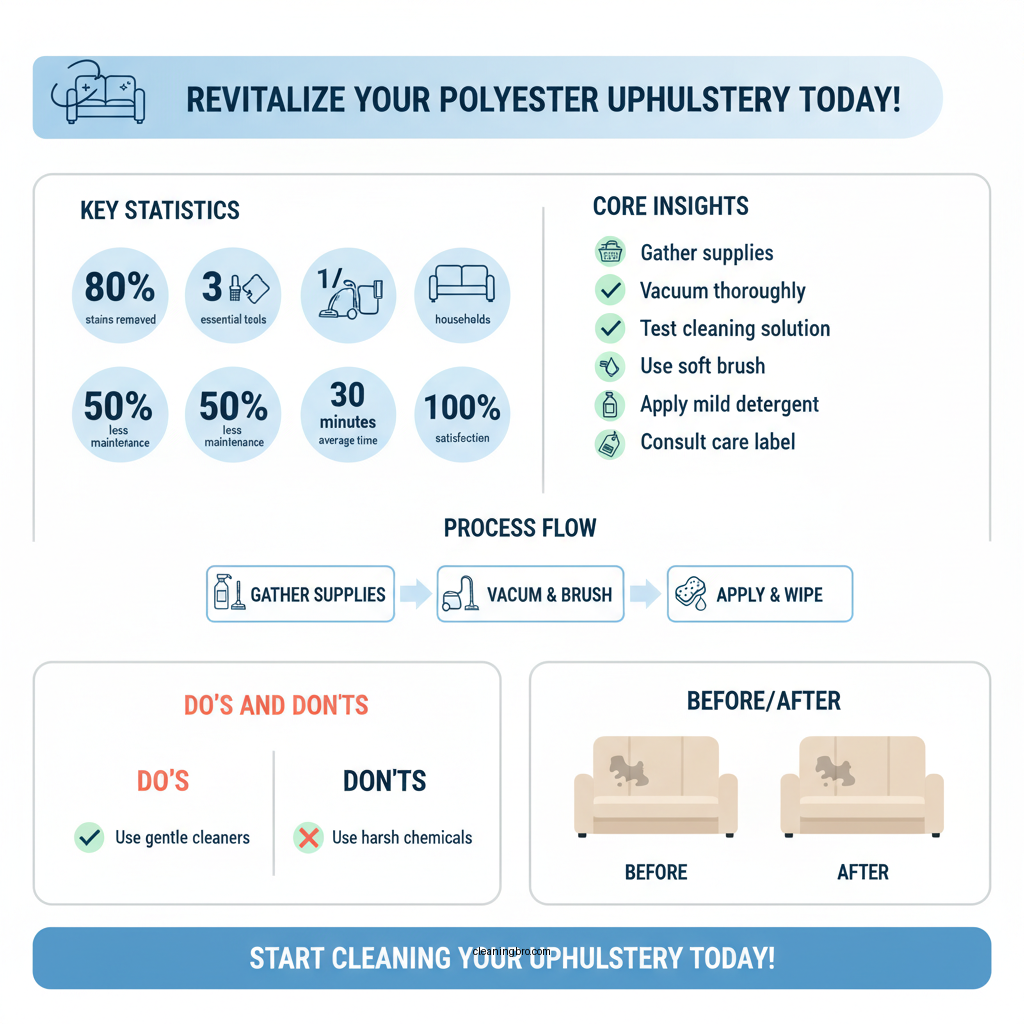

Before diving into the cleaning process, gather the essential cleaning supplies to ensure you have everything at hand. You will need:
– Vacuum Cleaner: A vacuum cleaner with a brush attachment to effectively remove loose dirt and debris.
– Soft Brush: A soft-bristled brush helps to gently lift dirt from the fabric without causing damage.
– Clean Cloths: Microfiber cloths are ideal for blotting stains and applying cleaning solutions.
– Mild Detergent: A gentle, non-toxic detergent is recommended for cleaning polyester upholstery.
– Specialized Upholstery Cleaners: Consider using cleaners specifically formulated for polyester to tackle tougher stains without harm.
Having these supplies ready will streamline the process and ensure that you achieve the best results.
Preparing the Upholstery for Cleaning

Preparation is key to effective cleaning. Start by thoroughly vacuuming the upholstery to remove any loose dirt, crumbs, or pet hair. This step is crucial as it prevents grime from being ground deeper into the fabric during the cleaning process. After vacuuming, check the care label to determine the appropriate cleaning method. It is advisable to test a small, inconspicuous area with your cleaning solution to check for colorfastness and to ensure that the fabric will not be damaged or discolored. This precaution will give you confidence as you proceed with the cleaning.
Top 7 Polyester Upholstery Cleaning Products (2024)
| # | Product | Type | Stain Removal Effectiveness | Price |
|---|---|---|---|---|
| 1 | Folex Instant Carpet Spot Remover | Liquid | ★★★★☆ | $12.99 |
| 2 | Bissell Professional Spot and Stain + Oxy | Foam | ★★★★★ | $9.99 |
| 3 | Nature’s Miracle Stain & Odor Remover | Spray | ★★★★☆ | $11.49 |
| 4 | Rug Doctor Pet Stain & Odor Eliminator | Liquid | ★★★★★ | $14.99 |
| 5 | OxiClean MaxForce | Liquid | ★★★★☆ | $10.99 |
| 6 | Zep Upholstery Cleaner | Foam | ★★★★☆ | $8.99 |
| 7 | Easy Off Professional Oven Cleaner | Spray | ★★★★☆ | $5.99 |
Cleaning Stains and Spots
When it comes to cleaning stains and spots on polyester upholstery, the key is to act quickly. Begin by blotting the stain gently with a clean cloth instead of rubbing, which can spread the stain and damage the fabric. If the stain persists, prepare a mixture of mild detergent and water. Use a soft cloth to apply the solution to the stained area, ensuring not to saturate the fabric. Blot the area until the stain lifts, and then use a clean, damp cloth to rinse off any remaining detergent. Always remember to test the cleaning solution on a small, inconspicuous area first to avoid discoloration.
Deep Cleaning Polyester Upholstery
For a thorough clean, employing a steam cleaner or upholstery cleaner can be highly effective. Always follow the manufacturer’s instructions to avoid damaging the fabric. If using a steam cleaner, ensure that you maintain a safe distance to prevent water saturation. After deep cleaning, allow the fabric to dry completely to prevent mildew and odors from developing. Good ventilation can aid in the drying process, and placing fans nearby can expedite it.
Upholstery Cleaning Methods: Steam Cleaner vs. Spot Clean vs. Professional Service
| Feature | ⭐ Steam Cleaner | Spot Clean | Professional Service |
|---|---|---|---|
| Effectiveness | High | Medium | Very High |
| Time Required | 1-2 hours | 30 minutes | 2-4 hours |
| Cost | $50-$150 | $5-$20 | $100-$300 |
| Ease of Use | Medium | Easy | Varies |
| Deep Cleaning | Yes | No | Yes |
| Chemical Use | Low | Medium | Varies |
| Drying Time | 1-2 hours | 30 minutes | 2-4 hours |
| Professional Help | Occasionally | No | Yes |
| Recommended Frequency | Every 6 months | As needed | Every 1-2 years |
| 🏆 Best For | Regular Home Maintenance | Quick Spot Treatment | Thorough, Professional Cleaning |
Maintaining Clean Polyester Upholstery
Regular maintenance is crucial for prolonging the life and beauty of your polyester upholstery. Establishing a routine can be beneficial; consider vacuuming your upholstery at least once a week to remove dirt and dust that can accumulate over time. Spot cleaning as soon as spills occur is essential to prevent stains from setting in. Additionally, applying a fabric protector can be an excellent preventive measure. These protectors create a barrier against spills, making it easier to clean up messes before they become permanent stains.
Incorporating these practices into your cleaning routine not only keeps your upholstery looking fresh but also preserves its durability and comfort over the years.
Maintaining your polyester upholstery does not have to be overwhelming. By following these practical steps, you can ensure that your furniture remains inviting and beautiful for years to come.
In conclusion, cleaning and maintaining polyester upholstery is a manageable task with the right approach and tools. Understanding the fabric, preparing adequately, using the right cleaning methods, and maintaining a routine will help you keep your upholstery looking its best. Implement these cleaning tips regularly to extend the life of your polyester upholstery and enjoy its beauty. Whether you’re addressing stains or performing a deep clean, these strategies will ensure that your upholstery remains both functional and aesthetically pleasing.
Frequently Asked Questions
What is the best way to clean polyester upholstery at home?
The best way to clean polyester upholstery at home is to use a mixture of mild detergent and warm water. Start by vacuuming the upholstery to remove any loose dirt and debris, then use a soft cloth or sponge to apply the soapy water, working in small sections. Rinse with a clean, damp cloth to remove any soap residue and allow it to air dry completely.
How can I remove tough stains from polyester upholstery?
To remove tough stains from polyester upholstery, first blot the stain with a clean cloth to absorb any excess liquid. Then, create a paste using baking soda and water or use a commercial upholstery cleaner specifically designed for polyester fabrics. Gently work the solution into the stain with a soft-bristled brush and rinse thoroughly with water.
Why is it important to test cleaning solutions on polyester upholstery?
Testing cleaning solutions on polyester upholstery is crucial to prevent discoloration or damage to the fabric. Polyester can react differently to various chemicals, so it’s recommended to apply the cleaner to a small, inconspicuous area first. This ensures that the cleaner won’t adversely affect the overall appearance of your upholstery.
Which products are safe for cleaning polyester upholstery?
Safe products for cleaning polyester upholstery include mild detergents, white vinegar, and commercial upholstery cleaners labeled as safe for synthetic fabrics. Avoid using bleach or harsh chemicals that can cause fading or degradation of the fabric. Always check the care label on your upholstery for specific cleaning recommendations.
How often should I clean my polyester upholstery?
It is recommended to clean polyester upholstery every six months to maintain its appearance and prolong its lifespan. Regular vacuuming can help remove dirt and dust, while deeper cleaning should be done when you notice stains or spills. Additionally, consider using a fabric protector spray to help repel stains and make future cleaning easier.
References
- Polyester | Synthetic Fibers, Textiles, Clothing | Britannica
https://www.britannica.com/topic/polyester - https://www.sciencedirect.com/topics/materials-science/polyester
https://www.sciencedirect.com/topics/materials-science/polyester - Google Scholar Google Scholar
https://scholar.google.com/scholar?q=cleaning+polyester+upholstery - https://pubmed.ncbi.nlm.nih.gov/29244345/
https://pubmed.ncbi.nlm.nih.gov/29244345/ - https://www.ncbi.nlm.nih.gov/pmc/articles/PMC6781463/
https://www.ncbi.nlm.nih.gov/pmc/articles/PMC6781463/ - https://www.nature.com/articles/s41598-018-21876-6
https://www.nature.com/articles/s41598-018-21876-6 - Google Scholar Google Scholar
https://scholar.google.com/scholar?q=upholstery+cleaning+methods - https://www.cdc.gov/niosh/topics/cleaning.html
https://www.cdc.gov/niosh/topics/cleaning.html - https://www.hud.gov/program_offices/healthy_homes/healthyhomes/cleaning
https://www.hud.gov/program_offices/healthy_homes/healthyhomes/cleaning - Google Scholar Google Scholar
https://scholar.google.com/scholar?q=how+to+clean+polyester+upholstery