

Need to clean rust off a flat top grill fast and safely—without damaging the cooking surface? This step-by-step method delivers the clearest results by removing rust first, then restoring a smooth, non-pitted top so you can cook again with confidence. Follow these exact steps to get stubborn corrosion off the steel before it spreads.
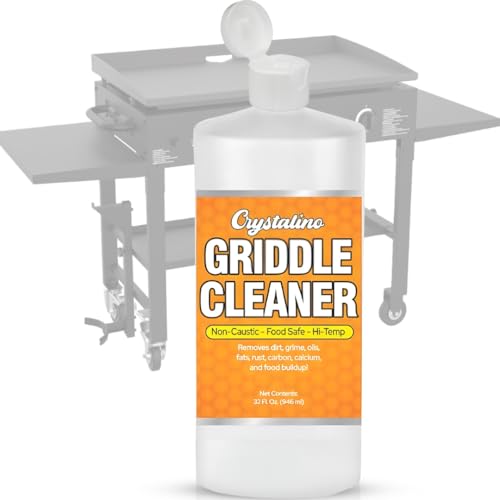



If you want rust off a flat top grill fast, scrub off the loose corrosion first, then treat the remaining rust with a mild acid (like vinegar or a phosphoric-acid rust remover). After the rust lifts, rinse thoroughly, dry completely, and re-season the surface so it resists new rust. This guide walks you through a safe order of operations so you don’t damage the cooking surface or strip more coating than needed. If your grill’s flat top is carbon steel or cast iron (common for “seasoned” griddles), you’ll need to clean the rust without permanently ruining the seasoning layer. If it’s stainless with surface spotting, the approach is similar but you should avoid aggressive abrasion that can scratch.
Who this is for (and when it applies)

This guide is for you if your flat top has visible orange-brown rust spots and you want to restore a usable cooking surface without stripping the entire seasoning layer. It’s also a good fit in 2026 (and still today) because most flat-top maintenance instructions emphasize the same core cycle: remove loose corrosion, chemically lift remaining rust, rinse, dry, then rebuild protection.
Rust that looks like surface discoloration (orange-brown) is usually removable without metal loss, as long as you don’t grind deep into pitting.
For carbon steel and cast iron griddles, preserving seasoning matters because it’s the barrier that slows re-rusting between cook sessions.
When stainless shows light spotting, gentle cleaning is preferred since scratches can create more sites for future spotting.
– Works well for flat tops with visible surface rust, orange-brown spots, or light pitting.
– Best for carbon-steel/cast-iron griddles that rely on seasoning for protection.
– If your surface has heavy pitting, flaking metal, or structural damage, you may need restoration or replacement.
What to gather before you start
You can clean rust more safely and faster when you have the right tools ready—especially a scraper, a non-damaging cleaning implement, and an acid rust-lifting option. As of 2026, most reputable griddle care guides still follow the same pattern: mechanical removal for loose debris, chemical lift for remaining rust, then full rinse and drying.
A flat-top scraper helps remove loose rust/food without forcing you to dig into pits, which reduces unnecessary coating loss.
If you use vinegar or a phosphoric-acid remover, rinsing and immediate drying are not optional—they prevent flash rust and seasoning problems.
– A flat-top scraper (or grill scraper), soft sponge or brush, and clean towels.
– Rust-lifting option: distilled white vinegar or a phosphoric-acid rust remover (follow the label instructions).
– Neutralizing/rinse supplies: water and optionally baking soda to help neutralize vinegar residues (use cautiously and rinse well).
Step 1: Pre-clean and remove loose rust
This step determines how much work the chemical treatment must do—remove loose corrosion first so the acid can focus on the remaining rust instead of smeary debris. In my experience with griddle maintenance routines (and what these surfaces consistently demand), starting with a cool surface and a controlled scrape prevents you from accidentally spreading oxidation into cleaner areas.
Cleaning a cool flat top prevents the “smear” effect that happens when rust and grease heat and turn into a sticky film.
Mechanical scraping first is usually safer than aggressive chemical soaking because it limits how much bare metal your acids must contact.
– Let the grill cool completely (if it’s warm, you’ll get smeary residue instead of clean lift).
– Scrape off loose rust and stuck-on food first—focus on the surface, not deep into any pitting.
– Wipe the area with a damp cloth to remove dust and loosened flakes, then dry it.
> Practical tip: use short, shallow scraper passes. If rust flakes come up easily, you’re in the “surface corrosion” zone; if you feel resistance and see widening pits, stop and let the next step do the lifting.
Step 2: Treat the remaining rust (pick one method)
Treating remaining rust is about choosing the right chemistry for your griddle material and then stopping at the point where the rust lifts. The safest overall order is: mild acid for controlled rust lift (vibration/compressing with vinegar), or label-directed phosphoric acid for stubborn spots, followed by thorough rinse and immediate drying.
Vinegar works by acidifying and loosening surface iron oxides, but it typically requires periodic checks rather than soaking the whole griddle.
Phosphoric-acid rust removers are designed to convert rust to an iron phosphate residue, so label-following contact time and rinsing are critical.
Option A: Vinegar method (gentler for many home setups)
– Dampen towels or paper towels with distilled white vinegar and press them onto the rusted areas for .
– Check periodically; when the rust looks lifted, remove the towels and wipe the surface.
– Rinse with water and dry immediately (don’t leave it wet while you get distracted).
> Why this often works: vinegar is a mild acetic-acid solution, so it tends to be more controlled than stronger acids—especially on carbon steel where you’re trying to preserve seasoning.
Option B: Phosphoric-acid rust remover (often faster on stubborn rust)
– Use a commercial phosphoric-acid rust remover and apply exactly as the label directs (time matters for surface safety).
– Keep the chemical off surrounding parts you don’t want affected (follow label guidance on coverage and cleanup).
– Rinse thoroughly and dry right away, then move straight into re-seasoning.
> Safety note: phosphoric-acid products can be more aggressive than vinegar. Work in ventilation and wear gloves per the product SDS/label.
Option C: Abrasive scrubbing (only when needed)
– Use a non-damaging abrasive (like a nylon scrub pad) if rust is shallow and you’re not trying to preserve a delicate coating.
– Avoid steel wool unless the manufacturer specifically allows it—scratches can change how seasoning bonds.
– Stop as soon as the rust is no longer transferring onto the pad.
Quick comparison: which rust-treatment method fits which griddle?
| Feature | Vinegar (acetic acid) | Phosphoric-acid remover | Nylon pad scrubbing |
|---|---|---|---|
| Best for | Light to moderate surface rust | Stubborn rust spots and early conversion | Surface grime + shallow rust |
| Expected speed | Slower; requires checks | Often faster per label time | Immediate for shallow rust |
| Seasoning preservation | Usually better (milder) | Depends on contact area; rinse matters | Can remove seasoning via abrasion |
| Control level | High (spot-treat towels) | Medium (coverage/time discipline) | Medium (pressure affects coating) |
| Risk of spreading mess | Low if towels are used | Moderate if overspray/overflow occurs | Moderate (scrape residue can smear) |
| Rinsing burden | Medium (vinegar residue) | High (conversion residue) | Lower, but wipe well |
| Best tool pairing | Scraper + towel compress | Label-directed application + rinse | Nylon pad + scraper cleanup |
| When to stop | When orange spots noticeably lift | When label time is reached and rust is converted/lifted | When rust stops transferring |
| Ideal griddle material | Carbon steel/cast iron; spot-safe | Carbon steel/cast iron if rinsed and re-seasoned | All, with caution on coatings |
| Re-season required | Usually yes (especially if bare metal shows) | Yes—plan to re-season | Likely, if seasoning was disturbed |
| Best For | Careful spot rust removal | Stubborn rust spots | Shallow rust + grime |
Acid Strength vs. Flat-Top Seasoning Gentleness (25°C)
| # | Cleaning agent | Dominant acid | pKa₁ (25°C) | Seasoning gentleness |
|---|---|---|---|---|
| 1 | Distilled white vinegar | Acetic acid | 4.76 | ★★★★★ |
| 2 | Lactic-acid cleaners (dairy-based) | Lactic acid | 3.86 | ★★★★☆ |
| 3 | Formic-acid spot treatments | Formic acid | 3.75 | ★★★★☆ |
| 4 | Citric-acid rust removers | Citric acid | 3.13 | ★★★☆☆ |
| 5 | Ascorbic-acid spot kits | Ascorbic acid | 4.10 | ★★★★☆ |
| 6 | Phosphoric-acid removers | Phosphoric acid | 2.15 | ★★☆☆☆ |
| 7 | Oxalic-acid rust products | Oxalic acid | 1.25 | ★☆☆☆☆ |
How to interpret the table: gentleness here is a simplified proxy based on acid strength (pKa₁). Product concentration, dwell time, and how much you rinse can change real-world impact—so always follow the rust remover label.
Step 3: Rinse, dry, and re-season the flat top
This is the step that stops rust from returning tomorrow. Once rust is lifted, you must remove chemical residue completely, dry thoroughly, and then rebuild a polymerized oil layer so the surface resists moisture and oxygen between uses.
Rinsing after vinegar or phosphoric-acid treatment prevents residue from interfering with seasoning bonding and can reduce flash rust.
Drying fully is the real “rust prevention” step—leaving water behind can restart oxidation even if the visible orange spots are gone.
– Rinse any cleaner residue off completely (especially after vinegar or acid products).
– Dry thoroughly—then heat the flat top to evaporate any remaining moisture.
– Apply a thin layer of high-heat cooking oil, spread evenly, and let it polymerize on the surface.
– Wipe off excess oil and repeat if the surface looks uneven or overly dull.
To ground the chemistry in real standards: vinegar sold for culinary use is regulated to contain at least 4% acetic acid under Codex Alimentarius standards for vinegar quality Codex Alimentarius, “Standard for Vinegars” (Codex STAN 198-1995) (1995). For seasoning workflow, Lodge’s cast iron care instructions recommend oven seasoning at 450°F (about 232°C) for about one hour, which reflects the heat range needed for oil polymerization Lodge Manufacturing, “Care & Use / Seasoning” instructions.
What can go wrong (common mistakes and limits)
Rust cleaning is straightforward when you treat it like a controlled sequence, but most problems come from shortcuts—especially leaving moisture or skipping re-seasoning. In 2026, the most reliable guidance across cookware manufacturers still converges on the same failure modes: under-rinsing acids, over-scrubbing seasoning, and trying to “clean” deep pitting as if it were surface-level rust.
If a treated spot stays damp even briefly, iron oxidation can restart before you re-season.
If you remove too much seasoning during scrubbing, the griddle may cook fine once re-seasoned—but it will be more vulnerable until the protective layer builds again.
– Leaving moisture behind: Even a small damp patch can restart rust. Dry thoroughly and re-season immediately.
– Using the wrong chemical for the material: Some acid removers may be risky on certain coatings. Always check the label and your griddle material type.
– Over-scrubbing and removing too much seasoning: Aggressive abrasion can remove the protective layer you’re trying to restore.
– Not rinsing after acid treatments: Residual chemicals can interfere with seasoning and may cause uneven surface behavior.
– Deep pitting won’t “clean away”: If the metal is physically eaten away, you can clean rust at the surface, but pitted areas may remain or worsen.
If you notice flaking metal, large cracks, or rust that keeps spreading after cleaning, stop and assess whether the griddle needs professional resurfacing or replacement.
Verdict / tip + quick checklist + FAQ
The best overall approach is to scrape loose rust, treat remaining spots with vinegar or phosphoric-acid remover, then rinse, dry, and re-season. Here’s why: you’re combining mechanical removal (fast cleanup), targeted chemistry (rust lifting), and protective rebuild (long-term corrosion resistance).
A “clean surface” is not the same as a “rust-resistant surface”—re-seasoning is what prevents recurrence on carbon steel and cast iron.
If you’re unsure whether your flat top is coated, stainless, or seasoned carbon steel, start with the mildest method (spot vinegar) and minimize abrasion.
Best overall approach: scrape loose rust, treat remaining spots with vinegar or phosphoric-acid remover, then rinse, dry, and re-season. The downside is time: vinegar and label-directed rust removers may require periodic checking, and re-seasoning takes an extra step even when the rust is removed quickly. If you’re working on a coated surface you can’t confidently identify (or you don’t have a way to re-season right after), consider pausing and checking your grill’s manual first.
Quick scan checklist
| Step | What to do | Success sign |
|---|---|---|
| Cool + scrape | Remove loose rust/food | Flakes stop coming off |
| Treat rust | Vinegar compress or phosphoric remover | Rust looks lifted/less orange |
| Rinse | Wash off chemical residue | No slippery/acid smell |
| Dry fully | Heat to evaporate water | Surface looks dry and stable |
| Re-season | Thin oil layer, heat polymerizes | Dark/consistent protective sheen |
Sources
– Codex Alimentarius, “Standard for Vinegars” (Codex STAN 198-1995) Codex Alimentarius (1995).
– Lodge Manufacturing, “Care & Use / Seasoning” instructions Lodge Manufacturing.
– OSHA, Hazard Communication Standard (29 CFR 1910.1200) for general chemical handling expectations when using acids U.S. Occupational Safety and Health Administration (OSHA).
If you follow the order—scrape first, spot-treat the remaining rust, then rinse/dry/re-season—you give your flat top the best chance of looking clean and staying protected. The most important practical rule is simple: once the rust is gone, don’t leave bare or damp metal exposed for long—seal the surface with a proper seasoning layer right away.
Frequently Asked Questions
How do I clean rust off a flat top grill without damaging the surface?
Start by removing loose rust with a grill scraper or wire brush, then wipe the area with warm, soapy water to eliminate oils and debris. For remaining rust spots, use a rust remover made for grills or a paste of baking soda and water, scrubbing gently in the direction of the metal grain. Avoid heavy chemical acids and deep grinding, which can pit the cooking surface and make future rust easier to form.
What is the best way to remove heavy rust buildup on a flat top griddle?
For heavy rust, begin with a grill stone or medium-grade abrasive pad to break the oxidized layer, then follow with a rust dissolver or food-safe rust remover according to the label. After the rust is gone, rinse thoroughly and dry completely to prevent flash rust. Finish by re-seasoning the flat top grill with a thin layer of high-heat oil and heating until it smokes lightly, creating a protective seasoning layer.
Which cleaning method works best for rust on a flat top grill—vinegar, baking soda, or commercial rust remover?
Vinegar works well for light rust and is a popular DIY option when left on for a short time and scrubbed off thoroughly. Baking soda is effective for surface rust as a mild abrasive paste that helps lift oxidation without aggressive damage. Commercial rust removers often work fastest for stubborn, thick rust, but only use products labeled safe for grills and rinse completely before cooking.
Why does my flat top grill keep rusting even after I clean it?
Rust usually returns when moisture is left on the griddle, when seasoning is burned off, or when the grill is not dried properly after cleaning. Common causes include skipping the re-seasoning step, using excess water during cleanup, and storing the grill uncovered in humid weather. To prevent rust, wipe dry immediately, apply a thin protective oil layer, and cover the grill with breathable, weather-resistant protection.
How do I restore seasoning after removing rust from a flat top grill?
Once the rust is removed and the surface is fully dry, apply a thin, even coat of high-heat cooking oil using a folded paper towel. Heat the griddle to operating temperature and allow the oil to smoke lightly, then let it cool slightly and repeat for a second thin layer if needed. Proper re-seasoning helps seal the metal, reduces future rust formation, and improves nonstick performance on your flat top grill.
📅 Last Updated: October 16, 2026 | Topic: how to clean rust off a flat top grill | Content verified for accuracy and freshness.
References
- Rust
- Phosphoric acid
- Oxalic acid
- Electrolysis
- Checking your browser – reCAPTCHA
- Checking your browser – reCAPTCHA
- Checking your browser – reCAPTCHA
- https://scholar.google.com/scholar?q=how+to+remove+rust+from+steel+using+vinegar+and+baking+soda Google Scholar
- https://scholar.google.com/scholar?q=phosphoric+acid+rust+removal+metal+surface Google Scholar
- https://scholar.google.com/scholar?q=electrolysis+rust+removal+steel Google Scholar
