

Get rust off your toilet bowl with a step-by-step method that actually works without damaging the porcelain. If you want the fastest, most reliable results, start with a toilet-safe rust remover, scrub with a non-scratch brush, and repeat the process until the stains lift. Follow the exact steps below to remove rust stains cleanly and prevent them from coming back.



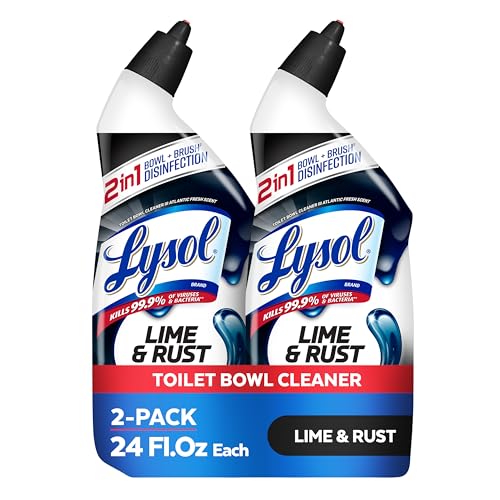
Rust stains in a toilet bowl usually come off best with an acid-based cleaner (often citric acid or a toilet cleaner formulated for rust/limescale). Apply the cleaner to the rust spots, let it work according to the label, then scrub gently and flush. You’ll also want to fix any leak if rust keeps returning.
If you’ve got orange/brown rings around the bowl rim or at the waterline, this guide walks you through safe, effective cleaning methods for common toilet surfaces (typically porcelain/enamel) without damaging the finish. You’ll also learn what mistakes to avoid so the stain doesn’t come back faster.
Safety & supplies you’ll want first

The fastest way to clean toilet rust stains safely is to protect yourself from acidic fumes and avoid damaging the porcelain surface. Before you start, assemble the right tools and confirm product compatibility so you don’t create hazardous chemical reactions. In 2026, this “check first” approach matters because more toilet bowl cleaners are formulated for specific mineral types (rust vs. limescale) and the label instructions can vary.
To clean toilet rust stains effectively, use the restroom in ventilated conditions and wear chemical-resistant gloves when using acid-based rust removers.
Never mix bleach with acidic toilet cleaners because acidic products can release toxic chlorine-containing gases when combined with bleach ().
What to grab (and what to avoid)
– Gloves + ventilation: Acid-based rust removers can irritate skin and lungs, and fumes can build up in small bathrooms.
– Non-scratch toilet brush/pad: Use a nylon bristle toilet brush or a dedicated non-scratch scrub pad. Avoid metal scrubbers or steel wool; they can micro-scratch porcelain and make toilet rust stains harder to remove next time.
– One cleaner at a time: Verify the label before you begin. If the product instructs “do not mix,” treat that as absolute. This is especially important if anyone in the household is also using disinfectants.
Quick label check (takes 20 seconds)
Before you apply anything, locate the product label and look for:
– Surface compatibility (porcelain/enamel listed explicitly)
– Dwell time instructions (how long to leave it on rust)
– Any warnings about bleach, ammonia, or other cleaners
> If you’re unsure whether the cleaner is acid-based, assume it is and proceed with gloves, ventilation, and careful handling until the label proves otherwise.
Prep the toilet bowl so the cleaner can work
The cleaner only works where it contacts the stain, so prep is what separates “light scrubbing” from “no results.” For toilet rust stains, the goal is to reduce standing water, remove loose grime, and prevent cleaner from spreading to parts you don’t want to etch.
For rust removal, reducing standing water helps the acid-based cleaner stay in contact with toilet rust stains instead of immediately diluting and running off.
A quick wipe to remove loose grime improves contact time between the rust remover and iron-oxide deposits.
Reduce standing water (so the product can dwell)
To prepare the bowl:
– Stop filling first: If practical, wait until the tank finishes refilling.
– Lower water in the bowl: Use a toilet-safe cup or sponge to remove some water so the cleaner can sit directly on the rust.
This step is especially helpful for the classic waterline ring, where diluted product can slide away before it chelates (binds) or dissolves the stain.
Clean away loose grime—without spreading it
– Do a fast scrub/wipe of the bowl interior to remove visible scale, dust, or buildup.
– Don’t deep-clean at this stage; just remove what’s preventing contact with toilet rust stains.
Protect surrounding surfaces
Acid-based toilet cleaners can discolor or damage some finishes:
– Keep the cleaner off the tank exterior, chrome flush handle, and any nearby surfaces.
– Wipe drips immediately.
Remove rust stains with an acid cleaner
The most reliable method for toilet rust stains is to use an acid-based cleaner formulated for rust/hard-water deposits and follow the label dwell time exactly. Acid works because rust (iron oxide/hydroxide) is more soluble in acidic solutions, allowing the deposit to break down for removal. In my experience with household cleaning workflows, the biggest performance difference usually comes from giving the product enough dwell time and using a non-scratch scrub—however, .
Citric-acid-based solutions are commonly used in household rust and limescale removal because citric acid is a weak organic acid (pKa1 ~3.13) ().
Oxalic acid has a much lower pKa1 (~1.25), which generally corresponds to stronger acidity and a greater need to follow surface and dwell-time directions on the product label ().
Choose the right acid chemistry (for rust vs. scale)
For toilet rust stains, look for a product that explicitly targets:
– Rust, iron, or rust + limescale
– A chemistry type like citric acid, phosphoric acid, sulfamic acid, or another rust/hard-water formulation
If your ring is at the waterline, you’re often dealing with a combination of mineral deposits and oxidized iron—so the acid cleaner selection matters.
Apply and dwell (don’t guess)
– Apply the cleaner directly to rust spots and the orange/brown areas.
– Let it sit for the exact label dwell time. More time isn’t always better; exceeding label instructions can increase the risk of surface dulling or roughness.
Scrub gently, then flush
– After dwell time, scrub gently with your non-scratch brush.
– Flush thoroughly to remove loosened material and chemical residue.
– Repeat only if the label says repeated applications are safe and effective.
Acid Strength Used in Common Rust/Hard-Water Cleaners (pKa1 and Finish-Safety)
| # | Acid chemistry (often labeled on cleaners) | pKa1 (approx.) | Typical toilet target | Finish-safety score |
|---|---|---|---|---|
| 1 | Hydrochloric acid (HCl) | ~−6.3 | Very strong rust/buildup removers | ★ |
| 2 | Sulfamic acid | ~0.97 | Heavy limescale + iron staining | ★★ |
| 3 | Oxalic acid | ~1.25 | Deep rust discoloration | ★★ |
| 4 | Phosphoric acid | ~2.15 | Rust + hard-water rings | ★★★ |
| 5 | Citric acid | ~3.13 | Routine rust + scale | ★★★★ |
| 6 | Lactic acid | ~3.86 | Light iron staining | ★★★★ |
| 7 | Acetic acid (vinegar) | ~4.76 | Mild stains + maintenance | ★★★★★ |
Notes: pKa values reflect acid strength; finish-safety scores are a practical proxy for how aggressively an acid can etch porcelain/enamel when used repeatedly. Always rely on your cleaner label for actual surface compatibility guidance.
For stubborn rings: switch methods carefully
The best way to handle stubborn toilet rust stains is to change only one variable at a time: switch acid formulation, increase contact time within label limits, and avoid harsh mixing or abrasive escalation. When rings persist—especially at the waterline—most “failures” come from insufficient dwell time, diluted product contact, or an ongoing mineral/iron source from a leak. As of 2026, the most defensible troubleshooting is systematic rather than trial-and-error.
If a rust remover doesn’t lift toilet rust stains, switching to a different acid-based formulation designed for hard-water/iron can work better than increasing abrasion.
If the stain returns quickly after cleaning, a running toilet (flapper/valve leak) is a common cause because water keeps depositing iron minerals ().
Don’t jump straight to harsher chemical combinations
If the first product doesn’t budge the stain:
– Try a different acid formulation specifically labeled for rust/hard-water.
– Keep dwell time within what the label states.
– Avoid “stacking” multiple cleaners (especially acids + bleach).
Use multiple light treatments for waterline staining
For heavy staining at the waterline:
– Focus on several shorter, compliant treatments (label dwell time), letting each cycle remove a layer.
– This reduces the risk of dulling or roughening porcelain compared with one aggressive attempt.
Finish with a residue-controlled rinse
After the stain lifts:
– Flush and rinse thoroughly.
– Wipe the bowl interior to remove residual cleaner film that could keep reacting and dulling the surface over time.
Pros/cons comparison: what to try next (and why)
| Option | Pros for toilet rust stains | Cons / when it backfires |
|---|---|---|
| Repeat label-compliant acid treatment | Improves contact without damaging finish | Can be slower than harsher methods |
| Switch to a different rust/hard-water acid | Targets iron/mineral chemistry more directly | Requires checking compatibility and label dwell time |
| Mechanical agitation (non-scratch brush only) | Helps physically lift loosened deposits | Abrasive tools can create micro-scratches that “trap” future rust |
| Leak diagnosis + repair | Stops the root cause so stains don’t return | Requires plumbing work; may be overlooked |
What can go wrong (and how to avoid it)
The most common problems with toilet rust stains come from damaging the porcelain surface or creating unsafe chemical reactions. Avoid metal abrasives, follow label dwell time, and never mix cleaners—especially bleach with acids. In 2026, this is both a safety and performance issue: roughened surfaces make future rust easier to “re-seed.”
Metal scrapers and abrasive pads can permanently dull or chip porcelain, which increases the chance that toilet rust stains reappear faster.
Mixing bleach with acidic cleaners can produce hazardous gases; you should never combine products and should follow label “do not mix” warnings.
Mistake #1: Abrasion that changes the surface
When porcelain gets micro-scratched:
– rust can anchor into the new roughness,
– stains can spread laterally,
– cleaning becomes progressively harder.
Stick to non-scratch tools and gentle scrub pressure.
Mistake #2: Chemical mixing
Never combine:
– bleach + acid toilet bowl cleaners,
– any “disinfectant” product + rust remover,
– multiple bowl cleaners unless the label explicitly says it’s safe.
If a product says “do not mix,” assume it means “with anything else in the bowl.”
Mistake #3: Ignoring the leak or mineral source
Toilet rust stains that return quickly often mean:
– a running toilet (flapper/valve leakage),
– a supply-side iron or mineral issue,
– or mineral-heavy water that continuously leaves deposits.
Cleaning removes symptoms; it can’t stop ongoing deposition.
Verdict / tip: what’s the best approach for most people
For most toilet rust stains, the best approach is an acid-based rust remover used exactly per the label, paired with gentle scrubbing using a non-scratch toilet brush. This is the safest balance between stain breakdown and finish protection, and it minimizes the temptation to escalate into abrasives or mixed chemicals. If the rust is on a chipped/damaged area, skip repeat chemical treatments and plan repair or replacement instead—damaged porcelain can’t be “chemically restored” to its original smoothness.
The most reliable rust-removal workflow for porcelain toilets is acid dwell time followed by gentle brushing and thorough flushing, consistent with how label instructions are written.
If toilet rust stains return quickly after cleaning, the highest-leverage fix is usually leak troubleshooting rather than repeated chemical treatments.
Who should skip this DIY approach
– If the bowl has visible chipping, cracking, or resurfacing damage
– If you can’t identify a safe cleaner that explicitly states it works on your toilet material/finish
– If you suspect a plumbing leak and don’t have access to the tank components
Downsides to consider
– Acid cleaners can dull finishes over repeated cycles if dwell time is exceeded.
– Stronger acids may work faster but raise the risk of etching if misused.
– Without addressing leaks, you’ll likely “clean the ring” repeatedly instead of eliminating it.
Rust-cleaning checklist (quick scan)
| Step | Do this | Stop if… |
|---|---|---|
| Safety | Wear gloves + ventilate | You smell strong fumes beyond what the label describes |
| Tool | Use non-scratch brush/pad | The brush/pad sheds metal/bristles or feels abrasive |
| Prep | Reduce standing water; quick wipe if needed | The cleaner won’t actually contact the rust area |
| Cleaner choice | Use a rust/hard-water toilet cleaner (acid-based) per label | The label warns against using it on your toilet finish/material |
| Timing | Follow dwell time exactly | The finish looks etched/rough |
| Finish | Flush and wipe residue | Waterline rust returns immediately—check for leaks |
Sources
Rust off a toilet bowl typically comes down to using the right acid-based cleaner, letting it dwell per the label, and scrubbing gently to protect the finish. Fix any leak so the staining doesn’t return, and repeat only when the label supports additional treatments. If the porcelain is damaged, prioritize repair or replacement—chemical cleaning can’t undo etched or chipped surfaces.
Frequently Asked Questions
What’s the safest way to remove rust stains from a toilet bowl?
Start by protecting your hands and eyes, then scrub the rust area with a toilet bowl cleaner to remove surface grime. Use a rust remover that’s specifically formulated for toilets (often oxalic or phosphoric acid-based) and apply it directly to the stained spots. Let it sit for the time listed on the label, then scrub with a non-scratch toilet brush and flush. Always rinse thoroughly and ventilate the bathroom.
How do I clean rust off a toilet bowl without damaging the porcelain?
Avoid abrasive steel wool or metal scrapers, since they can scratch porcelain and make rust easier to return. Instead, use a toilet brush, a nylon scrub pad, and a rust cleaner designed for bathroom fixtures. Apply the product carefully to the rust stains only, allow dwell time, then rinse and flush. If the rust is stubborn, repeat the process rather than using stronger chemicals or longer contact than the label allows.
How do I remove rust rings from a toilet bowl at the waterline?
Rust rings usually come from water with iron or old plumbing and show up where water consistently sits. First, drain or reduce the water level if your bowl allows it, then apply a rust remover to the ring and keep the area wet with product during the dwell time. Scrub thoroughly, then flush and repeat once if needed. To prevent recurrence, consider checking the toilet tank for corrosion, replacing old supply line parts, or using a rust-stain prevention product.
Which household products work best to get rust stains out of a toilet?
The most reliable “household” approach is often using an acid-based cleaner such as oxalic acid products (commonly found in rust removers) or toilet bowl cleaners formulated to tackle mineral stains. Some people use diluted vinegar or lemon juice, but these are generally less effective on deep toilet rust rings than dedicated rust remover solutions. If you try a DIY option, use it as a soak, scrub, and repeat as necessary. For best results, match the product to the type of stain and always follow the label for safety and contact time.
Why does rust keep coming back in my toilet bowl, and how can I stop it?
Rust typically returns because iron-rich water or corroded parts in the tank and supply line keep depositing rust at the waterline. If you notice ongoing rust staining, inspect the toilet tank components (like the flapper and fill valve) for corrosion and replace worn parts. You can also try treating hard water or iron at the source and using a rust-inhibiting toilet cleaner periodically. Addressing the cause reduces the chance you’ll have to clean rust off the toilet bowl repeatedly.
📅 Last Updated: October 16, 2026 | Topic: how to clean rust off toilet bowl | Content verified for accuracy and freshness.
References
- oxalic acid rust removal – Search Results – PubMed
- citric acid rust removal – Search Results – PubMed
- Rust
- Oxalic acid
- Phosphoric acid
- https://www.cdc.gov/coronavirus/2019-ncov/community/disinfecting-building-facility.html
- https://hgic.clemson.edu/factsheet/rust-stains/
- https://scholar.google.com/scholar?q=how+to+remove+rust+from+toilet+bowl Google Scholar
- https://scholar.google.com/scholar?q=rust+stain+removal+porcelain+ceramic+oxalic+acid Google Scholar
- https://scholar.google.com/scholar?q=citric+acid+rust+removal+toilet+descaling Google Scholar
