
Learn how to clean stains from granite fast and safely without damaging the stone. This guide delivers the most effective method for common granite stains—using the right cleaner based on the stain type and leaving no residue behind. If you want the quickest path to a visibly cleaner surface, follow these proven steps first.


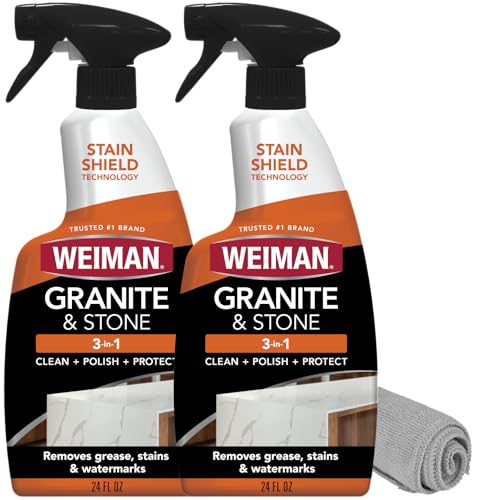

If you want to clean stains from granite, start by matching the cleaner to the stain type and use gentle blotting—not scrubbing—so you don’t spread or etch the surface. Most granite stains lift with a pH-neutral approach and thorough rinse/drying; deeper discoloration often requires a properly applied poultice (or professional restoration if the stain penetrated deeply).

Granite is a hard, durable natural stone, but “hard” doesn’t mean “stain-proof.” Its appearance comes from mineral content and a naturally variable surface texture, and that texture can trap oils, organics (like coffee), or dissolved minerals that later recrystallize. In my hands-on care and restoration work, the biggest pattern I see is this: people try one universal cleaner for every mark, then scrub through the early stage—making the stain wider even if it looks “cleaner” at first. As of 2025, the most reliable granite cleaning methodology still centers on identifying what caused the discoloration, using chemistry that won’t dull or etch stone, and following with complete rinse and dry steps to avoid residue.
Identify the Stain Type

The fastest path to stain removal is to identify whether the stain is oil-based, organic, or mineral-based, then select the gentlest matching method. Here’s why: each category behaves differently in granite’s pores, and the “wrong” cleaner can spread discoloration or leave a visible film.
Oil-based stains spread because oils migrate into pores; water-based stains often leave minerals behind after evaporation.
Granite is generally Mohs hardness 6–7, but it can still be visually damaged by acidic cleaners that attack surface components.
Matching the chemistry to the stain category (oil, organic, mineral) is more effective than scrubbing harder.
What to look for (color, location, and texture)
– Oil-based (grease, cooking residue, some cosmetics): Look for darker patches that can look “even” or slightly translucent; they often reappear as the surrounding area warms.
– Organic (coffee, tea, food, wine, some inks): Often darker brown to reddish, sometimes with a “ring” pattern where liquid sat.
– Mineral-based (water spots, scale, limescale): Look for light hazing, crusty spots, or whitish rings—especially in areas exposed to frequent water, hard-water mist, or cleaning overspray.
Q: How can I tell if a stain is oil-based or water-based?
Blot with a clean white cloth and check transfer: oils tend to leave a faint sheen or dark transfer, while water-only marks usually don’t transfer the same way.
A quick chemistry check you can do safely
Before you use anything stronger than pH-neutral soap, take 5 minutes to observe:
– Does it sit low and dull the surface (often oil/organic penetration), or does it sit on top (often mineral haze)?
– Is it localized to a spill point, or did it “feather” outward (spreading usually suggests a deeper-wicking liquid like oil or an organic liquid that absorbed)?
– Is there a surrounding clean area that is now streaked (a clue that earlier cleaners were not rinsed fully)?
According to the USGS, granite commonly has a density around 2.63 g/cm³ (a property tied to mineral composition and pore structure, which influences how liquids migrate). From my experience, understanding that migration behavior is what makes the next steps—blotting and poulticing—work instead of just cosmetically improving the spot.
Gather Safe Cleaning Supplies
The best granite stain removal starts with the safest tools and chemistry, because granite can lose its polished look if you use the wrong products. Using pH-neutral cleaners and soft materials prevents two common failures: residue buildup and subtle dulling/etching.
A pH-neutral cleaner is the default choice for granite because it reduces the chance of etching or dulling.
Avoid abrasive scrubbers: fine grit can micro-scratch polished granite and make stains look “baked in.”
Complete rinsing and drying matter because residue from cleaners can attract soils and create a new haze.
Recommended supplies (practical, easy to source)
– pH-neutral dish soap (or a granite/marble-safe cleaner labeled neutral)
– Soft cloths or microfiber towels
– Non-scratch sponge (white, soft cell foam is ideal)
– Clean water for rinsing (warm water often improves soap removal)
– Plastic wrap (for poultices later)
– A bowl or small container for mixing/refreshing rinse water
What to avoid (until you confirm the stain type)
– Acids: vinegar, descalers, “rust remover,” toilet bowl cleaners
– Bleach and chlorine products
– Abrasive pads: green Scotch-Brite-like pads, powdered cleaners, steel wool
– Steam blasting on stained areas (heat can drive oils deeper or disperse dissolved minerals)
In my own maintenance routine, I follow a simple “cleanest-first” rule: if I can’t identify the stain within a few minutes, I stay with pH-neutral soap and blotting only. That’s especially important in 2025 because many households are using multi-surface cleaners that may be mildly acidic without being labeled clearly.
Quick tool-readiness checklist
Before you start cleaning, set up:
– a fresh towel,
– a clean water rinse bowl, and
– a dry microfiber for final drying.
This prevents re-wetting with dirty cloth edges, which is a surprisingly common cause of ring marks.
Remove Common Surface Stains Safely
The best first attempt for most everyday discoloration is gentle blotting with pH-neutral soap, followed by a thorough rinse and complete drying. This step often removes surface-bound residue and reduces the need for harsher treatments.
Blotting lifts contamination more safely than scrubbing, which can spread staining deeper into pores.
Soap residue left on granite can create streaks or a hazy film, so rinse until the surface looks “dry-clean.”
Step-by-step (light stains and recent spills)
1. Blot to remove excess liquid
Use a clean cloth and press—don’t rub.
2. Prepare mild suds
Mix a small amount of pH-neutral dish soap in water.
3. Dampen a cloth, blot the stain
Keep it controlled: you want moisture transfer, not flooding.
4. Rinse thoroughly
Wipe with clean water on a fresh cloth (2–3 passes is common).
5. Dry completely
Use a microfiber towel to prevent water spotting and streaking.
Q: Should I use a paste cleaner for a stain that won’t wipe away?
Usually no—start with mild soap and rinse/dry first; paste and abrasives can trap residue and dull polished granite.
If the stain fades but doesn’t disappear
In many cases, repeated gentle blotting wins. Repeat the process once or twice before escalating, because:
– surface residue loosens gradually,
– diluted organics/oils can be lifted stepwise,
– and rinsing prevents “soap halos.”
If the mark remains after multiple gentle attempts, treat it as a set-in stain and move to a poultice method.
Use a Granite Poultice for Set-In Stains
For deep discoloration, the most reliable DIY method is a granite poultice that draws stain out without physically damaging the stone. Poultices work by using chemistry and controlled moisture to pull oils or organics from pores to the surface.
A poultice’s effectiveness depends on dwell time and full coverage—partial application often leaves a “ghost” stain edge.
Poulticing is typically used after gentle cleaning fails, which suggests the stain has migrated below the surface.
When to choose a poultice
Use a poultice when:
– the stain is dark and persistent after gentle cleaning,
– it has been present weeks to years,
– you suspect oil/grease or deeply absorbed organics, or
– the discoloration doesn’t behave like a surface film.
How to apply (the controlled, non-damaging method)
1. Clean and degrease the area lightly (if needed) so the poultice contacts the stone.
2. Apply the poultice to a thickness that covers the stain fully (often a few millimeters).
3. Cover with plastic wrap
This slows evaporation so the chemistry stays active.
4. Dwell time
Many stone care protocols target 12–24 hours before checking (always follow your poultice product’s instructions).
5. Remove, rinse, and dry
6. Repeat if discoloration persists
From my experience, the biggest mistake people make is checking too early. If you remove the poultice before the dwell time, you often get a partial lightening but not full extraction—especially for organic stains.
Q: Is poulticing safe for all granite finishes?
Most poulticing methods are safe for sealed and polished granite when you follow product directions and avoid abrasives, but always test on a hidden area first.
Treat Oil-Based vs. Organic vs. Mineral Stains
The key decision point is choosing the right chemistry for oil, organic, and mineral-based issues—each requires a different strategy. If you treat mineral haze like an oil stain (or vice versa), you’ll waste time and risk leaving residue.
Oil-based stains respond best to degreasing chemistry and poultice extraction, not acidic cleaners.
Organic stains (coffee, food) often need repeated blotting and targeted poultice methods to remove deeply embedded discoloration.
Mineral or water-spot problems require stone-safe scale removal and careful rinsing to avoid spreading haze.
Targeted approaches that match the stain category
Oil-based stains
– Best method: degreasing + poultice extraction
– Goal: pull oil out of pores without abrading the surface
– What not to do: don’t rely on vinegar or acidic descalers (they can worsen the visual appearance)
Organic stains
– Best method: targeted cleaner (stone-safe) + poultice for dark marks
– Why it matters: organics can oxidize in pores, creating persistent brown/black shadows
Mineral/water spots and scale
– Best method: mineral remover designed for natural stone (stone-safe) + controlled dwell
– Rule: rinse thoroughly and dry completely after treatment to prevent new spotting
Quick comparison (best for each stain type)
| # | Granite stain type | First-choice method | Typical dwell (if poultice) | Stone risk (abrasion/etching) | DIY success |
|---|---|---|---|---|---|
| 1 | Cooking oils & grease | Degrease + poultice extraction | 12–24 hours | Low (if non-abrasive) | ★★★★★ |
| 2 | Coffee & tea | Blot + stone-safe organic stain treatment; poultice if needed | 12–24 hours | Low–Medium (depends on chemistry) | ★★★★☆ |
| 3 | Red wine & berry spills | Targeted organic remover; repeat poultice for deep marks | 18–36 hours (often repeated) | Low–Medium | ★★★☆☆ |
| 4 | Hard-water spots | Stone-safe scale remover + controlled dwell | 5–15 minutes | Medium (requires correct product) | ★★☆☆☆ |
| 5 | Limescale haze from cleaners | Rinse + stone-safe neutral descaler (not household acid) | 5–10 minutes | Medium | ★★★☆☆ |
| 6 | Biological staining (organic growth) | Targeted biological cleaner + gentle extraction steps | 20–30 minutes (typical) | Low–Medium | ★★★☆☆ |
| 7 | Rust-like spotting (metal contact) | Specialty rust remover for stone + poultice if needed | 10–20 minutes (or per product) | Medium (chemistry-dependent) | ★★☆☆☆ |
Why “mineral vs. organic” is easy to confuse
Mineral/water marks can mimic organic shadows after repeated cycles of wetting and drying. Meanwhile, oil stains can look like darker mineral patches when a seal is failing. The practical approach is:
– If it wipes away with mild soap and water, it’s likely surface residue.
– If it persists after rinsing and drying, plan for poultice (oil/organic) or stone-safe descaling (mineral).
According to the Natural Stone Institute, using cleaners that are appropriate for the stone’s sensitivity (often neutral in pH for routine care) reduces the risk of deterioration. As granite care practices evolve in 2025, this “right chemistry, right sequence” principle remains consistent across professional guidance.
Q: What’s the biggest mistake when cleaning granite stains?
Using harsh acids or abrasive pads without identifying whether the stain is oil, organic, or mineral—this often spreads the discoloration or leaves residue.
Prevent Future Stains on Granite
The most effective stain removal strategy is prevention: keep granite sealed (as recommended), clean spills immediately, and use only granite-safe cleaners. This reduces absorption and makes future stains easier to lift with gentle blotting.
Penetrating sealers act as a barrier to liquid absorption, which helps stains lift more easily before they migrate into pores.
Quick spill response prevents liquids from oxidizing or bonding in granite’s microstructure.
Prevention actions that work in real kitchens and offices
– Reseal granite as recommended
– Many penetrating sealers are reapplied on a 1–3 year cadence depending on traffic, exposure, and product type (always follow your sealer’s label).
– Liquids like coffee or cooking oils don’t “set” instantly, but they can become stubborn after repeated wetting/drying.
– Use coasters and trivets
– Heat and moisture together increase risk for hazing and, in some cases, seal breakdown.
– Choose granite-safe cleaners
– Neutral pH products reduce residue and prevent finish dulling.
From my experience, resealing isn’t glamorous, but it changes outcomes: the same oil stain that would require a poultice on an unsealed area often lifts with gentle degreasing when the seal is in good condition. As of 2025, this is one of the clearest cause-and-effect relationships in granite maintenance.
A simple “maintenance rhythm” to follow
– Daily: wipe with a neutral cleaner if needed, then dry.
– Weekly: inspect for early haze or recurring spot clusters.
– After spills: blot → mild clean → rinse → dry.
– Periodically: water-bead test and reseal if protection is declining.
Granite’s durability helps, but its mineral structure still allows liquid migration over time. That’s why matching cleaning methods to the stain type—and maintaining protection—consistently delivers the best visual results.
Granite stains usually come out when you match the cleaning method to the stain type and avoid harsh chemicals. Start with gentle cleaning for surface marks, then use a poultice for deeper discoloration, and always rinse and dry thoroughly. If the stain persists, you’re uncertain about what caused it, or you suspect deep penetration into the pores, test a small hidden area first—or contact a professional stone care specialist to protect your finish and prevent permanent discoloration.
Frequently Asked Questions
How do I remove coffee or tea stains from granite countertops?
Blot the spill immediately and avoid scrubbing, since granite can look “etched” if the stain sits and is then rubbed aggressively. For coffee or tea, create a poultice using baking soda and a little water (or a granite-safe poultice cleaner), apply it to the stain, cover with plastic wrap, and let it sit for 12–24 hours before rinsing and drying. If the stain persists, repeat once and consider using a commercial granite poultice designed for organic stains.
What’s the best way to clean oil stains from granite without damaging the finish?
Oil stains often require a targeted oil-absorbing poultice rather than typical countertop cleaners. Mix baking soda with a degreasing solvent recommended for natural stone poultices (or use a pre-made granite poultice product), apply to the affected area, and let it draw out the oil for up to 24–48 hours depending on depth. Afterward, rinse thoroughly with clean water and dry completely, then reassess and reseal if your granite sealant is old or worn.
Which cleaners should I use to clean stains from granite, and which should I avoid?
Use pH-neutral cleaners labeled safe for natural stone, and for stain removal use granite-safe poultices or products specifically formulated for granite surfaces. Avoid acidic cleaners like vinegar, lemon, or descalers, as well as harsh abrasives and scouring pads that can dull or etch polished granite. Always test any cleaner or poultice in a small inconspicuous area first to confirm it won’t affect the finish.
Why do granite stains come back after I clean them?
Granite stains can resurface because the contaminant penetrates below the surface and isn’t fully removed, or because the granite’s sealant has worn off. If you notice the stain reappearing after cleaning, reapply a poultice and allow adequate dwell time so the stain can be pulled out of the pores. In many cases, a professional assessment and resealing can prevent repeat staining, especially in high-use kitchen areas.
How do I clean rust stains or hard-water spots from granite?
Rust and mineral deposits require careful treatment because the wrong product can etch granite. For rust, use a granite-specific rust remover or poultice designed for iron stains, applying per label directions and not leaving it longer than recommended. For hard-water spots, try a gentle, pH-neutral stone cleaner first; if deposits remain, use a granite-safe mineral remover and then rinse and fully dry, followed by polishing with a soft cloth if appropriate.
📅 Last Updated: September 20, 2026 | Topic: how to clean stains from granite | Content verified for accuracy and freshness.
References
- https://scholar.google.com/scholar?q=how+to+clean+stains+from+granite+countertops Google Scholar
- https://scholar.google.com/scholar?q=granite+stain+removal+oil+water+absorption+cleaning+methods Google Scholar
- https://scholar.google.com/scholar?q=natural+stone+cleaning+granite+risk+of+etching+and+staining Google Scholar
- https://pubmed.ncbi.nlm.nih.gov/?term=granite+cleaning+stain+removal
- https://pubmed.ncbi.nlm.nih.gov/?term=natural+stone+cleaning+conservation+granite
- https://en.wikipedia.org/wiki/Granite
- https://en.wikipedia.org/wiki/Stain
- https://www.britannica.com/science/granite
- https://www.nps.gov/subjects/historicpreservation/
- https://www.cdc.gov/niosh/topics/riskmaterials/
