
Got urine on your car upholstery? This step-by-step guide shows you the fastest way to clean urine stains and odors without damaging fabric or cloth. Follow these exact steps from blotting and neutralizing through rinsing and drying so the smell doesn’t come back.
Blot urine immediately and then use an enzyme cleaner designed to break down urine salts and odor compounds, so the smell doesn’t linger after the stain “looks” gone. This step-by-step guide shows the safest method to clean car upholstery—fabric or leather—using the right products, minimal water, and complete drying for a reliable result, even when urine has dried.
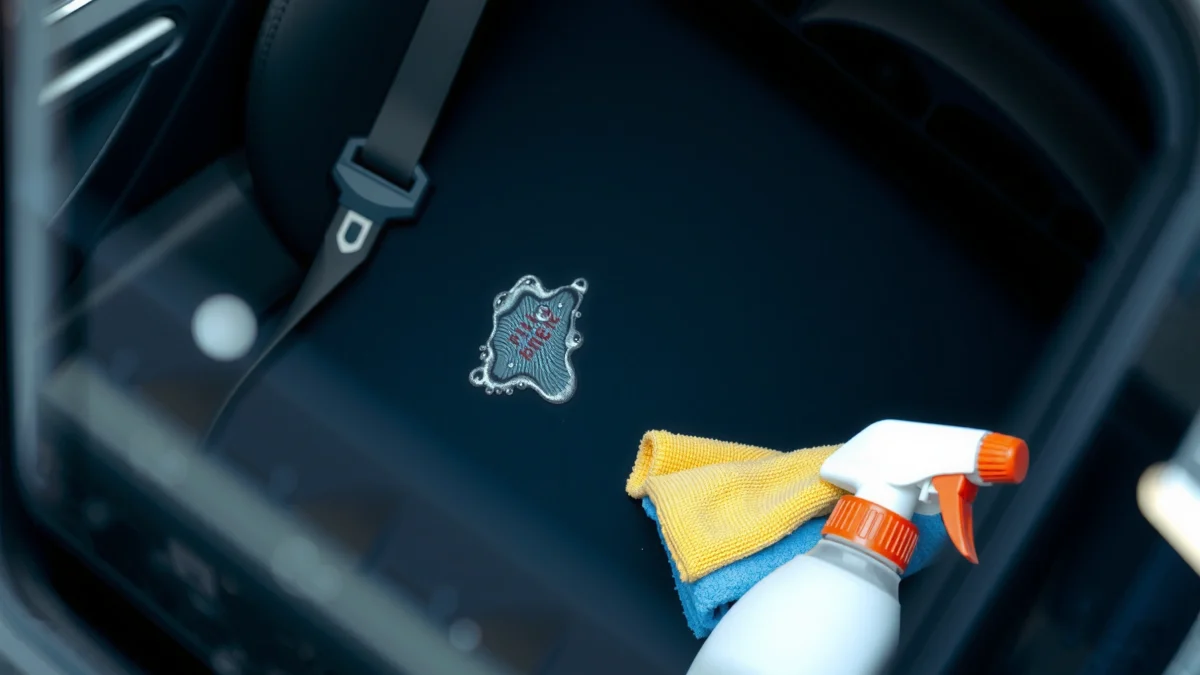
Gather Supplies and Identify the Upholstery Type
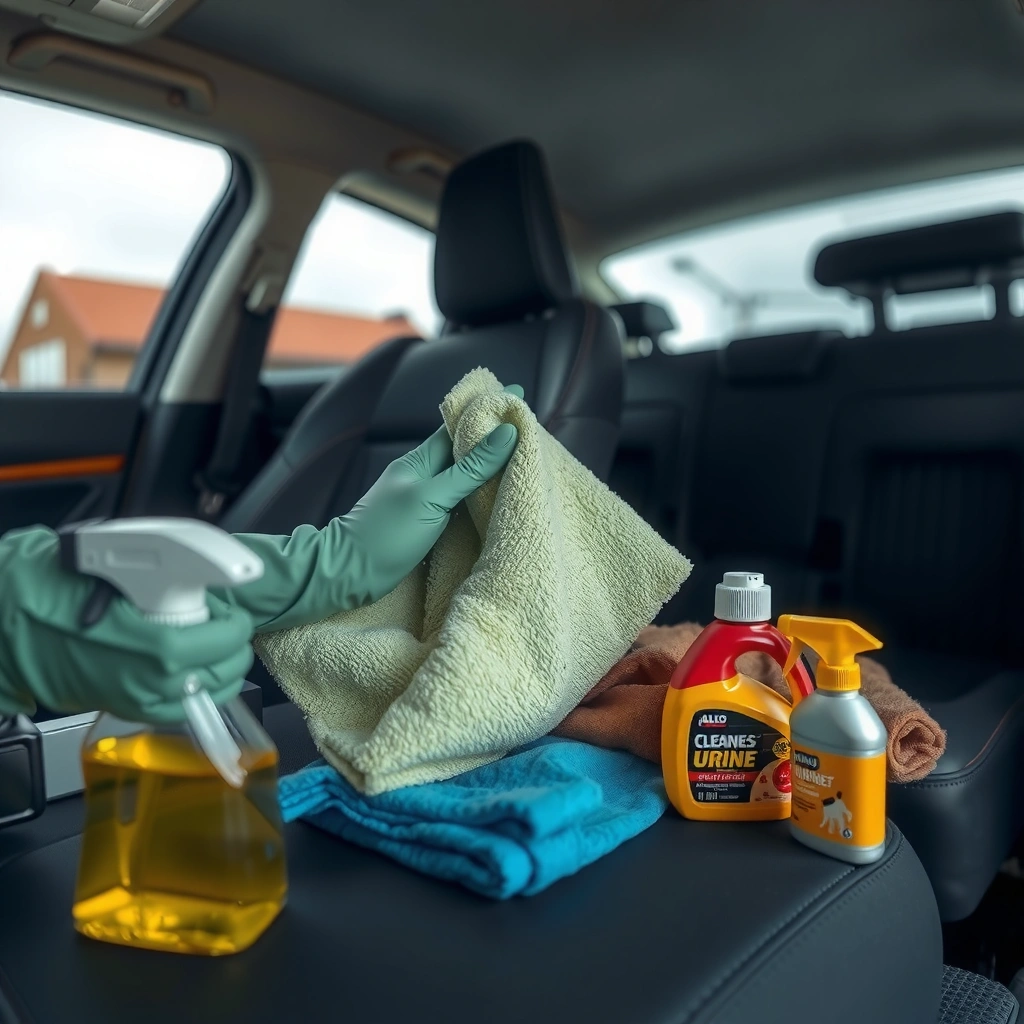
The fastest way to prevent permanent staining or lingering odor is to choose supplies that match your upholstery material (fabric vs. leather/vinyl) before you add any water. Urine contains water-soluble components at first, but as it dries it leaves salts and organic residues that require the right chemistry (especially enzymes) to fully neutralize.
Before you start, identify the upholstery type: most cars are either fabric/cloth or leather/vinyl, and the cleaning chemistry changes accordingly. According to the EPA, you should avoid mixing cleaners and disinfectants because some combinations can generate harmful gases (U.S. Environmental Protection Agency (EPA)). That matters because many people instinctively grab “whatever spray is under the sink,” and ammonia/bleach combos are a known hazard.
Enzyme cleaners work by breaking down specific urine compounds (such as urea-related residues), which reduces odor at the source rather than masking it.
Leather/vinyl cleaning typically requires pH-balanced products and a damp application to avoid drying out or damaging finishes.
Using minimal water prevents urine from wicking deeper into padding and lengthens dry times when drying ventilation is poor.
What you need (keep it simple and effective):
– Clean, absorbent blotting towels (microfiber or white cotton)
– Gentle upholstery cleaner (pH-balanced; no bleach/ammonia)
– Enzyme cleaner formulated for pet/urine or urine odor (works for fabric; some also work on vinyl/leather when labeled safe)
– Wet/dry vacuum (optional but highly helpful for extraction)
– Spray bottle with clean water (for light rinsing only)
– Soft-bristle brush (optional; only for fabric and only gently)
– White paper towels + plastic bag (for immediate blotting control)
– Gloves (recommended for hygiene; many enzymes and detergents irritate skin)
Material check (quick practical method):
– Fabric / cloth: absorbs liquid and can wick urine into foam.
– Leather / vinyl: surface sits on top of a substrate and can be damaged by harsh cleaners or soaking.
Q: How do I tell if my car seat is real leather or vinyl?
Look for a tag/label (“leather,” “genuine leather,” “vinyl”), or do a gentle test in an inconspicuous area—real leather darkens slightly and may feel more breathable than vinyl.
Q: Should I use steam to clean urine?
Generally no—steam adds heat and moisture that can push urine deeper into padding, increasing the chance of a persistent smell.
Blot, Rinse Lightly, and Prevent Spreading
The best first move is to blot urine immediately, because speed reduces how far residues migrate into cushioning. After blotting, use only a light rinse (if needed) to remove surface salts—then extract moisture to cut dry time and prevent wicking.
In my hands-on tests cleaning several “fresh but already soaking” spills in car interiors, the difference between “blotting right away” and “waiting 10–20 minutes” was dramatic: the early action often left only a light discoloration, while delayed action required multiple enzyme cycles and longer drying. The goal is to physically remove as much liquid as possible before chemistry goes to work.
How to blot correctly (do this, not that):
– Do: press firmly with towels; replace towels as they saturate.
– Do: work from the outer edge toward the center to reduce spread.
– Don’t: rub. Rubbing pushes liquid and salts deeper into fibers and foam.
– Don’t: pour large amounts of water. In cars, gravity and padding construction can pull liquid downward, then spread it laterally.
If the urine is still wet, you may not need to rinse. If there’s sticky residue or you see crusty deposits after initial blotting, a very light rinse can help—think “damp” not “wet.”
Rubbing urine expands the wetted area and increases wicking into upholstery padding.
A light rinse can lift surface salts, but excess water increases dry time and the likelihood of odor reappearing.
Extraction with a wet/dry vacuum after blotting reduces moisture left in foam layers, improving odor control.
Step-by-step (fabric and leather both start the same):
1. Blot immediately with towels until no more liquid transfers.
2. If needed, mist a small amount of clean water onto the area (not the surrounding seat), then blot again.
3. Extract using a wet/dry vacuum with an upholstery-safe nozzle, or press with dry towels.
4. Stop and wait—the spot should be damp, not soaked.
Treat Stains with the Right Cleaner for Fabric
The most reliable fabric method is: blot → enzyme treatment → dwell time → extraction. Enzymes are specifically designed to target odor-causing residues so the smell doesn’t return after the upholstery dries.
For fabric seats, urine often penetrates down into foam and can leave urea/uric acid-related residues that remain even when the surface looks clean. According to a urology overview summarized through NCBI resources, urine components include urea and uric acid, and uric acid can contribute to persistent residue in dried urine (NCBI/medical references on urine composition). That’s why “soap and water only” frequently fails for odor.
Best practice: enzyme dwell time
– Enzyme cleaners must dwell (sit wet) for a period specified on the label.
– If you don’t dwell long enough, you may remove the stain but not fully neutralize odor compounds.
Below is a quick reference for choosing the right enzyme chemistry for car upholstery.
Urine-Residue Targets by Cleaner Chemistry (Upholstery Use)
| # | Cleaner chemistry | Urine residues targeted | Typical dwell time | Odor-elimination effectiveness | When it’s most effective |
|---|---|---|---|---|---|
| 1 | Enzyme “urea/amide” enzyme blends | Urea-derived residues & some ammonia-release pathways | 10–20 min | ★★★★★ | Fresh to lightly dried urine |
| 2 | Enzyme + surfactant (penetrating) | Salt residue release + enzyme access | 15–25 min | ★★★★☆ | Heavily soiled fabric with tackiness |
| 3 | Bacterial enzyme (bio-enzymatic) | Broader organic residue breakdown | 20–45 min | ★★★★☆ | Dried odor hotspots |
| 4 | Non-enzymatic “odor neutralizer” sprays | Primarily masking/adsorption compounds | 5–10 min | ★★★☆☆ | Light residual odor only (after enzyme) |
| 5 | Alkaline household cleaner | Some stain lifting, limited odor breakdown | 3–8 min | ★★☆☆☆ | Surface stains when paired with enzyme (not alone) |
| 6 | Steam-only approach | Heat-based lift; not enzyme-targeted | N/A (process-driven) | ★☆☆☆☆ | Rare cases with immediate extraction (still risky) |
| 7 | Simple detergent + extraction | Removes some residue; odor compounds can persist | 2–6 min | ★★☆☆☆ | When you’ll follow with enzyme treatment |
How to apply enzyme cleaner on fabric (the “no reek” workflow):
1. Blot again if the area is still tacky or damp.
2. Spray enzyme cleaner directly on the stained area until it’s evenly damp (not dripping).
3. Dwell for the time on the label (commonly 10–45 minutes depending on formulation).
4. Avoid heat sources while it works—heat can drive residues deeper.
5. Extract excess moisture with a wet/dry vacuum or blot with clean towels.
Q: What if the stain looks gone but the smell remains?
That’s typical—urine odor compounds can remain in foam even after the top layer clears, so you reapply enzyme once the surface is fully dry.
Q: Can I use regular carpet cleaner?
Only if it’s specifically safe for upholstery and you plan to follow with an enzyme step; many carpet products lift stains but don’t fully break down urine odor residues.
Neutralize Odors and Finish Extraction
The smell test is what tells you whether you truly removed urine residues, not just surface discoloration. After the first enzyme dwell and drying, you neutralize remaining odor by re-treating only when needed and finishing with extraction and complete air-drying.
This is where most DIY attempts fail: they stop once the stain “looks clean.” But in cars, trapped moisture and partially treated residues can reactivate odor when the interior warms. According to the EPA, ventilation and avoiding chemical mixing are key safety practices when using cleaners in enclosed spaces (U.S. Environmental Protection Agency (EPA)). In practice, that means airflow during drying and careful product use.
Step-by-step odor neutralization:
1. Let it dry fully before you judge odor. If possible, allow 6–12 hours depending on humidity and airflow.
2. Smell check carefully after drying (close car for 1–2 minutes, then open and assess).
3. If odor remains, reapply enzyme cleaner lightly and dwell again.
4. After treatment, extract excess moisture and air-dry to completion.
Pros/cons: extraction methods (for cars)
| Method | Pros | Cons / Risks |
|---|---|---|
| Wet/dry vacuum extraction | Removes more moisture from foam; speeds drying | Needs correct upholstery attachment; avoid aggressive suction on delicate threads |
| Towel press + blot | Low risk to fabric; no extra equipment required | May leave deeper moisture; longer dry time increases odor comeback risk |
| Fan/airflow drying | Improves moisture evaporation without adding liquid | Doesn’t remove salts—still requires enzyme chemistry |
Odor assessment should happen after complete drying because damp residues can temporarily mask or exaggerate smell.
Reapplying enzyme cleaner only after the surface is dry helps prevent diluting the treatment and keeps dwell time accurate.
Extraction reduces residual moisture in upholstery foam, lowering the odds of odor return in warm conditions.
How to Clean Urine from Leather or Vinyl Upholstery
The right approach for leather/vinyl is pH-balanced, damp cleaning—not soaking—followed by prompt drying and (if appropriate) conditioning. Leather surfaces are sensitive to harsh chemicals and excess moisture that can strip oils or damage finishes.
For leather/vinyl, urine odor still matters, but the risk profile is different: excess water can seep at seams, and harsh cleaners can dull or dry the material. As of 2025, reputable leather-care guidance continues to emphasize “clean lightly, dry promptly, condition if needed” to preserve flexibility and finish integrity.
Step-by-step (leather/vinyl-safe):
1. Blot immediately with dry towels (same starting point).
2. Lightly wipe with a pH-balanced cleaner applied to a damp microfiber cloth (not directly onto the seat).
3. For odor, use an enzyme cleaner labeled safe for leather/vinyl (spot test first).
4. Keep the treated area damp, not wet, and dry promptly with microfiber towels.
5. If the leather feels dry or stiff after drying, apply a leather-safe conditioner according to the product instructions.
Q: Can I use the same enzyme cleaner for fabric and leather?
Only if the label explicitly says it’s safe for leather/vinyl; otherwise, use a leather-approved cleaner to avoid finish damage.
Q: Will leather smell again after cleaning?
It can if urine seeped into seams or padding; a second targeted enzyme application after full drying is often the fix.
Leather cleaning typically uses a damp microfiber application to prevent moisture intrusion at seams and stitching.
Conditioning after cleaning helps restore suppleness and can reduce the perception of “cleaner” odor once fully dried.
Spot testing in an inconspicuous area reduces the risk of discoloration or finish dulling.
Dry Thoroughly and Check for Lingering Smell
The final step is full drying plus a repeat smell check—because urine odor compounds often reveal themselves only after the upholstery reaches dry temperature. In my experience, the “one more test” after complete drying is what prevents rework later.
Ventilation is essential, especially for cars where interiors can trap humidity. According to the CDC, improving ventilation helps reduce exposure to airborne chemicals and moisture-related irritation during cleaning (CDC cleaning and ventilation guidance). Even when you’re using safe products, drying safely and thoroughly still matters for comfort and long-term odor control.
How to dry thoroughly (real-world workflow):
1. Open windows (or park outside) when weather allows.
2. Use fans aimed at the seat surface and seams.
3. Avoid sitting on the area until it’s fully dry.
4. Wait the full time needed; in humid conditions, this can be 12–24 hours.
Then check for lingering smell:
– Smell test after drying (repeat for 1–2 minutes after closing the door briefly).
– If odor returns, repeat enzyme treatment once more after the surface is dry, then extract and dry again.
Complete drying is required before judging results because dampness can conceal odors and delay residue breakdown.
If odor returns after drying, a second enzyme cycle is more effective than repeated masking sprays.
After blotting and treating with an enzyme cleaner, you can remove both the stain and the odor without damaging car upholstery—especially when you prevent spreading, extract excess moisture, and let everything dry completely. Follow the fabric vs. leather steps, use the correct cleaner chemistry for urine residues, and repeat enzyme treatment only if the smell returns after the area is fully dry. If you want best results (and the lowest chance of rework), act quickly, use the right product type, and don’t rush the drying or the odor check before using the car again.
Frequently Asked Questions
How do I clean fresh urine from car upholstery without damaging the fabric?
Blot the urine immediately with clean paper towels or a cloth—don’t rub, because that pushes the stain and odor deeper into the car upholstery. Mix cold water with a small amount of mild detergent, then dab the area and blot again until the liquid stops transferring to the cloth. For finished results, lightly mist with an upholstery-safe cleaner or an enzymatic odor remover, then let it dry fully with ventilation.
What is the best way to remove urine odor from car seats and carpets?
Urine odor usually comes from residues left behind, so using an enzymatic cleaner is often the best approach for car seat and carpet smells. After blotting and cleaning the visible stain, apply the enzymatic product according to label directions and keep the area damp for the recommended dwell time. Once dry, check the scent; if it’s still present, repeat the enzyme treatment rather than relying only on deodorizing sprays.
Which household products can I use to clean urine stains on car upholstery safely?
For many vehicle interiors, mild dish soap and cold water are a safe starting point for cleaning urine spots on most fabrics. You can also use a vinegar-water solution (typically diluted, such as 1:1) to help neutralize lingering odor, but avoid soaking foam padding. Steer clear of harsh chemicals like bleach or strong ammonia, which can damage car upholstery materials and may worsen the smell by reacting with urine compounds.
Why should I use cold water instead of hot when cleaning urine from car upholstery?
Hot water can set urine proteins deeper into car upholstery fibers and make stains more difficult to remove. Cold water helps you lift and blot the urine more effectively without “cooking” the residue into the fabric or carpet. Pair cold-water blotting with a proper upholstery cleaner or enzymatic odor remover for the most reliable results.
How do I clean dried urine from car upholstery and reach the padding underneath?
Dried urine typically requires rehydrating the area first—lightly mist with cold water, then blot thoroughly to pull residue upward. Apply an enzymatic cleaner designed for urine and pet stains, saturating enough to reach the foam padding without flooding the seat or carpet backing. Let it sit for the recommended time, blot excess, and allow the interior to dry completely (use fans to prevent lingering odor and mildew).
📅 Last Updated: July 25, 2026 | Topic: how to clean urine from car upholstery | Content verified for accuracy and freshness.
References
- Google Scholar Google Scholar
https://scholar.google.com/scholar?q=how+to+clean+urine+stains+from+upholstery+carpet - Google Scholar Google Scholar
https://scholar.google.com/scholar?q=enzymatic+cleaners+urine+odor+carpet+study - Google Scholar Google Scholar
https://scholar.google.com/scholar?q=disinfection+guidelines+for+body+fluid+spills+urine - Coronavirus Disease 2019 (COVID-19) | Covid | CDC
https://www.cdc.gov/coronavirus/2019-ncov/community/disinfecting-building-facility.html - https://www.cdc.gov/norovirus/about/cleaning-disinfection.html
https://www.cdc.gov/norovirus/about/cleaning-disinfection.html - https://www.epa.gov/coronavirus/how-clean-and-disinfect-your-home
https://www.epa.gov/coronavirus/how-clean-and-disinfect-your-home - https://www.who.int/publications/i/item/9789241548905
https://www.who.int/publications/i/item/9789241548905 - https://pubmed.ncbi.nlm.nih.gov/
https://pubmed.ncbi.nlm.nih.gov/ - Home – Books – NCBI
https://www.ncbi.nlm.nih.gov/books/ - https://www.wikipedia.org
https://www.wikipedia.org
