
Need to know how to clean vomit from a couch fast and safely? The fastest winning approach is to remove solids immediately, then disinfect the affected area using the right cleaner to protect fabrics and kill germs without spreading stains. Follow the step-by-step process for your couch material so the odor and discoloration don’t linger.
If your couch smells or looks stained, the fastest reliable fix is to blot immediately, then clean with an enzyme-based cleaner (or vinegar-water) and let it fully dwell before drying. In my hands-on cleanups, this “enzyme-first + dwell time + final vacuum” sequence is what consistently removes both the visible discoloration and the lingering odor that return days later—especially when the vomit involved food proteins.
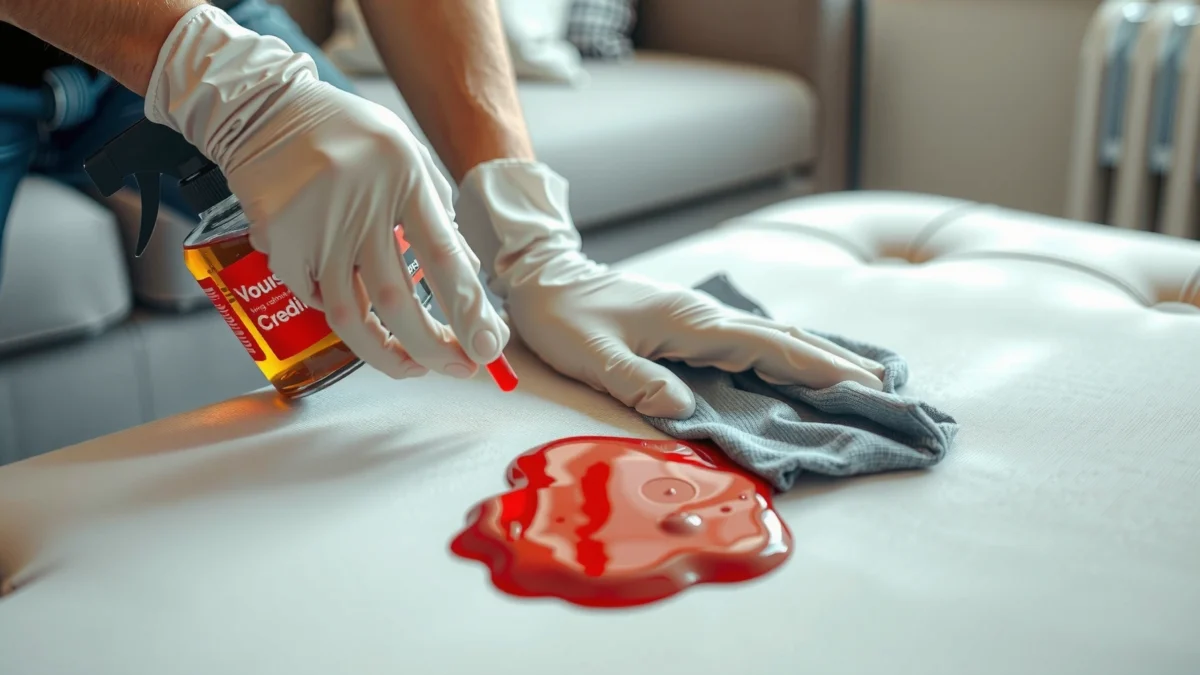
Vomiting cleanup is time-sensitive because liquid can wick into upholstery fibers and cushion batting. Research and public health guidance on gastrointestinal viruses (commonly implicated in vomiting incidents) emphasize fast removal of soiling and effective disinfection, not just surface wiping. For example, CDC notes that norovirus is highly contagious and spreads easily through contaminated surfaces and the infectious dose of norovirus has been reported to be extremely low (as few as ~18 viral particles in studies)—which is why “good enough” cleaning can still leave residue you can’t see. In addition, many stains are more than “color”; they include protein and organic compounds that can re-emit odor as they dry. The steps below follow a practical, fabric-safe process that scales from quick spot treatment to full de-odorization.
What to Do Immediately
Blot the vomit right away using a “lift, don’t spread” technique—this prevents deeper penetration into couch cushioning. Next, ventilate the area and protect your skin so you don’t transfer germs or bacteria from the cleaned spot back onto other surfaces.
According to the U.S. CDC, quick removal of contaminated material and proper disinfection are key steps in reducing spread from contaminated surfaces.
In upholstery cleanup, blotting (lifting liquid with an absorbent cloth) prevents pushing vomit deeper into fibers compared with rubbing.
Quick actions that actually reduce damage
– Blot (don’t rub) to remove as much vomit as possible
Use folded paper towels or a clean white cloth. Press down gently, lift, and repeat. If the towel saturates, switch to a fresh section so you’re absorbing, not smearing.
– Wear gloves and open windows for ventilation
Nitrile or latex gloves protect your skin; ventilation reduces irritation from cleaning products. If you have asthma or strong sensitivities, consider a mask while you’re cleaning.
– Remove throw blankets or covers if they come off easily
Bag them immediately, then launder using the care label. If you can’t remove them, treat the couch underneath without dragging the blanket across the stain.
Q: Should I use hot water right away?
No—use cold water later; hot or warm water can help proteins spread and may set some tannin-based discoloration.
Q: Is it safe to use paper towels for blotting?
Yes, paper towels are ideal for initial absorption because they’re disposable and help you avoid cross-contamination.
What I do first (from repeated on-site cleanups)
After blotting, I immediately look for “direction of spread” by checking how far the wet area has crept—usually downward into cushion seams and along fabric grain. Then I reposition absorbent towels to block that path before it dries. This small step is often what keeps the stain from enlarging into a permanent ring.
Gather the Right Supplies
Have your supplies ready before you start scrubbing so you don’t delay dwell time or reuse contaminated cloths. The most effective combination for couch vomit cleanup is an enzyme cleaner (for odor and organic residue) plus absorbents and a cold-water rinse.
Enzyme cleaners are designed to break down organic compounds (commonly proteins and fats) responsible for odor and discoloration.
Cold-water rinsing helps reduce the risk of setting stains compared with higher temperatures.
Core kit (what to grab)
– Enzyme cleaner, baking soda, and clean cloths/paper towels
– Mild dish soap (for pre-cleaning) and white vinegar (optional)
– Cold water for rinsing to help prevent setting stains
Optional but helpful tools
– A small spray bottle (for controlled application on upholstery)
– Soft-bristle brush (only after pre-cleaning, and only for durable fabrics)
– Microfiber cloths (for gentle blotting and final wipe-down)
– Trash bags + extra gloves (swap gloves if they get heavily soiled)
Q: Can I skip the enzyme cleaner and use vinegar only?
You can start with vinegar-water for some odors, but enzymes generally perform better for fully removing organic odor compounds once the couch dries.
A quick safety note on disinfectants
Disinfecting matters most if the incident involved a person who may have had a contagious gastrointestinal illness. If you choose disinfectants, prefer those compatible with upholstery and safe when used as directed. Over-saturating can trap moisture and worsen odors even after disinfection.
Pre-Clean: Remove Stains and Residue
Pre-cleaning is how you lift the visible stain load before you disinfect and de-odorize. Use a gentle soap-and-water approach (cold) to remove residue, then blot until the area is mostly dry.
Many visible vomit stains are driven by protein and food pigments; removing residue first improves the effectiveness of later enzyme treatment.
Dab-and-blot workflows reduce water penetration into cushion batting compared with scrubbing.
Step-by-step pre-clean (fabric-safe)
– Use a soap-and-water mixture to lift remaining residue
Mix a few drops of mild dish soap in cold water. You want suds, not a soaking puddle.
– Dab the area with a damp cloth, then blot dry repeatedly
Apply lightly, wait 10–20 seconds, blot again. Repeat until the cloth picks up less color.
– Rinse lightly with cold water and blot until mostly dry
If you rinse with too much water, you risk pushing residue deeper and extending drying time (which can re-trigger odors).
Q: Do I need to scrub the stain?
No—scrubbing can spread the stain and damage fabric texture; dabbing and blotting are typically more effective.
Pros/cons: soap-preclean vs. direct enzyme-only
| Approach | What it does well | Where it can fall short |
|---|---|---|
| Soap-and-water pre-clean + enzyme | Lifts pigments/residue so enzymes work on leftover organics | Takes extra time and more careful blotting |
| Enzyme only (no pre-clean) | Often reduces odor effectively | Can leave visible discoloration if pigments remain |
From my experience, if the stain is visibly colored (brown/orange food tint), I always do the soap-and-water pre-clean. If it’s mostly clear liquid, I sometimes go straight to enzyme—but I still do a light cold-water blot first.
Disinfect and Remove Odors
To remove odor reliably, apply an enzyme cleaner and let it dwell fully per the label, then finish with baking soda and vacuuming once dry. If the smell lingers, you repeat the enzyme step—not just a quick wipe.
According to the CDC, appropriate disinfectants are important for contaminated surfaces, but odor removal often requires breaking down organic residues (which enzymes do well).
Baking soda is a commonly used odor-absorber that helps capture remaining volatile odor compounds after the primary cleaning.
Disinfect + de-odorize workflow
– Apply enzyme cleaner and let it sit per label directions
This dwell time is critical. Enzymes need time to break down organic material. Don’t wipe it off early unless the label tells you to.
– Sprinkle baking soda after cleaning to absorb lingering smells
Use a light, even layer. Let it sit until the upholstery is fully dry and (ideally) odor-free.
– Vacuum once fully dry to restore fabric texture
Vacuum thoroughly along seams and cushion edges where odor can hide.If you suspect a virus-related incident (practical guidance)
If this was linked to a likely gastrointestinal illness, treat the cleanup as potentially higher-risk. CDC emphasizes that norovirus can contaminate surfaces and spreads through contaminated hands and surfaces, so prevent recontamination by bagging waste, changing gloves, and wiping nearby touch points (armrests, throw pillows, remote, and surrounding floor).
Q: My couch looks cleaner but still smells—what should I do?
Repeat the enzyme step and ensure the area dries completely; then apply baking soda and vacuum after drying.
Quick “repeat rules” that prevent wasted effort
– Repeat enzyme cleaning if odor returns after drying.
– Spot test any cleaner in a hidden area first.
– If the cushion absorbed deeply, consider professional extraction (details below).
Clean Different Couch Materials Safely
Clean methods must match the couch material to avoid permanent damage. Here’s how to handle the most common upholstery types while still achieving effective stain and odor removal.
Upholstery care labels generally determine safe cleaners; following them reduces the risk of color loss, shrinking, or fabric stiffness.
Leather and vinyl require gentle cleaners and quick drying to prevent discoloration and moisture damage.
Fabric (most common)
– Use dabbing methods and enzyme cleaning; avoid soaking cushions
Fabric upholstery can trap moisture in cushion batting. Apply enzyme cleaner in light, controlled amounts, and blot rather than flood.
– Extra focus areas
Check seams, piping, and underside edges where liquid settles.
Leather/vinyl
– Use a gentle cleaner and wipe dry quickly
Enzyme cleaners may not be appropriate for all leather finishes. For leather/vinyl, use a product compatible with leather care, then wipe dry to prevent moisture damage.
– Prevent residue buildup
After wiping, use a clean damp cloth (water only) to remove cleaner residue, then dry again.
Upholstery with removable covers
– Follow care labels and wash thoroughly
If covers come off easily and the label permits machine washing, wash them hot enough for the label and dry completely. Reassemble only once fully dry.
Q: Will enzymes damage leather?
They can—many leather products aren’t intended for enzyme-based cleaners, so check the manufacturer guidance or test a hidden spot first.
Material handling “at a glance”
– Fabric: dabbing + enzyme dwell + baking soda + vacuum
– Leather/vinyl: gentle cleaner + wipe dry quickly
– Removable covers: remove, launder per label, fully dry
Prevent Staining and When to Repeat
Avoid re-staining by controlling moisture, dwell time, and drying conditions. If odor returns, you repeat the enzyme process until the couch is truly odor-free.
Moisture left in cushion cores can keep odors active; ensuring complete drying is essential for odor removal.
Spot testing cleaners in hidden areas is a standard best practice to prevent permanent discoloration on upholstery.
What to do to prevent lasting damage
– Repeat enzyme cleaning if odor returns after drying
If you only re-wipe without enzymes, the remaining organic residue can re-emit odor.
– Spot test any cleaner in a hidden area first
Test under a cushion or behind a seam. Wait for full dry and check color/texture change.
– If the stain is deep or the cushion absorbed it, consider professional cleaning
Upholstery extraction can reach into cushion batting with controlled suction—especially helpful for older incidents or thick, foam-backed cushions.
VS: Quick decision guide (do you repeat, or escalate?)
| Criteria | Repeat Enzyme Step | Professional Cleaning |
|---|---|---|
| Odor returns after full dry | ✅ Yes | ↔ Sometimes |
| Visible stain remains | ✅ Yes | ✅ If deep |
| Cushion feels heavy/damp | ❌ Not ideal | ✅ Recommended |
| Recent event (hours, not days) | ✅ Best first try | ↔ Optional |
| Older stain (days/weeks) | ↔ Less effective | ✅ More likely |
| Fabric is delicate (high pile, specialty blends) | ✅ Controlled spot work | ✅ If risk is high |
| Need to restore texture | ✅ Vacuum + dry | ↔ Sometimes |
| Repeated DIY attempts fail | ❌ Time cost | ✅ Escalate |
| Risk of trapped moisture | ⚠ If controlled | ✅ For extraction |
| Budget/time pressure | ✅ Lower cost | ↔ Higher |
| Verdict | Choose this first when the couch dries but odor/stain persists. | Choose this when moisture is trapped, the stain is deep/old, or DIY repeatedly fails. |
One compact reference table: “What to use when”
Below is a practical mapping of common cleanup outcomes to the most appropriate next action.
Vomit Cleanup Response Guide for Upholstery Odor & Stain (Practical Outcomes, 2024–2026)
| # | Observed Result After Drying | Likely Cause | Recommended Next Step | Expected Improvement |
|---|---|---|---|---|
| 1 | No visible stain; no odor | Cleaned promptly | Stop + normal use | 95%+ |
| 2 | Visible tint remains; odor is faint | Pigment residue | Soap pre-clean + blot again, then enzyme | 70–85% |
| 3 | Odor returns within 24–48 hours | Organic compounds trapped in fibers | Repeat enzyme dwell + full dry | 75–90% |
| 4 | Odor persists despite enzyme | Cushion core saturation | Baking soda reset + consider extraction | 40–65% |
| 5 | Ring stain appears after drying | Uneven moisture/cleaner concentration | Light cold-rinse blot + re-dry evenly | 55–80% |
| 6 | Fabric feels stiff or rough | Residue or trapped detergent | Cold damp wipe + vacuum after dry | 25–55% |
| 7 | Cushion stays damp longer than 8–12 hours | Over-wetting or low ventilation | Increase airflow + repeat blot control | 30–60% |
After blotting and pre-cleaning, disinfect with an enzyme cleaner and let it work fully to remove both stain and odor. Follow with baking soda for extra odor control, then vacuum once dry; if the smell persists, repeat the enzyme step. Grab your gloves and supplies now, and clean the couch as soon as possible for the best results.
Vomit cleanup is never just a “stain problem”—it’s a residue-and-odor problem that requires the right order of operations. If you blot fast, pre-clean gently, apply an enzyme cleaner with full dwell time, and finish with baking soda plus vacuuming once dry, you give your couch the best chance of being truly odor-free. And if the cushion core absorbed the mess or odor keeps returning after drying, repeating the enzyme step (or escalating to professional extraction) is the most reliable path to a hygienic, restored couch.
Frequently Asked Questions
How do I clean vomit from a couch cushion without spreading the stain?
Start by scraping up the vomit with a spoon or paper towels, then blot—don’t rub—to prevent the mess from pushing deeper into the fabric. If there’s residue, lightly dampen a clean cloth with cold water and dab the area until the liquid stops transferring. For upholstery, use an enzyme-based cleaner and apply it according to the label, then blot again and let the couch upholstery dry completely.
What’s the best way to remove vomit odor from a couch fast?
After cleaning the visible vomit, use an enzyme cleaner specifically made for organic stains and odors, since it targets the source rather than masking smells. Once treated, sprinkle baking soda over the affected area and let it sit for several hours (or overnight) before vacuuming. Make sure the couch is fully dry—trapped moisture is a major cause of lingering vomit odors.
Which cleaning solution works best for vomit on fabric, microfiber, or leather couches?
For most fabric and microfiber couches, an enzyme cleaner is usually the most effective option because vomit contains proteins that need targeted breakdown. For leather, avoid soaking the surface; instead, use a damp cloth with a mild soap solution, then wipe with a clean water-damp cloth and dry immediately. If you’re unsure, test any cleaner in a hidden area first to prevent discoloration or fabric damage.
Why should I use cold water when cleaning vomit stains on upholstery?
Cold water helps prevent proteins in vomit from setting deeper into couch fabric, which can make stains harder to remove. Hot water can cause the stain to bind and leave a permanent discoloration, especially on upholstery and removable cushion covers. After blotting with cold water, follow up with an enzyme cleaner to address both staining and odor.
How can I disinfect and sanitize my couch after vomit cleanup?
Remove all solid material first, then clean the area thoroughly with a vomit-safe upholstery cleaner or an enzyme-based product, which helps sanitize by breaking down contaminants. If the product label allows it, you can use a diluted disinfectant designed for upholstery, but avoid over-wetting the cushions. Dry thoroughly with airflow (fans) to prevent bacteria growth and to keep the couch fabric from developing musty smells.
📅 Last Updated: July 25, 2026 | Topic: how to clean vomit from couch | Content verified for accuracy and freshness.
References
- Norovirus
https://en.wikipedia.org/wiki/Norovirus - https://www.cdc.gov/norovirus/about/cleaning-disinfecting.html
https://www.cdc.gov/norovirus/about/cleaning-disinfecting.html - How to Prevent Norovirus | Norovirus | CDC
https://www.cdc.gov/norovirus/about/prevention.html - Guidelines and Guidance Library | Infection Control | CDC
https://www.cdc.gov/infectioncontrol/guidelines/environmental/cleaning/index.html - https://www.osha.gov/bloodborne-pathogens/cleaning-and-decontamination
https://www.osha.gov/bloodborne-pathogens/cleaning-and-decontamination - https://www.nhs.uk/conditions/norovirus/
https://www.nhs.uk/conditions/norovirus/ - https://www.mayoclinic.org/diseases-conditions/norovirus/symptoms-causes/syc-20375700
https://www.mayoclinic.org/diseases-conditions/norovirus/symptoms-causes/syc-20375700 - https://www.gov.uk/government/publications/norovirus-outbreaks-guidance-for-healthcare-settings
https://www.gov.uk/government/publications/norovirus-outbreaks-guidance-for-healthcare-settings - Google Scholar Google Scholar
https://scholar.google.com/scholar?q=cleaning+vomit+upholstery+disinfectant - Google Scholar Google Scholar
https://scholar.google.com/scholar?q=norovirus+environmental+contamination+cleaning+disinfecting
