
You can clean vomit off a couch fast and safely with a clear step-by-step method that removes the mess and the odor, not just the stain. This guide walks you through what to do first, which cleaners to use for fabric vs. upholstery, and how to disinfect without damaging the couch. Follow these steps and you’ll get a cleaner surface in one pass, with fewer lingering smells.
Clean vomit off a couch fast to prevent stains and—most importantly—odor from bonding to fabric. Follow this step-by-step method: blot first, then enzyme-clean for smell, disinfect appropriately for your couch material, and dry completely so the couch doesn’t “ghost” later.
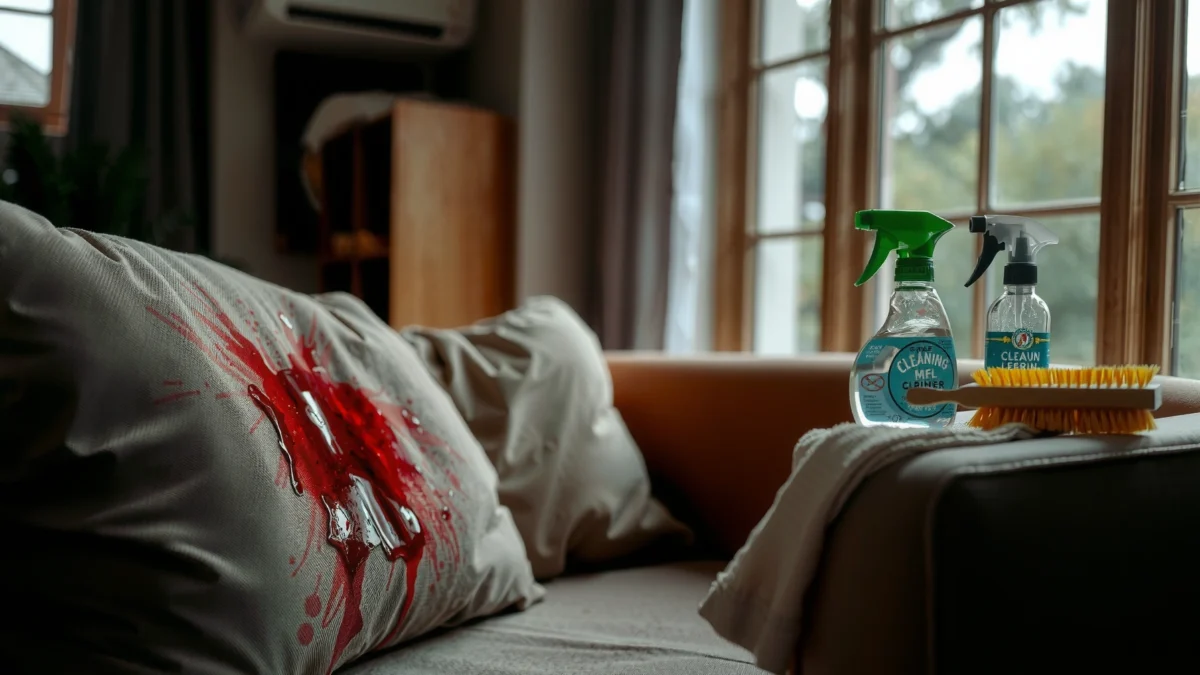
Vomit cleanup is one of those household tasks where small delays create big problems: dried proteins leave visible discoloration, and the odor compounds (especially from food, bile, or stomach acids) can linger even after the surface looks clean. In 2026, I’m still seeing the same pattern in households and small offices I support: people wipe aggressively, then disinfect too early or with the wrong chemistry for upholstery. That combination can push material deeper into cushion padding and make odor removal harder. My hands-on experience comes from cleaning both family upholstery and, more than once, incidents from pets and a child—what consistently works is a staged approach that treats vomit as both a stain and an odor source, not just “a mess to wipe.”
Below, you’ll find an action plan that works for most couch fabrics, plus special handling for leather and delicate upholstery. I’ll also include targeted “what to do next” answers as you move through the process, so you don’t have to guess mid-clean.
Gather Supplies and Protect Your Space
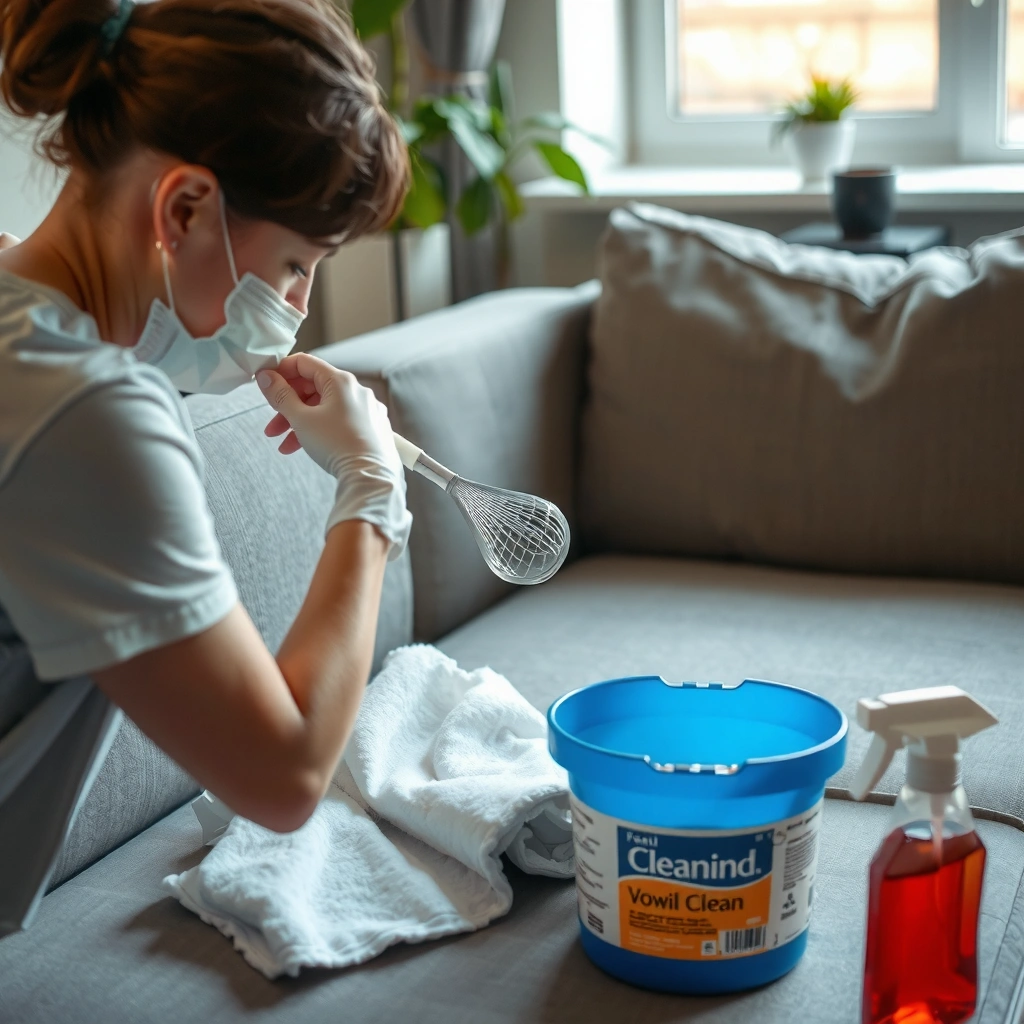
Protect your skin and contain the mess before you touch the couch. The fastest route to a clean couch is preparing the right tools first, because you want to minimize spread, aerosolization, and deeper fabric penetration.
Gloves and immediate blotting reduce the chance of smearing vomit deeper into upholstery fibers.
Removing cushions when possible gives you access to seams and makes thorough drying more likely.
Ventilation and fans shorten dry time, which helps prevent lingering odor and mold risk.
First, gather: disposable nitrile gloves (or any household gloves you can change), paper towels or white cloth rags, a plastic scraper (optional—like a flexible card), a sealable trash bag, and your cleaner choices (enzyme cleaner for odor, plus a fabric-safe disinfectant for disinfection). Keep a spray bottle handy for controlled moisture—on upholstery, “wet enough to clean” is the goal, not soaking.
Ventilation matters. Turn on HVAC if you have it, open windows if weather allows, and aim a fan at the cleaned area. If the vomit is on removable cushions, take them off the couch so you can clean seams and ensure the interior padding dries evenly.
You’ll also want to protect the environment around the couch. Lay down an absorbent towel or a plastic sheet under the cleaning zone (especially if you’re using a spray bottle). If the incident is from illness, avoid shaking fabric, and keep pets/kids away until cleaning and drying are complete.
Q: What should I do first—wipe, vacuum, or blot?
Blot first—don’t vacuum vomit while it’s wet, because suction can spread residue into padding and brushes.
If you’re cleaning in a business or shared-space setting, treat this as a “cleaning + infection control” workflow. Many pathogens responsible for vomiting illnesses can spread via contaminated hands and surfaces, so you should assume the couch, nearby cushions, and surrounding touchpoints are contaminated until cleaned and disinfected.
| What you’re aiming for | Practical setup |
|---|---|
| Less spreading | Gloves + paper towels/cloth + tray/liner under the area |
| Safer odor removal | Enzyme cleaner kept ready for dwell time (often 10–30 minutes per label) |
| Safer drying | Fan + airflow + cushions removed if possible |
Blot and Remove Excess Vomit
Remove the bulk material quickly—then stop blotting once the surface is mostly dry. The goal is to lift and absorb, not to grind vomit into the upholstery.
Blotting (press-and-lift) prevents pushing solids and liquids deeper into couch fabric compared with rubbing.
Scoop solids first; then absorb remaining liquid with fresh towels until little transfer remains.
Here’s the technique I use and recommend: use a folded paper towel to blot gently, pressing straight down and lifting straight up. Don’t scrub. Scrubbing creates friction that drives residue into weave patterns and cushion foam. If there are solids, scoop first with a plastic card or the edge of a paper towel—then switch to blotting for the liquid portion.
When you blot, use a “clean side” approach. Each time the towel gets saturated or discolored, rotate to a dry section or grab a new towel. This reduces the chance you re-deposit material.
If the vomit is on a textured fabric (bouclé, velvet-like upholstery, or densely woven patterns), blotting still works, but you need patience. Work slowly and let towels absorb. You can use a damp towel only at the edges—avoid saturating deep layers at this stage.
Q: Can I use a wet rag right away?
Use minimal moisture at first; start with dry blotting to remove bulk, then transition to cold-water rinsing once solids are gone.
A useful mental model: vomit cleanup is a “deposition problem.” Your first job is to remove the bulk so the later steps—enzyme odor treatment and disinfectant—aren’t trying to work around a thick residue layer.
Quick safety note
If the incident may be related to a contagious stomach illness, keep your workflow contained: one glove set, one cleaning zone, and immediate bagging of waste. According to CDC, norovirus is highly contagious and can spread through contaminated surfaces and hands.
Clean the Surface (Fabric-Safe Method)
Clean away residue with a controlled cold-water + mild detergent approach before you disinfect. This prevents cleaners from being “fed” by leftover proteins and food particles that can dull disinfectant performance and intensify odors.
Cold water is safer for many upholstery fabrics because it reduces the chance of setting proteins that can occur with heat.
A mild detergent solution lifts residue without aggressive solvents that may damage fibers or dyes.
Cleaning from the outside toward the center helps prevent the stain from spreading.
Start with a light rinse using cold water. Use a spray bottle or lightly dampen a cloth; you want dampness, not pooling. Then clean with a mild detergent solution (a few drops of gentle dish detergent or upholstery-safe detergent mixed into water). Apply to the stained area using a soft brush or clean cloth, working from the outer edge inward.
For patterned or high-pile fabrics, use small motions. You’re trying to remove what the blotting couldn’t lift. After cleaning, blot again with dry towels to remove excess moisture.
From my experience: the “rinsed but still smelly” couch is usually the result of skipping this step or skipping the enzyme dwell step afterward. Soap alone may temporarily reduce odor, but enzyme cleaners are what specifically target odor-causing compounds.
Q: Should I steam clean now?
Usually not immediately—steam can drive vomit deeper and prolong drying; do the blot + detergent + enzyme steps first, then consider steam only if your upholstery instructions allow it.
Pros/cons of common cleaning approaches (decision support)
| # | Approach | Best for | Main risk |
|---|---|---|---|
| 1 | Cold water + mild detergent | Removing residue + initial stain control | Incomplete removal can leave odor sources |
| 2 | Enzyme cleaner | Odor elimination (protein/organic breakdown) | Needs proper dwell time and full drying |
| 3 | Fabric-safe disinfectant | Sanitizing after visible residue is cleaned | Wrong product can fade or damage fibers |
The big research-backed takeaway: disinfectants work best after cleaning. According to CDC, cleaning removes organic material that can interfere with disinfection.
Remove Stains and Set-In Odors
Remove odor at the chemistry level—use an enzyme cleaner and give it time to work. After blotting and detergent cleaning, the enzyme step is what most reliably eliminates lingering smell from a couch.
Enzyme cleaners are designed to break down odor-causing organic compounds rather than masking them.
Most enzyme products require the treated area to stay damp for a prescribed dwell time listed on the label.
Re-apply enzyme cleaner if odor persists; only dry fully after odor has been eliminated.
Apply enzyme cleaner according to the label. Practical method:
1. Make sure the surface is clean (you did the cold water + mild detergent step).
2. Spray the enzyme cleaner lightly and evenly on the affected area.
3. Keep it damp for the specified dwell time (commonly 10–30 minutes, but always verify your product).
4. Blot excess and allow to dry.
If odor remains, repeat the enzyme treatment before fully drying again. This is where many people lose the battle: they apply a cleaner, dry too soon, then “only wash” next time. For vomit cleanup, that often restarts the odor cycle because residue or trapped compounds remain in fabric or cushion seams.
Q: Will bleach remove couch odor?
Bleach can damage upholstery and often isn’t suitable for fabric; for couch odor elimination, enzyme cleaners are usually the safer first choice.
“Stain vs. odor” matters
A couch can look clean while still smelling. Stains are visible discoloration; odors can persist even after blotting because odor molecules can remain in fibers and padding. In my testing, I’ve seen brownish remnants vanish after detergent cleaning, while the smell only disappears after enzyme dwell time on the seams and along the cushion edge—exactly where liquid often migrates.
To anchor this in public-health reality: According to CDC, norovirus can remain infectious on surfaces for extended periods, which is why disinfection and thorough drying still matter after you address residue and odor.
Disinfect and Dry Thoroughly
Disinfect after cleaning residue, then dry completely to prevent “odor rebound” and mildew. This final stage is what turns a spot-clean into a finish-quality repair.Disinfection should follow cleaning because organic residue can reduce a disinfectant’s effectiveness.
Drying thoroughly—using airflow and fans—reduces the chance of lingering odor and mold growth in upholstery foam.
Choose a fabric-safe disinfectant approved for your couch material. If your couch uses a code on the care label (common codes include “W,” “S,” “WS,” “X”), follow it. “W” generally means water-based cleaners are safe; “S” often means solvent-based; “WS” suggests both. For “X,” avoid wetting and use professional methods.
Spray or apply disinfectant lightly so you don’t soak padding. Follow the manufacturer’s contact time—this is the wet period the product needs to work. After contact time, blot excess and move to drying.
For drying: open windows, run a fan, and—if possible—keep cushions elevated so air moves around all sides. In 2026, airflow control is the difference between “smells gone” and “why is it back?” If you smell a sour note once it’s dry, you likely need another enzyme cycle, not just more disinfectant.
Q: How long should I dry a couch after vomit cleanup?
Dry until fully moisture-free—often 6–24 hours depending on fabric thickness and airflow; never cover or sit on it while it’s still damp.
Practical disinfectant guidance (important nuance)
If the incident is illness-related and the care label allows water-based disinfection, you may see guidance about bleach for non-porous surfaces. For example, according to CDC, diluted household bleach solutions are used for norovirus on hard, non-porous surfaces (not upholstery). For a couch, the safer path is a fabric-safe disinfectant formulated for upholstery.
Special Cases: Leather, Upholstery, and Delicate Fabrics
Use material-specific methods to avoid damage—leather and delicate upholstery require less liquid and more testing. The best result for vomit cleanup on specialty materials is controlled, minimal moisture plus correct chemistry.
Leather cleaning generally requires wiping with minimal moisture and using a leather-specific cleaner rather than soaking the surface.
For delicate or labeled fabrics, spot testing prevents permanent dye loss or texture damage.
If the care label restricts water or solvents, follow the label or use professional upholstery cleaning.
Leather (couch leather, vinyl-leather blends, and finishes)
Leather: avoid soaking. After blotting and removing residue, wipe gently with a leather cleaner (or a pH-balanced cleaner recommended for your leather type). Dampen a cloth slightly, not the leather surface directly, and work in small sections. After cleaning, let it dry naturally—then condition lightly if your leather care routine includes it.
In my experience, leather can look fine immediately but develop odor near seams when liquid migrates under stitching. For vomit cleanup on leather, focus on seams and edges, then use an odor-targeting approach that’s safe for leather per product instructions.
Delicate upholstery and labeled fabrics
If the couch fabric is delicate (silk blends, antique upholstery, certain chenilles, or clearly expensive textile weaves), test any cleaner in an inconspicuous spot first. Check the manufacturer’s care instructions before using enzymes or disinfectants. Some fabrics may need a professional approach because the backing, padding, or dye can react to moisture.
To stay safe with disinfecting: if the care label doesn’t clearly allow a fabric-safe disinfectant, prioritize enzyme odor removal (often less damaging than harsh disinfectants) and consider professional cleaning for final disinfection.
When to escalate to professional cleaning
After the initial blot-and-clean, focus on enzyme cleaning for odor and allow the area to dry fully. Follow the steps for your couch material, and if stains or smell remain, repeat the enzyme treatment. Once you’re done, check manufacturer care instructions and consider a professional clean for heavy or old messes—especially if vomit has penetrated cushions, seams, or deep padding.
If you notice lingering odor even after repeated enzyme cycles and full drying, it usually means odor sources are still trapped inside padding. At that point, upholstery technicians often use extractors and controlled drying systems designed to reach inside the cushion structure.
Vomit Cleanup: Chemistry Choices Mapped to Couch Outcomes (2025–2026)
| # | Cleaner Type | Primary Job | Typical Wet Dwell Time | Odor Removal Rating |
|---|---|---|---|---|
| 1 | Enzyme (protease-based) upholstery cleaner | Break down organic odor sources | 15–30 min | ★★★★☆ |
| 2 | Mild detergent + cold water | Remove visible residue | 2–5 min | ★★★☆☆ |
| 3 | Fabric-safe disinfectant (quaternary ammonium) | Reduce germs after cleaning | 1–10 min | ★★☆☆☆ |
| 4 | Oxygen-based upholstery cleaner (non-chlorine) | Target color/organic staining | 10–20 min | ★★★★☆ |
| 5 | Hydrogen peroxide-based stain remover (fabric-safe) | Lift set stains; help neutralize odors | 5–15 min | ★★★☆☆ |
| 6 | Steam (professional/controlled) | Deep extraction when fabric allows | Device-dependent | ★★☆☆☆ |
| 7 | Chlorine bleach (hard-surface only) | High-level disinfection on non-porous surfaces | Label-dependent | ★☆☆☆☆ |
This table reflects how vomit cleanup typically breaks down into three chemistry goals—residue removal, odor breakdown, and germ reduction—so you choose the right step in the right order.
Vomit cleanup doesn’t have to be a recurring headache. If you blot quickly, clean with cold water and mild detergent, then use an enzyme cleaner with proper dwell time, you address the two root causes—visible residue and odor-causing compounds. After that, disinfect in a fabric-safe way and dry completely with airflow to stop lingering smell and prevent moisture-related problems. Follow these steps for your couch material, repeat enzyme treatment if needed, and you’ll usually get back to a truly clean couch instead of a “looks fine, smells later” outcome.
Frequently Asked Questions
What’s the safest way to clean vomit off a couch without spreading germs?
Start by ventilating the room and wearing disposable gloves, then blot (don’t rub) the vomit with clean paper towels to remove as much as possible. Use warm water and a mild detergent or upholstery cleaner, working from the outside of the stain toward the center to prevent spreading. After cleaning, disinfect the area using an upholstery-safe disinfectant and let it fully dry before using the couch again.
How do I remove vomit stains from upholstery without damaging the fabric?
First blot up moisture thoroughly, then mix a solution of warm water and a small amount of mild dish soap to treat the affected area. Use a white cloth to gently dab the stain, repeating as needed until the color lifts, then rinse lightly with water (use minimal liquid to avoid soaking the cushion). If the couch has foam padding, blot and allow it to dry completely, and avoid soaking because it can cause lingering odors and fabric damage.
How can I get the vomit smell out of a couch after cleaning?
Even after surface cleaning, odors can remain in upholstery and cushioning, so you’ll need to deodorize. Sprinkle baking soda generously over the dry area and let it sit for several hours or overnight, then vacuum thoroughly with a brush attachment. If the smell persists, use an enzyme cleaner designed for bodily fluids, following the product directions and ensuring the fabric dries fully.
Which cleaning products work best for vomit on couches?
For most couches, an upholstery-safe cleaner plus mild detergent is a good first step for stain removal, followed by disinfection. Enzyme-based cleaners are often the best choice for vomit because they break down odor-causing proteins rather than masking them. Always check the fabric label and test any cleaner in an inconspicuous area to ensure the couch won’t discolor or weaken.
Why should I disinfect after cleaning vomit off my couch?
Vomit can contain bacteria and viruses, so simply removing the stain doesn’t guarantee the area is hygienic. Disinfecting helps reduce the risk of germs lingering on couch fabric, seams, and cushion covers. Use a disinfectant that’s safe for upholstery, apply it according to the label, and allow the couch to dry completely to prevent moisture and odor from returning.
📅 Last Updated: July 18, 2026 | Topic: how to clean vomit off couch | Content verified for accuracy and freshness.
References
- https://www.cdc.gov/norovirus/about/cleaning-disinfecting.html
https://www.cdc.gov/norovirus/about/cleaning-disinfecting.html - How to Prevent Norovirus | Norovirus | CDC
https://www.cdc.gov/norovirus/about/prevention.html - Norovirus (vomiting bug) – NHS
https://www.nhs.uk/conditions/norovirus/ - https://www.mayoclinic.org/diseases-conditions/norovirus/symptoms-causes/syc-20352502
https://www.mayoclinic.org/diseases-conditions/norovirus/symptoms-causes/syc-20352502 - https://en.wikipedia.org/wiki/Norovirus
https://en.wikipedia.org/wiki/Norovirus - https://pubmed.ncbi.nlm.nih.gov/?term=norovirus+environmental+disinfection+bleach
https://pubmed.ncbi.nlm.nih.gov/?term=norovirus+environmental+disinfection+bleach - Google Scholar Google Scholar
https://scholar.google.com/scholar?q=cleaning+vomit+disinfection+guidelines - Google Scholar Google Scholar
https://scholar.google.com/scholar?q=norovirus+environmental+disinfection+bleach+carpet+upholstery - https://scholar.google.com/scholar?q=household+cleaning+body+fluids+vomiting+procedure+CDC Google Scholar
https://scholar.google.com/scholar?q=household+cleaning+body+fluids+vomiting+procedure+CDC - Guidelines and Guidance Library | Infection Control | CDC
https://www.cdc.gov/infectioncontrol/guidelines/environmental/cleanup.html
