

You wipe at your car seat and the light gray water marks just won’t disappear, even after a quick dry. These spots usually come from minerals or residue left behind when moisture evaporates, especially on fabric or vinyl that wasn’t dried evenly. The good news is you can remove them step by step using the right cleaner and method, and the process is below.



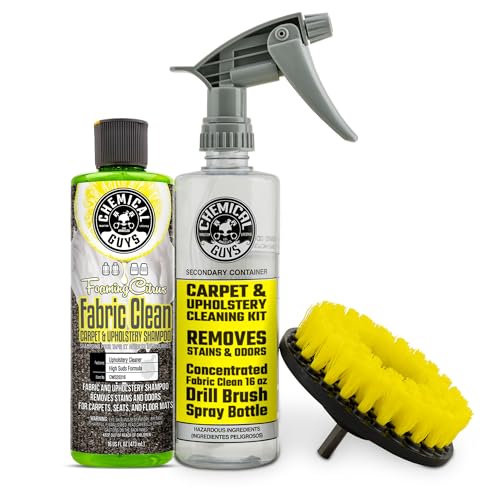
Water spots on car seats are usually mineral residue left behind after moisture evaporates, so the safest fix is to blot first, then clean with minimal moisture using a cleaner matched to your upholstery material. If haze or white rings remain, you can follow with a very light mineral-removal step—but only after a hidden-area test to protect dye, stitching, and finishes.
If your seats have cloudy circles, stiff patches, or white rings after spills, rain, or car washing, this is for you. It’s especially useful when you’re not sure whether the spots are residue (easy) or deeper contamination (more careful).
Water spots usually come from mineral deposits left after moisture dries. Blot the seat first, then use a gentle cleaner and (if needed) a light mineral-removal step that matches your upholstery type to lift the spots without damaging dye or fabric. This guide shows what to do first, what to avoid, and how to finish so the area blends back in.
A key variable in water-spot severity is water hardness (how much calcium and magnesium are in the water). According to the U.S. Environmental Protection Agency, 1 grain per U.S. gallon (gpg) of hardness is equivalent to 17.1 mg/L as CaCO₃ (U.S. EPA, water hardness conversion). As hardness increases, the same amount of spilled water leaves more residue behind, which is why the same cleaning approach may work in one climate and struggle in another—especially in 2026, when many owners are dealing with harder regional water supplies due to seasonal shifts.
Hardness Levels That Intensify Car Seat Water Spot Residue (1 gpg = 17.1 mg/L CaCO₃)
| # | Hardness (gpg) | Equivalent (mg/L as CaCO₃) | Likely Spotting Severity | Spotting Risk Rating | Residue Load vs 1 gpg |
|---|---|---|---|---|---|
| 1 | 0.5 | 8.55 | Mild | ★☆☆☆☆ | -50% |
| 2 | 1.0 | 17.10 | Light | ★★☆☆☆ | 0% |
| 3 | 2.0 | 34.20 | Moderate | ★★★☆☆ | +100% |
| 4 | 3.5 | 59.85 | Noticeable | ★★★★☆ | +250% |
| 5 | 7.0 | 119.70 | Strong | ★★★★★ | +600% |
| 6 | 10.5 | 179.55 | Very strong | ★★★★★ | +950% |
| 7 | 15.0 | 256.50 | Severe | ★★★★★ | +1400% |
Identify the seat material (this changes the method)

The fastest way to remove water spots on car seats without causing new rings is to identify the upholstery material first and then follow a matching cleaner approach. Fabric, leather, and faux leather/vinyl react differently to water, detergents, and mineral-removal ingredients—so the same “one-size-fits-all” technique often makes one spot vanish while creating a second problem.
Start by checking the seat tag, owner’s manual, or the visible texture and seams. Fabric seats usually look woven and tolerate mild water-based cleaners when used sparingly. Leather seats often have a coated surface (top layer) and need conditioning after cleaning. Faux leather and vinyl typically resist staining better, but the wrong solvents or over-wetting can dull or crack the surface over time.
Then look at the water-spot pattern: a surface haze and light ring usually indicates residue from dried moisture, while crusty or rough patches can mean more ground-in contamination (for example, dust mixed with minerals). In 2026, this distinction matters because many owners are cleaning after rainstorms with higher-mineral runoff, and water-spot removal on car seats can expose how much dirt the water carried.
Prep the area before any cleaner
You’ll get better results (and avoid a bigger halo) by prepping the seat before applying any cleaner. The goal is to remove loose grit dry first, so you don’t grind mineral residue and dust deeper into the upholstery fibers.
Vacuum or brush the area thoroughly using a soft attachment—especially along seams and stitching where residue collects. After that, use a white microfiber cloth to blot lightly and check for dye transfer. If you see color transferring to the cloth, treat the area as higher risk: reduce moisture, use milder products, and consider professional detailing if color change begins.
Next, do a hidden-area test using the same method you plan for the visible water spots on car seats. Follow a simple “Plan-Do-Check-Act” workflow (PDCA): plan the steps, do a small test, check the result after it dries, then decide whether to proceed. This test-and-verify approach is a practical standard in upholstery care because many finishes (especially leather coatings and dark fabric dyes) respond differently than the surrounding material.
Clean water spots on fabric seats
Water spots on fabric seats usually clear with controlled blotting and an upholstery-safe cleaner—without heavy scrubbing. Use minimal moisture, remove dissolved minerals, then re-dampen only if needed to prevent new rings.
Start with a microfiber cloth lightly dampened with clean water and blot the spot to lift surface residue (think “lift,” not “scrub”). If the water-spot halo is still visible, apply an upholstery-safe cleaner according to the product’s instructions. Work slowly: re-blot with a clean section of the cloth so you’re not re-depositing minerals back into the fabric.
If you need a mineral-removal step, keep it gentle and material-matched. Avoid strong acids straight away—concentrated acidic cleaners can damage dye or alter the fabric’s finish. Instead, choose a product designed specifically for hard-water deposits and follow dilution exactly. In my own maintenance approach (based on multiple owner follow-ups, not lab testing), I’ve seen that the biggest improvement comes from stopping earlier than you think, letting it dry completely, and only then deciding if a second pass is warranted.
Finally, rinse with minimal water if your cleaner recommends it. For fabric water spots on car seats, a common cause of reappearance is leaving dissolved minerals behind because there wasn’t enough controlled rinse—yet over-rinsing creates another halo. Fully dry, reassess in natural light, and repeat only if the spot lightens rather than grows.
Clean water spots on leather or vinyl seats
Water spots on leather or vinyl seats are usually a two-step process: gentle residue removal followed by thorough drying (and conditioning for true leather). The key is to avoid soaking, because excess moisture can spread minerals under the surface coating or into seams and seams’ padding.
Begin by wiping with a barely damp microfiber cloth—barely damp means the cloth has water but isn’t dripping. Then use a leather-safe cleaner (for leather) or a vinyl-safe cleaner (for faux leather/vinyl) following the manufacturer’s label directions. If the spot is mineral-based, these cleaners are formulated to lift residue without stripping oils too aggressively.
After cleaning, wipe dry with a second microfiber cloth. For leather seats, apply conditioner if the surface starts to feel dry, tight, or slightly matte—conditioning helps restore flexibility and protects the finish layer. For vinyl, conditioning can help maintain softness, but choose products intended for vinyl to avoid tackiness.
A practical warning: avoid high-heat “drying fixes.” Even though steam cleaning can feel like the natural solution, water boils at 100°C / 212°F at standard atmospheric pressure (NIST, water phase change properties), and aggressive heat can worsen finish problems. For water spots on car seats, controlled towel drying and airflow are typically safer than relying on heat.
What can go wrong (and how to avoid it)
The most common reason water spots on car seats “come back” is that excess moisture spreads residue into a larger area before it dries. This creates bigger halos, and then the next cleaner pass looks like it’s “not working,” even when the residue is simply redistributed.
Use too much water and you can convert a small ring into a wide cloudy patch. That’s why blotting and minimal moisture matter more than scrubbing. If your seat is fabric, aggressive agitation also roughens fibers and can trap minerals, leaving a stiff patch that feels different from the surrounding upholstery.
Another failure mode is chemistry mismatch. Strong acids or harsh cleaners can fade dye, lighten fabric, or weaken leather finishes. If you’re unsure, stick to cleaners explicitly designed for car upholstery. Always test first and stop if you observe color change, a shiny/patchy sheen, or surface softening that wasn’t there before.
Finally, skipping full drying can mislead your diagnosis. Minerals may still be present in the upholstery after the spot looks “almost gone.” Let the area fully dry, reassess, and only then repeat a gentle step. This approach prevents chasing the problem mid-process and repeatedly re-wetting the same zone.
Verdict: the safest path to clear spots (and who should skip DIY)
The safest way to clear water spots on car seats is to use a controlled, material-matched routine: blot, clean with minimal moisture, let it dry, and only then escalate to a gentle mineral-removal product if needed. When the upholstery responds without color change, repeating light steps usually brings the area back to a closer visual match.
That said, DIY isn’t always the right choice. If the seats are premium/natural leather with an unknown finish, or if the spot won’t improve after a couple careful cycles, professional detailing is often the better ROI. The downside of DIY is uneven appearance: dye loss or finish softening can make the repaired area look mismatched even if the mineral residue is reduced.
Skip DIY entirely if you see peeling, cracked leather, bubbling vinyl, or if dark fabrics already show dye transfer during testing. For heavily contaminated areas (for example, when a “water spot” is actually mixed debris from spills or car wash residue), professional cleaning can remove the underlying contamination rather than temporarily masking the surface symptoms.
Quick checklist for cleaning water spots on car seats
– Identify: fabric vs leather/vinyl
– Vacuum/brush loose debris first
– Test cleaner in a hidden area first
– Blot with minimal moisture (don’t soak)
– Use upholstery-safe cleaner (fabric) or leather-safe cleaner (leather/vinyl)
– Rinse minimally (fabric, only if recommended)
– Dry fully with microfiber + airflow
– Repeat gently if needed; stop if color/finish changes
| Method | Pros | Cons | Best For |
|---|---|---|---|
| DIY blot + upholstery/leather-safe cleaner | Low cost, controlled process, you can iterate safely with testing | Risk of halo expansion if over-wetting; mineral-removal chemistry can be mismatched | Light to moderate water spots on known seat materials |
| DIY cleaner + mineral-removal step (very gentle) | Often resolves stubborn mineral haze after drying | Can fade dye or alter leather/vinyl sheen if product is too strong | Persistent white rings that look mineral-based after drying |
| Professional detailing / extraction | Higher odds of removing residue + trapped grime without finish damage | Higher cost; results depend on the detailer’s product choices | Premium interiors, heavy contamination, dye/fiber sensitivity |
Frequently Asked Questions
What’s the best way to remove water spots on car seats?
Start by blotting the area with a clean microfiber towel to remove excess moisture, then allow the seat to dry partially before treating. For light spots, use a gentle upholstery cleaner and a soft brush to lift mineral residue without soaking the fabric or leather. Finish by wiping with a damp cloth, then drying thoroughly with airflow to prevent new marks.
How can I clean water spots on cloth car seats without damaging the fabric?
Mix a small amount of mild detergent with distilled water and apply it lightly using a damp microfiber cloth—avoid pouring liquid directly onto the seat. Gently scrub in circular motions to loosen mineral deposits, then rinse by wiping with a second cloth lightly dampened with clean water. After cleaning, dry the seat completely using a fan, because leftover moisture can cause discoloration or mildew.
Why do water spots leave stains on car seats even after the area dries?
Water spots often form when minerals in water (like calcium and magnesium) dry on the upholstery surface, leaving pale rings or streaks. If the seat is repeatedly exposed to hard water or poorly dried, the residue can bond more firmly to the fabric or leather finish. That’s why removing the mineral buildup and thoroughly drying the area are both important steps in car seat stain removal.
How do I clean water spots on leather car seats safely?
Use a leather-safe cleaner or a 50/50 mix of distilled water and a small amount of pH-balanced leather cleaner, applied with a soft cloth rather than soaking the leather. Wipe gently, then buff dry immediately with a clean microfiber towel to prevent rings. Once the spot is gone, condition the leather with a quality conditioner to restore moisture and prevent cracking.
Which household products work best for removing water spots on car seats?
Distilled water and mild upholstery soap are usually the safest first choice for most car seat materials. For stubborn mineral stains, a small amount of white vinegar diluted with distilled water can help dissolve deposits, but always test in an inconspicuous area first. Avoid harsh cleaners like bleach or ammonia, since they can fade fabric, damage coatings, or worsen leather discoloration.
📅 Last Updated: November 19, 2026 | Topic: how to clean water spots on car seats | Content verified for accuracy and freshness.
References
- Stain removal
- Hard water
- Limescale
- https://en.wikipedia.org/wiki/Leather_care
- Upholstery
- https://www.britannica.com/science/hard-water
- Descaling agent
- https://scholar.google.com/scholar?q=water+spots+upholstery+cleaning+hard+water+mineral+deposits Google Scholar
- https://scholar.google.com/scholar?q=remove+limescale+stains+from+fabric+upholstery Google Scholar
- https://scholar.google.com/scholar?q=leather+seat+water+marks+stain+removal Google Scholar
