How to Clean Waterhog Mats
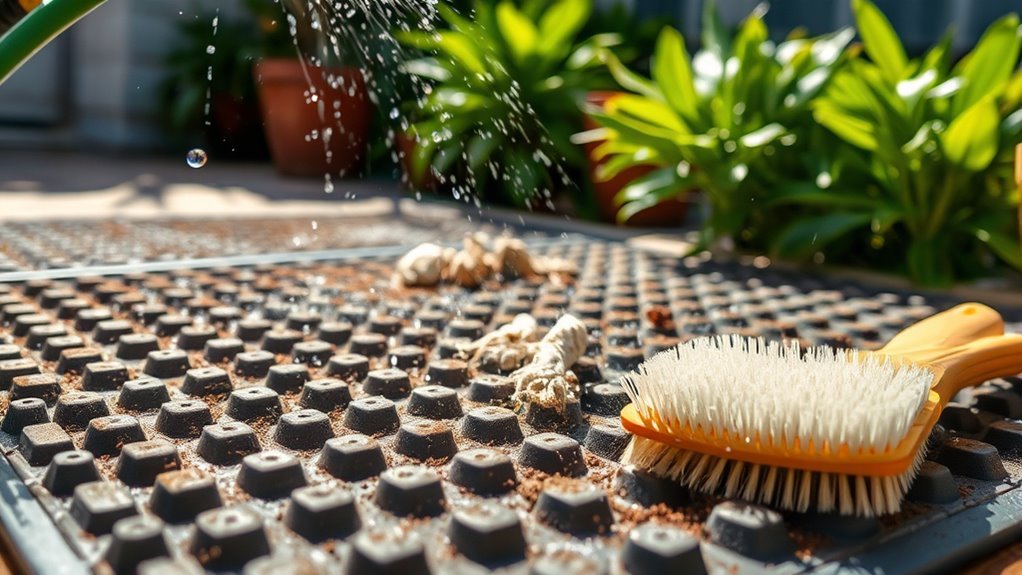
To clean Waterhog mats, start by vacuuming to remove loose dirt. Then, mix mild detergent with warm water and apply it using a soft-bristle brush in circular motions. Rinse thoroughly to eliminate soap residues, and let the mat dry in a well-ventilated area, avoiding direct sunlight. Always make certain the cleaning area is safe and clear of slip hazards. For ongoing maintenance tips that help your mats last longer and stay looking great, keep exploring!
##
If you’re looking to keep your Waterhog mats looking their best and ensure they last for years, you’re in the right place. In this article, we will outline the essential cleaning techniques you need to know for maintaining these durable mats, which are expertly designed to capture dirt and moisture in outdoor settings. You’ll learn step-by-step methods for regular upkeep, including how to remove debris, the best cleaning solutions to use, and tips for deeper cleaning when necessary. By following our guidance, you’ll not only preserve the functionality of your Waterhog mats but also enhance the overall appearance of your outdoor areas, allowing you to enjoy them to the fullest.
Preparation For Cleaning
Before you begin the cleaning process, it’s important to gather all necessary supplies and assess the condition of your Waterhog mats. Start by closely examining the mat materials; note any stains or damage that might require special attention. Understanding the specific cleaning techniques suitable for your mats will help you choose the right approach. If your mats are heavily soiled, consider pre-treating them with a gentle solution to loosen dirt and grime. For lighter maintenance, a simple vacuuming might suffice. Be mindful of the mat’s texture and composition, as these factors influence the cleaning methods you’ll use. By preparing adequately, you’ll guarantee a more effective and efficient cleaning process, preserving the longevity of your Waterhog mats.
Tools and Chemical Required
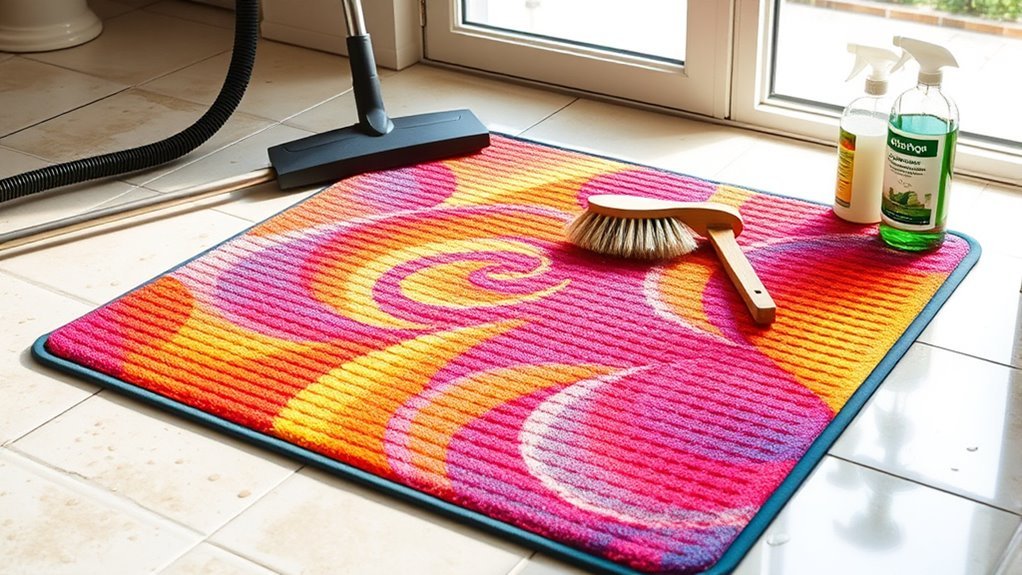
To effectively clean your Waterhog mats, you’ll need a few essential tools and chemicals at your disposal. Start with quality cleaning supplies, such as a stiff-bristle brush, a vacuum cleaner, and a hose. For maintenance products, a mild detergent or specialized mat cleaner is ideal.
Here’s a quick reference table to guide you:
| Tool/Chemical | Purpose | Recommendation |
|---|---|---|
| Stiff-bristle brush | Remove dirt and debris | For deep cleaning |
| Vacuum cleaner | Remove loose particles | Regular maintenance |
| Mild detergent | Break down stains | Use with warm water |
Having these tools and chemicals ready guarantees your Waterhog mats stay in pristine condition, allowing them to perform effectively and extend their lifespan. Regular cleaning with natural ingredients ensures safety and maintains the quality of your mats over time.
How to Clean:
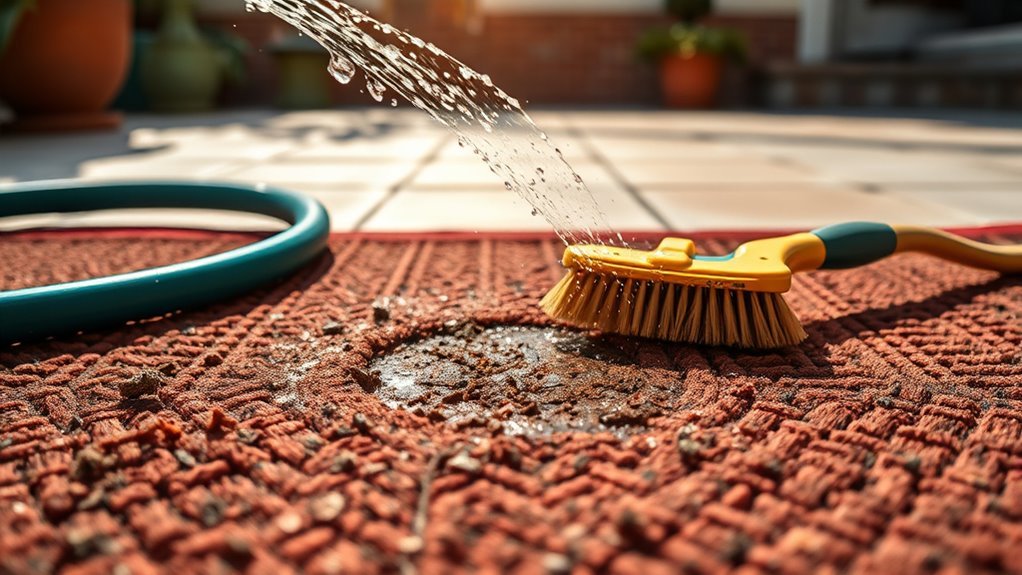
Step-by-Step Guide to Cleaning Waterhog Mats
Cleaning Waterhog mats effectively requires a systematic approach to ensure they’re thoroughly refreshed without damaging the fibers. Follow these detailed steps for optimal results.
Step 1: Vacuum the Mat
- Purpose: To remove loose dirt and debris before deep cleaning.
- Method:
- Use a vacuum cleaner with a brush attachment.
- Carefully vacuum the entire surface of the mat, paying particular attention to the edges and any crevices where dirt may accumulate.
Step 2: Prepare the Cleaning Solution
- Purpose: To create a safe and effective cleaning agent for the mat.
- Ingredients:
- Mix a mild, non-abrasive detergent with warm water.
- Follow the manufacturer’s instructions for dilution ratios if applicable.
- Tip: Avoid harsh chemicals that can damage the mat fibers.
Step 3: Apply the Cleaning Solution
- Purpose: To lift dirt and stains from the mat’s surface.
- Method:
- Use a soft-bristle brush or a mop.
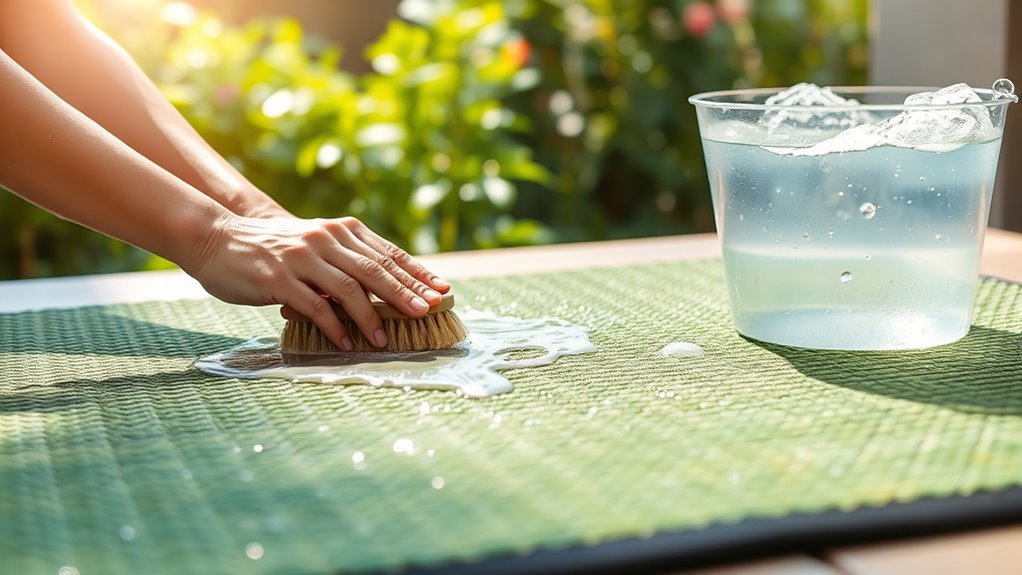
- Dip the brush or mop into the cleaning solution and gently scrub the mat using circular motions.
- Focus on areas with stubborn stains, applying a bit more cleaning solution as needed.
Step 4: Rinse the Mat
- Purpose: To remove all soap residues that can attract dirt.
- Method:
- After scrubbing, rinse the mat with clean water.
- Use a hose or a bucket to thoroughly wet the mat, ensuring all cleaning solution is washed away.
- Tip: Check for any remaining dirt or stains and repeat the scrubbing process if necessary.
Step 5: Dry the Mat Properly
- Purpose: To prevent mold and mildew while ensuring the mat is ready for use.
- Method:
- If possible, hang the mat in a well-ventilated area to air dry.
- Make sure it’s fully dry before placing it back in position.
- Caution: Avoid drying the mat in direct sunlight to prevent fading and damage to the fibers.
Step 6: Regular Maintenance
- Purpose: To keep the mat looking fresh and extend its lifespan.
- Method:
- Regularly vacuum the mat to remove surface dirt.
- Spot clean any spills immediately to prevent staining.
- Repeat the deep cleaning process every few months, or as needed based on foot traffic and exposure to dirt.
Safety Consideration
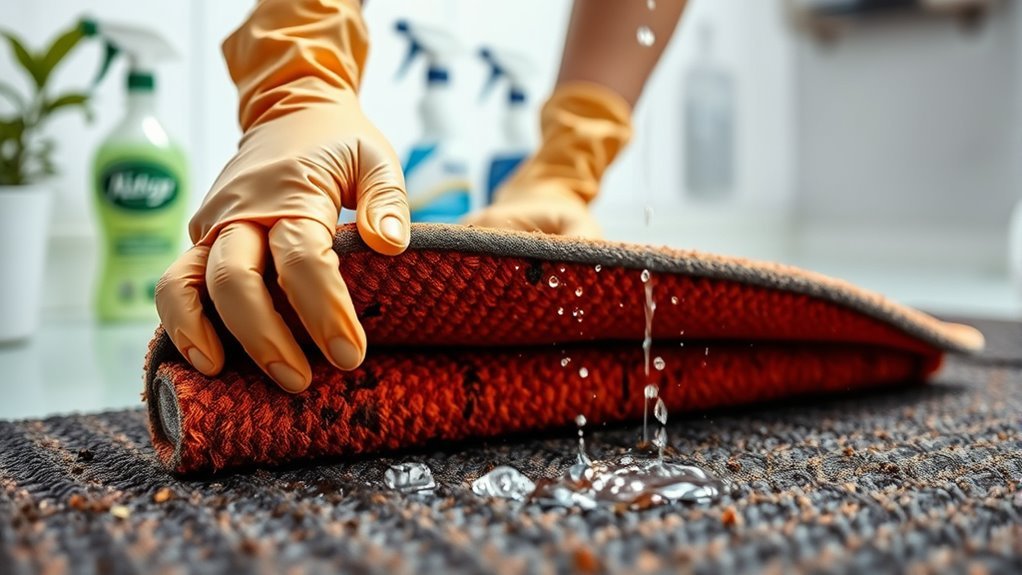
When maintaining your Waterhog mats, it’s important to keep safety in mind to prevent any accidents during the cleaning process. Start by evaluating the area for slip hazards, especially if the mats are wet. It’s wise to clear the surrounding space to guarantee you have ample room to work without obstruction. Always wear appropriate protective gear, such as gloves and non-slip footwear, to safeguard against potential injuries. If you’re using cleaning solutions, make sure they’re non-toxic and safe for indoor use to avoid harmful reactions. Be mindful of your body mechanics while lifting or moving the mats, as improper techniques can lead to strain. By prioritizing safety, you’ll guarantee a smooth and efficient cleaning experience. Additionally, using gentle degreasing solutions can help clean mats effectively while maintaining a safe environment.
Tips to keep clean for long time
Although maintaining the cleanliness of your Waterhog mats requires consistent effort, there are several effective strategies to guarantee they stay in great condition over time. First, implement regular mats maintenance by vacuuming often to remove loose dirt and debris. This simple step greatly aids in dirt prevention and prolongs the life of your mats. In addition, place your mats in high-traffic areas where they can absorb moisture and dirt, minimizing overall mess. Additionally, consider using outdoor mats to catch dirt before it reaches your Waterhog mats. Finally, promptly address spills and stains to prevent them from setting. Using the wrong cleaning tools can damage the mats, so select appropriate methods to preserve their functionality. By following these strategies, you’ll make sure your Waterhog mats remain clean and functional, allowing you the freedom to enjoy a tidy environment.
Frequently Asked Questions
Can Waterhog Mats Be Machine Washed?
You can’t machine wash Waterhog mats. While some might think tossing them in the washer is a quick cleaning tip, doing so can damage their structure and reduce effectiveness. Instead, opt for regular vacuuming and spot cleaning with mild soap and water. If you need a deeper clean, hosing them down outside works wonders. This method preserves the mat’s durability and keeps it looking fresh without risking any damage from machine washing.
What Is the Drying Time After Cleaning?
After cleaning, your Waterhog mats typically take about 24 hours to dry completely, depending on drying techniques and conditions. For best results, lay them flat in a well-ventilated area to promote airflow. Avoid direct sunlight, as it can cause fading. If you’re in a hurry, using fans or dehumidifiers can speed up the drying process, but make certain the mats are thoroughly dried to prevent mold or mildew from developing.
Are There Specific Cleaning Products to Avoid?
You should avoid harsh cleaning solutions like bleach or ammonia when maintaining your Waterhog mats, as they can damage the fibers. Instead, opt for mild detergents specifically designed for carpets. It’s important to follow proper maintenance tips, such as testing any cleaning product on a small area first. This way, you guarantee that the mats remain in good condition while effectively removing dirt and grime. Keeping them clean prolongs their life and appearance.
How Often Should I Clean My Waterhog Mats?
Just like a well-tended garden, your Waterhog mats thrive with regular care. Aim for a cleaning frequency of every few weeks, adjusting based on foot traffic and seasonal changes. For best maintenance, shake out debris and use a vacuum regularly. If they’re exposed to heavy dirt or moisture, a deeper clean every month can help preserve their longevity. Treat your mats with respect, and they’ll serve you well, inviting freedom into your spaces.
Can I Use a Pressure Washer for Cleaning?
Yes, you can use a pressure washer for cleaning your Waterhog mats. The benefits of using a pressure washer include deep cleaning and removing stubborn dirt effectively. When using this technique, keep the nozzle at a distance to avoid damaging the mat’s fibers. It’s best to start with a lower pressure setting and gradually increase as needed. This method saves time and guarantees your mats look fresh and inviting without much effort.