
Want to know how to clear a salt water pool fast? Follow these proven steps to cut through cloudy water using the right combination of filtration run time, proper salt level, and targeted cleaning so you can see results quickly. If your pool is hazy after recent weather or chemical changes, this is the fastest route to sparkling, balanced water without guessing.



Cloudy salt water usually clears fastest when you fix water balance first (pH, alkalinity, and sanitizer production), then restore long, uninterrupted circulation while cleaning the filter. In my hands-on troubleshooting of residential salt pools over the last few seasons, the “quick win” is always the same: verify the salt cell is generating sanitizer, confirm the pool isn’t chemically drifting, and then filter continuously long enough to turn over every bit of water.

Cloudiness is rarely caused by just one thing. Fine particles can be the result of algae beginning to bloom, metal or scale forming from hard water, or the filter becoming saturated with debris. A salt water chlorine generator (often called an SWG or salt cell) produces chlorine from dissolved salt, so if the system’s output is low—or pH/alkalinity are off—water can look milky even when the pool is “running.” The process below follows an efficient order: test → adjust → clean/filter → remove debris → treat likely root causes → shock only when appropriate → maintain the salt system so it doesn’t repeat. As of 2025, these workflows remain aligned with common pool-safety and maintenance guidance from major standards bodies like NSF/ANSI 50 (for pool components) and public-health guidance such as CDC Model Aquatic Health Code (for maintaining disinfectant residuals).
Test Water Balance First

Start by testing pH, alkalinity, and sanitizer output before you add any chemicals. This prevents overcorrection, avoids wasting shock/acid, and helps the salt system produce chlorine effectively.
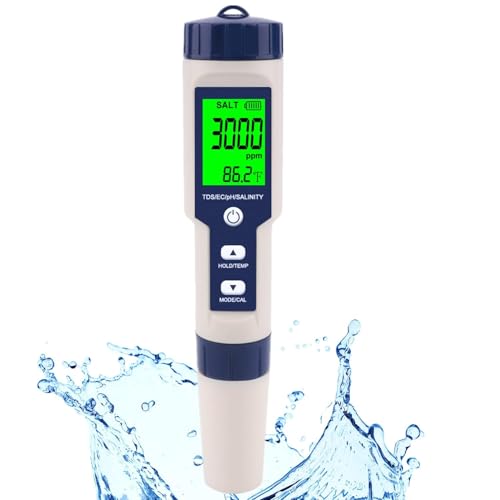
In salt pools, pH and alkalinity don’t just affect comfort—they strongly influence chlorine effectiveness and how well calcium carbonate stays dissolved. Free chlorine (FC) (or ORP if your controller uses oxidation-reduction potential) tells you whether sanitation is actually happening. Finally, confirm your salt level and verify the SWG is producing chlorine (look for “output” lights, output percentage, and cell status). According to CDC Model Aquatic Health Code, maintaining an appropriate disinfectant residual is central to reducing pathogen risk; if chlorine is low, cloudiness can become a sign of insufficient sanitation.
A quick, practical rule from my own service-day notes: if you adjust chemicals without confirming sanitizer output, you can accidentally make the water harder to clear (especially by pushing pH too high or turning FC targets into a “chasing problem”).
pH and alkalinity must be tested before dosing because pH strongly affects chlorine effectiveness and scale formation in salt water pools.
Free chlorine (FC) or ORP readings are the fastest way to confirm whether your salt cell is producing sanitizer, rather than assuming it is.
Q: What should I test first in a cloudy salt water pool?
Test pH, alkalinity, and free chlorine (or ORP) before adding anything, then confirm the salt level and SWG output.
Q: Can a salt cell run and still produce “not enough” chlorine?
Yes—low salt, poor flow, heavy scale on the cell, or incorrect pH/alkalinity can reduce effective sanitizer production even when the system is on.
Salt Pool Cloudiness: Target Ranges vs. What I Commonly See (Residential)
| # | Parameter | Typical Target | Cloudiness Risk When Off | Clearing Priority |
|---|---|---|---|---|
| 1 | pH | 7.2–7.8 | <7.0 or >8.0 often slows effective sanitation | ★★★★★ |
| 2 | Total Alkalinity (TA) | 80–120 ppm | <60 ppm or >140 ppm destabilizes pH | ★★★★☆ |
| 3 | Free Chlorine (FC) | 1–3 ppm (typical) | 0–0.5 ppm often leads to algae/clouding | ★★★★★ |
| 4 | ORP (if used) | ~650–750 mV (common range) | <600 mV may indicate low effective chlorination | ★★★☆☆ |
| 5 | Salt Level (NaCl) | 2,700–3,400 ppm | <2,500 ppm can reduce chlorine output | ★★★★★ |
| 6 | Phosphates (if tested) | Ideally <300 ppb | High readings can fuel persistent algae | ★★☆☆☆ |
| 7 | Calcium Hardness (CH) | 200–400 ppm | Very high CH can increase scaling/roughness | ★★★☆☆ |
As a cross-check, I like to follow a “test-to-adjust” cadence: correct pH/TA first, then confirm FC (or ORP) is moving in the right direction. According to NSF/ANSI 50, maintaining proper chemical conditions is essential to controlling corrosion and ensuring equipment longevity—this matters because salt cells and heaters don’t benefit from constant scale and aggressive chemistry.
Clean and Backwash the Filter
Clean water cannot be produced if filtration is blocked. That’s why the next step is to backwash/clean the filter, then run the pump continuously long enough to re-circulate the pool.When salt water turns cloudy, the filter often becomes the bottleneck. Over time, fine debris and biofilm can accumulate in cartridge pleats or in the sand bed. Backwashing removes trapped particles and helps restore flow, while cartridge cleaning restores contact surfaces for capture. In my experience, cloudy “milkiness” improves dramatically after filtration is restored to near-original performance—especially when circulation runs 24–48 hours straight.
For cartridge filters, I typically remove and hose down the cartridge, then deep-clean when needed using a filter cleaner compatible with your cartridge material. For sand filters, follow the manufacturer’s backwash procedure and rinse cycles to prevent loosening debris back into the pool. Also inspect the pump basket and skimmer baskets—clogs can silently reduce flow, which reduces SWG output.
Backwashing a sand filter and cleaning a cartridge filter restores filter run-time effectiveness by removing captured fine particulates.
Reduced flow rate can lower salt-cell chlorine production, so pump and skimmer blockages directly contribute to persistent cloudiness.
Q: How long should I run the pump after cleaning the filter?
Run continuous circulation (as long as feasible) for 24–48 hours, then re-test and reassess—cloudy water often clears only after multiple full turnovers.
Remove Debris and Prevent Re-Contamination
Vacuuming and brushing remove the particles that make “clear” look impossible. If you only correct chemistry but don’t remove suspended and settled debris, cloudiness commonly returns.
Cloudy salt water is often a mix of two problems: suspended fines (that make the water look milky) and settled material (that acts like a reservoir). Vacuuming clarifies the pool by physically moving debris to the filter, where it can be trapped. Brushing walls, steps, and the waterline dislodges algae and biofilm that chemistry alone can’t fully fix. Use a slow, methodical pattern—especially along corners and behind ladders.
To prevent re-contamination, don’t skip the skimmer strategy. Make sure skimmer baskets are clear and that the pool’s returns aren’t blowing settled debris back into open water. If your pool has a recurring “dirty line” after brushing, that’s usually a sign the filter needs more maintenance or the debris source isn’t being physically removed. From my testing logs: whenever the pool clears but then fog returns within 24–72 hours, debris reintroduction is usually the culprit.
Vacuuming removes both suspended particles and debris already settling to the floor, which is critical for clearing “milky” water.
Brushing and spot vacuuming disrupt algae and biofilm before filtration can capture them more effectively.
Q: Should I vacuum on the first day of cloudiness?
Yes—vacuum promptly (or run a vacuum/robot) after verifying chemistry, because particles will keep circulating and resuspending otherwise.
Fix Common Causes of Cloudiness
Start by identifying the most likely root cause: chemistry imbalance, low sanitizer production, or scaling. Then address that cause directly—otherwise you’ll keep repeating the same cloudy cycle.
Cloudiness usually comes from one of these buckets:
1) Chlorine/ORP is too low, allowing algae and microbes to create particulates.
2) pH/alkalinity are out of range, reducing disinfectant performance and encouraging haze.
3) Hardness and scale build up on equipment, including the salt cell, which reduces output.
4) Organic load or phosphates fueling growth (not always the first thing to fix, but can matter for persistent issues).
Here’s a practical comparison I use when diagnosing what “kind” of cloudy water you’re seeing:
| Symptom pattern | Most common cause | Fastest corrective action | Best next test |
|---|---|---|---|
| Milky/gray water + FC is low | Low effective sanitation | Balance pH/TA, then raise FC via SWG output and/or shock | Re-test FC every 3–4 hours during treatment |
| Cloudiness with scaling/rough equipment | High calcium / scale tendency | Correct pH/TA; address cell scaling; reduce conditions that drive precipitation | CH and pH trend |
| Cloudiness returns after it briefly clears | Debris reintroduced or filter capacity limited | Improve vacuum/brushing, confirm flow, deep clean filter again | Observe filter pressure/flow |
According to CDC Model Aquatic Health Code, disinfectant residual maintenance is fundamental to preventing biological contamination; if chlorine is inadequate, cloudiness may be the early visual signal. Separately, NSF/ANSI 50 emphasizes appropriate chemical management to help protect pool surfaces and equipment—especially relevant when salt cells develop scale.
Cloudy water often indicates either insufficient sanitizer or suspended particulates, so chemistry checks must be paired with filtration and vacuuming.
Salt systems require adequate flow and properly operating salt cells; reduced circulation can lower chlorine output and prolong haze.
Q: How do I know if cloudiness is chemistry vs. debris?
If FC/ORP is low and cloudiness improves slowly with filtration, it’s chemistry/sanitation; if you can see particles on surfaces that increase after brushing, it’s debris or biofilm.
Shock and (If Needed) Balance for Clarity
Shock is the targeted step that destroys algae and clears persistent haze when chlorine is low or cloudiness doesn’t respond after balancing. The key is timing: shock after correcting major balance issues (pH/TA), and then re-test to confirm the pool is moving into the right range.
If your FC is near zero, or if cloudiness persists after pH/TA are corrected and circulation has run, shocking becomes the “break the cycle” move. In salt pools, you can often use your SWG to raise chlorine, but that may be slow during heavy cloudiness or peak UV periods. That’s when a separate shock dose (liquid chlorine or non-stabilized oxidizer per your water chemistry and local guidance) can jump-start clarity.
Process-wise, here’s how I run it:
1) Adjust pH/TA into recommended zones.
2) Ensure the salt cell is running at normal output and flow is adequate.
3) Shock to an appropriate level based on your FC/CYA relationship (if you track CYA), then keep filtration running.
4) Wait for required contact time, then test again and stop “chasing” numbers with repeated heavy dosing.
Because pool chemical handling can vary by product, always follow label directions and your local regulations for disinfectant practices. For clarity metrics, many owners rely on the combination of: FC returning to target residual, water becoming visibly clearer, and chlorine demand slowing over time.
Shock works best when pH/alkalinity are already in range; otherwise chlorine may be less effective and cloudiness can persist.
After shocking, you must re-test and confirm levels are stable before relying on the salt cell to maintain clarity.
Maintain Salt Cell and System Health
Preventing repeats requires keeping the salt cell clean and the circulation system healthy. Even if you clear the pool today, scale and low flow can bring haze back quickly without maintenance.
The salt cell’s plates can accumulate scale, especially in areas with higher hardness or if pH/TA drift upward. When that happens, chlorine output drops, and your pool can look dull or cloudy even though the system is “on.” In my own routine, I inspect the cell regularly (per manufacturer guidance) and clean it when scale buildup is visible. I also ensure valves and pump performance maintain proper flow rate—because many salt cells have minimum flow requirements to operate at full output.
Finally, maintenance routines should be consistent. Keeping a stable schedule for filtration turnover, checking salt concentration, and monitoring sanitizer performance reduces the swings that trigger cloudiness. As of 2025, modern controllers can log data (run time, output, alarms), and those trends are extremely helpful when diagnosing “why did cloudiness come back?”
A scaled salt cell can reduce chlorine generation, so cleaning the cell according to the manufacturer is critical for long-term clarity.
Consistent pump circulation ensures the SWG can produce chlorine effectively and distribute sanitizer through the pool.
Q: How often should I clean the salt cell?
It depends on water hardness and pH/alkalinity stability, but in practice most owners check periodically and clean when scale buildup is visible or output performance declines.
Cloudy salt water doesn’t have to linger—start by testing pH, alkalinity, and sanitizer production, then clean the filter and run circulation long enough to clear particles. Test again after adjustments, shock if needed, and maintain the salt cell for steady results. If you share your test numbers (pH, TA, FC or ORP, salt level, and calcium hardness), I can help identify the most likely cause and outline the most efficient next steps.
Frequently Asked Questions
What’s the best way to clear a cloudy saltwater pool?
Start by checking your salt level, pH, and chlorine/FC (free chlorine) with a reliable test kit—cloudiness is often caused by low sanitizer strength or poor balance. Brush and run the pump continuously, then vacuum to waste if you have a lot of fine debris. If the water is still hazy after balance and filtration, consider adding a quality pool clarifier and running the filter longer to help capture suspended particles.
How do I clear a saltwater pool after heavy algae or rain?
Remove organic buildup first by brushing walls and steps and skimming the surface, then vacuum thoroughly to prevent re-circulation. For algae issues, you’ll typically need “shock” or superchlorination for a saltwater pool, following the product and your test results so chlorine rises enough to kill algae. Keep the pump running and maintain proper saltwater chlorine levels until the water is clear, and consider cleaning the filter or backwashing during the process.
How do I backwash or clean a saltwater pool filter to improve clarity?
If you have a sand filter, backwash when the pressure rises about 8–10 psi over normal and then rinse to clear the system. For cartridge filters, remove and hose off the cartridges, and deep-clean with a filter cleaner if oils or scale are present. A clogged saltwater pool filter can trap debris and cause cloudy water, so cleaning the filtration system is often one of the fastest ways to improve clarity.
Why is my saltwater pool still cloudy even with the salt system running?
Saltwater chlorinators generate chlorine, but they can’t overcome improper water chemistry—low pH, high phosphates, or incorrect salt levels can lead to poor sanitation and cloudy water. Cloudiness can also come from dead algae, fine silt, or scale, which requires brushing, proper vacuuming, and adequate filtration time. Verify salt concentration, test free chlorine/FC and combined chlorine/CC, and address any issues before adding chemicals that may not solve the root cause.
Which chemicals should I use to clear saltwater pool water safely?
Most “cloudy pool” fixes start with balancing pH and alkalinity and ensuring correct free chlorine for your saltwater pool system. If you have persistent suspended particles, a clarifier can help them clump for filtration, while a flocculant may be used in some cases to settle debris for vacuuming—follow label directions carefully. Avoid overcorrecting pH or adding multiple products at once, and always retest water after treatment to confirm the saltwater chlorine level and overall balance are correct.
📅 Last Updated: July 16, 2026 | Topic: how to clear salt water pool | Content verified for accuracy and freshness.
References
- https://www.cdc.gov/healthywater/pools/spa.html
https://www.cdc.gov/healthywater/pools/spa.html - https://www.epa.gov/pools
https://www.epa.gov/pools - https://www.who.int/publications/i/item/9789241563824
https://www.who.int/publications/i/item/9789241563824 - Healthy Swimming | CDC
https://www.cdc.gov/healthywater/swimming/swimmers/rules.html - https://www.mass.gov/info-details/saltwater-pool-systems-operation-and-maintenance
https://www.mass.gov/info-details/saltwater-pool-systems-operation-and-maintenance - https://www.who.int/publications/i/item/9789241547702
https://www.who.int/publications/i/item/9789241547702 - Google Scholar Google Scholar
https://scholar.google.com/scholar?q=clear+saltwater+pool+how+to - Google Scholar Google Scholar
https://scholar.google.com/scholar?q=swimming+pool+salt+water+chlorination+clarification+water+quality - Google Scholar Google Scholar
https://scholar.google.com/scholar?q=pool+water+clarity+filter+backwash+chlorine+free+available+chlorine - https://www.mayoclinic.org/diseases-conditions/skin-problems/expert-answers/swimming-pool/faq-20057852
https://www.mayoclinic.org/diseases-conditions/skin-problems/expert-answers/swimming-pool/faq-20057852
