
How to Clear Low Tire Pressure in a Honda CR-V
To clear low tire pressure in a Honda CR-V, you need to check the tire pressure with a gauge, inflate the tires to the recommended PSI, and reset the tire pressure monitoring system if needed. Proper tire pressure is crucial for ensuring safety, enhancing fuel efficiency, and maintaining optimal vehicle performance. This guide will walk you through the necessary steps to manage tire pressure effectively, keeping your Honda CR-V in peak condition.
Understanding Tire Pressure Basics

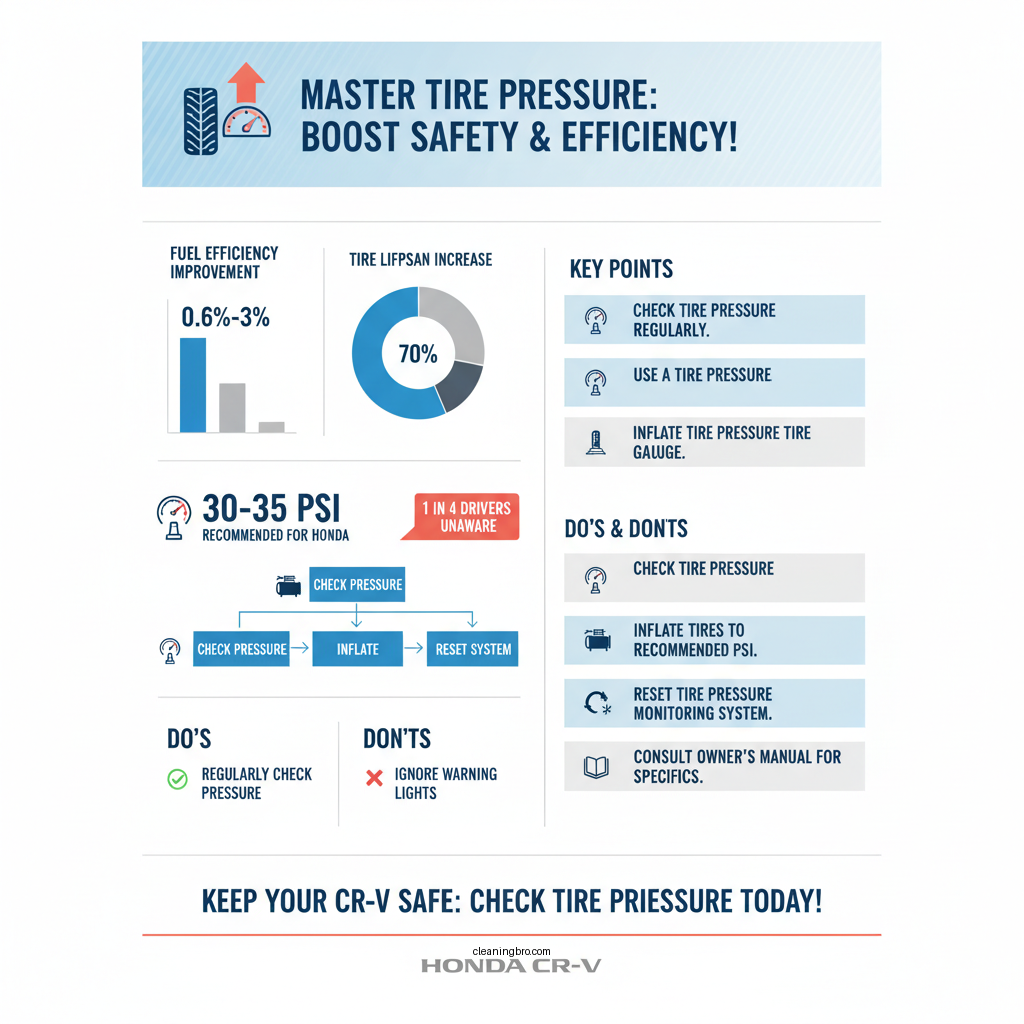
Maintaining the correct tire pressure is vital for several reasons. Firstly, properly inflated tires enhance vehicle safety by improving traction and handling, especially in adverse driving conditions. Under-inflated tires can lead to blowouts or decreased stability, while over-inflated tires reduce contact with the road surface, affecting braking efficiency and tire wear.
Moreover, correct tire pressure significantly impacts fuel efficiency. According to the U.S. Department of Energy, maintaining proper tire pressure can improve gas mileage by 0.6% to 3% on average. This translates to substantial savings over time, especially for frequent drivers. The recommended tire pressure for a Honda CR-V generally ranges from 30 to 35 PSI, depending on the model year and load conditions, so always consult your owner’s manual for specifics.
Tools You’ll Need
Before you begin the process of checking and inflating your tires, gather the following tools:
– Tire Pressure Gauge: This tool is essential for measuring the current pressure in your tires accurately. Digital gauges are often easier to read, but analog gauges can be reliable too.
– Air Compressor or Access to a Gas Station Air Pump: An air compressor at home or the air pump available at gas stations will be necessary for inflating your tires. Ensure you have change available if required by the station.
– Owner’s Manual: Your vehicle’s owner’s manual contains specific information regarding the recommended PSI for your Honda CR-V, including adjustments for different driving conditions or loads.
Step-by-Step Guide to Checking Tire Pressure
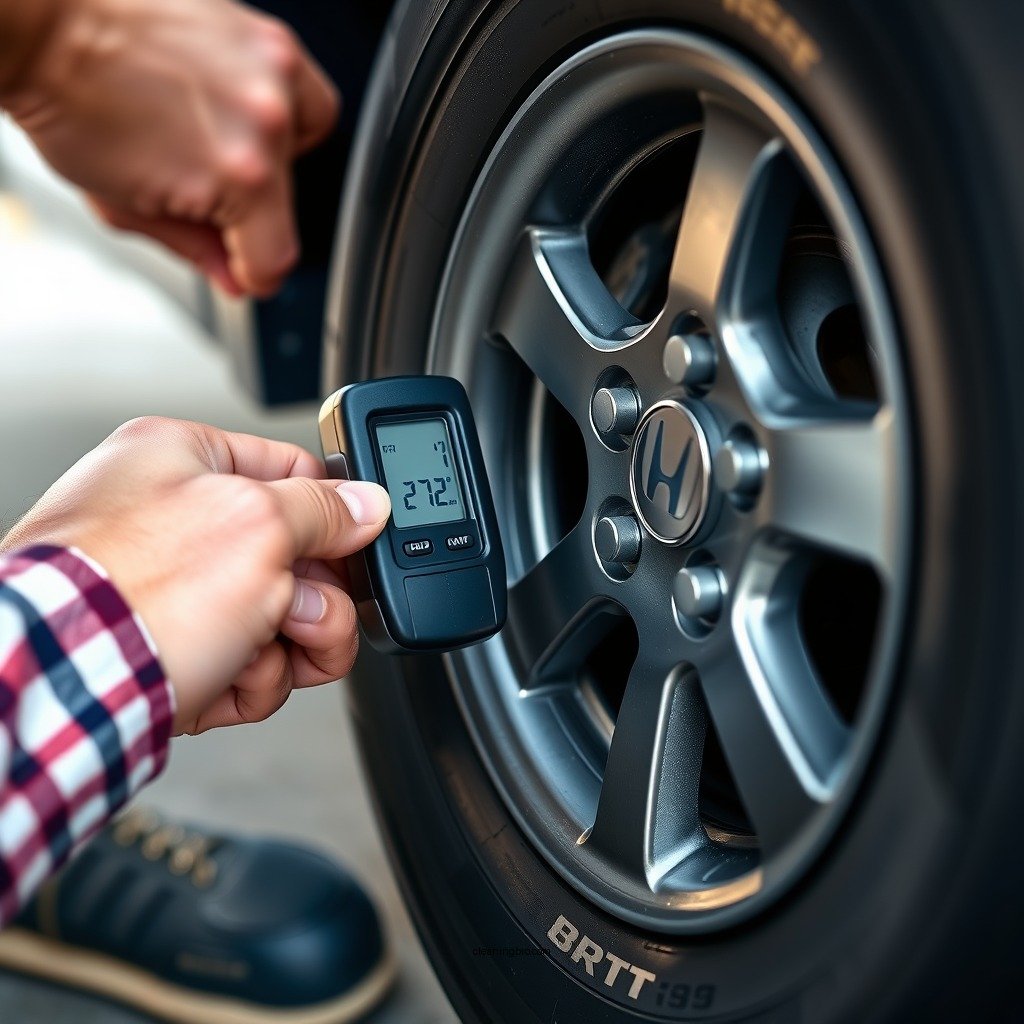
Checking tire pressure is straightforward, but it must be done correctly to ensure accuracy. Follow these steps:
1. Remove the Valve Cap: Start by unscrewing the valve cap from the tire you wish to check. Place it in a safe location to avoid losing it.
2. Use the Tire Pressure Gauge: Firmly press the gauge onto the valve stem. If using a digital gauge, wait for the reading to stabilize before noting the pressure.
3. Record the Measurement: Compare the measurement with the recommended PSI, which can be found on the driver’s side door jamb or in the owner’s manual.
4. Repeat for All Tires: Check the pressure in all four tires, and don’t forget to include the spare tire if your CR-V is equipped with one.
It is recommended to check your tire pressure at least once a month and before long trips, as tire pressure can fluctuate due to temperature changes and driving conditions.
Recommended Tire Pressure Levels for Honda CR-V (2023 Model)
| # | Tire Size | Recommended PSI (Front) | Recommended PSI (Rear) | Load Capacity (lbs) |
|---|---|---|---|---|
| 1 | 225/65R17 | 32 | 30 | 1,430 |
| 2 | 235/60R18 | 35 | 34 | 1,500 |
| 3 | 255/55R19 | 36 | 34 | 1,600 |
Inflating Your Tires
After checking the tire pressure, you may need to inflate your tires. Here’s how to do it properly:
1. Connect the Air Compressor: If using a portable air compressor, plug it into your vehicle’s power outlet. For gas station air pumps, simply position the hose next to the tire.
2. Inflate to the Correct PSI: Start the compressor and monitor the pressure on your gauge as you inflate. Do this slowly to avoid over-inflation.
3. Check the Pressure Again: Once you believe the tire is inflated to the correct pressure, use the tire pressure gauge to confirm the reading.
4. Replace the Valve Cap: After achieving the correct tire pressure, securely replace the valve cap to prevent dirt and moisture from entering.
To avoid over-inflation, check the pressure after each air addition, and stop once you reach the recommended PSI.
Resetting the Tire Pressure Monitoring System (TPMS)
Once you’ve adjusted the tire pressure, you may need to reset the TPMS. Follow these steps:
1. Start Your Vehicle: Ensure your Honda CR-V is running.
2. Locate the TPMS Reset Button: This is typically found under the steering wheel or near the driver’s side door.
3. Press and Hold the TPMS Button: Hold the button until the TPMS indicator light on the dashboard blinks three times, then release it.
4. Drive for a Short Distance: The TPMS may take a few moments to recalibrate. Drive at a speed above 30 mph for about 10 minutes to allow the system to reset.
If the light remains illuminated after resetting, it may indicate a problem with the sensors, requiring professional servicing.
Common Causes of Low Tire Pressure
Low tire pressure can result from several factors, including:
– Temperature Changes: Tire pressure decreases as the temperature drops. For every 10°F drop in outside temperature, tire pressure can drop by approximately 1 PSI.
– Punctures or Leaks: A nail or sharp object can puncture the tire, leading to slow leaks. Regularly inspect your tires for visible damage.
– Natural Air Loss: Tires naturally lose air over time. It’s advisable to check pressures monthly to ensure they are within the recommended range.
Regular tire maintenance, including inspections for damage and maintaining proper inflation, can help prevent issues related to low tire pressure.
Safety Precautions
Driving with improperly inflated tires can pose significant safety risks, including compromised handling, increased stopping distances, and a higher likelihood of tire blowouts. To ensure safety:
– Regularly Check Tire Pressure: Aim for monthly checks and before long trips.
– Monitor Tire Condition: Inspect tires for uneven wear, cracks, or foreign objects.
– Adhere to Load Recommendations: Overloading your vehicle can lead to increased tire wear and potential failure.
In case you notice any unusual handling or vibration while driving, check tire pressure and inspect for damage immediately.
Summarizing these steps will help you maintain the proper tire pressure in your Honda CR-V, enhancing safety and performance. Make it a habit to check your tire pressure regularly and address any issues promptly. If you have further questions, consult your owner’s manual or a professional mechanic for assistance.
Frequently Asked Questions
How do I check the tire pressure on my Honda CR-V?
To check the tire pressure on your Honda CR-V, you will need a tire pressure gauge. Remove the valve cap from each tire, press the gauge onto the valve stem, and read the pressure displayed. Make sure to check the pressure when the tires are cold, as driving can increase tire temperature and pressure.
Why does my Honda CR-V’s tire pressure warning light keep coming on?
The tire pressure warning light on your Honda CR-V indicates that one or more tires are under-inflated, which can be due to temperature changes, slow leaks, or improper inflation. It’s essential to regularly check your tire pressure and ensure all tires are inflated to the recommended PSI listed on the driver’s side door jamb to maintain safety and fuel efficiency.
What is the recommended tire pressure for a Honda CR-V?
The recommended tire pressure for a Honda CR-V typically ranges between 30 to 35 PSI, depending on the model year and trim. You can find the exact specifications on the tire information placard located on the driver’s side door frame. Always refer to this placard before inflating your tires.
How can I inflate my Honda CR-V tires properly?
To properly inflate your Honda CR-V tires, first, check the recommended PSI, then use an air compressor at a gas station or a portable tire inflator. Remove the valve cap, attach the inflator, and add air until you reach the desired pressure. Recheck with a gauge to ensure accuracy and replace the valve cap securely.
What should I do if my Honda CR-V keeps losing tire pressure?
If your Honda CR-V keeps losing tire pressure, first inspect for visible punctures or damage, and ensure all tires are properly inflated. If the problem persists, it may be due to a slow leak, valve stem issues, or rim damage. In such cases, it’s best to take your vehicle to a professional tire shop for a thorough inspection and repair.
References
- 404
https://www.honda.com/owners/resources/maintenance/faq/how-to-check-and-inflate-tires - Tire Safety Ratings and Awareness | TireWise | NHTSA
https://www.nhtsa.gov/equipment/tires - https://www.edmunds.com/car-maintenance/how-to-check-your-tire-pressure.html
https://www.edmunds.com/car-maintenance/how-to-check-your-tire-pressure.html - https://www.cdc.gov/niosh/topics/tires/default.html
https://www.cdc.gov/niosh/topics/tires/default.html - https://www.nhtsa.gov/road-safety/tire-safety
https://www.nhtsa.gov/road-safety/tire-safety - Google Scholar Google Scholar
https://scholar.google.com/scholar?q=how+to+clear+low+tire+pressure+honda+crv - Google Scholar Google Scholar
https://scholar.google.com/scholar?q=tire+pressure+maintenance - Google Scholar Google Scholar
https://scholar.google.com/scholar?q=how+to+inflate+tires+correctly - how to clear low tire pressure honda crv – Search results
https://en.wikipedia.org/wiki/Special:Search?search=how+to+clear+low+tire+pressure+honda+crv - https://www.ncbi.nlm.nih.gov/search/research-articles/?term=how+to+clear+low+tire+pressure+honda+crv
https://www.ncbi.nlm.nih.gov/search/research-articles/?term=how+to+clear+low+tire+pressure+honda+crv