How to Remove Stubborn Stains From Pet Mess
To remove stubborn pet stains, first identify the type of mess and blot it gently with cold water to prevent spreading. Avoid rubbing, and use homemade cleaners like a vinegar-water mix or baking soda solution to lift stains and neutralize odors. Enzymatic cleaners work best by breaking down organic material—apply generously and let them sit without rinsing immediately. Ventilate the area well to remove lingering smells. If you want to get your space truly fresh and clean, keep exploring effective steps and tips.
Identifying Different Types of Pet Stains
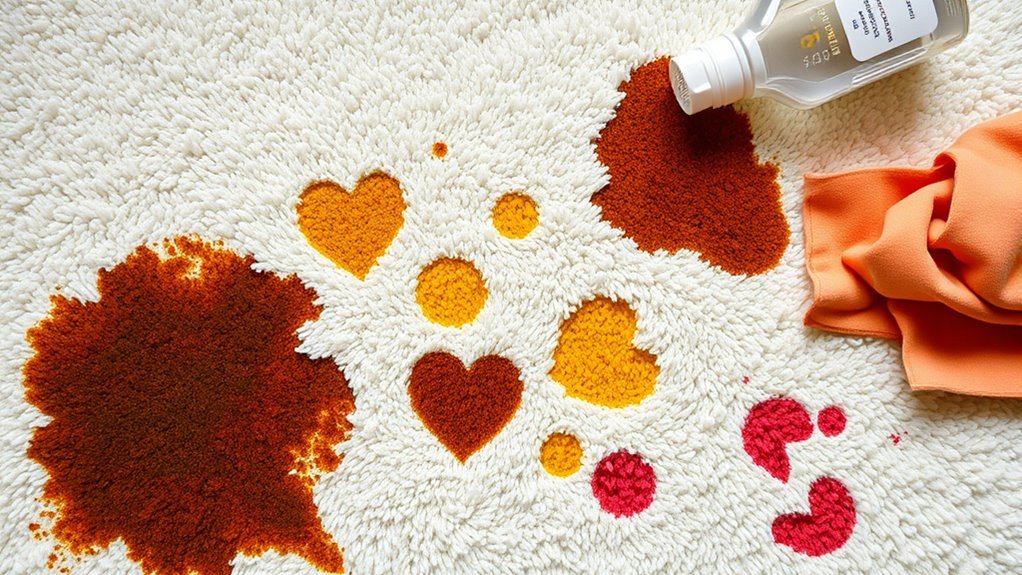
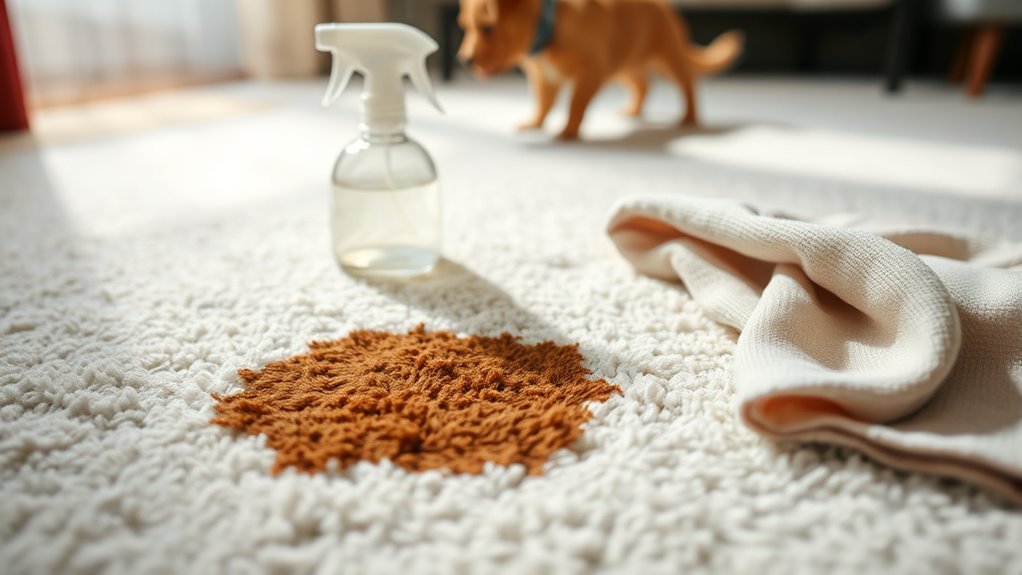
Before you can effectively clean pet stains, you need to recognize what type you’re dealing with. Dog urine often leaves a yellowish stain with a strong ammonia smell, especially on carpets or hardwood floors. It can soak deep, making it tricky to remove if you don’t act right. Cat feces, on the other hand, leave solid waste stains that can be harder to spot immediately but often come with odor and residue that can stain fabric or upholstery. Knowing the difference helps you target the stain properly and avoid spreading it further. Understanding these common pet messes lets you regain control over your space, freeing you from lingering odors and unsightly marks without wasting time or energy on the wrong cleaning approach.
Immediate Steps to Take After a Pet Accident
When you spot a pet accident, start by blotting the area gently instead of rubbing to avoid spreading the stain. Use cold water to help lift the mess without setting it deeper into the fabric. Acting quickly can make a big difference in keeping stains from becoming permanent.
Blot, Don’t Rub
One of the most important things you can do immediately after a pet accident is to blot the stain instead of rubbing it. Rubbing spreads the mess and pushes it deeper into fibers, making stain removal tougher. To free yourself from stubborn stains quickly, follow these simple blotting techniques:
- Grab a clean cloth or paper towel and gently press onto the stain.
- Repeat blotting with fresh sections of the cloth—don’t rub or scrub.
- Continue until the cloth no longer absorbs moisture.
Use Cold Water
After blotting the stain to remove as much moisture as possible, you’ll want to apply cold water right away. Using cold water benefits you by preventing the stain from setting deeper, which hot water can cause by cooking proteins in pet messes. The temperature importance here is essential—cold water helps loosen and dilute the stain without locking it in. Simply pour or spray a small amount of cold water onto the affected area, then blot again gently. This helps free the stain from fabric fibers, making it easier to remove later. By acting quickly with cold water, you maintain control over the mess and avoid stubborn stains that limit your freedom to enjoy a clean, fresh home.
Homemade Cleaning Solutions for Stubborn Stains
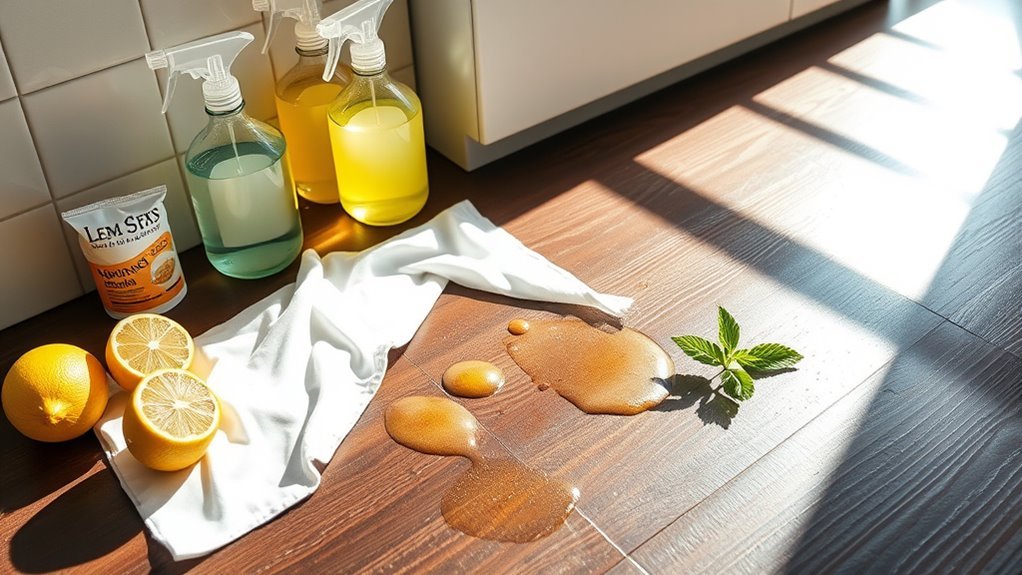
Although commercial cleaners can be effective, homemade solutions are often gentler and just as powerful for tackling stubborn pet stains. Using natural ingredients not only protects your surfaces but also keeps your space chemical-free, giving you more freedom in how you clean. Here are three easy mixtures with precise cleaning ratios to try:
Gentle, chemical-free homemade cleaners effectively tackle pet stains while protecting your surfaces and your space.
- Mix 1 cup white vinegar with 1 cup water for an all-purpose stain remover.
- Combine 2 tablespoons baking soda with 1 cup warm water to neutralize odors and lift stains.
- Use 1 tablespoon liquid dish soap with 2 cups warm water to break down tough grime.
These DIY solutions let you control what touches your home, making stain removal safer and more satisfying.
Using Enzymatic Cleaners Effectively
Homemade solutions are great for many stains, but some pet messes need a stronger approach. That’s where enzymatic cleaners come in. These cleaners harness enzyme properties that break down proteins and organic matter, tackling stains at their source. To use them effectively, first blot up any excess mess without rubbing. Then, apply the cleaner generously, ensuring it reaches deep into the fibers. Let it sit for the recommended time—usually about 10-15 minutes—so the enzymes can do their job. Avoid rinsing or wiping immediately, as enzyme activity needs moisture to work. By understanding and respecting the enzyme properties and following proper cleaner application, you’ll free your space from stubborn pet stains without harsh scrubbing or endless effort.
Tips for Removing Odors Alongside Stains
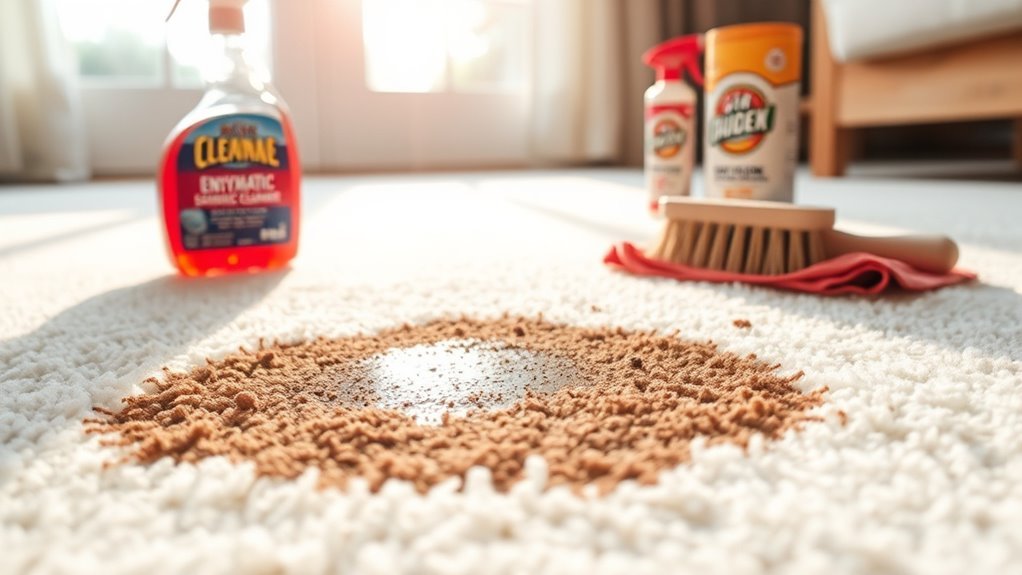
When tackling pet stains, you’ll want to address odors at the same time to prevent lingering smells from becoming a problem. Here’s how to effectively remove odors alongside stains:
- Use odor neutralizers instead of just scent masking products. Neutralizers chemically eliminate odors, freeing your space from unwanted smells rather than covering them up.
- Apply enzymatic cleaners that break down organic compounds causing the odor. This stops the source of the smell and helps prevent your pet from returning to the same spot.
- After cleaning, ventilate the area well. Fresh air helps dissipate any remaining odor molecules, giving your home a truly fresh feel.
Preventative Measures to Avoid Future Stains
To keep your home cleaner and reduce the hassle of stubborn pet stains, it’s important to take proactive steps. Focus on preventive training to teach your pets where to go and use protective covers on furniture and floors to shield surfaces from accidents. These simple measures give you more freedom and less cleanup.
| Preventive Training | Protective Covers |
|---|---|
| Establish consistent routines | Use waterproof furniture covers |
| Reward positive behavior | Place mats under feeding areas |
| Address accidents promptly | Protect carpets with washable rugs |
Frequently Asked Questions
Can Certain Pet Breeds Cause More Stubborn Stains Than Others?
You might find that certain pet breeds can cause more stubborn stains due to breed behavior influencing the type and frequency of messes. For instance, some breeds are more prone to marking territory or drooling, which can affect stain severity. When you do a stain comparison, you’ll notice differences depending on the breed’s habits and diet. Knowing this helps you tackle stains more effectively, giving you the freedom to enjoy your pet without worrying about cleanup challenges.
How Do Professional Cleaning Services Handle Extreme Pet Stains?
When you hire professional cleaning services, they use advanced stain removal techniques tailored to tackle extreme pet stains effectively. You’ll appreciate how their professional equipment—like industrial steam cleaners and enzymatic solutions—breaks down stubborn messes that regular cleaners can’t handle. This means you get your freedom back from worrying about lingering odors or marks, letting your space feel fresh and clean again without the hassle of DIY struggles.
Are There Any Health Risks Associated With Pet Stain Removal Chemicals?
Think of chemical safety like maneuvering through a storm—you need the right gear to stay safe. Some stain removers contain harsh chemicals that can irritate your skin, eyes, or lungs. But don’t worry, you’ve got freedom to choose safer cleaning alternatives like enzyme-based or natural products. These options protect your health while keeping your space fresh, letting you clean boldly without fearing hidden risks lurking in traditional chemicals.
How Long Should I Wait Before Letting My Pet Back on Cleaned Areas?
You should wait until the cleaning products have fully dried before letting your pet back on the area. Drying time varies depending on the product and surface but usually takes a few hours. This guarantees any chemicals evaporate, keeping your pet safe and the space fresh. It’s all about giving freedom to your furry friend while protecting their health—so be patient and let the area air out completely before they roam again.
Can Pet Diet Affect the Type or Difficulty of Stains They Leave?
Did you know that dietary impact can change up to 40% of stain composition in pet messes? If your pet’s diet includes a lot of protein or artificial colors, their stains might be tougher to remove. Understanding this gives you the freedom to tweak their meals and make cleanup easier. So, yes, what your pet eats can directly affect both the type and difficulty of stains you’re dealing with around the house.