Preparing Your Home for Monsoon Season Cleaning
To prep your home for monsoon cleaning, start by inspecting and fixing your roof and clearing gutters to avoid water damage. Seal windows and doors tightly to block leaks, and declutter drains for smooth water flow. Protect wooden furniture, use dehumidifiers to control moisture, and clean curtains and upholstery thoroughly. Treat any mold early and store seasonal items in waterproof containers. Having an emergency cleaning kit ready helps you act fast during leaks or floods. There’s more to guarantee your home stays dry and safe this season.
Inspect and Repair Roofs and Gutters

Before the monsoon hits, you should thoroughly inspect your roof and gutters to spot any damage or blockages. A detailed roof inspection helps you identify loose shingles, cracks, or weak spots that could lead to leaks during heavy rain. Don’t wait for problems to trap you inside your home; taking control starts with a solid roof over your head. Gutter maintenance is equally vital—clogged gutters can cause water overflow, damaging your walls and foundation. Clear leaves, debris, and dirt to guarantee smooth water flow. Staying proactive with roof inspection and gutter maintenance not only safeguards your home but also liberates you from unexpected repairs, letting you enjoy the monsoon’s beauty without worry. Your home’s freedom from water damage begins with this simple, essential step.
Seal Windows and Doors to Prevent Water Leakage
Since windows and doors are common entry points for rainwater, sealing them properly is vital to keeping your home dry during the monsoon. Start by applying weather stripping around window frames and door edges to block drafts and prevent leaks. This simple step creates a tight seal, stopping water from sneaking inside. Don’t forget door sweeps—install them at the base of exterior doors to seal gaps that let in moisture and pests. Choosing quality materials guarantees durability throughout heavy rains. Taking these measures gives you control over your home’s protection, letting you enjoy the monsoon without worrying about water damage. By sealing windows and doors effectively, you’re creating a barrier that keeps your living space safe, dry, and comfortable all season long.
Clean and Declutter Drains and Downspouts
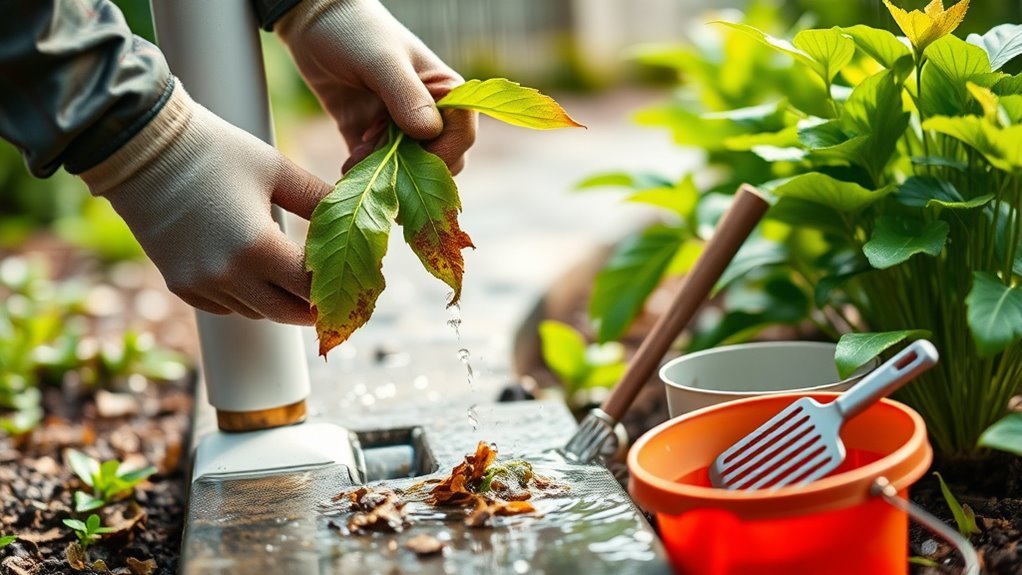
You’ll want to remove debris from your drains and downspouts regularly to keep water flowing smoothly. Check for any blockages that could cause overflow or damage during heavy rains. Keeping these clear helps protect your home from water buildup and potential flooding.
Remove Debris Regularly
While heavy rains pour during monsoon season, clogged drains and downspouts can quickly cause water to back up and damage your home. To stay in control, you need to commit to debris removal as part of your regular maintenance routine. Leaves, twigs, and dirt can pile up fast, blocking water flow and creating risks you don’t want. By clearing these obstructions regularly, you keep your drainage system free and functional, preventing costly repairs and water damage. Don’t wait for a problem to appear—take charge now and maintain your home’s defenses. Staying proactive with debris removal means you can enjoy the monsoon without worry, preserving your freedom from unexpected cleanup and structural issues.
Check for Blockages
Before the monsoon rains hit hard, it’s essential to check for blockages in your drains and downspouts. Clogged drains can disrupt water flow, causing backups and potential damage to your home’s foundation. Take a moment to clear leaves, twigs, and dirt that may have accumulated. This simple drain maintenance step guarantees rainwater moves freely, preventing overflow and flooding. You want your home to stay dry and safe, right? Don’t forget to flush your downspouts with water to confirm they’re clear. If you spot stubborn blockages, use a plumber’s snake or call a professional before the heavy rains arrive. Staying proactive with drain maintenance gives you the freedom to enjoy the monsoon season without worrying about water damage or costly repairs.
Protect Wooden Furniture and Flooring
To keep your wooden furniture and flooring safe during monsoon season, controlling moisture is key. You’ll want to use protective coatings like sealants or varnishes to create a barrier against water damage. Taking these steps now can help prevent warping and mold later on.
Moisture Control Tips
Humidity can wreak havoc on wooden furniture and flooring during the monsoon season, causing warping, swelling, and mold growth. To protect your space, focus on effective humidity control. Use dehumidifiers or air conditioners to keep indoor moisture levels in check, giving your wood the freedom to breathe without damage. Additionally, install moisture barriers beneath wooden floors to prevent dampness from seeping up from the ground. Make sure windows and doors are well-sealed to avoid unwanted moisture entry. Regularly check and maintain your home’s ventilation to promote air circulation, reducing trapped humidity. By taking these practical steps, you’ll preserve the beauty and integrity of your wooden furnishings and flooring, allowing you to enjoy your home comfortably, no matter how intense the monsoon gets.
Protective Coating Options
Since wooden surfaces are particularly vulnerable during the monsoon, applying protective coatings can be one of the most effective ways to shield your furniture and flooring from moisture damage. You’ve got options like varnishes, polyurethane, or water-repellent sealers, each designed to create a barrier against dampness. When choosing protective coatings, consider the finish and durability you want. Application methods vary: brushing on is simple and precise, while spraying offers a smooth, even layer quickly. Make sure the wood is clean and dry before you start. By carefully selecting and applying the right protective coatings, you’re giving your wooden pieces the freedom to withstand the wet season without warping or staining. It’s a smart step toward maintaining your home’s natural beauty through monsoon months.
Use Dehumidifiers and Ventilation Solutions

One effective way to keep your home comfortable during the monsoon season is by using dehumidifiers and improving ventilation. Dehumidifier maintenance is key—regularly clean filters and empty water tanks to guarantee efficiency. Proper ventilation systems help circulate fresh air, preventing dampness and mold. Together, they create a healthier, freer living space, letting you enjoy the season without worry.
| Solution | Benefit |
|---|---|
| Dehumidifiers | Reduce moisture, prevent mold |
| Ventilation Systems | Improve air flow, reduce damp |
| Regular Maintenance | Guarantees efficiency, longevity |
Wash and Dry Curtains and Upholstery
To keep your living space fresh during the monsoon, don’t forget about your curtains and upholstery. These elements tend to trap moisture, which can lead to musty smells and discomfort. Start by checking the care labels on your curtain materials—some fabrics can be machine washed, while others need gentle hand washing or dry cleaning. For upholstery cleaning, vacuum thoroughly to remove dust and dirt before using a suitable fabric cleaner. Avoid soaking furniture to prevent water damage. After washing, dry curtains and upholstery in a well-ventilated area or under a fan to speed up drying and avoid dampness. Taking these steps not only keeps your home smelling fresh but also protects your fabrics, giving you the freedom to enjoy a clean, comfortable environment all monsoon long.
Treat and Prevent Mold and Mildew Growth
Although the monsoon brings much-needed rain, it also creates the perfect environment for mold and mildew to thrive in your home. To keep your space fresh, focus on mold prevention by controlling moisture and improving ventilation. For mildew treatment, use specialized cleaners and dry affected areas promptly.
| Issue | Mold Prevention Tips | Mildew Treatment Methods |
|---|---|---|
| High Humidity | Use dehumidifiers | Apply mildew removers |
| Damp Walls | Seal leaks and cracks | Scrub with vinegar or bleach |
| Poor Ventilation | Open windows, use fans | Dry surfaces quickly |
| Wet Fabrics | Wash and dry promptly | Use antifungal sprays |
| Stored Items | Keep in dry, airy places | Inspect and clean regularly |
Stay proactive to enjoy a mold-free, breathable home all monsoon long.
Store Seasonal Items in Waterproof Containers
During the monsoon season, keeping your seasonal items safe from moisture is essential, and waterproof containers are your best bet. When you choose airtight, waterproof solutions, you protect your belongings from water damage, mold, and mildew. This means less worry and more freedom to enjoy the season without constant upkeep. Opt for durable containers with secure lids that seal out humidity and rain. Label each container clearly, so you can find what you need without sifting through everything. By investing in proper seasonal storage, you create a system that keeps your home organized and your items intact. Waterproof containers let you reclaim control over your space, ensuring your seasonal gear stays dry and ready for when you need it next.
Prepare an Emergency Cleaning Kit for Water Damage
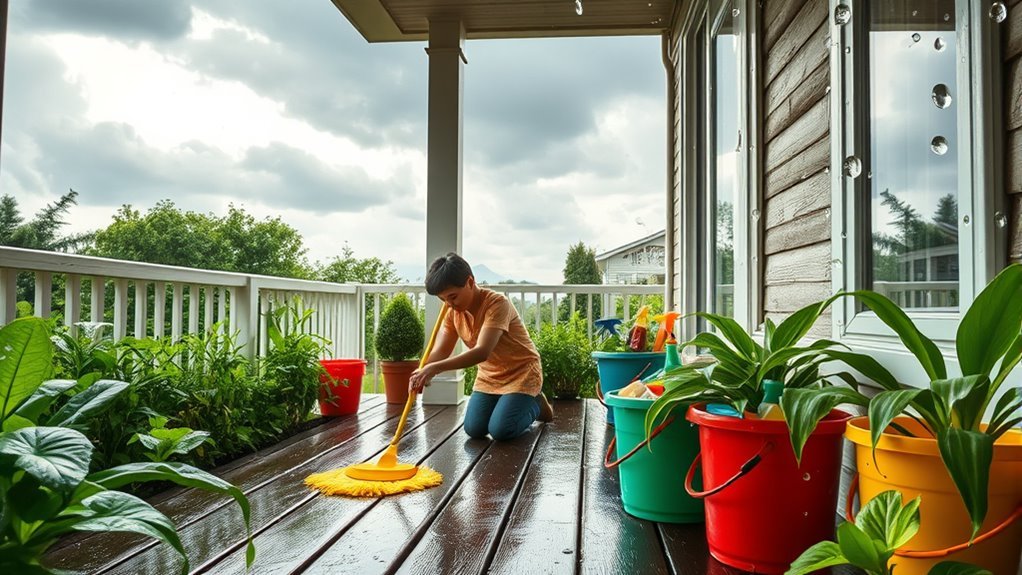
One essential step in monsoon prep is putting together an emergency cleaning kit for water damage. You want to stay ahead of any unexpected leaks or flooding, so gather your emergency supplies now. Include cleanup essentials like heavy-duty gloves, absorbent towels, a wet/dry vacuum, and plastic bags for debris. Don’t forget a sturdy mop, buckets, and disinfectants to prevent mold growth. Having these items ready means you can act fast and keep your home safe without hassle. This kit gives you the freedom to tackle water damage quickly, minimizing stress and damage. Keep it in an easily accessible spot so when the monsoon hits, you’re prepared to protect your home and enjoy peace of mind.
Frequently Asked Questions
How Often Should I Schedule Professional Roof Inspections Before Monsoon?
Back in the days of quills and parchment, regular upkeep was key, and it’s no different now. You should schedule professional roof inspections at least twice a year to guarantee your roof maintenance is thorough, especially before monsoon season hits. This inspection frequency helps catch any vulnerabilities early, giving you the freedom to enjoy the storm without worry. Staying proactive means less stress and more peace of mind for your home.
What Natural Remedies Help Reduce Indoor Humidity During Monsoon?
You’ll want to tackle indoor humidity naturally during monsoon by using ventilation techniques like opening windows when it’s less humid outside or using exhaust fans to keep air flowing. Adding a dehumidifier benefits your space by drawing moisture out, making it feel fresher and more comfortable. These simple steps let you enjoy a dry, cozy home without relying on harsh chemicals, giving you freedom from damp, musty air.
Can Indoor Plants Help Prevent Mold Growth in Monsoon Season?
You might find air purifying plants really helpful during monsoon season. They can naturally balance humidity levels, making your space less inviting for mold growth. While they won’t completely stop mold, these plants improve air quality and absorb excess moisture, giving you more freedom from worrying about dampness. Just pick varieties like peace lilies or spider plants, and you’ll enjoy a fresher, healthier home without feeling confined by mold concerns.
What Are the Best Waterproof Materials for Outdoor Furniture Covers?
You might think any waterproof cover will do, but choosing weather resistant fabrics like solution-dyed acrylic or polyester with a PVC coating truly makes a difference. These materials repel water and resist mildew, so your outdoor furniture stays protected during heavy rains. Investing in quality covers not only simplifies outdoor furniture maintenance but also lets you enjoy your space freely, without worrying about damage from the monsoon season or other harsh weather.
How Do I Safely Dispose of Moldy Household Items After Cleaning?
When dealing with mold removal, you’ll want to make sure you’re not spreading spores around. After cleaning, seal moldy household items in heavy-duty plastic bags to contain the mold. Label them clearly for safe disposal, then dispose of them in your regular trash if local rules allow. If not, check with your waste management facility for guidelines. This way, you’re protecting your freedom to breathe easy without risking contamination.