Top 10 Tips for Cleaning Mold
To clean mold effectively, first identify the mold type to tailor your approach and wear proper protective gear like an N95 respirator, gloves, and goggles. Ventilate the area well and use appropriate cleaning solutions with mold inhibitors, scrubbing surfaces thoroughly to remove spores. Address moisture problems promptly and dry the area completely. Consider mold-resistant products when possible and monitor for recurrence regularly. Following these steps guarantees efficient removal and safety—explore further for detailed guidance on each tip.
Identify the Type of Mold

How can you effectively clean mold without first identifying its type? Mold types vary greatly in their health risks and cleaning requirements, making mold identification essential. You’ll want to start by observing physical characteristics such as color, texture, and growth patterns. Common mold types include black mold, which is toxic, and less harmful varieties like Aspergillus or Cladosporium. Conducting mold identification can involve visual inspection and, for accuracy, professional testing using spore traps or surface sampling. Proper identification allows you to tailor your cleaning approach, ensuring safety and efficiency. By pinpointing the mold type, you avoid ineffective treatments and reduce exposure to hazardous spores. Taking this precise step grants you freedom from guesswork and helps you address the problem with confidence. Additionally, using eco-friendly solutions like vinegar and baking soda can effectively clean mold while minimizing chemical exposure.
Protect Yourself With Proper Gear
When cleaning mold, you need to wear vital safety equipment like gloves, goggles, and protective clothing to prevent skin and eye contact. Proper respiratory protection, such as an N95 respirator, is critical to avoid inhaling harmful mold spores. Using the right gear minimizes health risks and guarantees safe mold removal.
Essential Safety Equipment
Protecting your respiratory system is essential when tackling mold removal, so you’ll need a high-quality N95 respirator or higher-rated mask to filter out harmful spores. Beyond respiratory protection, equip yourself with safety goggles to shield your eyes from airborne mold particles and cleaning agents. Protective gloves are critical, preferably nitrile or rubber, to prevent skin contact with mold and toxic substances. Additionally, wear long sleeves and pants to minimize skin exposure. Make certain all gear fits properly to maintain a secure barrier against contaminants. Using this essential safety equipment not only safeguards your health but also empowers you to address mold confidently and effectively, preserving your freedom to maintain a clean, safe environment without compromise. Always prioritize safety to avoid adverse health effects during mold remediation.
Proper Respiratory Protection
Anyone handling mold removal needs to prioritize proper respiratory protection to prevent inhaling hazardous spores and particles. You should wear a high-quality respiratory mask designed to filter out airborne mold spores—N95 or higher-rated masks are recommended. This gear protects your lungs, maintaining your health and freedom to work safely. Additionally, don’t overlook safety goggles. Mold spores can irritate your eyes, so sealed safety goggles will shield them effectively. Guarantee your respiratory mask fits snugly without gaps, and check that your safety goggles provide a secure barrier against airborne contaminants. By equipping yourself with both a respiratory mask and safety goggles, you minimize health risks, empowering you to tackle mold removal with confidence and control over your environment.
Ventilate the Area Well

When cleaning mold, you need to ventilate the area well to reduce airborne spores and moisture. Open windows and doors to create cross-ventilation, allowing fresh air to circulate. Using fans strategically can enhance airflow, directing contaminants outside and speeding up drying.
Open Windows and Doors
To reduce mold spores and moisture levels effectively, you should open windows and doors to secure proper ventilation. This action facilitates the exchange of stale, contaminated indoor air with fresh air from outdoor conditions, which dilutes airborne mold spores and lowers humidity. Confirm that the outdoor environment is suitable—avoid opening openings during high pollen counts or excessive pollution to prevent exacerbating indoor air quality issues. Position openings to create cross-ventilation, allowing air to flow freely through the space, accelerating moisture removal. Consistently ventilating in this manner helps disrupt mold growth cycles and supports drying of affected areas. By controlling indoor air quality through strategic use of windows and doors, you maintain a healthier environment while reclaiming your space from mold without relying on chemical treatments or mechanical devices.
Use Fans Effectively
Although opening windows and doors promotes natural airflow, using fans effectively can greatly enhance ventilation by directing and accelerating air movement. To maximize mold cleanup efficiency, consider strategic fan placement: position exhaust fans near mold-affected areas to pull contaminated air outside. Simultaneously, place intake fans by open windows or doors to draw fresh air in, creating a consistent airflow path. This airflow management reduces moisture and airborne spores, limiting mold spread. Avoid aiming fans directly at mold surfaces to prevent dispersing spores further. Instead, focus on establishing unidirectional airflow that carries contaminants out. Proper fan use not only speeds drying but also improves air quality, giving you greater control over your environment during mold remediation. Effective fan placement is essential for maintaining a clean, mold-free space.
Use the Right Cleaning Solutions
Choosing the right cleaning solution is vital for effectively removing mold without damaging surfaces. You’ll want to select cleaning agents specifically designed to eliminate mold spores and prevent regrowth. Solutions containing mold inhibitors are highly recommended because they not only clean but also create a barrier against future mold development. Avoid generic cleaners, as they may fail to penetrate mold colonies or could harm sensitive materials like wood or drywall. When selecting a product, check labels for active ingredients such as sodium hypochlorite or hydrogen peroxide, which are proven to neutralize mold. Always test the solution on a small, inconspicuous area first to ascertain compatibility. Using appropriate cleaning agents with mold inhibitors empowers you to maintain a mold-free environment while preserving your surfaces’ integrity. Additionally, ensuring the area is well-ventilated during cleaning helps create an energized atmosphere and supports effective mold removal, as emphasized in cleaning and organizing.
Scrub Moldy Surfaces Thoroughly
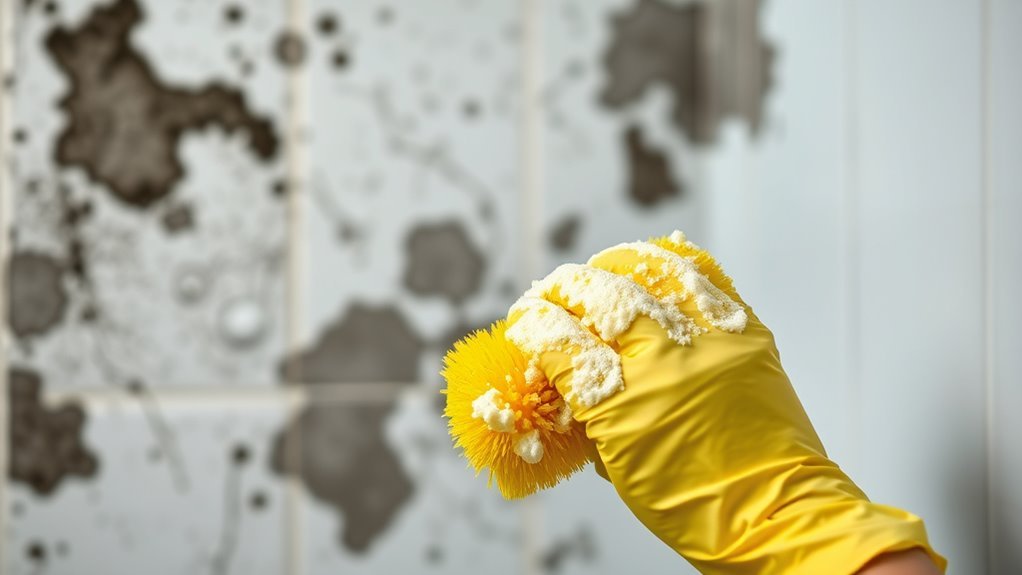
Once you’ve selected the appropriate cleaning solution, the next step is to scrub the moldy surfaces thoroughly to remove both visible mold and embedded spores. Effective mold removal techniques rely heavily on mechanical action, so using scrub brushes with stiff bristles is essential. These brushes penetrate porous materials and dislodge mold colonies that chemical cleaners alone can’t reach. Apply firm, consistent pressure in circular motions to maximize spore extraction. For delicate surfaces, opt for softer brushes to avoid damage while still achieving thorough cleaning. Always focus on corners, crevices, and textured areas where mold tends to hide. Remember, thorough scrubbing not only cleans but also prevents mold recurrence by removing the root colonies. This step is critical to regaining control over your environment and ensuring long-term mold freedom. Additionally, wearing N95 respirators during scrubbing helps protect you from inhaling airborne mold spores released during cleaning.
Dispose of Contaminated Materials Safely
You’ll need to follow proper disposal methods to prevent mold spores from spreading. Always handle contaminated materials as hazardous waste, using sealed bags and protective gear. Check local regulations to verify you’re disposing of moldy items safely and legally.
Proper Disposal Methods
Proper disposal of mold-contaminated materials requires following specific safety protocols to prevent further contamination and health risks. You should first segregate affected items, identifying those that can’t be salvaged. Wrap porous materials, like drywall or carpet, in heavy-duty plastic to contain spores. While exploring recycling options, remember most mold-contaminated materials aren’t recyclable due to contamination risks. It’s essential to label these items clearly to avoid accidental reuse. Always consult local regulations to determine acceptable disposal sites and methods. Avoid mixing mold waste with regular trash to minimize environmental impact. By correctly handling mold-contaminated materials, you maintain a safer environment and comply with waste management standards. Proper disposal is vital before moving on to handling hazardous waste procedures.
Handling Hazardous Waste
After segregating and securely packaging mold-contaminated materials, the next step involves handling hazardous waste with strict adherence to safety protocols. You need to follow all applicable safety regulations to guarantee proper hazardous waste disposal. This includes labeling waste containers accurately, using leak-proof packaging, and preventing cross-contamination during transport. Always wear appropriate personal protective equipment to minimize exposure risks. Consult local and federal guidelines to determine approved disposal facilities and methods for mold-contaminated waste. Avoid mixing hazardous waste with general refuse, as improper disposal can lead to environmental contamination and health hazards. By complying with safety regulations and using designated disposal services, you maintain your freedom by responsibly managing hazardous waste, safeguarding your environment, and protecting public health while fulfilling legal obligations.
Fix Moisture Problems Promptly
Any amount of excess moisture can create ideal conditions for mold growth, so it’s essential to address leaks, condensation, and humidity issues immediately. Effective moisture control and humidity management stop mold before it starts, preserving your freedom to live in a clean, safe environment. Identify sources of moisture and repair them promptly to prevent structural damage and microbial proliferation. Regularly checking and emptying water reservoirs in appliances like coffee machines also helps control moisture and inhibit mold growth.
| Moisture Source | Action Required |
|---|---|
| Leaks (pipes, roof) | Immediate repair |
| Condensation | Improve ventilation |
| High humidity (>60%) | Use dehumidifiers |
Dry the Area Completely After Cleaning
Once cleaning is complete, you’ll need to assure the area is thoroughly dried to prevent mold from returning. Employ effective drying techniques such as using high-powered fans, dehumidifiers, or increasing ventilation to expedite moisture evaporation. Pay special attention to hidden or porous materials where moisture can linger unnoticed. Proper moisture control is critical; humidity levels should be maintained below 60% to inhibit mold growth. Use moisture meters to verify dryness in walls, floors, and ceilings before closing up any cleaned spaces. Remember, incomplete drying undermines your cleaning efforts and sets the stage for mold re-infestation. By rigorously applying these drying techniques and maintaining strict moisture control, you assure a mold-free environment and safeguard your freedom from recurring contamination.
Use Mold-Resistant Products When Possible
Ensuring the area is completely dry greatly reduces the chance of mold returning, but selecting the right materials can further protect your space. Using mold resistant paints and mold resistant materials creates an environment less conducive to mold growth, giving you long-term freedom from frequent cleanings.
Here’s a quick comparison of common mold-resistant options:
| Product Type | Benefits |
|---|---|
| Mold Resistant Paints | Inhibit mold spores on surfaces |
| Treated Drywall | Resists moisture absorption |
| Mold Resistant Insulation | Limits fungal growth |
| Sealants & Caulks | Prevent moisture penetration |
| Waterproof Membranes | Block water intrusion |
Choosing these materials reinforces your defenses, reducing mold risks and helping maintain a clean, healthy space with less hassle. Complementing these materials with moisture control practices is essential to prevent mold growth effectively.
Monitor for Mold Recurrence Regularly
Because mold can reappear even after thorough cleaning, you should regularly inspect vulnerable areas to detect early signs of recurrence. Focus on damp or poorly ventilated spaces like basements, bathrooms, and behind appliances. Use a flashlight and moisture meter to assess hidden spots where mold growth often initiates. Document your findings to track changes over time. Prompt detection allows you to implement prevention strategies swiftly, minimizing further contamination and structural damage. Consistent monitoring supports your freedom from mold-related health risks and costly repairs. Incorporate regular inspections into your maintenance routine, especially after events like leaks or flooding. By staying vigilant, you maintain control over your environment and guarantee lasting mold-free conditions without relying on reactive measures. Remember that mold can start appearing within 24 to 48 hours in damp conditions, so timely action is critical.
Frequently Asked Questions
Can Mold Cause Health Problems for Pets?
Yes, mold can cause health problems for your pets due to mold toxicity. When your pet is exposed to mold, they might show pet symptoms like coughing, sneezing, lethargy, or skin irritation. It’s essential you recognize these signs early, as mold toxicity can lead to more severe respiratory or neurological issues. To protect your pet’s health and maintain your freedom from worry, promptly address any mold exposure in their environment.
How Long Does Mold Take to Grow?
Mold growth can begin within 24 to 48 hours under ideal conditions, such as moisture and warmth. You should know that mold spores are everywhere, but they only thrive where dampness exists. To halt mold growth, focus on mold prevention by controlling humidity levels below 60% and fixing leaks promptly. By maintaining a dry environment, you’ll effectively stop mold from establishing itself and protect your freedom to enjoy a healthy space.
Is Bleach Effective on All Types of Mold?
Bleach effectiveness varies depending on mold types and surfaces. While bleach can kill surface mold on non-porous materials, it’s less effective on porous ones because it can’t penetrate deeply. Some mold species resist bleach, so relying solely on it may not fully resolve the issue. You’ll want to assess the mold type and material involved, ensuring you use appropriate methods to effectively remove and prevent regrowth for lasting freedom from mold.
Can Mold Spread Through HVAC Systems?
Imagine your HVAC system as a highway for mold spores—yes, mold can indeed spread through it if not properly maintained. Regular HVAC maintenance is essential to prevent mold growth and distribution. Without proper filtration and moisture control, mold thrives in ducts, posing health risks and reducing air quality. To enjoy clean, free-flowing air, prioritize mold prevention by scheduling inspections and keeping your HVAC system dry and clean.
Should I Hire a Professional for Large Mold Infestations?
If you’re dealing with a large mold infestation, hiring professional services is highly recommended. Mold removal in extensive cases requires specialized equipment and expertise to guarantee thorough eradication and prevent recurrence. Professionals can safely assess contamination levels, contain affected areas, and use industrial-grade products. Attempting a DIY fix might spread mold spores, compromising your freedom to live in a healthy environment. So, for your safety and effective mold removal, trust the experts.