Using Essential Oils to Clean Kitchen
You can use essential oils like lemon, tea tree, and eucalyptus to naturally clean and disinfect your kitchen. They cut grease, kill germs, and leave a fresh scent without harsh chemicals. Mixing these oils with vinegar and water creates an effective all-purpose cleaner you can spray on surfaces or cutting boards. Just remember to dilute properly and test first to avoid damage. There’s plenty more to explore on making your kitchen sparkling and safe using essential oils.
Benefits of Using Essential Oils for Kitchen Cleaning
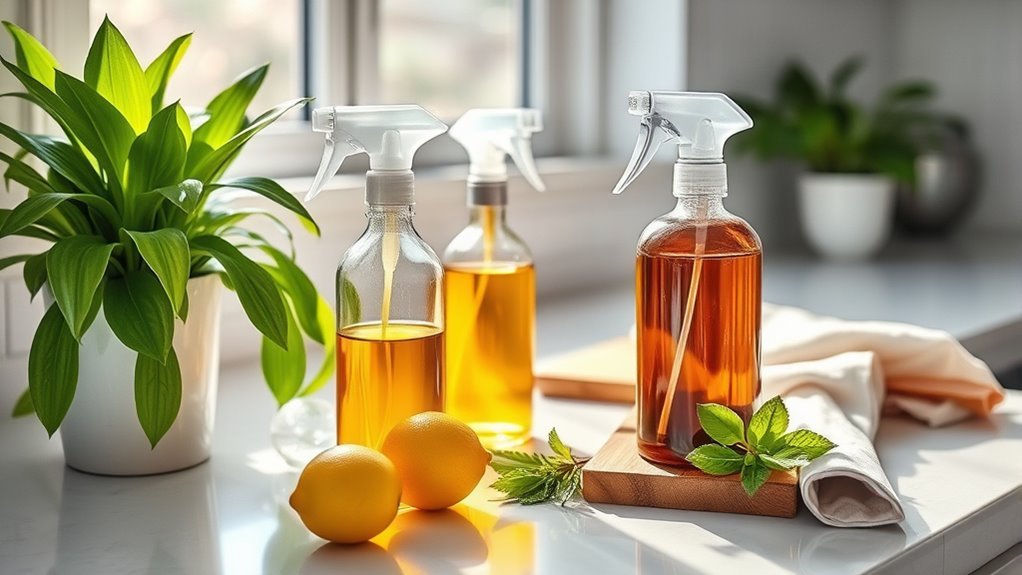
Although you might not realize it, using essential oils for kitchen cleaning offers several key benefits that make your routine more effective and enjoyable. When you choose essential oils, you’re embracing eco friendly solutions that reduce your reliance on harsh chemicals, protecting both your health and the planet. These oils provide natural antibacterial and antifungal properties, helping you keep your kitchen hygienic without compromising safety. Plus, aromatic cleaning turns a mundane chore into a rejuvenating experience, filling your space with uplifting, natural scents that invigorate your senses. This approach gives you freedom from synthetic fragrances and toxins, making your kitchen a healthier, more pleasant environment. By integrating essential oils, you gain a powerful, sustainable method that aligns with your desire for a cleaner, greener lifestyle.
Top Essential Oils for Kitchen Cleaning and Their Properties
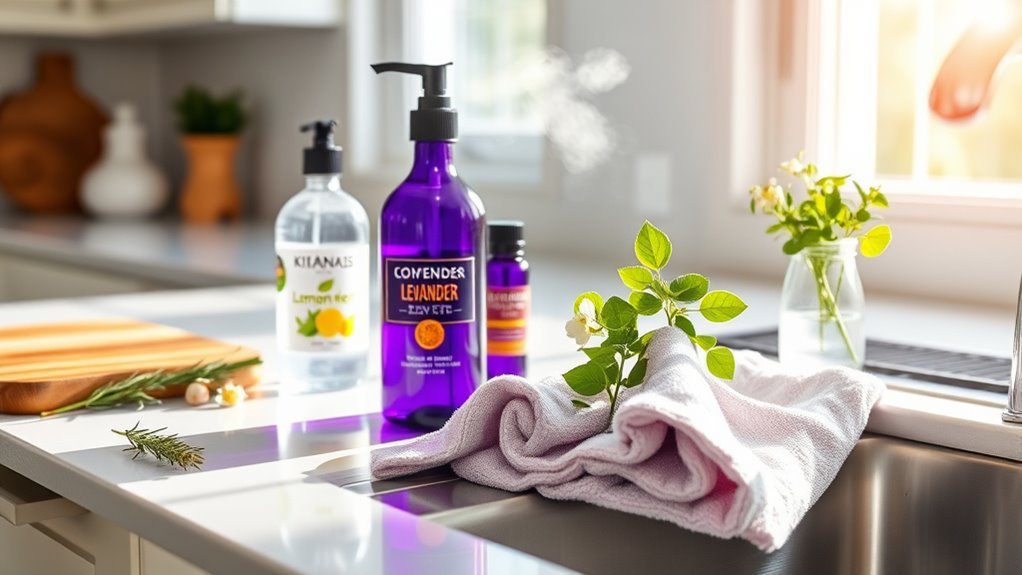
When you choose essential oils for kitchen cleaning, it’s helpful to know which ones pack the most punch regarding effectiveness and scent. Lemon oil benefits include powerful antibacterial and grease-cutting abilities, leaving your kitchen fresh. Tea tree properties offer natural antifungal and antiviral effects, making it great for sanitizing surfaces. Lavender oil adds a calming scent while fighting germs, and eucalyptus is a strong deodorizer with antimicrobial traits. Here’s a quick guide:
| Essential Oil | Key Properties |
|---|---|
| Lemon | Antibacterial, grease-cutting, fresh |
| Tea Tree | Antifungal, antiviral, sanitizing |
| Lavender | Germ-fighting, calming scent |
| Eucalyptus | Antimicrobial, deodorizing |
Pick these oils and enjoy a cleaner, fresher kitchen without harsh chemicals.
How to Make an All-Purpose Kitchen Cleaner With Essential Oils
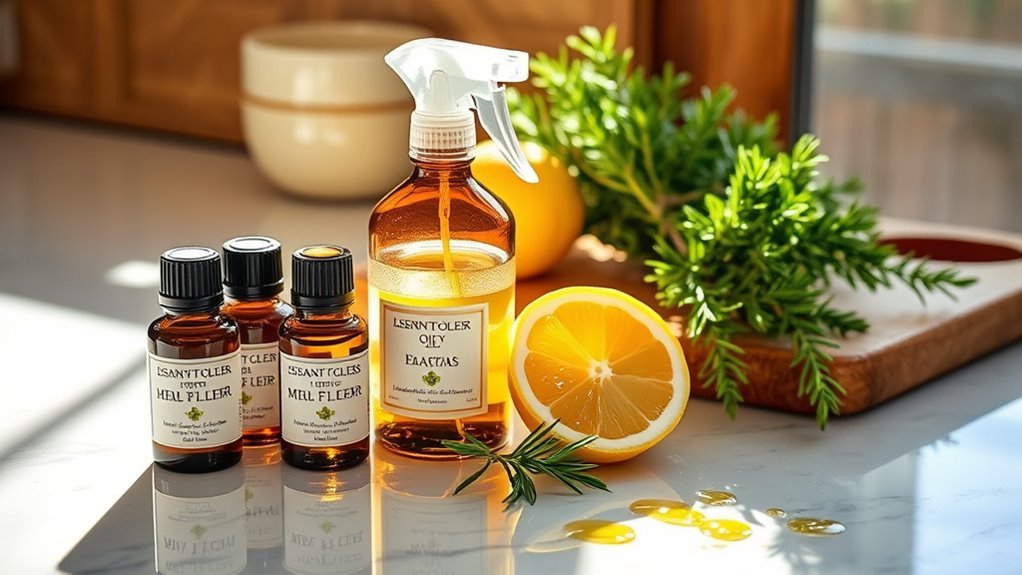
You’ll need just a few simple ingredients to make your own all-purpose kitchen cleaner with essential oils. I’ll walk you through the mixing process to guarantee it’s both effective and safe. Plus, I’ll share some tips on how to apply it for the best results.
Ingredients Needed
Gathering the right ingredients is key to making an effective all-purpose kitchen cleaner with essential oils. Your ingredients list should include distilled water, white vinegar, and a mild liquid soap as natural alternatives to harsh chemicals. These basics form a safe, powerful base for your cleaner. Next, choose essential oils known for their antibacterial and freshening properties—lemon, tea tree, or eucalyptus are excellent picks. They not only boost cleaning power but also leave your kitchen smelling crisp and inviting. You’ll also need a spray bottle to mix and store your cleaner for easy use. With these simple, natural ingredients, you’re set to create a versatile solution that respects your health and the environment while giving you the freedom to clean your kitchen confidently.
Mixing Instructions
Creating your all-purpose kitchen cleaner with essential oils is simple and quick. Start by following the right mixing ratios: combine 1 cup of distilled water with 1/2 cup of white vinegar and 1 tablespoon of liquid castile soap. For essential oils, add about 20 drops total—think 10 drops of lemon for freshness, 5 drops of tea tree for its antibacterial power, and 5 drops of eucalyptus for a clean scent.
Use gentle blending techniques by swirling the mixture in a spray bottle instead of shaking vigorously to avoid excess suds. This approach guarantees the oils disperse evenly without creating foam. With these straightforward mixing ratios and blending techniques, you’re free to customize your cleaner and enjoy a natural, effective kitchen solution.
Application Tips
A few simple tips can make applying your essential oil kitchen cleaner more effective and enjoyable. First, choose spray bottles with fine mist nozzles for even coverage. This guarantees your cleaner spreads evenly without wasting any solution. When mixing oil combinations, balance citrus oils like lemon or orange with antibacterial oils such as tea tree or eucalyptus for both scent and power. Apply your cleaner by spraying directly onto surfaces and wiping with a microfiber cloth; this technique lifts grime without harsh scrubbing. For stubborn spots, let the solution sit a minute before wiping. Remember, consistent application techniques not only improve cleanliness but also maximize the benefits of your chosen essential oils. Embrace these methods to keep your kitchen fresh and free, on your own terms.
Using Essential Oils to Disinfect Cutting Boards and Surfaces
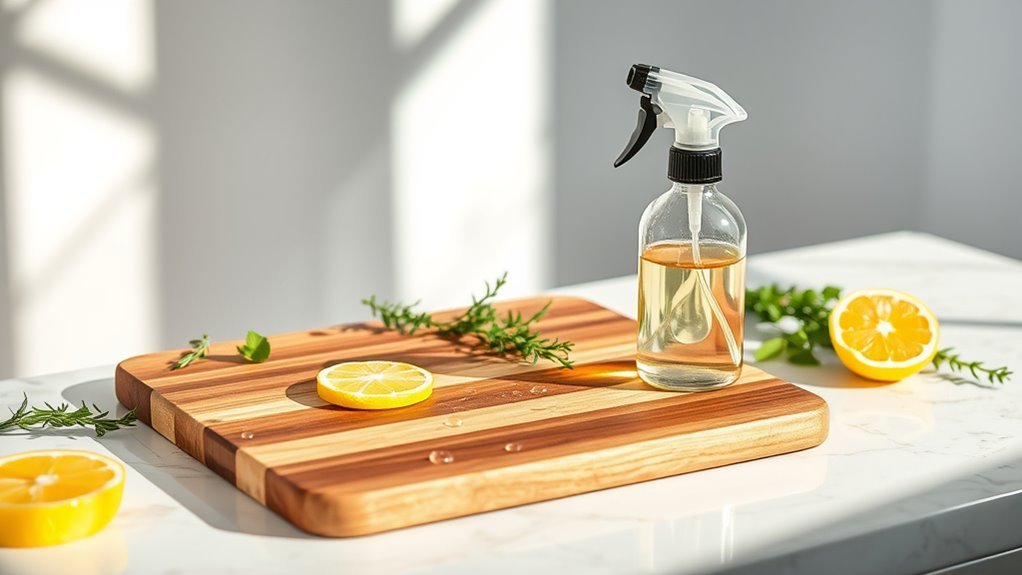
When you want to keep your cutting boards and surfaces free from germs, essential oils offer a natural and effective solution. Simply mix a few drops of tea tree or lemon oil with water in a spray bottle. These oils are powerful for disinfecting surfaces without harsh chemicals. After chopping, spray your cutting board and wipe it down to maintain proper cutting board care. Not only do these oils kill bacteria, but they also leave a fresh scent, making your kitchen feel clean and vibrant. Using essential oils lets you take control of your kitchen hygiene, avoiding synthetic products while ensuring safety. This method supports your freedom to choose natural cleaning options that work well and keep your space healthy.
Removing Grease and Stains Using Essential Oil Blends
Though grease and stains can be stubborn, essential oil blends make tackling them much easier. You can create a powerful grease removal solution by mixing lemon, eucalyptus, and tea tree oils with a bit of warm water and dish soap. This combination breaks down tough grease without harsh chemicals, giving you freedom from sticky residues. For stain treatment, try blending lavender and peppermint oils with white vinegar; this blend lifts stains naturally and leaves a fresh scent. Simply apply these mixtures to affected areas, let them sit for a few minutes, then wipe clean. Using essential oils not only cleans effectively but also lets you maintain a kitchen environment free from synthetic toxins. With these blends, you’re empowered to handle grease and stains swiftly and safely.
Tips for Safely Using Essential Oils in Your Kitchen Cleaning Routine
When using essential oils in your kitchen cleaning, make sure to dilute them properly to avoid irritation. Choose oils that are safe for food-prep areas, like lemon or tea tree. Also, store your oils in a cool, dark place and handle them with care to keep them effective and safe.
Dilution Guidelines
A few drops of essential oil can go a long way in your kitchen cleaning routine, but it’s important you dilute them properly to avoid irritation or damage. Stick to recommended dilution ratios—usually, 1-2% essential oil concentration in a carrier like water or vinegar works well. This means about 6-12 drops per ounce of liquid. Higher concentrations might seem tempting for stronger scents, but they can harm surfaces or irritate your skin. Always mix oils thoroughly to guarantee even distribution and effectiveness. By controlling dilution ratios, you keep your cleaning safe and efficient, giving you the freedom to harness nature’s power without risking harm. Remember, less is often more when it comes to essential oils in your kitchen cleaning arsenal.
Safe Oil Choices
Proper dilution is just one part of using essential oils safely in your kitchen cleaning routine. Choosing safe blends is vital to guarantee you enjoy both freedom and effectiveness without risking irritation or damage. Here are some oil safety tips to keep in mind:
- Opt for citrus oils like lemon or orange for their natural antibacterial properties.
- Use tea tree or eucalyptus oils carefully, as they’re potent but effective.
- Avoid oils known for skin sensitivity, such as cinnamon or clove, unless highly diluted.
- Test blends on small surfaces first to prevent damage to countertops or finishes.
- Always mix oils with a carrier like vinegar or water to create safe blends.
Storage and Handling
Three key practices can help you store and handle essential oils safely in your kitchen cleaning routine. First, focus on proper essential oil storage—keep your oils in dark glass bottles away from heat, light, and moisture to preserve their potency. Second, always follow handling precautions: never apply oils directly to your skin without dilution, and avoid contact with eyes. Third, store oils out of reach of children and pets to prevent accidental ingestion or spills. By respecting these simple guidelines, you maintain both your freedom to use natural cleaners and your safety. Remember, essential oils are powerful—treat them with care during every step of your cleaning routine to enjoy their benefits without risk.
Frequently Asked Questions
Can Essential Oils Damage Kitchen Appliances or Surfaces?
You might worry if essential oils could damage your kitchen appliances or surfaces. It all comes down to essential oil compatibility and surface material considerations. Some oils are acidic or potent, which can harm delicate materials like wood or certain metals. To keep your freedom to clean boldly, always test oils on a small area first and avoid prolonged exposure. That way, you enjoy natural freshness without risking damage to your kitchen.
Are Essential Oils Safe to Use Around Pets in the Kitchen?
Think of essential oils like a double-edged sword in your quest for pet safety. While they bring fresh scents, they can cause essential oil toxicity in pets if used carelessly. You want to enjoy their benefits without risking your furry friends’ health. So, keep oils out of reach, avoid diffusing them in small spaces, and always research each oil’s safety. That way, you’re free to create a safe, fragrant home.
How Should Essential Oils Be Stored to Maintain Their Effectiveness?
You’ll want to store your essential oils in dark, airtight storage containers to keep them fresh and potent. Temperature control is key—keep them in a cool, consistent environment away from direct sunlight and heat sources. This helps preserve their therapeutic properties and extends their shelf life. By managing storage wisely, you maintain freedom to enjoy your oils whenever you want, without worrying about them losing effectiveness.
Can Essential Oils Help Eliminate Kitchen Odors From the Garbage Disposal?
Yes, you can use essential oils to tackle garbage disposal odor elimination effectively. Just drop a few drops of lemon, eucalyptus, or tea tree oil into the disposal, then run cold water while turning it on. The natural antibacterial properties help break down grime and neutralize smells, giving you fresh, clean air. It’s a simple, freeing way to keep your kitchen smelling great without harsh chemicals.
What Are the Best Essential Oils for Cleaning Kitchen Linens?
They say, “Cleanliness is next to godliness,” and when it comes to kitchen linens, you want oils that free you from stubborn odors. Lavender properties bring calming freshness and natural antibacterial power, perfect for towels and napkins. Citrus scents like lemon or orange invigorate and cut through grease, leaving your linens smelling bright and clean. Using these oils, you’ll enjoy freedom from harsh chemicals and a naturally fresh kitchen vibe.