Washing Laundry Without Damage
To wash laundry without damaging your clothes, start by checking fabric care labels for specific instructions. Sort your laundry into darks, lights, and whites to prevent color bleeding. Choose a detergent suited for your fabric type and use the appropriate washing cycle—cold for delicates, warmer for sturdier fabrics. Hand wash or use a delicate cycle for fragile items. Air dry away from direct sunlight to avoid fading and shrinkage. There’s more to explore for keeping all fabrics in top shape.
Understanding Fabric Care Labels
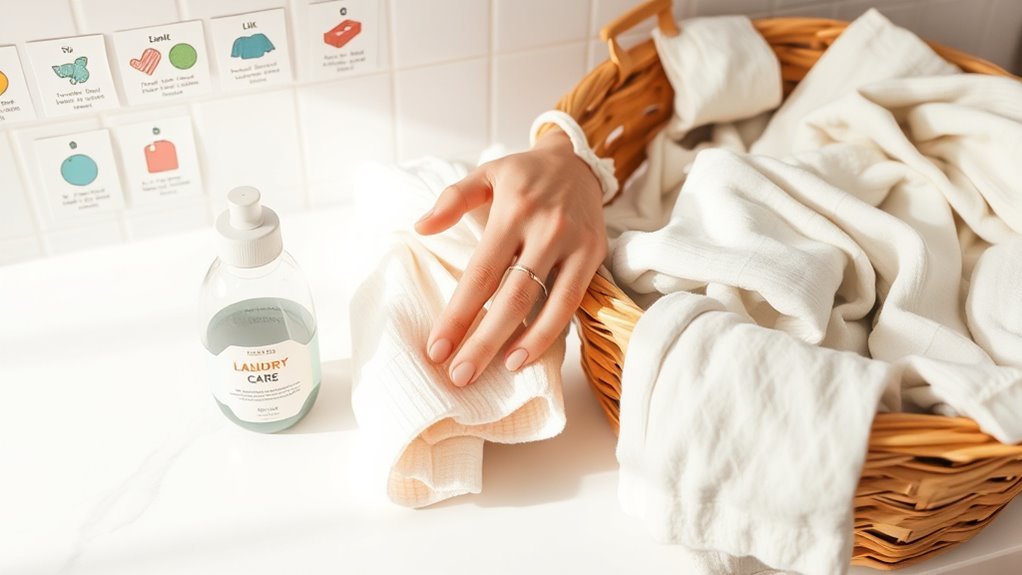
How do you make sure your clothes last longer and stay in great condition? The key is understanding fabric care labels. These small tags hold essential info about fabric types and how to treat them. When you learn to read label symbols, you gain freedom to wash, dry, and iron without fear. Each symbol guides you on water temperature, machine cycle, and drying method suitable for that fabric type. For example, delicate fabrics like silk or wool require gentle cycles, while cotton can handle more vigorous washing. Ignoring these instructions risks shrinking or damaging your clothes, limiting your wardrobe’s lifespan. By respecting care labels, you keep your clothes looking fresh and vibrant, giving you the confidence to wear your favorite pieces again and again.
Sorting Laundry Effectively
Anyone who wants to keep clothes looking their best knows that sorting laundry is essential. By using effective sorting techniques, you prevent colors from bleeding and fabrics from damaging each other. Start by separating your laundry into clear color categories: darks, lights, and whites. This simple step gives you freedom to wash confidently without worry.
| Color Category | Examples | Tips |
|---|---|---|
| Darks | Black, navy, brown | Wash in cold water |
| Lights | Pastels, light gray | Use gentle cycle |
| Whites | White shirts, socks | Use warm water, avoid mixing |
| Delicates | Silk, lace | Hand wash or use mesh bag |
Stick to these sorting techniques, and your clothes will retain their color and shape longer, freeing you from laundry mishaps.
Choosing the Right Detergent and Washing Cycle

Since different fabrics and colors require specific care, choosing the right detergent and washing cycle is essential to protect your clothes. You’ll want to pick detergent types that suit your laundry needs—whether it’s a gentle formula for sensitive skin or a powerful one for heavy stains. Pay attention to washing temperatures, too; cooler settings save energy and prevent fading, while warmer cycles tackle tougher grime. Understanding these options gives you the freedom to customize each load without risking damage. By matching detergent types with appropriate washing temperatures and cycles, you’re in control of preserving your wardrobe’s look and feel. This approach lets you enjoy clean clothes without constraints, keeping your laundry routine both effective and liberating.
Best Practices for Washing Delicate and Colored Fabrics
When handling delicate and colored fabrics, you’ll want to take extra care to maintain their vibrancy and texture. The best way to do this is to hand wash them using cold water, which prevents shrinking and color bleeding. Avoid harsh detergents; instead, choose a gentle formula that’s designed for delicate materials. When hand washing, gently swirl the fabric without wringing or twisting to protect the fibers. Rinse thoroughly with cold water to remove soap without stressing the fabric. If machine washing is necessary, use a mesh bag and select the delicate cycle with cold water. By following these steps, you’ll keep your delicate and colored clothes looking fresh and vibrant, giving you the freedom to wear them with confidence without worrying about damage.
Proper Drying and Storage Techniques
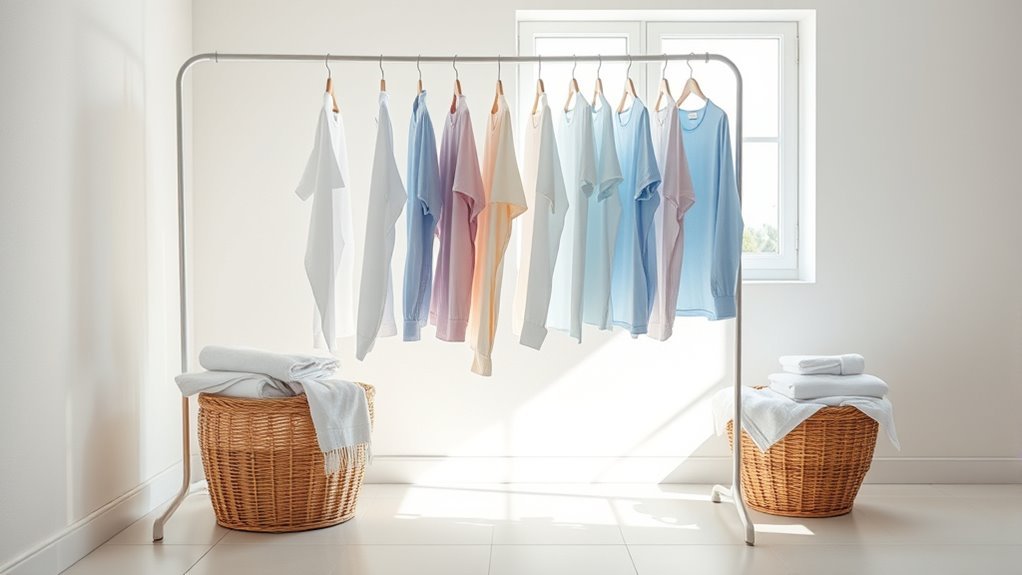
Although washing your clothes properly is essential, how you dry and store them plays an equally important role in maintaining their quality. To keep your fabrics in top shape and enjoy true fabric preservation, focus on these key steps:
- Opt for air drying whenever possible to reduce heat damage and shrinkage.
- Avoid direct sunlight, which can fade colors and weaken fibers over time.
- Store clothes in a cool, dry place to prevent mildew and maintain fabric integrity.
- Use breathable storage containers or cloth bags to allow air circulation and keep fabrics fresh.
Frequently Asked Questions
Can I Wash Clothes Without Detergent?
You might think you can wash clothes without detergent, but it’s not always a walk in the park. While skipping detergent saves you from harsh chemicals, you’ll want to try eco friendly alternatives like soap nuts or baking soda to keep things fresh. Using proper washing techniques, like cold water cycles and gentle agitation, helps protect your fabrics while freeing you from traditional laundry hassles. It’s about finding balance and freedom in your routine.
How Often Should I Clean My Washing Machine?
You should clean your washing machine about once a month to keep it running smoothly and extend its life. Regular machine maintenance prevents buildup from detergent and dirt, which can cause odors or damage. If your washing frequency is high, consider cleaning it more often. Keeping your machine fresh frees you from worrying about poor performance, so you can enjoy the freedom of clean clothes without hassle.
Is Hand-Washing Better Than Machine Washing?
You might wonder if hand washing benefits your clothes more than machine washing. While hand washing lets you treat delicate fabrics gently and gives you control, machine washing efficiency saves you time and energy, handling larger loads quickly. If you value freedom and flexibility, combining both methods could work best—hand washing special items while relying on your machine for everyday laundry, freeing you up to enjoy what matters most.
Can Fabric Softener Damage Clothes?
You might think fabric softener’s harmless, but it can actually affect your clothes’ durability over time, breaking down fibers and reducing lifespan. Don’t worry though—you don’t have to give up softness. Fabric softener alternatives like white vinegar or wool dryer balls offer gentle care without damaging your freedom to wear what you love. These options keep your clothes feeling great while preserving their strength, so you can enjoy both comfort and longevity.
What Temperature Is Safe for All Fabrics?
You’ll want to stick to cold water when washing most fabric types—it’s the safest bet to keep your clothes looking fresh without shrinking or fading. Cold water cleans gently, preserving colors and textures, giving you the freedom to wash everything from delicate silks to sturdy cottons without worry. If you’re feeling adventurous, always check care labels, but cold water’s your go-to for protecting your wardrobe and enjoying hassle-free laundry days.