Washing Refrigerator Without Damage
To wash your refrigerator without damage, start by unplugging it and removing all food and detachable shelves. Use a mild detergent with warm water and a soft cloth or sponge to clean interior surfaces gently, avoiding harsh chemicals that can degrade seals and plastics. Clean and lubricate door seals to keep them pliable, and wipe the exterior with a microfiber cloth suited to its surface type. Following these precise steps guarantees thorough cleaning while preserving your refrigerator’s integrity; more details can improve your routine.
Preparing Your Refrigerator for Cleaning
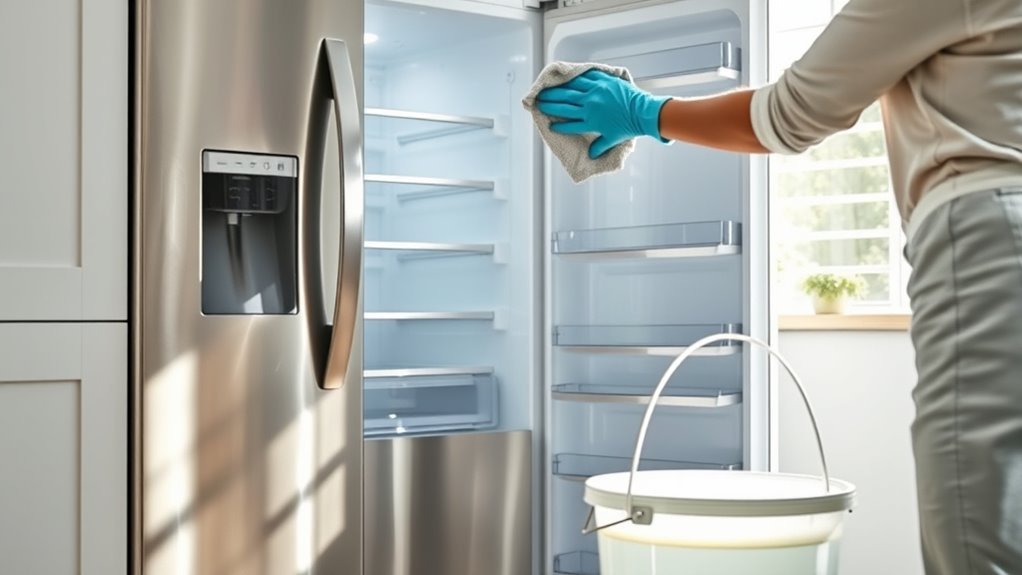
Before you begin washing your refrigerator, make sure to unplug the appliance and remove all food items. Start by emptying shelves systematically, placing perishable goods in a cooler to maintain freshness. Remove all detachable shelves and drawers for separate cleaning. As you clear the interior, take the opportunity to organize contents, discarding expired products and grouping similar items together. This step not only simplifies the cleaning process but also enhances efficiency when restocking. Use labeled containers or bins to maintain order and prevent clutter. Ensuring the refrigerator is completely empty and organized minimizes the risk of damage during cleaning and streamlines your workflow. Proper preparation guarantees a thorough wash without compromising the appliance’s components or your food’s safety. Gather the necessary cleaning supplies beforehand to ensure efficient, uninterrupted cleaning.
Safe Cleaning Solutions and Tools
Although there are many cleaning products available, you should choose solutions that are both effective and safe for your refrigerator’s materials. Opt for eco friendly cleaners that won’t degrade plastic or rubber seals and avoid harsh chemicals like bleach or ammonia. These gentle formulations clean thoroughly without causing damage or leaving harmful residues. Pair your cleaner with gentle scrubbers such as soft sponges or microfiber cloths; abrasive pads risk scratching surfaces and compromising insulation. Verify tools are non-metallic to prevent rust or corrosion. By selecting appropriate, non-toxic products and soft cleaning implements, you maintain your refrigerator’s integrity while achieving hygienic results. This approach grants you the freedom to clean confidently, preserving both appliance longevity and your health. Using microfiber cloths during cleaning helps prevent scratches and streaks, ensuring a spotless finish.
Step-by-Step Guide to Washing the Interior

When you start washing the interior, be certain to unplug the refrigerator and remove all food items to prevent spoilage and allow easier access. Focus on interior organization by removing shelves and drawers for thorough cleaning. Use a mild detergent solution with a soft cloth to prevent damage. Wipe all surfaces, then dry completely before reassembling. Maintain a consistent cleaning frequency every 3-4 months for ideal hygiene. Regular maintenance and attention to cleaning techniques can help extend the lifespan of your appliance.
| Step | Action |
|---|---|
| 1. Preparation | Unplug, empty, and remove detachable parts |
| 2. Cleaning | Use mild detergent and soft cloth |
| 3. Drying | Thoroughly dry all surfaces and parts |
| 4. Reassembly | Replace shelves and drawers, plug in |
This structured process guarantees effective cleaning without compromising your refrigerator’s integrity.
Cleaning and Protecting Refrigerator Seals
After thoroughly cleaning the interior, it’s important to give attention to the refrigerator seals. Proper seal maintenance guarantees an airtight closure, which preserves energy efficiency and prevents moisture buildup. For effective cleaning and damage prevention, follow these steps:
Maintaining refrigerator seals ensures airtight closure, energy efficiency, and prevents moisture buildup after cleaning the interior.
- Use a soft cloth dipped in warm, soapy water to gently wipe the seals, avoiding harsh chemicals.
- Inspect seals for cracks or deformities; replace damaged seals promptly to maintain proper function.
- Apply a thin layer of silicone-based lubricant or petroleum jelly to keep seals pliable and prevent drying out.
- Regularly test seal integrity by closing the door on a piece of paper; if it slips out easily, seals may need adjustment or replacement.
- Storing items in a cool, dry place helps prevent moisture buildup that can affect seal condition.
Maintaining the Exterior Without Damage

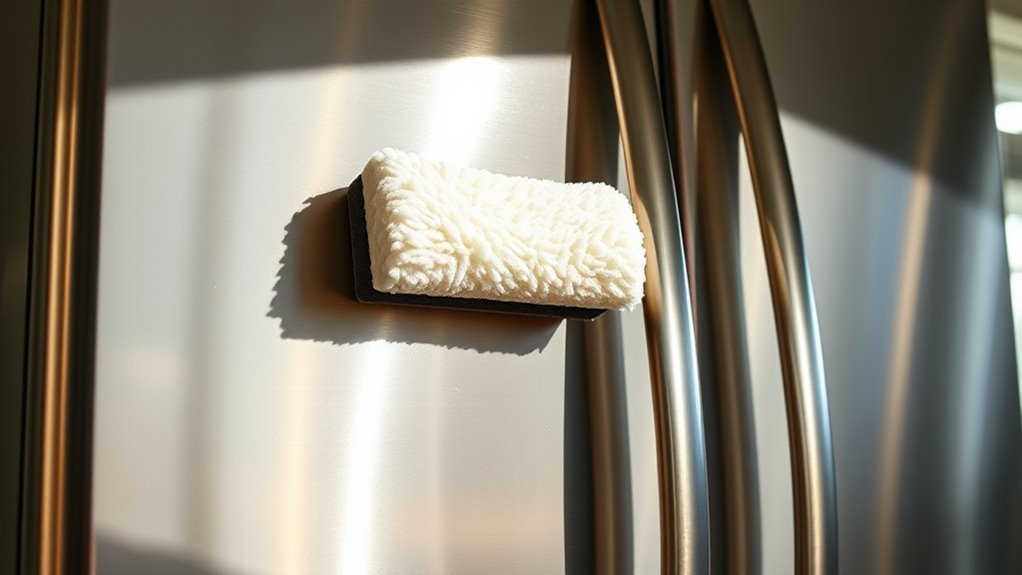
To maintain your refrigerator’s exterior without causing damage, you need to use appropriate cleaning methods and materials that won’t compromise its finish. First, identify the surface materials—stainless steel, painted metal, or plastic—since each requires specific care. Use a microfiber cloth with mild detergent diluted in warm water for routine cleaning, avoiding abrasive pads or harsh chemicals that can scratch or dull surfaces. Establish a cleaning frequency of once every two weeks to prevent buildup without overexposure to moisture or cleaners. For stainless steel, wipe in the grain direction and apply a specialized polish occasionally to preserve luster. Always dry surfaces thoroughly to prevent streaks and water spots. Following these precise steps guarantees your refrigerator’s exterior remains pristine, extending its aesthetic appeal and your freedom from costly repairs. Using gentle sprays for daily maintenance is especially beneficial for stainless steel surfaces to remove fingerprints and smudges effectively.
Frequently Asked Questions
Can I Use Vinegar Instead of Commercial Cleaners Safely?
Though vinegar lacks the charm of a Victorian elixir, you can safely use it instead of commercial cleaners for your fridge. Vinegar benefits include its natural cleaning power and ability to dissolve grime without harsh chemicals. It’s a non-toxic choice that preserves your appliance’s integrity. Just dilute white vinegar with water, avoid harsh scrubbing, and guarantee good ventilation. This method offers a precise, eco-friendly alternative that respects your freedom from synthetic cleaners.
How Often Should I Deep Clean My Refrigerator?
You should follow frequency guidelines to maintain your refrigerator’s efficiency and hygiene. Typically, a deep clean every three to four months fits most cleaning schedules, but you might adjust based on usage or spills. Setting a cleaning schedule helps prevent odor buildup and guarantees food safety. Keep track of your fridge’s condition, and if you notice unusual smells or stains, don’t hesitate to deep clean sooner to keep things fresh and functional.
Is It Safe to Unplug the Fridge During Cleaning?
Sure, feel free to unplug your fridge and embrace the thrilling freedom of a powerless appliance—just don’t expect your food to enjoy the vacation. For unplugging safety during fridge maintenance, always remove the plug to avoid electric shock, but plan to clean quickly to prevent spoilage. Keep the door open to air it out. This precise step guarantees your fridge stays damage-free, balancing safety with your desire for efficient, responsible upkeep.
Can Mold Grow Inside if Not Cleaned Properly?
Yes, mold can grow inside if you don’t clean your fridge properly. Mold prevention relies heavily on consistent cleaning frequency—ideally every 3 to 4 months. You should remove spoiled food, wipe spills immediately, and use mild disinfectants to eliminate mold spores. Maintaining proper temperature and airflow also helps. By following these technical steps, you make certain your fridge stays mold-free, giving you more freedom from health risks and unpleasant odors.
What’S the Best Way to Deodorize My Fridge?
To tackle fridge odors, neutralize, absorb, and refresh using natural deodorizers. Start by removing spoiled food and wiping surfaces with a baking soda solution—1 tablespoon per quart of water. Place an open box of baking soda or activated charcoal inside to continuously absorb smells. For added freshness, set a small bowl of coffee grounds or lemon slices. These steps will effectively eliminate odors, letting you enjoy a cleaner, odor-free fridge environment.