How to Make Homemade Glass Cleaner
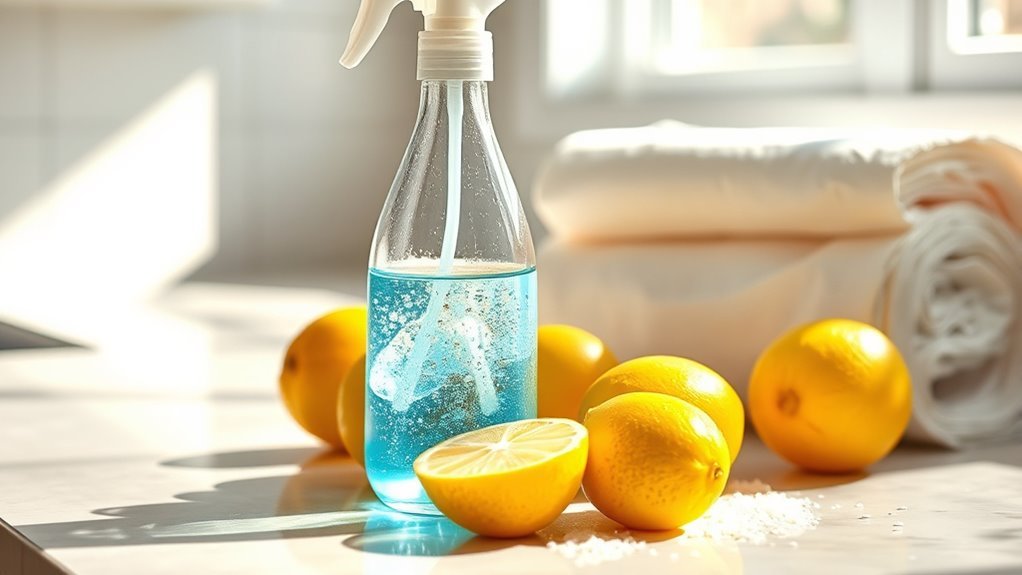
You can make homemade glass cleaner by mixing 2 cups distilled water, 1 cup white vinegar, and ½ cup isopropyl alcohol in a clean container. Stir gently to avoid bubbles, then pour into a spray bottle for easy application. Use a microfiber cloth or squeegee for streak-free results. Confirm you measure accurately and take safety precautions like wearing gloves. Understanding ingredient roles and variations can enhance cleaning effectiveness and longevity. More details can help you optimize your formulation and use.
Benefits of Using Homemade Glass Cleaner
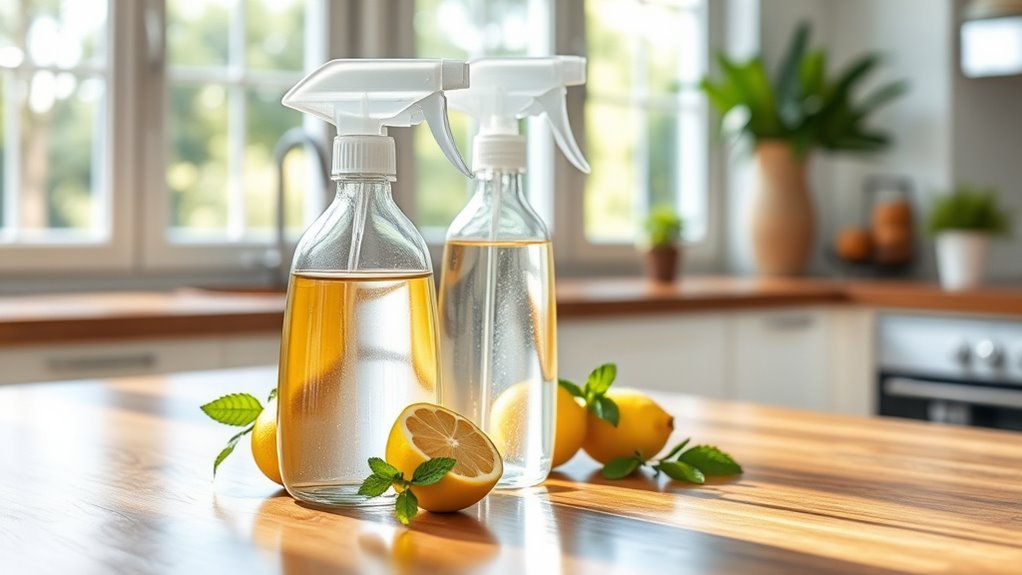
Although commercial glass cleaners are widely available, making your own homemade glass cleaner offers distinct advantages that you should consider. Primarily, it serves as a cost effective solution by utilizing common household ingredients, reducing your dependence on expensive, branded products. Additionally, the eco friendly benefits are significant; you control the components, avoiding harsh chemicals that contribute to environmental pollution. This approach aligns with sustainable living, minimizing plastic waste through reusable containers. You gain precise control over formulation strength, customizing it to your cleaning needs without compromising effectiveness. Homemade cleaners also reduce indoor air contaminants, promoting healthier living spaces. By adopting this method, you embrace freedom from commercial constraints, enhancing both economic and ecological responsibility in your cleaning routine. Using distilled water as a base in homemade glass cleaners helps achieve streak-free results and prevents mineral deposits on your windows.
Essential Ingredients for Glass Cleaning
To create an effective homemade glass cleaner, you’ll need key cleaning components such as a solvent to dissolve grease and a surfactant to lift dirt. Natural ingredients like vinegar and essential oils not only enhance cleaning power but also reduce chemical exposure. Understanding the specific role of each ingredient helps you formulate a precise and efficient solution. However, it is important to use vinegar cautiously as it can harm certain glass coatings if not compatible.
Key Cleaning Components
Three essential ingredients form the foundation of an effective homemade glass cleaner: a solvent to dissolve grease and grime, a surfactant to break surface tension and lift dirt, and a drying agent to prevent streaking. When crafting your formula, understanding these key cleaning components and their ideal ratios is vital for freedom from ineffective, streaky results.
- Solvent – Typically water combined with isopropyl alcohol; it breaks down oily residues.
- Surfactant – A mild detergent reduces surface tension, allowing the cleaner to spread evenly and release dirt.
- Drying agent – Usually vinegar or a small amount of alcohol prevents water spots and streaks.
Balancing these components precisely guarantees your homemade cleaner delivers clarity and shine without residue.
Natural Ingredient Benefits
Understanding the role of each cleaning component sets the stage for selecting natural ingredients that maximize effectiveness while minimizing chemical exposure. When you choose natural alternatives like white vinegar, its acetic acid efficiently breaks down grease and grime without harsh residues. Similarly, rubbing alcohol acts as a fast-evaporating solvent, guaranteeing streak-free finishes. Incorporating eco friendly options such as distilled water reduces mineral spotting and supports environmental sustainability. Essential oils not only add a pleasant scent but also offer antimicrobial properties, enhancing your cleaner’s functionality naturally. By relying on these precise, naturally derived components, you maintain control over your cleaning process, avoiding synthetic chemicals. This methodical approach guarantees your homemade glass cleaner is both effective and aligned with your values of safety and ecological responsibility.
Tools Needed for Mixing and Application
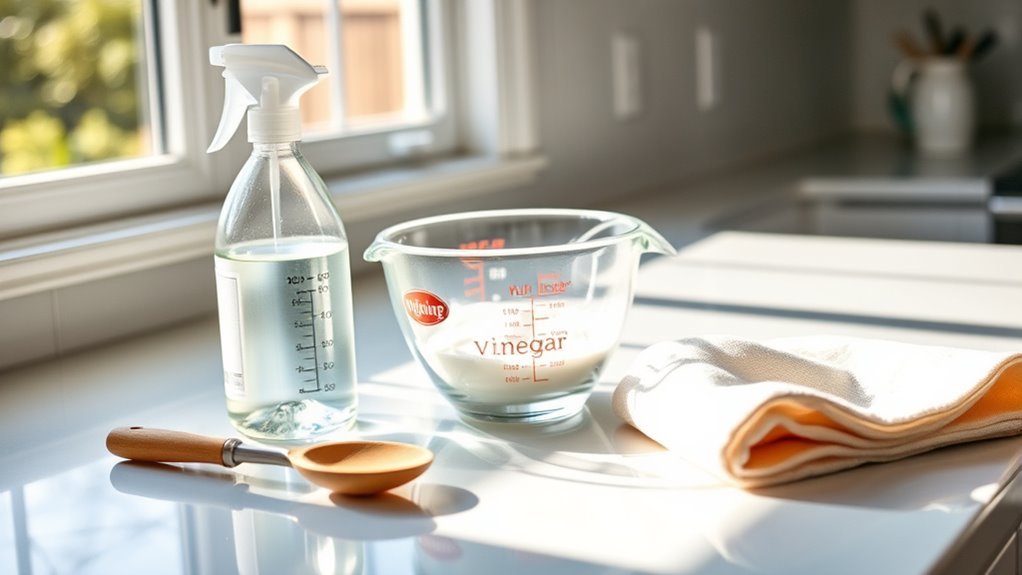
You’ll need specific tools to mix your homemade glass cleaner accurately, such as measuring cups and a sturdy mixing container. For application, selecting the right tool—like a spray bottle or microfiber cloth—ensures even distribution and effective cleaning. Understanding these essential tools helps optimize both preparation and use. Using microfiber cloths during application can help prevent streaks and achieve a spotless finish.
Essential Mixing Tools
A reliable set of mixing tools is essential for creating an effective homemade glass cleaner. Precision in mixing techniques guarantees consistent results, while selecting appropriate container options enhances both safety and convenience. To streamline your process, focus on these fundamental tools:
- Measuring cups and spoons – For accurate ingredient ratios, critical to cleaner efficacy.
- A sturdy mixing bowl or jug – Preferably glass or high-grade plastic to resist chemical reactions.
- A long-handled stirring utensil – Allows thorough blending without splashes or spills.
These tools empower you to control the formulation methodically, fostering freedom from commercial products. Choosing containers with secure lids further supports safe storage, maintaining solution integrity over time. By mastering these essentials, you optimize preparation, guaranteeing your homemade glass cleaner performs reliably every time.
Application Tools Choices
Three essential application tools guarantee your homemade glass cleaner is applied efficiently and effectively. First, a high-quality spray bottle allows precise distribution, supporting consistent application techniques. Choose one with an adjustable nozzle to control mist density and reach. Second, microfiber cloths are indispensable; their fine fibers prevent streaks and lint residue, ensuring a flawless finish. Third, a squeegee with a rubber blade facilitates rapid moisture removal, optimizing drying time and reducing smudges. Prioritize tool maintenance by regularly cleaning spray nozzles and laundering cloths without fabric softeners to preserve effectiveness. Inspect and replace squeegee blades as needed to maintain edge integrity. Selecting and maintaining these tools empowers you to apply your homemade glass cleaner with precision, maximizing clarity and surface freedom.
Step-by-Step Recipe for Basic Glass Cleaner
To prepare the basic glass cleaner, gather exact measurements of distilled water, white vinegar, and isopropyl alcohol. Precision guarantees consistent results and supports effective cleaning techniques.
Follow these steps:
- Combine 2 cups of distilled water with 1 cup of white vinegar in a clean container.
- Add 1/2 cup of isopropyl alcohol to the mixture for enhanced grease-cutting power.
- Stir gently to mix without creating excessive bubbles.
This formula leverages eco friendly options by avoiding harsh chemicals, granting you freedom from toxic residues. Store the solution in a spray bottle for easy application. Use a microfiber cloth or a squeegee—tools discussed earlier—to maximize streak-free performance while adhering to proper cleaning techniques. This methodical approach assures clarity and efficiency in your glass cleaning routine. Vinegar is especially effective as it cuts through grease naturally, making it a key ingredient in homemade cleaners.
Variations for Streak-Free Shine
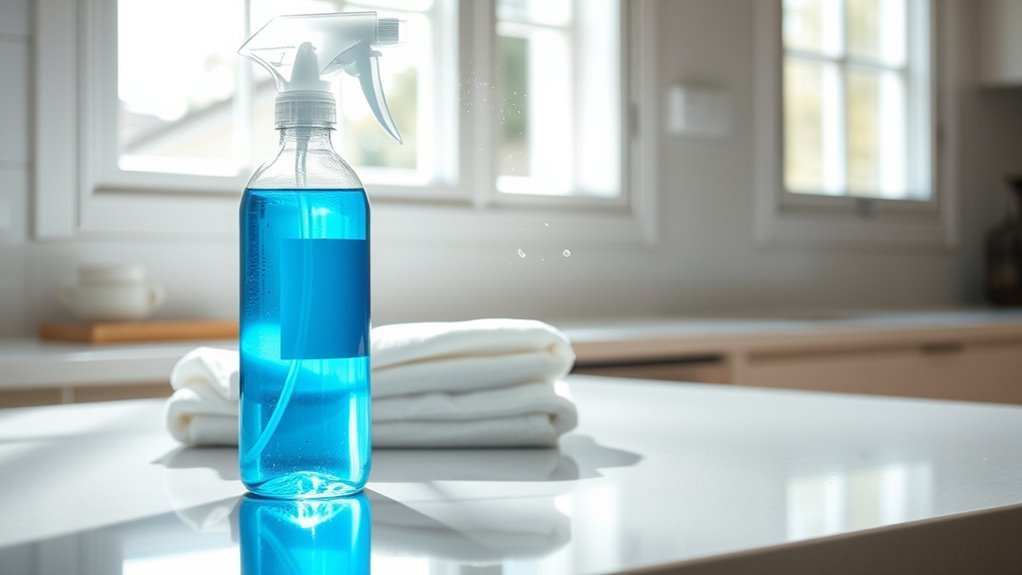
Building on the basic glass cleaner recipe, you can enhance streak-free results by adjusting ingredients or adding specific components tailored to your cleaning conditions. For effective streak prevention, incorporate a few drops of isopropyl alcohol; it accelerates drying and reduces residue. Alternatively, adding a teaspoon of white vinegar improves shine enhancement by breaking down mineral deposits. If you’re dealing with hard water stains, a small amount of lemon juice acts as a natural acid to boost clarity. To maintain freedom in your formulation, avoid overuse of additives that can leave films or odors. Always measure precisely: too much vinegar or alcohol can dull surfaces. Experiment with these variations methodically, noting how each impacts streak prevention and shine enhancement, thereby optimizing your homemade cleaner for your unique environment. Remember to store your mixture in airtight, labeled spray bottles to keep it fresh and effective over time.
Tips for Safe and Effective Use
Effective use of homemade glass cleaner depends on following precise safety and application guidelines. To guarantee safe handling and effective application, keep these points in mind:
Proper use of homemade glass cleaner requires following safety and application guidelines for best results.
- Wear protective gear: Always use gloves and avoid inhaling vapors to minimize skin and respiratory irritation.
- Test on small areas: Before full application, test the cleaner on a discreet glass section to confirm no damage or residue.
- Apply with proper tools: Use a microfiber cloth or a lint-free paper towel for streak-free results and even distribution.
- Store your cleaner in airtight, non-reactive containers away from direct sunlight and extreme temperatures to maintain its effectiveness.
Storage and Shelf Life of Homemade Cleaner
Although homemade glass cleaner is simple to prepare, how you store it directly affects its potency and safety. Use airtight, opaque storage containers to minimize exposure to air and light, which degrade active ingredients. Glass spray bottles with tight-fitting nozzles are ideal, preventing contamination and evaporation. Label your containers with the preparation date to monitor shelf life effectively. Typically, your cleaner maintains peak performance for up to one month when stored properly at room temperature, away from heat sources. Avoid metal containers, as they can react with acidic components, compromising solution stability. Regularly inspect the cleaner for changes in color, odor, or consistency before use. Proper storage guarantees your homemade glass cleaner remains effective, allowing you the freedom to maintain spotless surfaces safely and efficiently. Additionally, storing products in a cool, dry place helps preserve natural ingredients for confident cleaning without degradation.
Troubleshooting Common Cleaning Issues
When you encounter streaks, residue, or spots after using your homemade glass cleaner, it’s important to identify the underlying causes to correct them effectively. Proper streak removal and preventing residue buildup rely on a few key factors.
- Incorrect solution ratio: Too much vinegar or soap can leave residue. Stick to tested measurements for balance.
- Improper application: Using a dirty cloth or spraying excessively leads to streaks. Use a clean microfiber cloth and moderate spray.
- Surface conditions: Cleaning in direct sunlight or on hot glass causes rapid evaporation, leaving spots. Clean in a shaded, cool environment for best results.
Additionally, choosing a mild detergent with a pH close to neutral can help avoid damaging delicate glass fabric while cleaning.
Frequently Asked Questions
Can Homemade Glass Cleaner Be Used on Tinted Car Windows?
You can use homemade glass cleaner on tinted windows, but you need to guarantee the ingredients won’t damage the film. Avoid ammonia-based solutions, as they can degrade tint and reduce cleaning effectiveness. Instead, opt for a mixture with water, vinegar, and a small amount of dish soap. This method maintains tint integrity while providing good cleaning performance, allowing you the freedom to keep your windows clear without risking costly damage.
Is Homemade Glass Cleaner Safe for Antique Mirrors?
When caring for antique mirrors, you should be cautious with glass cleaner ingredients. Many homemade solutions contain vinegar or ammonia, which can damage delicate backing or finishes. For proper antique mirror care, avoid abrasive or acidic cleaners. Instead, use a mild, pH-neutral cleaner applied gently with a soft cloth. This method preserves the mirror’s integrity while providing freedom from harsh chemicals that could deteriorate its antique qualities.
How Does Homemade Cleaner Compare to Commercial Brands in Cost?
You know what they say: “A penny saved is a penny earned.” When considering cost effectiveness, homemade cleaners often come out ahead due to inexpensive, readily available ingredients like vinegar and baking soda. Ingredient sourcing is straightforward—you can purchase components in bulk, reducing per-use costs considerably. Unlike commercial brands, which include markup and packaging fees, making your own cleaner grants you economical freedom and control over expenses, making it a savvy, budget-conscious choice.
Can I Add Fragrance Oils to Homemade Glass Cleaner?
You can add fragrance oils to your homemade glass cleaner, but it’s vital to choose fragrance oil types that are water-soluble or specifically designed for cleaning products to guarantee proper blending. Be mindful of scent strength; start with a small amount to avoid overpowering the cleaner or leaving residue. Adjust gradually, testing the formula’s effectiveness and scent longevity. This method lets you customize your cleaner while maintaining performance and freedom in your formulation.
What Should I Do if Homemade Cleaner Causes Allergic Reactions?
If allergy symptoms hit you like a sudden storm, stop using the cleaner immediately. Identify which ingredient might be the trigger and replace it with alternative ingredients known for mildness, like distilled vinegar or baking soda. Test your new formula on a small surface first to guarantee safety. Always label your mixtures clearly and store them securely. Prioritize your health while maintaining your freedom to customize your cleaning solutions confidently.