Disinfecting High-Touch Areas in Garage
To disinfect high-touch areas in your garage, focus on door handles, light switches, tool handles, and storage knobs. Choose disinfectants that work well on metal and plastic without damaging surfaces, and opt for eco-friendly options when possible. Declutter first to access all spots easily, then clean regularly—especially after heavy use. Always wear gloves and guarantee good ventilation to stay safe. Keep your garage germ-free by following proper disinfecting techniques, and there’s more to learn about timing and safety precautions.
Identifying High-Touch Surfaces in Your Garage
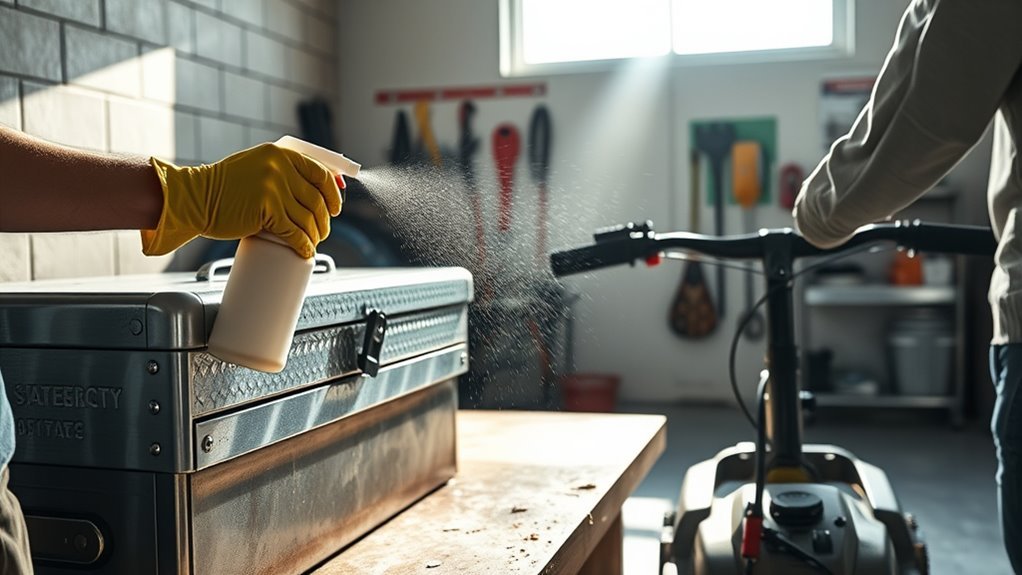
When you’re disinfecting your garage, the first step is to pinpoint the high-touch surfaces that get handled most often. This surface identification helps you focus your garage cleaning efforts where they matter most, saving you time and effort. Think about door handles, light switches, tool handles, and cabinet knobs—these spots see constant contact and can harbor germs. Don’t forget workbenches and storage bins you reach for regularly. By zeroing in on these key areas, you maintain a cleaner, safer space without getting bogged down in unnecessary scrubbing. Identifying these surfaces empowers you to take control of your garage environment, keeping it fresh and ready for whatever freedom your day demands. This targeted approach makes your garage cleaning both effective and efficient.
Choosing the Right Disinfectants for Garage Use
Picking the right disinfectant for your garage is essential to effectively eliminate germs without damaging surfaces. You want a product that balances disinfectant effectiveness with care for your environment. Eco friendly options are increasingly popular because they protect your health and the planet while still targeting harmful bacteria and viruses. Look for disinfectants labeled safe for use on the specific materials in your garage, like metal, plastic, or rubber. Avoid harsh chemicals that can corrode tools or leave toxic residues. Also, check the contact time—the duration the disinfectant needs to stay wet for maximum effectiveness. By choosing wisely, you maintain a clean, safe space without compromising your freedom to use eco-conscious products that work well in tough garage conditions.
Preparing the Garage for Effective Cleaning
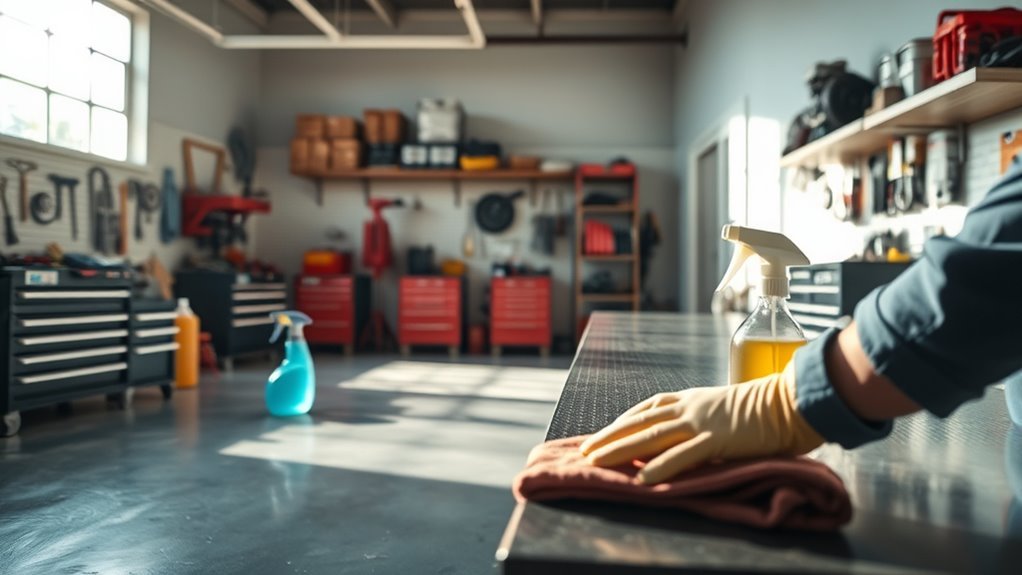
Before you start disinfecting, clear out clutter to access all surfaces easily. Make sure you have your cleaning supplies ready and within reach. Then, pinpoint the high-touch areas that need the most attention.
Declutter Garage Space
Clearing out your garage is the essential first step to make disinfecting high-touch areas more effective. When you declutter, you create space that lets you reach every corner without hassle, ensuring a thorough clean. Use these garage organization tips to reclaim your freedom:
- Sort items into keep, donate, or toss piles to streamline your space.
- Invest in smart storage solutions like wall-mounted racks or clear bins to keep things tidy.
- Label containers so you can quickly find what you need without digging around.
- Arrange frequently used items within easy reach, freeing up space and effort.
Gather Cleaning Supplies
A few essential cleaning supplies will make disinfecting your garage’s high-touch areas much easier and more effective. Start by gathering reliable cleaning solutions designed for tough grime and germs—look for those safe on various surfaces. Don’t forget gloves to protect your hands and microfiber cloths for efficient wiping without scratching. Organizing supplies like caddies or buckets help keep everything within reach, so you’re not wasting time searching mid-clean. A sturdy spray bottle lets you apply disinfectants evenly, while disposable wipes speed up the process on frequently touched spots. By prepping with the right tools and cleaning solutions, you’re setting yourself free from hassle and ensuring a thorough, straightforward clean. This preparation is the key step toward reclaiming your garage with ease and confidence.
Identify High-Touch Surfaces
With your cleaning supplies ready, it’s time to pinpoint the spots that get touched the most in your garage. Focusing on these areas will streamline your cleaning routines and give you back your freedom from constant worry about germs. Start by identifying:
- Handles and knobs on garage doors and cabinets, as they’re constantly grabbed.
- Controls and buttons on garage equipment like lawnmowers or power tools.
- Light switches, since you flip them on and off daily.
- Workbench surfaces where you rest tools or set down items.
Steps for Disinfecting Door Handles and Locks
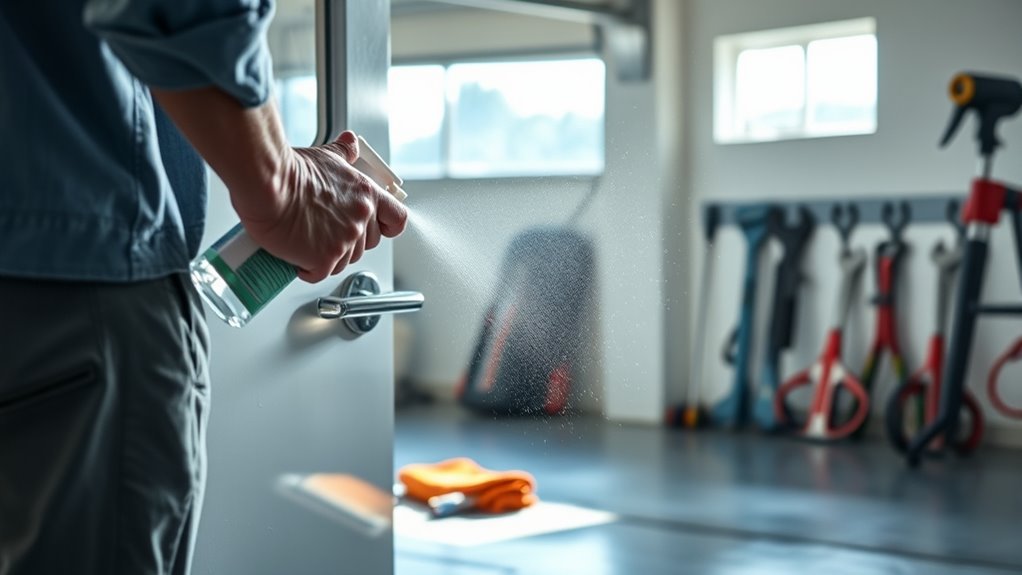
When disinfecting door handles and locks, you’ll want to choose a disinfectant that’s both effective and safe for the surfaces. Make certain to follow proper cleaning techniques, like wiping thoroughly and allowing the disinfectant to sit for the recommended time. These steps help guarantee you’re removing germs without damaging the hardware.
Selecting Effective Disinfectants
Since door handles and locks are touched frequently, you’ll want to choose disinfectants that work quickly and effectively against common germs. Here’s how to select the right one for your garage:
- Check for disinfectant effectiveness testing to verify it kills a broad range of pathogens efficiently.
- Consider natural disinfectant options like vinegar or hydrogen peroxide if you prefer chemical-free solutions that still pack a punch.
- Verify the product is safe for metal surfaces to avoid damage to your handles and locks.
- Look for fast-drying formulas that allow you to keep the garage accessible without long wait times.
Proper Cleaning Techniques
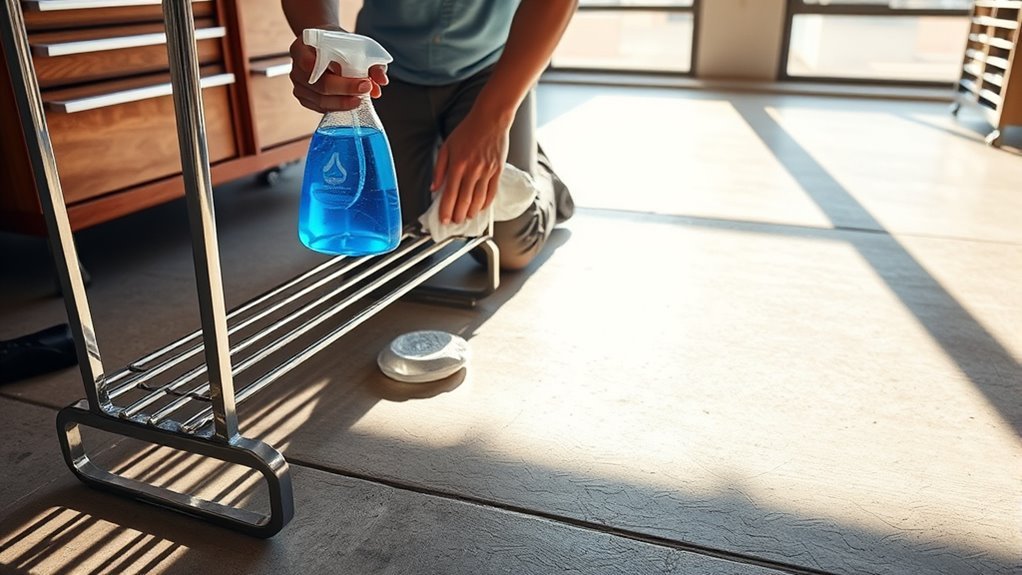
Although disinfecting door handles and locks might seem straightforward, following the right steps guarantees you eliminate germs effectively without damaging the surfaces. Start by identifying the surface types—metal, plastic, or wood—since each requires specific disinfectants and techniques. Use a disinfectant compatible with the material to avoid corrosion or discoloration. Begin with wiping down the handle and lock with a damp cloth to remove dirt and grime. Then apply the disinfectant, allowing it to sit for the recommended contact time. Don’t forget to clean around edges and crevices where germs hide. Establish cleaning schedules based on usage frequency; high-traffic doors may need daily attention, while less-used ones can be disinfected weekly. Staying consistent ensures your garage remains a safe, germ-free space without restricting your freedom.
Cleaning Light Switches and Electrical Outlets Safely
Because light switches and electrical outlets are frequently touched but can be sensitive to moisture, you’ll need to clean them carefully to avoid damage or electrical hazards. Here’s how to maintain electrical safety while using effective cleaning methods:
- Turn off power to the outlet or switch at the circuit breaker to eliminate shock risk.
- Use a dry microfiber cloth or lightly dampen it with a mixture of water and mild detergent—never spray directly.
- Gently wipe the surfaces, avoiding excess moisture that could seep inside.
- Verify everything is completely dry before restoring power.
Disinfecting Tool Handles and Storage Areas
When you’re disinfecting tool handles and storage areas, it’s important to focus on the spots you touch most often to prevent the spread of germs. Grab a disinfectant wipe or spray and carefully clean each handle, paying close attention to grooves or textured grips where dirt and bacteria can hide. This not only keeps your tools hygienic but also supports your tool maintenance routine by preventing grime buildup that can cause wear. Don’t forget to wipe down shelves, hooks, and bins where you store your tools. Keeping these storage areas clean promotes better storage organization, making it easier for you to find what you need quickly while maintaining a healthier workspace. A clean, organized garage helps you stay free to work efficiently without distractions.
Frequency and Timing for Garage Disinfection
Regularly disinfecting your garage is key to keeping germs at bay and maintaining a safe environment. To create an effective disinfection schedule, you’ll want to follow clear frequency guidelines that fit your lifestyle and garage use. Consider these points:
- Disinfect high-touch areas like door handles and switches at least twice a week.
- After heavy use or gatherings, increase cleaning frequency to daily.
- For less active garages, a weekly routine usually suffices.
- Always time disinfection during low-traffic periods to avoid interruptions.
Safety Precautions When Using Disinfectants
To guarantee your safety while disinfecting high-touch areas in your garage, you’ll need to handle cleaning products with care. Prioritize disinfectant safety by reading labels thoroughly and following instructions exactly. Never mix different chemicals, as that can release harmful fumes. Wearing protective gear like gloves and goggles shields your skin and eyes from irritation or injury. Make certain your garage is well-ventilated—open doors or windows to avoid breathing in strong fumes. Store disinfectants out of reach from kids and pets to prevent accidents. By respecting these safety precautions, you maintain your freedom to clean effectively without risking your health. Taking these simple steps guarantees you stay safe while keeping your garage germ-free and ready for whatever you need.
Maintaining a Germ-Free Garage Environment
Although garages are often overlooked, maintaining a germ-free environment there is essential for your overall home hygiene. To enjoy true freedom from germs and clutter, focus on these key steps:
Maintaining a germ-free garage is crucial for overall home hygiene and clutter-free living.
- Implement garage organization tips — keep tools and items stored properly to reduce dust and germs.
- Regularly clean high-touch surfaces like doorknobs, light switches, and workbenches using appropriate disinfectants.
- Control moisture and ventilation to prevent mold and bacteria growth.
- Establish a cleaning schedule to maintain cleanliness without overwhelming effort.
Frequently Asked Questions
Can Disinfectants Damage Garage Floor Coatings?
You might worry if disinfectants can damage your garage floor coatings. It really depends on the floor coating types you’ve got—epoxy, polyurethane, or acrylic all react differently. To keep your freedom intact, always check disinfectant compatibility with your specific coating. Using harsh chemicals can degrade some finishes, so opting for compatible, gentle disinfectants guarantees your floor stays protected while you maintain a clean, safe space without restrictions.
How to Disinfect Electronic Garage Door Openers?
You want to clean safely, you want to clean often, and you want to clean smart. When disinfecting your electronic garage door opener, choose disinfectant types safe for electronics, like alcohol-based wipes or sprays with at least 70% isopropyl alcohol. Avoid soaking or harsh chemicals that can damage the device. Clean frequently—especially during flu season or after guests visit—to keep germs at bay while maintaining your freedom to come and go worry-free.
Are Natural Disinfectants Effective for Garage Use?
You might wonder if natural alternatives are effective disinfectants for your garage. While many prefer them for freedom from harsh chemicals, efficacy studies show mixed results—some natural options like vinegar or tea tree oil can reduce germs but might not eliminate all pathogens thoroughly. If you want to embrace natural choices, just be mindful they may not match the power of commercial disinfectants, especially in high-traffic, dirt-prone areas.
Can Disinfecting Affect Stored Chemicals or Paints?
You might worry that disinfecting could cause chemical interactions with your stored materials, and that’s a valid concern. Some disinfectants can indeed lead to paint deterioration or react negatively with certain chemicals. To keep your freedom intact, always check the disinfectant’s ingredients and avoid direct contact with sensitive items. Proper ventilation and careful application help prevent damage, so you can stay safe without compromising your stored supplies.
What to Do if Disinfectant Causes Skin Irritation?
If you experience skin irritation from a disinfectant, stop using it immediately. You can try skin irritation remedies like rinsing the area with cool water, applying aloe vera, or using a gentle moisturizer. To avoid further issues, consider disinfectant alternatives that are less harsh, such as vinegar solutions or hydrogen peroxide. Always wear gloves and guarantee proper ventilation to protect your skin while keeping your space clean and safe.