
How Often Should I Dry Clean My Suit?
Dry cleaning your suit should ideally be done every 3 to 5 wears, depending on factors like fabric type, frequency of use, and personal habits. This ensures your suit remains in good condition without risking damage from excessive cleaning. In this article, you’ll learn about the best practices for maintaining your suit’s appearance and longevity.
Understanding Fabric Types

The fabric of your suit plays a crucial role in determining how often it should be dry cleaned. Different materials have unique cleaning needs and sensitivities. For instance, wool suits, known for their durability and classic look, may require more frequent cleaning than cotton suits due to their tendency to attract dirt and oils. Wool’s natural fibers can trap odors and stains, necessitating a cleaning schedule closer to the 3-wear mark.
On the other hand, cotton suits are generally more resilient and can often go up to 5 wears before needing a dry clean. However, natural fibers such as silk and linen are much more delicate. Silk can lose its luster and strength if over-dry cleaned, while linen is prone to showing wear and tear. Therefore, it’s essential to consider the fabric when deciding on a cleaning frequency, ensuring you maintain both the appearance and integrity of your suit.
Signs Your Suit Needs Cleaning
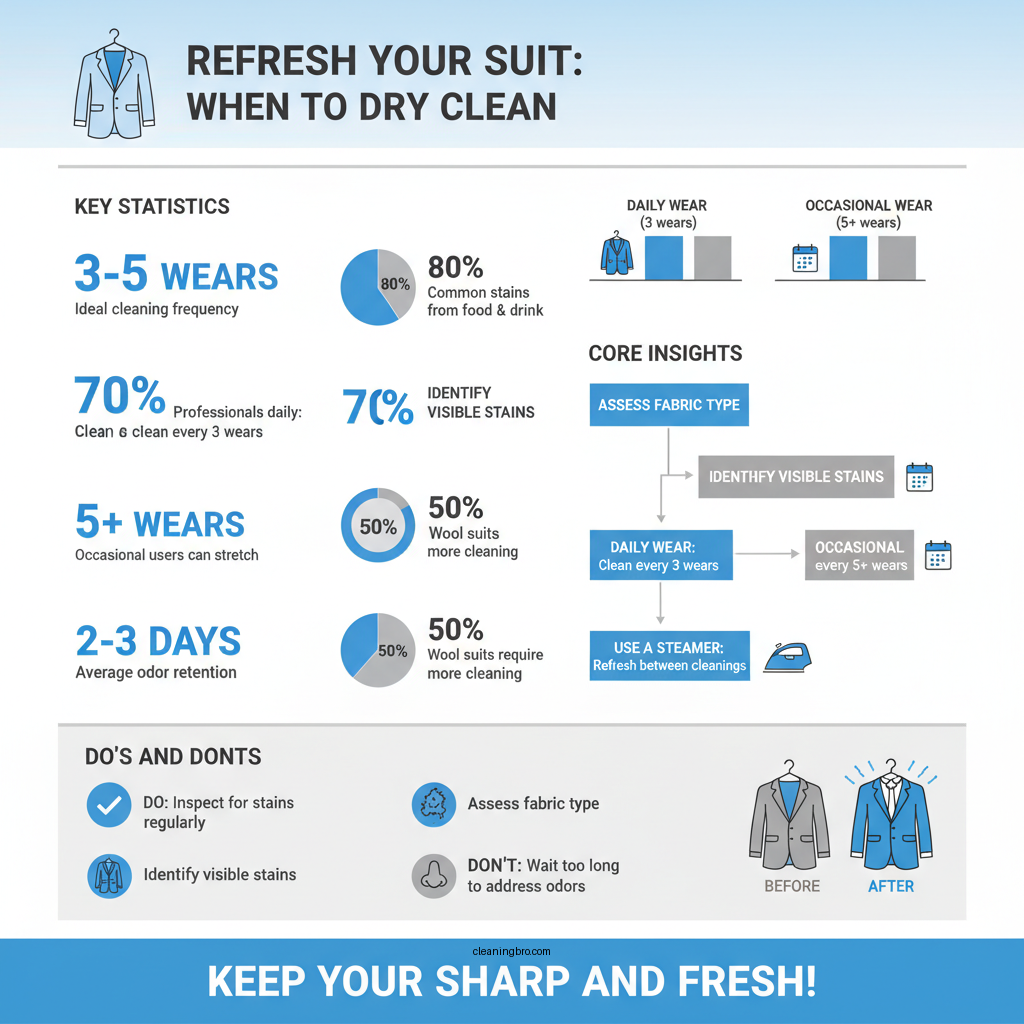

Recognizing when your suit needs cleaning is vital for maintaining its appearance. There are several telltale signs that indicate it’s time for a trip to the dry cleaner. First, visible stains or marks that persist even after brushing or steaming should prompt immediate action. Common culprits include food, drink spills, or sweat marks that can become ingrained in the fabric if left unattended.
Another significant indicator is unpleasant odors. Even after airing out your suit, if it still carries a scent, that’s a clear sign that cleaning is necessary. Regularly examining your suit for these signs can help you maintain its pristine condition, ensuring you always look professional and polished.
Frequency Based on Usage
The frequency of dry cleaning your suit is heavily influenced by how often you wear it. For individuals who wear suits daily, such as corporate professionals or those in formal environments, more frequent cleaning is advisable. In such cases, a cleaning cycle of every 3 wears is often appropriate to combat accumulated dirt and odors.
Conversely, if you reserve your suit for special occasions or events, you can stretch the cleaning interval to every 5 or more wears. In between professional cleanings, consider light cleaning methods. Using a fabric steamer can be an excellent way to refresh your suit, helping to eliminate wrinkles and minor odors without the harshness of dry cleaning.
Best Suit Fabrics and Recommended Cleaning Frequency
| # | Fabric Type | Recommended Cleaning Frequency | Durability |
|---|---|---|---|
| 1 | Wool | Every 3 wears | High |
| 2 | Cotton | Every 5 wears | Medium |
| 3 | Silk | Every 3 wears | Low |
| 4 | Linen | Every 4 wears | Medium |
| 5 | Synthetic Blends | Every 6 wears | High |
| 6 | Tweed | Every 4 wears | High |
| 7 | Houndstooth | Every 5 wears | Medium |
Seasonal Considerations
Seasonal changes can also influence how often you should dry clean your suit. For instance, during the winter months, suits may experience heavier use due to formal gatherings and holiday events. This increased wear can mean that your winter suits require cleaning more frequently, perhaps even after every few wears, especially if they are subjected to salt stains or moisture from the elements.
On the flip side, suits worn during warmer months may not experience the same level of wear and tear, allowing for a longer interval between cleanings. Additionally, proper storage during off-seasons is critical. Investing in breathable garment bags and hanging your suits can prevent them from wrinkling and maintain their shape, extending the time between necessary cleanings.
Cost and Environmental Impact
Frequent dry cleaning can add up quickly in costs, particularly for high-quality suits that require specialized care. Therefore, it’s imperative to weigh the benefits of regular cleaning against the expense. Many individuals find that maintaining a balance between professional cleaning and DIY maintenance, such as steaming and careful spot cleaning, can help mitigate costs while keeping the suit looking its best.
Moreover, the environmental impact of dry cleaning is becoming increasingly significant. Traditional dry cleaning methods often use harsh chemicals that can be harmful to both the environment and your health. Fortunately, eco-friendly dry cleaning options are emerging, utilizing less harmful substances and techniques that are gentler on fabrics and the environment. When choosing a dry cleaner, consider those that prioritize sustainable practices.
DIY Maintenance Tips
Maintaining your suit between professional cleanings is vital for its longevity. Regular brushing with a soft-bristled suit brush can help remove lint, dust, and dirt particles that accumulate on the fabric. This simple practice can significantly extend the time between dry cleaning appointments.
Using a steam cleaner is another excellent method to freshen up your suit. Steam can help eliminate wrinkles and odors without the need for harsh chemicals or excessive cleaning. Additionally, make it a habit to air out your suit after each wear; simply hanging it in a well-ventilated area can work wonders for maintaining freshness.Professional Cleaning Advice
When it comes to professional cleaning, consulting with your dry cleaner can provide valuable insights tailored to your suit’s specific fabric and wear. Each fabric has different sensitivities, and a knowledgeable cleaner will offer guidance on the best practices for care. Always follow the care labels on your suit, as they provide essential information on how to clean and maintain your garment without causing damage.
Furthermore, consider establishing a relationship with your dry cleaner; they can keep a record of your cleaning history, fabric types, and any special care instructions that may need to be followed. This relationship can lead to better service and more personalized advice.
Maintaining your suit’s appearance is crucial for ensuring it lasts long and looks sharp. By paying attention to the frequency of dry cleaning, the type of fabric, and your usage patterns, you can keep your suit in excellent condition. For best results, remember to seek professional advice tailored to your specific garment. With careful attention and regular maintenance, your suit can remain a staple in your wardrobe for years to come.
Frequently Asked Questions
How often should I dry clean my suit?
It’s generally recommended to dry clean your suit every 3-5 wears, depending on how much you sweat and the conditions in which you wear it. Frequent dry cleaning can damage the fabric, so consider spot cleaning for minor stains and airing out your suit between wears to extend the time between dry cleanings.
What are the signs that my suit needs dry cleaning?
Look for visible stains, odors, or wrinkles that don’t fall out with steaming or brushing. If your suit feels stiff or has lost its shape, that’s also a sign it may need a professional clean. Regular inspection can help maintain the suit’s appearance and longevity.
Why is dry cleaning important for maintaining my suit?
Dry cleaning removes dirt, oils, and stains that regular washing can’t address, preserving the fabric’s integrity and color. It helps prevent the buildup of grime, which can lead to fabric degradation, ensuring your suit remains sharp and professional-looking for longer.
What is the best way to care for my suit between dry cleanings?
To care for your suit between dry cleanings, always hang it on a good-quality wooden hanger in a breathable garment bag. Use a lint roller to remove debris, and steam out wrinkles instead of ironing to avoid damaging the fabric. These practices will help maintain your suit’s appearance and reduce the frequency of dry cleaning.
Which types of suits require more frequent dry cleaning?
Suits made from delicate fabrics like silk or those that are heavily patterned may require more frequent dry cleaning, especially if worn in humid or sweaty conditions. Additionally, suits worn for formal events or in professional settings where they are exposed to food and drink spills should be cleaned more often to maintain their pristine look.
References
- https://www.bbc.com/style/article/20160518-how-to-care-for-your-suit
https://www.bbc.com/style/article/20160518-how-to-care-for-your-suit - https://www.theguardian.com/fashion/2017/oct/27/how-to-care-for-your-suit
https://www.theguardian.com/fashion/2017/oct/27/how-to-care-for-your-suit - https://www.nytimes.com/2017/09/06/fashion/menswear-dry-cleaning-suit.html
https://www.nytimes.com/2017/09/06/fashion/menswear-dry-cleaning-suit.html - https://www.mayoclinic.org/healthy-lifestyle/consumer-health/in-depth/dry-cleaning/art-20045882
https://www.mayoclinic.org/healthy-lifestyle/consumer-health/in-depth/dry-cleaning/art-20045882 - https://www.sciencedirect.com/science/article/pii/S0927538X1830039X
https://www.sciencedirect.com/science/article/pii/S0927538X1830039X - https://www.reuters.com/article/us-fashion-care-idUSKBN16B2SD
https://www.reuters.com/article/us-fashion-care-idUSKBN16B2SD - Google Scholar Google Scholar
https://scholar.google.com/scholar?q=how+often+should+i+dry+clean+my+suit - Google Scholar Google Scholar
https://scholar.google.com/scholar?q=suit+care+dry+cleaning+frequency - Google Scholar Google Scholar
https://scholar.google.com/scholar?q=suit+maintenance+dry+cleaning+recommendations - how often should i dry clean my suit – Search results
https://en.wikipedia.org/wiki/Special:Search?search=how+often+should+i+dry+clean+my+suit