How Long Does Clear Coat Take to Fully Cure?
The curing time for clear coat can range from a few days to several weeks, depending on various factors such as the type of clear coat used, environmental conditions, and application methods. This article explores the intricacies of clear coat curing, helping you understand what affects the process and how to ensure you achieve the best results for your projects.
Understanding Clear Coat Curing
Clear coat serves as a protective layer applied over painted surfaces, enhancing gloss and durability. The curing process is a critical phase where the clear coat transitions from a wet state to a hardened finish. This transformation is primarily a chemical reaction that involves both drying (the evaporation of solvents) and hardening (the formation of a stable film).
Clear coats can be categorized into several types, each with unique properties and curing times:
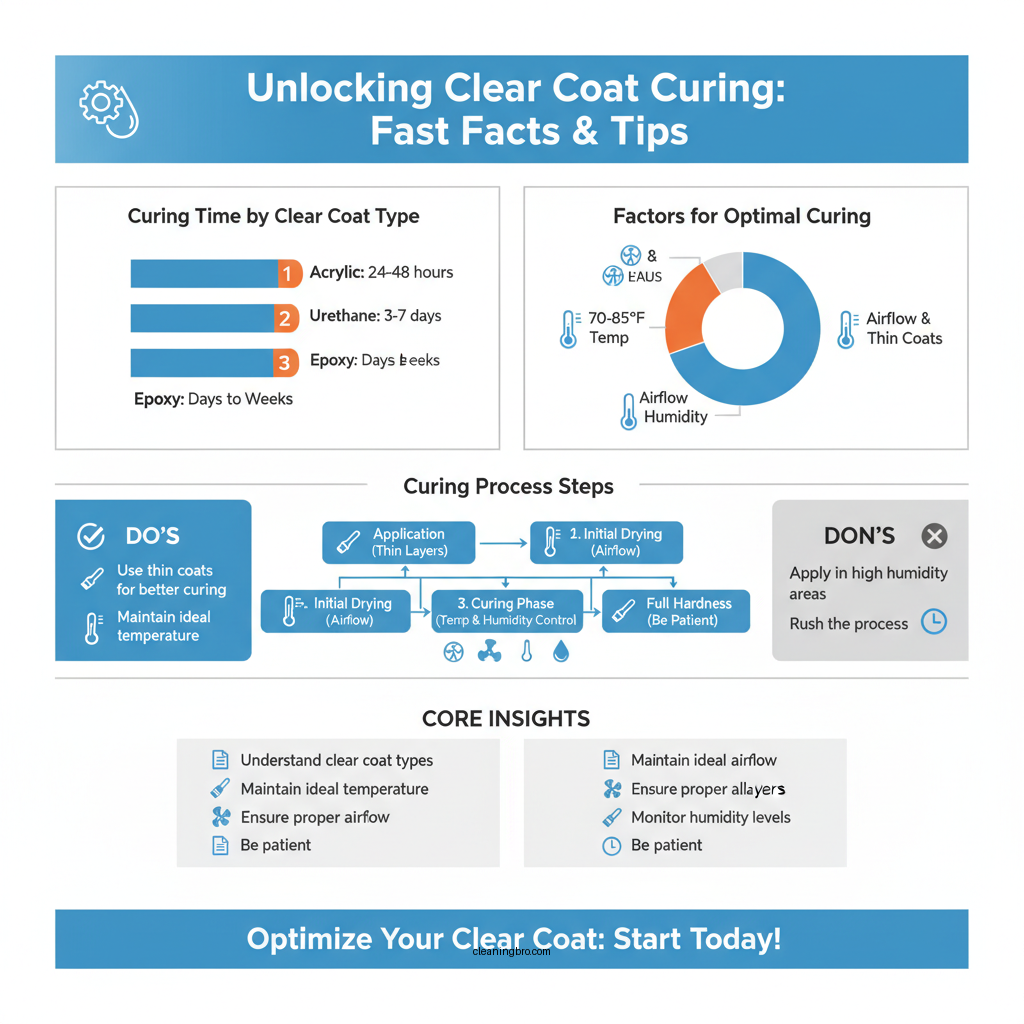
– Acrylic Clear Coats: These are known for their fast drying times and ease of application. They typically cure within 24 to 48 hours, but achieving full hardness may take up to a week.
– Urethane Clear Coats: These are more durable and resistant to chemicals and UV light. They usually require 3 to 7 days to fully cure, with the exact time influenced by the thickness of the application and environmental conditions.
– Epoxy Clear Coats: These are often used in industrial applications due to their exceptional bonding properties. Curing times can vary widely, from several days up to weeks, depending on the specific formulation and application thickness.
Understanding the type of clear coat you are using is essential for estimating curing times accurately.
Factors Influencing Curing Time
Curing times for clear coats can vary significantly based on several environmental and application factors:
– Temperature and Humidity: Warmer temperatures generally accelerate the curing process, while high humidity can prolong it. Ideal conditions are typically between 70°F and 85°F (21°C to 29°C) with low humidity levels. High humidity can introduce moisture that interferes with the drying process, leading to soft or tacky finishes.
– Airflow: Adequate airflow can facilitate faster drying and curing. In enclosed spaces, stagnant air can trap moisture and solvents, extending the time required for the clear coat to cure. Using fans or ensuring proper ventilation can significantly improve curing times.
– Coat Thickness: Applying a thicker layer of clear coat can trap solvents, leading to longer curing times. It’s advisable to apply multiple thin coats rather than one thick layer, which promotes quicker drying and a more even finish.
Typical Curing Times for Different Clear Coats
| Type of Clear Coat | Initial Cure Time | Full Cure Time | Characteristics |
|————————-|——————-|——————-|————————————–|
| Acrylic Clear Coats | 24-48 hours | Up to 1 week | Fast-drying, easy to apply |
| Urethane Clear Coats | 3-7 days | 7-14 days | Durable, UV and chemical resistant |
| Epoxy Clear Coats | 5-10 days | 2-4 weeks | Strong adhesion, industrial use |
Curing Times Overview
In summary, the curing times for clear coats can vary widely based on the type used, environmental conditions, and application methods. Below is a more detailed comparison of common clear coat types:
Curing Times for Common Clear Coats
| # | Type of Clear Coat | Initial Cure Time | Full Cure Time | Best For |
|---|---|---|---|---|
| 1 | Acrylic | 24-48 hours | Up to 1 week | DIY projects |
| 2 | Urethane | 3-7 days | 7-14 days | Automotive finishes |
| 3 | Epoxy | 5-10 days | 2-4 weeks | Industrial applications |
Signs That Your Clear Coat is Cured
Determining whether your clear coat has fully cured is crucial for ensuring the quality of your finish. Here are a few signs to look for:
– Hardness: A properly cured clear coat will feel hard to the touch without any tackiness. You can lightly press a fingernail into the surface; if it leaves a mark, it likely needs more time to cure.
– Glossiness: A well-cured clear coat will exhibit a smooth, glossy finish. Dull or uneven patches may indicate incomplete curing or issues related to application.
– Scratch Test: A simple scratch test can help assess the firmness of the cured surface. If you cannot leave a mark with a fingernail or a small tool, the coat has likely cured properly.
Tips for Speeding Up the Curing Process
If you are eager to expedite the curing process, consider the following strategies:
– Apply Thin Layers: Opt for multiple thin coats instead of one thick application. Each thin layer will dry faster and allow for quicker solvent evaporation.
– Control the Environment: If possible, maintain a temperature of around 75°F (24°C) and reduce humidity levels. Using a dehumidifier can help in humid conditions.
– Enhance Airflow: Utilize fans or heaters to improve air circulation in your workspace. Proper ventilation not only helps with faster drying but also minimizes the risk of dust settling on the wet surface.
Common Mistakes to Avoid
To achieve the best possible results with your clear coat application, be mindful of these common pitfalls:
– Thick Applications: Applying too much clear coat in one go can trap solvents, leading to prolonged curing times and potential imperfections.
– Inadequate Drying Time: Not allowing sufficient time between coats can result in adhesion issues. Always allow each coat to dry before applying the next.
– Ignoring Environmental Conditions: Neglecting the impact of temperature and humidity can lead to unexpected results. Always check the forecast and adapt your workspace accordingly.
By understanding the curing process and the factors that influence it, you can achieve a beautiful, lasting finish on your projects. Monitoring environmental conditions and adhering to application best practices will help ensure optimal curing.
In conclusion, while curing times for clear coats can vary widely, being informed about the specific type of clear coat you are using and the environmental conditions at play can make all the difference. If you are ever uncertain about your clear coat application, don’t hesitate to seek advice or assistance from professionals in the field. Whether you are working on a DIY project or a larger professional endeavor, taking the time to understand and manage the curing process can lead to superior results.
Frequently Asked Questions
How long does it take for clear coat to fully cure on a car?
The clear coat on a car typically takes about 30 days to fully cure, although it can become dry to the touch within a few hours. Factors such as temperature, humidity, and the type of clear coat used can influence the curing time. To ensure the best results, it’s advisable to avoid washing or waxing the vehicle for at least 30 days after application.
What factors affect the curing time of clear coat?
Several factors can affect the curing time of clear coat, including ambient temperature, humidity levels, and airflow. A warmer environment generally speeds up the curing process, while high humidity can slow it down. Additionally, different brands and formulations of clear coat may have varying curing times, so it’s essential to check the manufacturer’s guidelines for specific recommendations.
Why is it important to let clear coat fully cure?
Allowing the clear coat to fully cure is crucial because it ensures maximum durability and protection for the underlying paint. If the clear coat is not allowed to cure completely, it can lead to issues such as hazing, peeling, and decreased gloss over time. Proper curing also helps prevent the formation of imperfections and enhances the overall finish of the vehicle.
What is the best way to speed up the curing process of clear coat?
To speed up the curing process of clear coat, ensure you are working in a well-ventilated area with optimal temperature conditions, ideally between 70°F and 80°F. Utilizing a heat lamp or infrared curing light can also help accelerate the curing process. However, be cautious not to overheat the surface, as this can lead to other problems.
Which clear coat products have the fastest curing times?
Clear coat products with fast-drying or quick-curing formulas are designed to cure faster than standard options. Brands like Dupli-Color and House of Kolor often offer quick-dry clear coats that can be tack-free within an hour and fully cured in a matter of days. Always check product specifications to find the best option that meets your needs for quick turnaround times.
References
- Automotive paint
https://en.wikipedia.org/wiki/Clear_coat - https://pubmed.ncbi.nlm.nih.gov/24717418/
https://pubmed.ncbi.nlm.nih.gov/24717418/ - https://www.sciencedirect.com/topics/materials-science/clear-coat
https://www.sciencedirect.com/topics/materials-science/clear-coat - https://www.ncbi.nlm.nih.gov/pmc/articles/PMC3922227/
https://www.ncbi.nlm.nih.gov/pmc/articles/PMC3922227/ - Google Scholar Google Scholar
https://scholar.google.com/scholar?q=how+long+does+clear+coat+take+to+fully+cure - Google Scholar Google Scholar
https://scholar.google.com/scholar?q=cure+time+for+clear+coat - Paint | Interior, Exterior & Primer | Britannica
https://www.britannica.com/science/paint - The page you were looking for has moved.
https://www.cdc.gov/niosh/topics/chemical.html - https://www.nature.com/articles/s41598-018-25403-3
https://www.nature.com/articles/s41598-018-25403-3 - https://www.theguardian.com/environment/2020/sep/01/what-you-need-to-know-about-paint-chemicals-and-cures
https://www.theguardian.com/environment/2020/sep/01/what-you-need-to-know-about-paint-chemicals-and-cures