How Often Should You Clean a Pool Filter?
Cleaning a pool filter is essential to maintaining clean and clear water, and it should be done every 4 to 6 weeks for optimal performance. However, factors like pool usage and environmental conditions can influence this schedule. Understanding the specific needs of your pool filter type, recognizing the signs of when it requires maintenance, and adhering to recommended cleaning practices can significantly enhance the longevity and efficiency of your pool system. In this article, we will explore the best practices for cleaning your pool filter, signs that indicate it needs maintenance, and tips for keeping your pool in top shape.
Understanding Pool Filter Types
There are three primary types of pool filters: sand filters, cartridge filters, and diatomaceous earth (DE) filters. Each type has unique characteristics and maintenance requirements, influencing how often they should be cleaned.
1. Sand Filters: These filters use sand to trap debris and impurities. They are relatively low-maintenance but require backwashing when the pressure gauge indicates a rise of 8-10 psi above the normal operating level. Typically, sand filters should be cleaned every 4 to 6 weeks, depending on usage.
2. Cartridge Filters: These utilize a pleated cartridge to filter out dirt and debris. They need to be removed and cleaned with a hose or a filter cleaner, and should generally be cleaned every 4 to 6 weeks. However, they may require more frequent cleaning if the pool is heavily used or if there is significant debris.
3. Diatomaceous Earth (DE) Filters: Known for their superior filtration capabilities, DE filters use a powder made from fossilized algae. These require a more involved cleaning process, as the DE powder must be replenished after washing. DE filters usually need cleaning every 4 to 6 weeks but may need more frequent maintenance if the pool is very active or if there are heavy rains causing additional debris.
Understanding the filtration mechanism of each type will help determine the appropriate cleaning frequency and method.
Signs Your Pool Filter Needs Cleaning
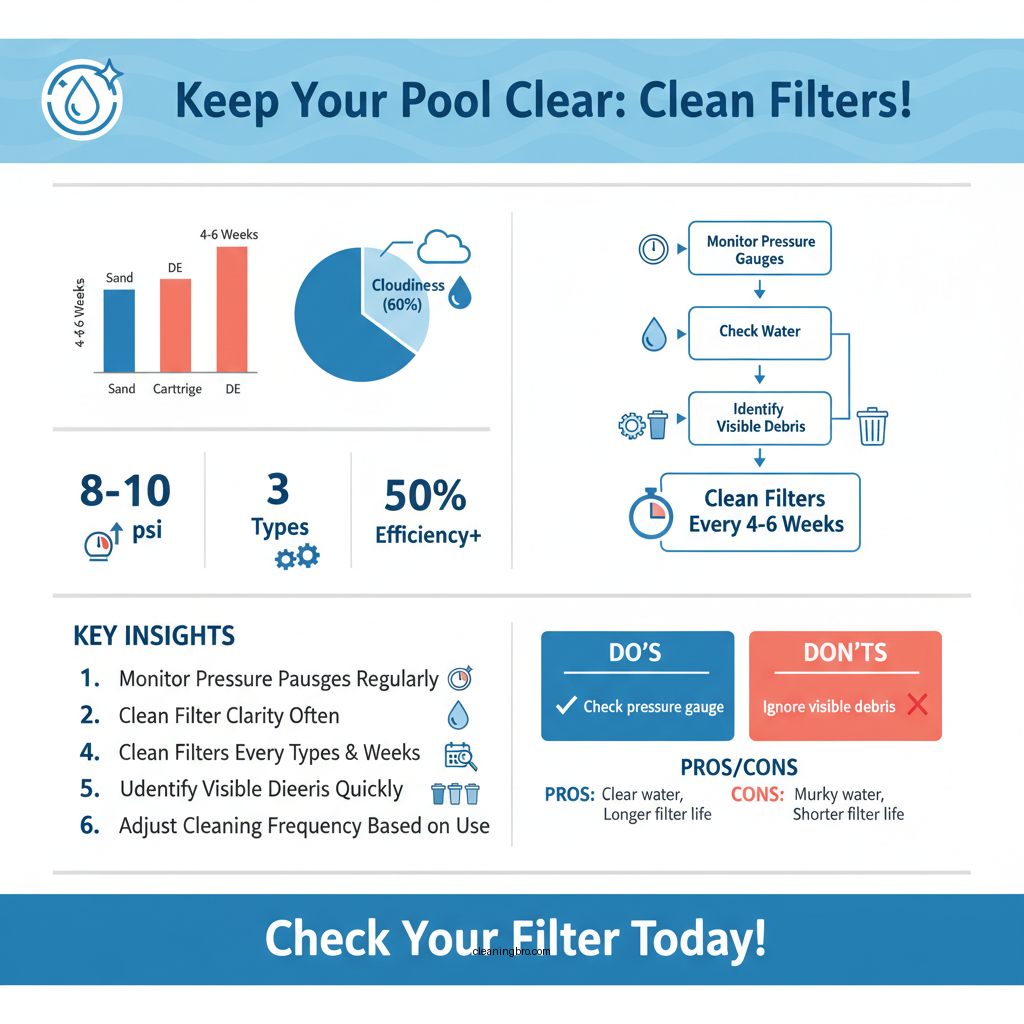
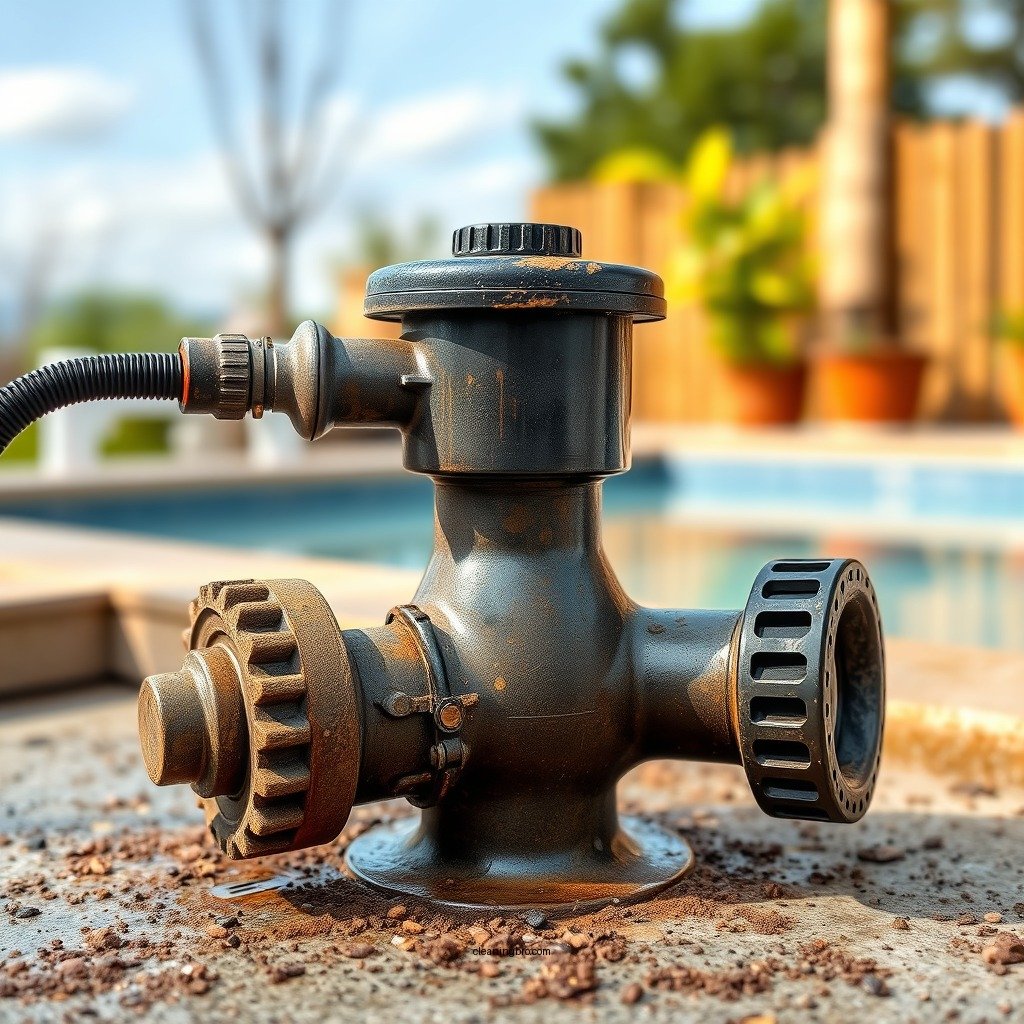
Keeping an eye on your pool filter’s performance is crucial for maintaining water quality. Here are key indicators that signal your filter might need attention:
– Increased Pressure Gauge Readings: A significant rise in the pressure gauge—typically 8-10 psi above the normal range—indicates clogging within the filter, necessitating cleaning.
– Water Clarity Issues: If the water in your pool appears cloudy or murky, it may be a result of a dirty filter failing to capture impurities effectively.
– Visible Debris: If you notice visible debris or dirt in the pool despite the filter running, your filter may be clogged and in need of cleaning.
– Frequent Backwashing: If you find yourself backwashing your sand filter more often than usual, it may be time for a thorough cleaning.
Recognizing these signs early can prevent more severe issues related to water quality and filter efficiency.
Recommended Cleaning Frequency
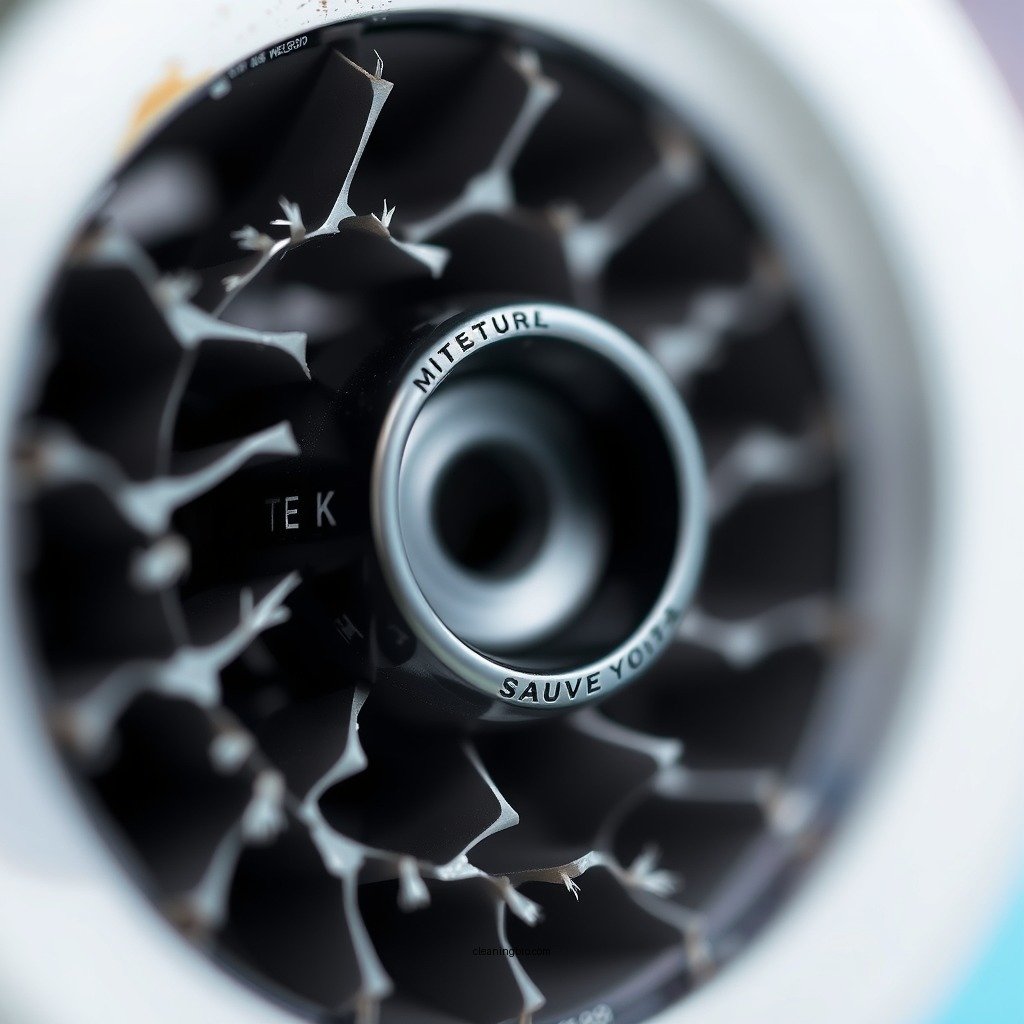
General guidelines suggest cleaning your pool filter every 4 to 6 weeks to keep it functioning at its best. However, several factors can influence this frequency:
– Pool Size: Larger pools typically require more maintenance and may necessitate more frequent cleaning of the filter.
– Pool Usage: Pools that experience heavy usage, such as those frequently used for parties or family gatherings, may need cleaning sooner than the suggested timeframe.
– Environmental Conditions: Areas with heavy foliage, dust, or pollen can lead to increased debris in the pool, thus requiring more frequent filter cleaning.
– Water Chemistry: Imbalanced water chemistry can lead to algae growth and other issues that may burden the filter, prompting more regular maintenance.
Adjusting your cleaning schedule based on these factors will help maintain optimal water quality and filter performance.
Top 7 Pool Filter Types by Maintenance Frequency (2023)
| # | Filter Type | Cleaning Frequency | Typical Lifespan | Cost |
|---|---|---|---|---|
| 1 | Sand Filters | Every 4-6 weeks | 5-10 years | $150-$500 |
| 2 | Cartridge Filters | Every 4-6 weeks | 3-5 years | $100-$300 |
| 3 | DE Filters | Every 4-6 weeks | 5-7 years | $400-$1,000 |
| 4 | Inline Filters | Every 4-6 weeks | 3-5 years | $200-$500 |
| 5 | Vacuum Filters | Every 4-6 weeks | 3-5 years | $150-$400 |
| 6 | Solar Filters | Every 4-6 weeks | 5-10 years | $300-$700 |
| 7 | Suction Filters | Every 4-6 weeks | 5-7 years | $200-$600 |
Steps to Clean Your Pool Filter
Cleaning your pool filter can be straightforward if you follow the proper steps for each filter type. Here are the specific cleaning procedures:
1. Sand Filters:
– Begin by turning off the pump and placing the valve in the backwash position.
– Turn on the pump and allow it to run for 2-3 minutes until the water runs clear in the sight glass.
– Turn off the pump, reset the valve to the filter position, and restart the pump.
2. Cartridge Filters:
– Turn off the pump, remove the cartridge, and rinse it with a hose to dislodge dirt and debris.
– For better results, soak the cartridge in a filter cleaner solution for 1-2 hours, then rinse thoroughly before reassembling.
3. Diatomaceous Earth Filters:
– Turn off the pump and remove the filter grids.
– Rinse the grids thoroughly with water, ensuring all DE powder is removed.
– Reassemble the filter, add fresh DE powder per the manufacturer’s instructions, and restart the pump.
Ensure you wear appropriate safety gear, including gloves and goggles, when cleaning your filter to protect yourself from chemicals and debris.
Maintenance Tips for Longevity
To extend the lifespan of your pool filter and maintain its efficiency, consider these maintenance tips:
– Regularly Check Water Chemistry: Maintaining balanced water chemistry can prevent issues like algae growth that can strain your filter. Test your water weekly and adjust pH, alkalinity, and chlorine levels as needed.
– Schedule Routine Inspections: Regularly inspect your pool equipment, including the filter. Look for signs of wear or damage, and replace any worn parts to avoid larger issues.
– Keep the Pool Area Clean: Regularly clean the pool deck and surrounding areas to minimize debris entering the pool. This can significantly reduce the workload on your filter.
– Monitor Backwash Schedule: If you have a sand filter, keep track of backwashing frequency. Over-backwashing can waste water and reduce filter efficiency.
Following these best practices can enhance the performance of your pool filter and contribute to an overall healthier pool environment.
Common Mistakes to Avoid
While maintaining a pool filter, it’s easy to make mistakes that can lead to inefficiencies. Here are some common pitfalls to avoid:
– Over-Cleaning: While it may seem beneficial to clean your filter frequently, over-cleaning can damage the filter media and reduce its effectiveness. Stick to the recommended cleaning schedule unless signs indicate otherwise.
– Neglecting Other Pool Maintenance Tasks: Focusing solely on the filter while neglecting other aspects of pool care can lead to larger issues. Ensure you maintain proper water chemistry, clean the pool regularly, and check pool equipment.
– Ignoring Manufacturer Instructions: Each filter type has specific maintenance procedures. Always refer to the manufacturer’s guidelines for cleaning and maintenance protocols.
Avoiding these mistakes will help you maintain a healthy and efficient pool environment.
Benefits of a Clean Pool Filter
Maintaining a clean pool filter has numerous advantages that contribute to a better swimming experience:
– Improved Water Clarity and Quality: A clean filter effectively captures impurities, ensuring clear and sparkling water for swimmers.
– Reduced Strain on the Pool Pump: A clean filter allows for optimal water flow, reducing strain on the pump and enhancing its longevity. This can lead to energy savings over time.
– Enhanced Health and Safety: A properly functioning filter helps reduce the risk of waterborne illnesses by maintaining sanitary conditions in the pool.
By prioritizing filter maintenance, you can ensure a healthy and enjoyable swimming environment for your family and guests.
Maintaining a clean pool filter is crucial for the overall health of your swimming pool. By following the outlined cleaning frequency and methods, you can ensure your pool remains a refreshing oasis. Start taking action today by inspecting your filter and adjusting your cleaning schedule as needed. A little effort in maintaining your pool filter can yield significant benefits in water clarity, equipment longevity, and overall enjoyment of your swimming experience.
Frequently Asked Questions
How often should you clean a pool filter?
The frequency of cleaning a pool filter largely depends on usage and the type of filter. Generally, you should clean a cartridge filter every 2-4 weeks, a sand filter every 1-2 months, and a DE filter every 4-6 months. Regular maintenance helps ensure optimal water clarity and reduces the strain on your pool’s circulation system.
What are the signs that your pool filter needs cleaning?
Common signs that your pool filter needs cleaning include decreased water flow, cloudy water, and an increase in the pool’s chemical levels. If the pressure gauge on your filter is significantly higher than normal, it’s also a good indicator that cleaning is necessary. Regularly monitoring these signs helps maintain a healthy swimming environment.
Why is it important to clean your pool filter regularly?
Regular cleaning of your pool filter is essential for maintaining water quality and preventing algae growth. A clean filter efficiently removes debris and contaminants, allowing for better circulation and chemical distribution. Neglecting filter maintenance can lead to expensive repairs and a less enjoyable swimming experience.
Which type of pool filter requires the most frequent cleaning?
Cartridge filters typically require the most frequent cleaning compared to sand and DE filters. They can become clogged faster due to their fine mesh design, which captures smaller particles. To keep your pool water clear and healthy, it’s recommended to clean cartridge filters every 2-4 weeks, especially during peak swimming season.
How can you clean a pool filter effectively?
To clean a pool filter effectively, start by turning off the pump and releasing the pressure. For cartridge filters, remove the cartridge and rinse it with a hose to dislodge debris. For sand filters, backwash the filter until the water runs clear. For DE filters, you will need to replace the DE powder after cleaning. Regular cleaning ensures better filtration and extends the life of your pool equipment.
References
- https://www.poolandspa.com/pool-filter-maintenance
https://www.poolandspa.com/pool-filter-maintenance - https://www.cdc.gov/healthywater/drinking/swimming/index.html
https://www.cdc.gov/healthywater/drinking/swimming/index.html - https://www.sciencedirect.com/topics/earth-and-planetary-sciences/pool-filter
https://www.sciencedirect.com/topics/earth-and-planetary-sciences/pool-filter - Swimming pool | sports | Britannica
https://www.britannica.com/science/swimming-pool - https://www.purdue.edu/hhs/food/pubs/pool-safety.html
https://www.purdue.edu/hhs/food/pubs/pool-safety.html - https://www.nature.com/articles/s41598-019-54819-3
https://www.nature.com/articles/s41598-019-54819-3 - Google Scholar Google Scholar
https://scholar.google.com/scholar?q=how+often+do+you+clean+a+pool+filter - Google Scholar Google Scholar
https://scholar.google.com/scholar?q=pool+filter+maintenance+frequency - Google Scholar Google Scholar
https://scholar.google.com/scholar?q=cleaning+swimming+pool+filters - https://en.wikipedia.org/wiki/Special:Search?search=how+often+do+you+clean+a+pool+filter
https://en.wikipedia.org/wiki/Special:Search?search=how+often+do+you+clean+a+pool+filter