How to Clean Air Stones: A Step-by-Step Guide
Cleaning air stones is essential for maintaining optimal performance in your aquarium or hydroponic system. Regular cleaning helps prevent clogging and ensures efficient aeration. In this guide, you’ll learn effective methods and tips for keeping your air stones clean and functional.
Understanding Air Stones and Their Importance

Air stones, typically made from porous materials such as ceramic or airstone, serve a crucial role in both aquariums and hydroponic systems. They diffuse air into fine bubbles, significantly improving the oxygenation in water, which is vital for the health of fish and plants alike. In an aquarium, proper oxygen levels can reduce stress on aquatic life, while in hydroponics, it supports vigorous plant growth by ensuring that roots receive adequate oxygen.
Over time, however, air stones can accumulate mineral deposits, algae, and other debris, leading to clogging. This not only diminishes their effectiveness but can also lead to decreased oxygen levels in the water, harming your aquatic ecosystem. Thus, understanding how to clean and maintain air stones is critical for anyone involved in aquarium keeping or hydroponic gardening.
Materials Needed for Cleaning Air Stones
To effectively clean air stones, you will need the following materials:
– Distilled Vinegar or Bleach Solution: Both are effective cleaning agents. Distilled vinegar is natural and safe for aquatic life when rinsed properly, while bleach is a stronger disinfectant but requires thorough rinsing to avoid harmful residues.
– Soft Brush or Toothbrush: A soft brush will help scrub the surface of the air stones gently without damaging them.
– Clean Water: For rinsing the air stones after cleaning, it is important to use clean water to ensure that all cleaning agents are completely removed.
Step-by-Step Cleaning Process

Cleaning air stones can be done efficiently by following these steps:
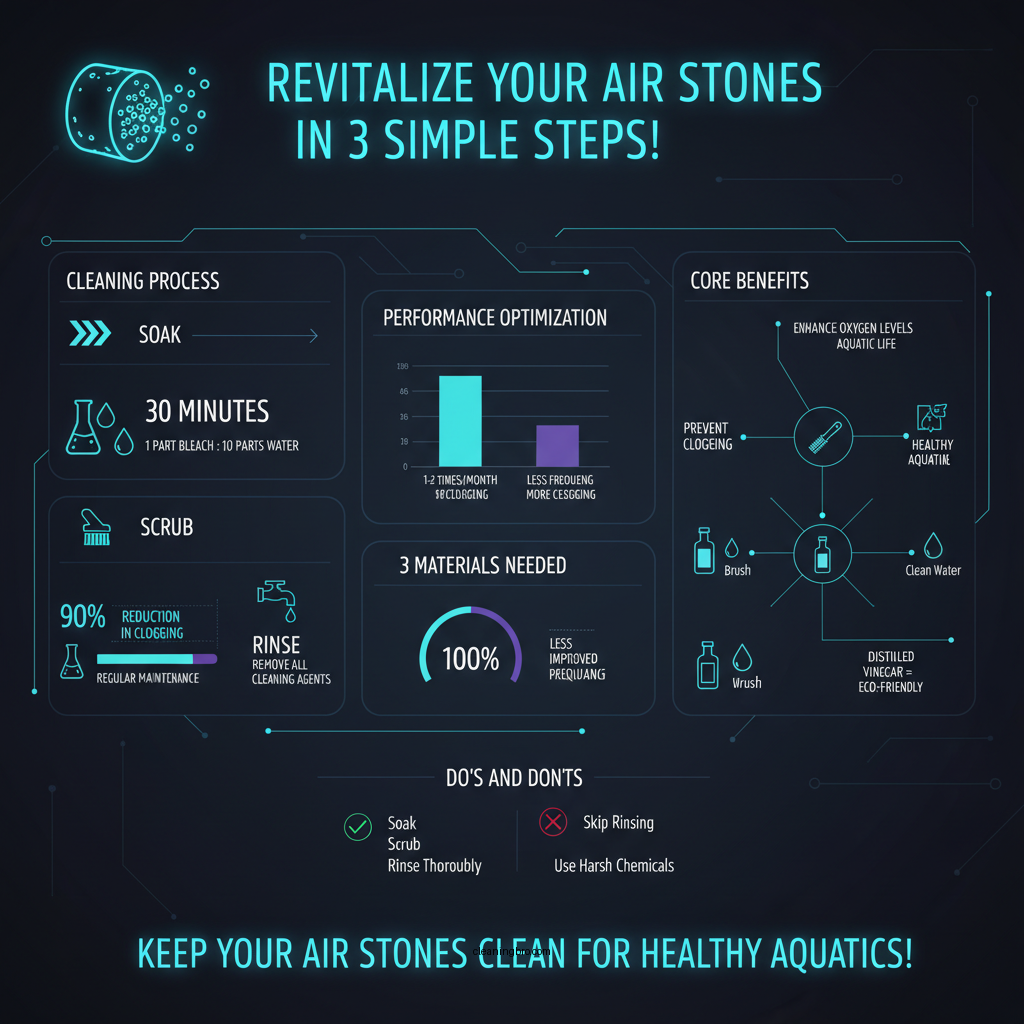
1. Soak the Air Stones: Prepare a cleaning solution using either distilled vinegar or a diluted bleach solution (1 part bleach to 10 parts water). Submerge the air stones in this solution for about 30 minutes. This soaking will help loosen any mineral deposits or algae that have built up on the surface.
2. Scrub the Surface: After soaking, take a soft brush or toothbrush and gently scrub the surface of the air stones. Pay close attention to any areas that appear particularly clogged or discolored. The goal is to remove as much buildup as possible without damaging the porous structure of the stones.
3. Rinse Thoroughly: Once the scrubbing is complete, rinse the air stones thoroughly under clean running water. It is crucial to ensure that all traces of the cleaning solution are washed away to prevent any adverse effects on your aquarium or hydroponic system.
4. Inspect for Damage: After rinsing, take a moment to inspect the air stones for any signs of wear or damage. If they appear excessively worn or still clogged despite cleaning, it may be time to consider replacement.
Rinsing and Drying
After cleaning, rinsing the air stones is a pivotal step that cannot be overlooked. Ensure that they are thoroughly rinsed under clean, running water to remove any remaining cleaning agents. Failing to do this can lead to contamination of your aquarium or hydroponic system.
Once rinsed, allow the air stones to air dry completely before reintroducing them into your system. This drying process helps prevent any moisture-related issues that could arise from storing wet stones.
Top Air Stone Brands and Their Features (2024)
| # | Brand | Material | Bubble Size | Durability |
|---|---|---|---|---|
| 1 | Aquatic Life | Ceramic | Fine | High |
| 2 | Hydrofarm | Mineral | Medium | Medium |
| 3 | Pondmaster | Plastic | Coarse | Low |
| 4 | Tetra | Ceramic | Fine | High |
| 5 | MarineLand | Plastic | Medium | Low |
| 6 | Ideal | Ceramic | Fine | High |
| 7 | Aquaneat | Ceramic | Medium | High |
Preventative Maintenance Tips
To prolong the life and effectiveness of your air stones, consider implementing the following preventative maintenance tips:
– Regular Inspections: Periodically check air stones for signs of clogging, wear, or any other issues. A visual inspection every month can help detect problems before they escalate.
– Routine Cleaning: Set a schedule for cleaning air stones based on usage. For heavily used systems, consider cleaning them every month. For less active setups, cleaning every few months may suffice.
– Water Quality Management: Maintaining good water quality can reduce the buildup of minerals and algae that clog air stones. Regular water changes and using filtration systems can support this effort.
– Replacement Schedule: Depending on the frequency of use and the material of the air stones, it may be advisable to replace them every 6-12 months. Keeping spares on hand can minimize disruption to your system.
Troubleshooting Common Issues
Despite regular cleaning and maintenance, you may encounter some common issues with air stones:
– Persistent Clogging: If your air stones remain clogged even after cleaning, consider increasing the soaking time in your cleaning solution or opting for a more potent cleaning agent. If issues persist, replacement may be necessary.
– Reduced Aeration: If you notice a significant decrease in aeration, check for blockages in the air tubing or pump as well. These could also contribute to inadequate air delivery.
– Algae Growth: If algae growth is a recurring issue, consider adjusting the lighting around your aquarium or hydroponic system, as excessive light can promote algae proliferation.
By being proactive in addressing these issues, you can ensure that your air stones remain effective and your aquatic environment stays healthy.
In summary, keeping your air stones clean is crucial for the health of your aquatic environment. By following the steps outlined in this guide, you can ensure optimal performance and longevity of your air stones. Regular maintenance will not only enhance aeration but also contribute to a healthier ecosystem in your aquarium or hydroponic setup.
Frequently Asked Questions
What are the best methods to clean air stones?
The best methods to clean air stones include soaking them in a vinegar solution or using a brush. Mix equal parts of white vinegar and water, and let the air stones soak for about 30 minutes to remove mineral buildup. After soaking, gently scrub with a soft brush to clear any remaining debris before rinsing thoroughly with clean water.
How often should I clean my air stones?
You should clean your air stones every 4 to 6 weeks, depending on usage and water conditions. Regular cleaning helps maintain optimal air flow and prevents clogging, which can affect the performance of your aquarium or hydroponic system. Monitoring the performance of your air stones can also indicate when cleaning is necessary.
Why is it important to clean air stones regularly?
Cleaning air stones regularly is important to ensure efficient air diffusion and maintain water quality. Over time, debris and mineral deposits can clog the pores of the stones, leading to reduced oxygen levels in the water, which can stress aquatic life. Keeping air stones clean promotes a healthier environment for your fish or plants.
Which cleaning agents are safe for air stones?
Safe cleaning agents for air stones include white vinegar, hydrogen peroxide, or diluted bleach solutions. Vinegar is particularly effective for removing mineral deposits, while hydrogen peroxide can help sanitize the stones without harming your aquarium’s ecosystem. Always rinse thoroughly after cleaning to remove any residual cleaning agents.
What should I do if my air stones are still clogged after cleaning?
If your air stones are still clogged after cleaning, consider replacing them with new ones, as prolonged use may cause irreversible damage. Alternatively, you can try soaking them in a stronger vinegar solution or use a specialized aquarium cleaner designed for removing stubborn deposits. Regular maintenance and replacement can help ensure optimal performance.
References
- Airstone
https://en.wikipedia.org/wiki/Airstone - https://www.ncbi.nlm.nih.gov/pmc/articles/PMC5004501/
https://www.ncbi.nlm.nih.gov/pmc/articles/PMC5004501/ - https://www.sciencedirect.com/topics/agricultural-and-biological-sciences/airstone
https://www.sciencedirect.com/topics/agricultural-and-biological-sciences/airstone - Frontiers | PGsim: A Comprehensive and Highly Customizable Personal Genome Simulator
https://www.frontiersin.org/articles/10.3389/fbioe.2020.00028/full - https://www.bbc.com/news/science-environment-45596735
https://www.bbc.com/news/science-environment-45596735 - https://www.cdc.gov/air/airquality.html
https://www.cdc.gov/air/airquality.html - Google Scholar Google Scholar
https://scholar.google.com/scholar?q=how+to+clean+air+stones - Google Scholar Google Scholar
https://scholar.google.com/scholar?q=maintaining+airstones+in+aquariums - Google Scholar Google Scholar
https://scholar.google.com/scholar?q=cleaning+airstones+best+practices - how to clean air stones – Search results
https://en.wikipedia.org/wiki/Special:Search?search=how+to+clean+air+stones