How to Effectively Clean Limestone Stains
Cleaning limestone stains can be straightforward with the right approach and materials. To effectively remove stains, it’s crucial to use gentle cleaning solutions and tools that won’t damage the stone. In this article, you’ll learn about various methods for tackling limestone stains, ensuring your surfaces remain pristine. By employing the correct cleaning techniques and preventive measures, you can maintain the natural beauty of your limestone surfaces for years to come.
Understanding Limestone and Its Vulnerabilities

Limestone is a sedimentary rock primarily composed of calcium carbonate, which makes it both beautiful and functional in various applications, including flooring, countertops, and outdoor patios. However, its porous nature makes it particularly vulnerable to stains. Because limestone can easily absorb liquids and oils, everyday spills can lead to unsightly discoloration. Common stains include those from food, oil, and water, which can create dark spots or a dull appearance over time. Understanding these vulnerabilities is essential for choosing the right cleaning methods and products that won’t cause further damage to this delicate stone.
Preparing for Cleaning
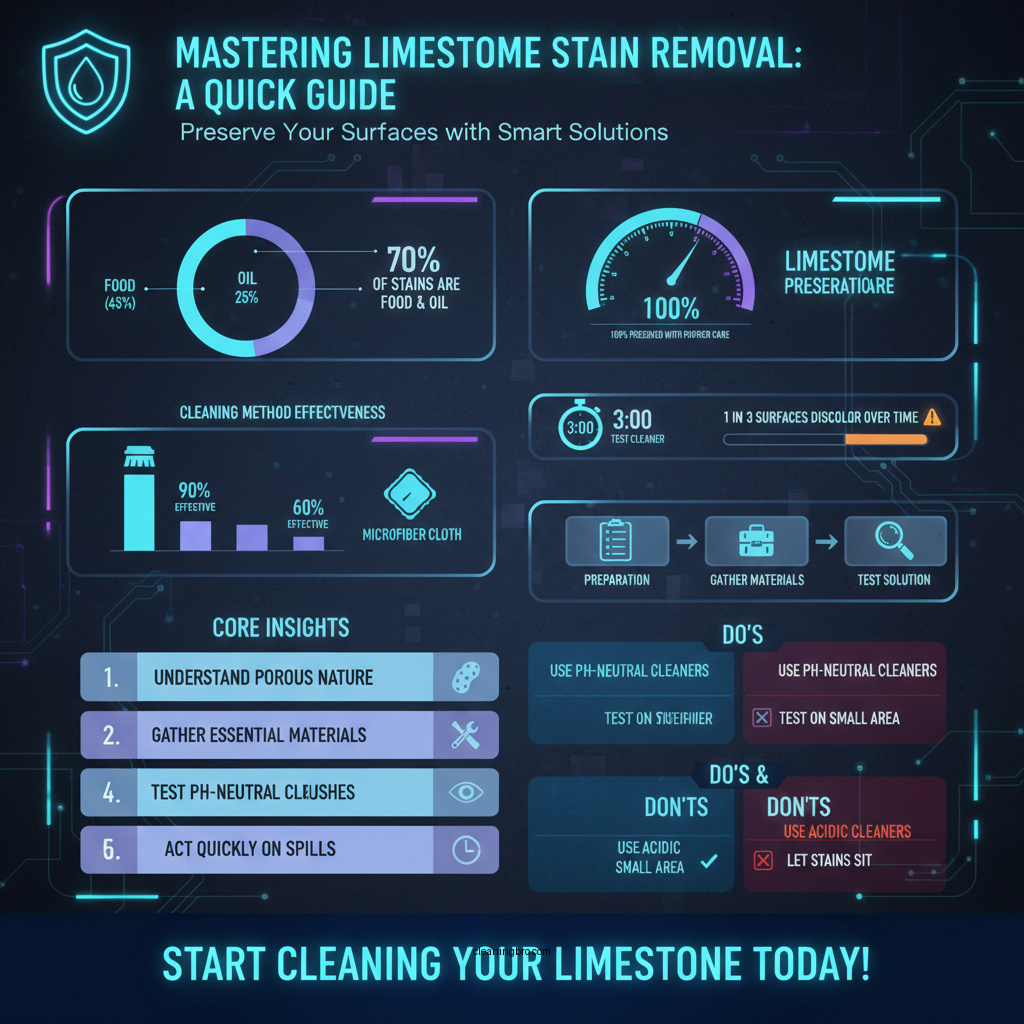

Before diving into the cleaning process, proper preparation is key. Gather all necessary materials to ensure an efficient and effective cleaning session. Essential items include soft brushes, pH-neutral cleaners specifically designed for limestone, and microfiber cloths to avoid scratching the surface. It’s also wise to test any cleaning solution on a small, inconspicuous area first to ensure it won’t harm the stone. This precaution helps avoid unexpected damage and allows you to ascertain the effectiveness of the cleaner on the specific stain you are addressing.
Top 5 Common Limestone Stains and Cleaning Methods
| # | Type of Stain | Recommended Cleaner | Cleaning Method |
|---|---|---|---|
| 1 | Oil | Baking Soda Paste | Apply, let sit, scrub gently |
| 2 | Food | pH-neutral Cleaner | Apply, scrub, rinse |
| 3 | Water | Distilled Water | Blot immediately, rinse |
| 4 | Rust | Commercial Rust Remover | Apply per instructions |
| 5 | Hard Water | Vinegar Solution (Avoid Direct Contact) | Dilute, apply quickly |
Natural Cleaning Solutions

For mild stains, natural cleaning solutions can be incredibly effective. One such solution is a mixture of baking soda and water, which serves as a gentle abrasive that can help lift stains without damaging the limestone. To create this paste, combine a few tablespoons of baking soda with enough water to form a thick consistency. Apply it to the stained area, allow it to sit for a few hours, and then scrub gently with a soft cloth before rinsing. It’s important to note that vinegar should be avoided as it can etch the limestone surface, causing more harm than good. Always opt for natural solutions that are safe for the stone’s delicate composition.
Chemical Cleaners for Stubborn Stains
For stubborn stains that don’t respond to natural cleaning methods, chemical cleaners specifically designed for limestone can be beneficial. Look for pH-neutral cleaners, as acidic or alkaline solutions can further damage the stone. When selecting a cleaner, always read the manufacturer’s instructions carefully to ensure compatibility with limestone. Applying the cleaner with a soft cloth or sponge is advisable, and it’s essential to follow up with thorough rinsing to remove any residual cleaner, which could otherwise lead to further staining over time.
Top 3 pH-Neutral Cleaners for Limestone
| Feature | ⭐ Eco-Friendly Cleaner | Stone Care Cleaner | Marmoleum Cleaner |
|---|---|---|---|
| pH-Neutral | ✅ | ✅ | ✅ |
| Biodegradable | ✅ | ✅ | ❌ |
| Non-Toxic | ✅ | ✅ | ✅ |
| Versatile Use | ✅ | ✅ | ✅ |
| Price Range | $10-$15 | $12-$18 | $8-$14 |
| Ease of Use | ✅ Ready-to-use | ✅ Dilute with water | ✅ Spray application |
| Scented | ✅ Fresh scent | ✅ Neutral scent | ❌ No scent |
| Suitable for Outdoor Use | ✅ | ✅ | ✅ |
| 🏆 Best For | Eco-conscious users | Stone care enthusiasts | Budget-friendly options |
Cleaning Techniques
When it comes to cleaning limestone, technique matters greatly to avoid scratches and further damage. Begin by applying the cleaner of your choice with a soft cloth or sponge, ensuring you scrub gently to avoid harming the surface. For persistent stains, let the cleaner sit on the stained area for a few minutes before scrubbing. This will allow the solution to penetrate and lift the stain more effectively. After scrubbing, it’s essential to rinse thoroughly with clean water to remove all cleaning residue. Finally, dry the area with a microfiber cloth to prevent water spots and maintain the limestone’s luster.
Preventing Future Stains
Prevention is always better than cure, especially when it comes to maintaining limestone surfaces. Regularly sealing limestone surfaces can provide a protective barrier against stains and spills. A good quality sealer can enhance the stone’s natural finish while preventing liquids from penetrating its porous surface. Additionally, cleaning up spills immediately is crucial; use a blotting technique rather than rubbing, as this helps prevent stains from setting in. Simple measures like using coasters under drinks and placing mats under food items can also go a long way in preserving the beauty of your limestone.
When to Seek Professional Help
If you find that stains persist despite your best cleaning efforts, it may be time to consider hiring a professional stone restoration service. Professionals have access to specialized tools and cleaning solutions that can rejuvenate heavily stained or damaged limestone surfaces. They can also provide advice on long-term maintenance strategies to keep your limestone looking its best. Opting for professional help can save you time and ensure that your limestone surfaces are restored to their original beauty without the risk of further damage.
Summarizing these methods, regular maintenance and immediate attention to spills can greatly reduce the occurrence of stains on limestone. By following these steps, you’ll keep your limestone looking beautiful for years to come. Don’t hesitate to try these cleaning techniques or consult a professional if needed!
Frequently Asked Questions
What are the best methods to clean limestone stains?
The best methods to clean limestone stains include using a mixture of warm water and a pH-neutral soap or a specialized limestone cleaner. Avoid acidic cleaners, as they can damage the stone. For tougher stains, a paste of baking soda and water can gently lift the stain without harming the limestone surface.
How do I remove oil stains from limestone?
To remove oil stains from limestone, sprinkle baking soda directly onto the stain and cover it with a damp cloth or plastic wrap for several hours. The baking soda will absorb the oil, making it easier to wipe away. Afterward, rinse the area with warm water and a mild detergent to ensure all residue is removed.
Why is it important to use a pH-neutral cleaner on limestone?
It is crucial to use a pH-neutral cleaner on limestone because acidic or alkaline cleaners can etch the surface and cause irreversible damage. Limestone is a sedimentary rock that reacts negatively to harsh chemicals, so a gentle cleaner helps maintain its appearance and longevity while effectively removing stains.
Which products should I avoid when cleaning limestone?
When cleaning limestone, you should avoid any products containing vinegar, lemon juice, or bleach, as these can damage the stone. Additionally, steer clear of abrasive cleaners or scouring pads that may scratch the surface. Stick to pH-neutral or specifically formulated limestone cleaners for safe and effective cleaning.
How can I prevent future stains on limestone surfaces?
To prevent future stains on limestone surfaces, regularly seal the stone with a high-quality stone sealer that provides a protective barrier against spills and stains. Additionally, promptly clean up any spills, especially acidic substances like citrus juices or wine, to minimize the risk of staining. Regular maintenance and gentle cleaning will help preserve the limestone’s beauty.
References
- Limestone | Characteristics, Formation, Texture, Uses, & Facts | Britannica
https://www.britannica.com/science/limestone - https://www.health.ny.gov/environmental/water/drinking/cleaning_stains.htm
https://www.health.ny.gov/environmental/water/drinking/cleaning_stains.htm - https://www.nature.com/articles/s41598-020-67681-5
https://www.nature.com/articles/s41598-020-67681-5 - https://www.sciencedirect.com/topics/earth-and-planetary-sciences/limestone
https://www.sciencedirect.com/topics/earth-and-planetary-sciences/limestone - https://www.thoughtco.com/how-to-clean-limestone-4175327
https://www.thoughtco.com/how-to-clean-limestone-4175327 - Google Scholar Google Scholar
https://scholar.google.com/scholar?q=cleaning+limestone+stains - Google Scholar Google Scholar
https://scholar.google.com/scholar?q=limestone+stain+removal - Google Scholar Google Scholar
https://scholar.google.com/scholar?q=how+to+clean+limestone - https://www.wikiwand.com/en/Limestone
https://www.wikiwand.com/en/Limestone - Google Scholar Google Scholar
https://scholar.google.com/scholar?q=how+to+clean+limestone+stains