
Cleaning chemicals out of plastic barrels can be effectively done using a combination of thorough rinsing, appropriate cleaning agents, and proper safety measures. In this guide, you will learn the step-by-step process to ensure your barrels are free from harmful residues and ready for safe reuse. Properly cleaning these barrels not only extends their lifespan but also ensures that they can be safely repurposed for various applications without the risk of contaminating new contents.
Understand the Type of Chemicals

Before you begin the cleaning process, it’s crucial to understand the type of chemicals that were previously stored in the barrel. Different chemicals require different cleaning approaches to ensure complete removal and safety. For instance, organic solvents may leave behind residues that necessitate specific cleaning agents, while acids and bases might require neutralization.

To identify the chemicals, refer to any available safety data sheets (SDS) associated with the contents. These documents provide essential handling and cleaning instructions, including personal protective equipment (PPE) recommendations. Knowing the nature of the chemicals will guide you in selecting the appropriate cleaning methods and agents, ensuring that you handle the barrels safely and effectively.
Gather Necessary Supplies
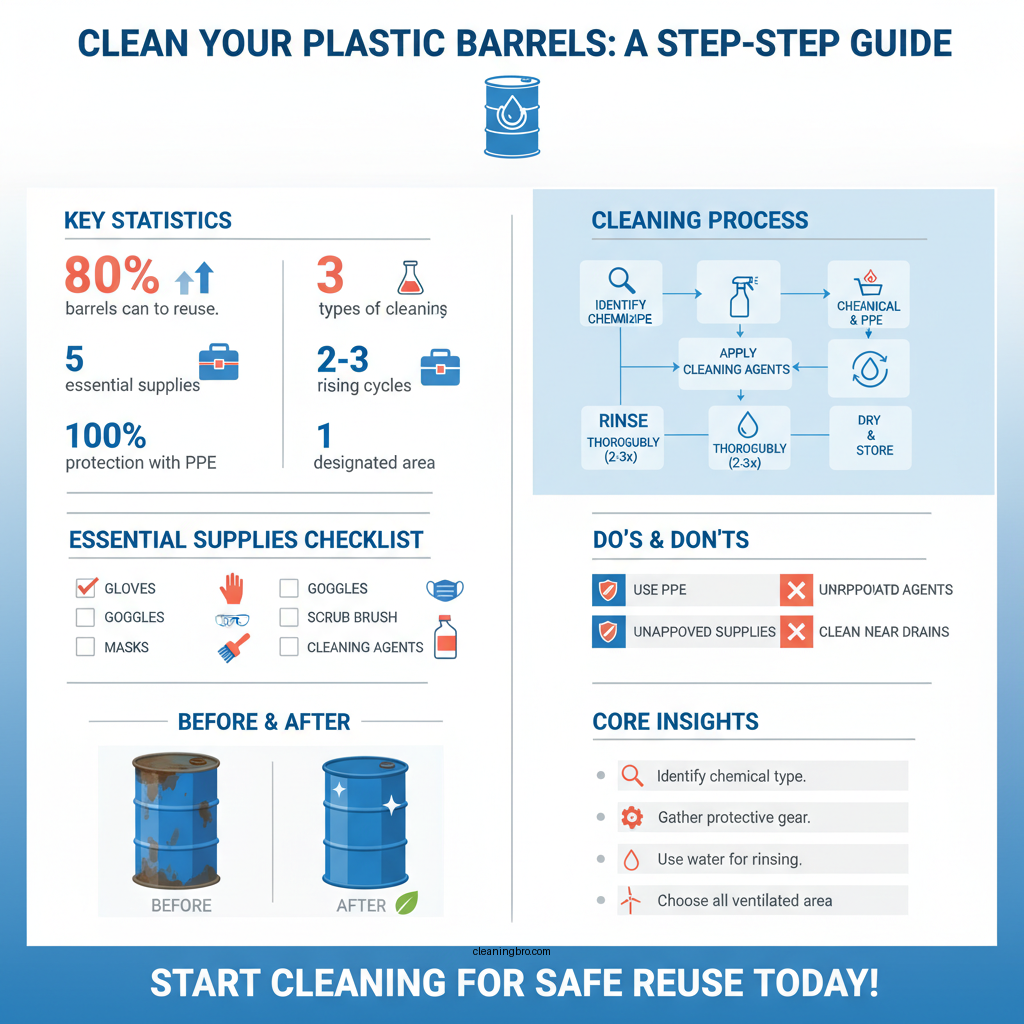

Once you have identified the chemicals, gather the necessary cleaning supplies. The list includes:
– Protective Gear: Gloves, goggles, and masks should be worn to protect yourself from chemical exposure.
– Cleaning Agents: Select cleaning agents that are compatible with the types of chemicals previously stored in the barrel. Options include vinegar, baking soda, or commercial degreasers specifically designed for chemical residues.
– Scrubbing Tools: A sturdy scrub brush with stiff bristles and any additional scrubbing tools (like sponges or cloths) for thorough cleaning.
– Water Source: Ensure you have access to a water supply, preferably with a hose or pressure washer to facilitate rinsing.
– Designated Cleaning Area: Choose a well-ventilated area away from drains or soil to prevent contamination of the environment.
Having these supplies on hand will streamline your cleaning process and enhance safety.
Rinse the Barrel Thoroughly
Begin the cleaning process by thoroughly rinsing the barrel with water to dilute and wash away any remaining chemical residues. This step is essential for reducing the concentration of harmful substances before applying any cleaning agents. Using a hose or a pressure washer is recommended, as it can provide a more effective rinse by reaching all surfaces inside the barrel.
Fill the barrel with water, slosh it around, and then drain it. Repeat this process several times until the water runs clear. If you have access to a pressure washer, it can significantly expedite this initial rinsing phase by dislodging stubborn residues and ensuring every nook and cranny is addressed.
Top 7 Cleaning Agents for Plastic Barrels (2023)
| # | Cleaning Agent | Effectiveness | Toxicity Level | Cost |
|---|---|---|---|---|
| 1 | Vinegar | Moderate | Low | $2 |
| 2 | Baking Soda | High | Low | $1 |
| 3 | Bleach | Very High | High | $5 |
| 4 | Commercial Degreaser | Very High | Medium | $10 |
| 5 | Hydrogen Peroxide | Moderate | Low | $3 |
| 6 | Soap and Water | Moderate | Low | $1 |
| 7 | Acid Neutralizer | High | High | $8 |
Use Appropriate Cleaning Agents
After rinsing, it’s time to apply the cleaning agents. The choice of cleaning agent is crucial and should be based on the chemicals previously stored in the barrel. For example, if the barrel was used for oils or greases, a commercial degreaser would be appropriate. For residues from non-toxic substances, you might opt for natural cleaning agents like vinegar or baking soda.
When using these agents, follow the manufacturer’s instructions carefully. Apply the cleaning agent generously inside the barrel, ensuring that all surfaces are covered. For stubborn residues, you may need to allow the cleaning agent to sit for a period, enabling it to break down the chemical residues effectively.
Scrub and Clean
With the cleaning agent applied, use a scrub brush to thoroughly clean the interior surfaces of the barrel. Pay special attention to corners and crevices, as these areas are often where residues can linger. Ensure that you scrub the sides and bottom of the barrel effectively to remove all traces of the previous contents.
Once you have scrubbed the interior, rinse the barrel again with water to remove any leftover cleaning solution. This step is essential, as leaving any cleaning agents in the barrel can lead to contamination of future contents.
Top 3 Cleaning Agents for Plastic Barrels
| Feature | ⭐ Vinegar | Baking Soda | Commercial Degreaser |
|---|---|---|---|
| Effectiveness | ✅ Moderate | ✅ High | ✅ Very High |
| Toxicity Level | Low | Low | Medium |
| Cost | $2 | $1 | $10 |
| Ease of Use | Easy | Moderate | Moderate |
| Environmental Impact | Low | Low | Medium |
| Availability | Widely Available | Widely Available | Available at Hardware Stores |
| Multi-surface Use | ✅ | ✅ | ✅ |
| Safe for Food Containers | ✅ | ✅ | ❌ |
| Best for Stains | ✅ | ✅ | ✅ |
| 🏆 Best For | Eco-friendly cleaning | General purpose use | Heavy-duty cleaning |
Inspect and Dry the Barrel
After scrubbing and rinsing, the next step is to inspect the barrel for any remaining chemical residues or odors. A thorough inspection will help ensure that no traces of the previous contents are left behind. If you still detect odors or see residues, repeat the cleaning and rinsing process as necessary.
Once you are satisfied that the barrel is clean, allow it to dry completely before storing it or using it again. This step is crucial to prevent mildew or chemical reactions that can occur from moisture being trapped inside the barrel. Ideally, place the barrel in a well-ventilated area or in the sun to facilitate the drying process.
Dispose of Waste Properly
Finally, it is imperative to dispose of any leftover cleaning solutions and residues responsibly. Collect all waste materials, including rinsate water and any cleaning agents used, and ensure they are disposed of according to local hazardous waste guidelines. Many communities have specific regulations regarding the disposal of chemical waste, so be sure to follow these rules to avoid legal issues and environmental contamination.
Do not pour chemicals down the drain or throw them in regular trash bins, as this can lead to environmental hazards. Instead, transport waste to designated disposal facilities that handle hazardous materials.
Cleaning chemicals out of plastic barrels is crucial for safe reuse and storage. By following these steps, you can ensure your barrels are clean and ready for future use. Remember to always prioritize safety and proper disposal methods when handling chemical residues. For more tips on maintaining your storage containers, check our other articles or subscribe for updates!
Frequently Asked Questions
What is the best method to clean chemicals out of plastic barrels?
The best method to clean chemicals out of plastic barrels involves rinsing the barrel with water and using a suitable cleaning solution. First, empty the barrel completely and rinse it with water to remove residual chemicals. Then, use a mixture of dish soap and warm water or a specialized barrel cleaning solution, scrub the interior, and rinse thoroughly until all soap is gone.
How can I safely dispose of chemicals from plastic barrels before cleaning?
To safely dispose of chemicals from plastic barrels, first check local regulations regarding hazardous waste disposal. If possible, transfer the chemicals to a compatible container for safe transport to a designated disposal facility. Always wear protective gear, such as gloves and goggles, and ensure proper ventilation while handling chemicals.
Why is it important to thoroughly clean plastic barrels that previously contained chemicals?
Thoroughly cleaning plastic barrels that previously contained chemicals is crucial to prevent contamination of future contents and to ensure safety. Residual chemicals can react with new substances, potentially causing hazardous situations. Additionally, cleaning helps maintain the integrity of the barrel material and prolongs its usability.
Which cleaning agents are effective for removing stubborn residues from plastic barrels?
Effective cleaning agents for removing stubborn residues from plastic barrels include vinegar, baking soda, and commercial degreasers. Vinegar is a natural disinfectant that can break down chemical residues, while baking soda acts as a mild abrasive. For more persistent residues, a commercial degreaser specifically designed for plastic can provide powerful cleaning action.
What precautions should I take when cleaning chemicals out of plastic barrels?
When cleaning chemicals out of plastic barrels, always wear appropriate protective gear, including gloves, goggles, and a mask to avoid inhaling fumes. Ensure you work in a well-ventilated area to minimize exposure to any harmful vapors. Additionally, never mix cleaning agents, as this can create dangerous reactions, and always follow the manufacturer’s instructions for both the barrel and the cleaning products used.
References
- Plastic container
https://en.wikipedia.org/wiki/Plastic_container - https://www.cdc.gov/niosh/docs/2004-100/default.html
https://www.cdc.gov/niosh/docs/2004-100/default.html - https://www.epa.gov/wastes/managing-used-plastic-containers
https://www.epa.gov/wastes/managing-used-plastic-containers - https://www.sciencedirect.com/topics/earth-and-planetary-sciences/plastic-containers
https://www.sciencedirect.com/topics/earth-and-planetary-sciences/plastic-containers - https://www.nature.com/articles/s41598-018-34583-9
https://www.nature.com/articles/s41598-018-34583-9 - https://www.ncbi.nlm.nih.gov/pmc/articles/PMC6838915/
https://www.ncbi.nlm.nih.gov/pmc/articles/PMC6838915/ - Plastic | Composition, History, Uses, Types, & Facts | Britannica
https://www.britannica.com/science/plastic - Google Scholar Google Scholar
https://scholar.google.com/scholar?q=cleaning+chemicals+out+of+plastic+barrels - Google Scholar Google Scholar
https://scholar.google.com/scholar?q=how+to+clean+plastic+containers+chemicals - Google Scholar Google Scholar
https://scholar.google.com/scholar?q=removing+chemical+residues+from+plastic+barrels
