How to Clean a Rifle Barrel: Step-by-Step Guide
Cleaning a rifle barrel is essential for maintaining accuracy and prolonging the life of your firearm. A clean barrel ensures that your shots remain consistent and effective, preventing the negative impacts of fouling and corrosion. This guide outlines the necessary steps and tools required to keep your rifle barrel in optimal condition, helping you to achieve the best performance possible.
Gather Necessary Tools and Materials
To effectively clean your rifle barrel, start by gathering the right tools and materials. Here’s a list of essential items you will need:
– Cleaning Rod: Choose a cleaning rod that is compatible with your rifle caliber. A good quality rod will prevent damage to the rifling in the barrel.
– Bore Brushes: Select brushes made of brass or nylon that fit your rifle’s caliber to effectively remove fouling.
– Cleaning Solvent: Use a high-quality cleaning solvent designed specifically for firearms to break down carbon and lead deposits.
– Gun Oil: A lubricant is needed to protect the barrel from rust and corrosion after cleaning.
– Patches: Cotton patches or cleaning swabs are used to apply the solvent and oil to the barrel.
– Bore Snake: While optional, a bore snake can be a quick and effective way to clean the barrel between more thorough cleanings.
Prepare Your Workspace
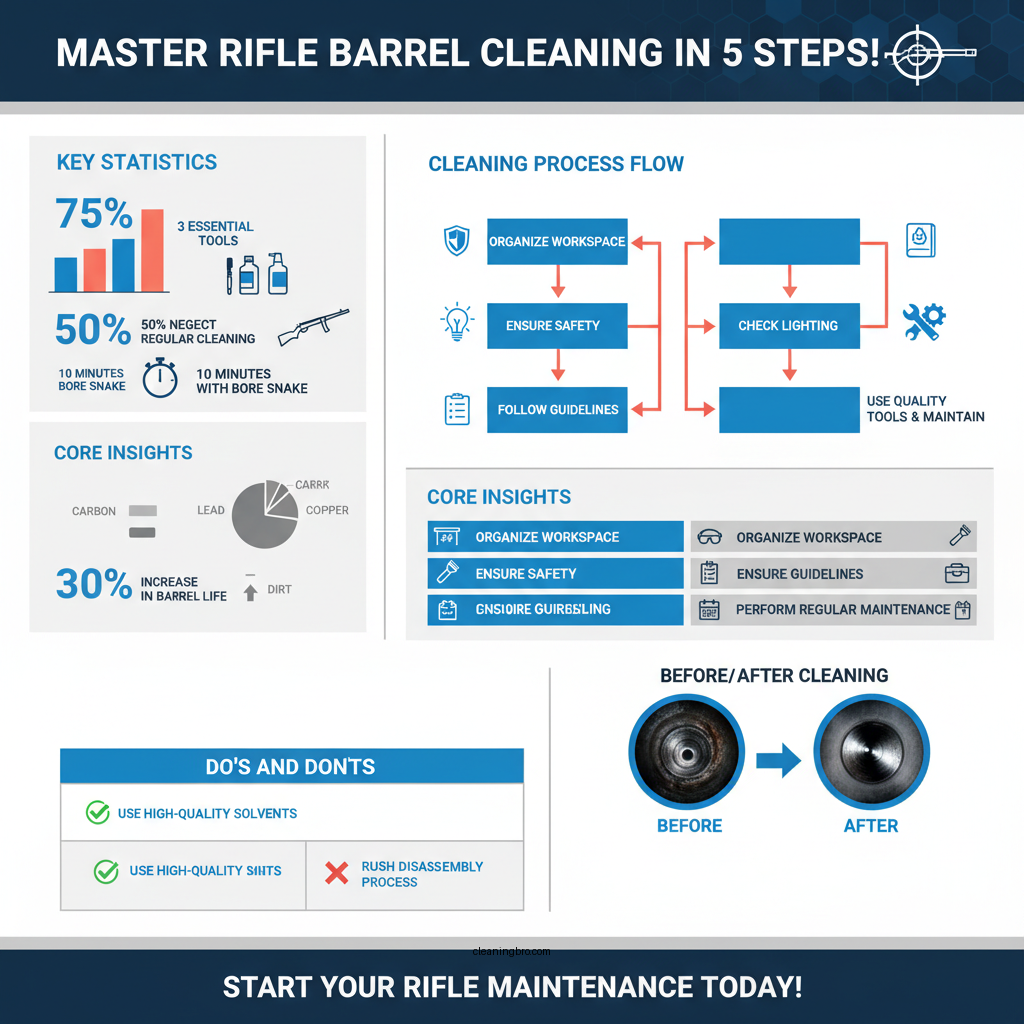

Before beginning the cleaning process, it’s vital to prepare your workspace. Here are key steps to follow:
– Clean and Organized Area: Ensure your workspace is free from dust and clutter. A clean area helps prevent contaminants from entering your barrel during the cleaning process.
– Safety First: Set up a safe area to handle your rifle. Use a designated cleaning mat, which also protects your surfaces and keeps cleaning materials organized.
– Good Lighting: Ensure your workspace is well-lit to help you see any potential fouling or wear in the barrel.
Disassemble the Rifle
Disassembling your rifle correctly is crucial for thorough cleaning:
– Manufacturer’s Guidelines: Always follow the specific disassembly instructions provided by the manufacturer. This ensures you do not damage any components.
– Remove Key Parts: Typically, you will need to remove the bolt, magazine, and any other components that obstruct access to the barrel. This allows for a more comprehensive cleaning process.
Top 7 Cleaning Solvents for Rifle Barrels (2023)
| # | Product Name | Type | Features | Price |
|---|---|---|---|---|
| 1 | Hoppe’s No. 9 | Solvent | Deep cleaning, odorless | $10.99 |
| 2 | Break-Free CLP | Cleaner | Lubricates, protects | $8.49 |
| 3 | M-Pro 7 | Solvent | Non-toxic, safe | $12.99 |
| 4 | Ballistol | Cleaner | Multi-purpose, biodegradable | $9.99 |
| 5 | Hoppes Gun Oil | Lubricant | Protects against rust | $5.99 |
| 6 | Outers Nitro Solvent | Solvent | Quick cleaning | $7.99 |
| 7 | Remington Rem Oil | Lubricant | Long-lasting protection | $6.49 |
Clean the Barrel
Now that your rifle is disassembled, you can begin the cleaning process:
– Applying Cleaning Solvent: Take your bore brush and apply a liberal amount of cleaning solvent to it. Insert it carefully into the barrel from the chamber end.
– Scrubbing the Barrel: Use a back-and-forth motion, scrubbing the length of the barrel thoroughly. This action helps to dislodge any fouling or residue that has built up over time.
– Using Patches: After scrubbing, switch to clean patches. Push a clean patch through the barrel using the cleaning rod. Repeat this step, replacing the patch until it comes out clear, indicating that the barrel is clean.
Lubricate the Barrel
After you have cleaned the barrel, it’s crucial to protect it from future wear and corrosion:
– Applying Gun Oil: Using a clean patch, apply a light coat of gun oil to the bore. This step is essential as it forms a protective layer against rust.
– Even Distribution: Ensure the oil is spread evenly throughout the bore. This helps in maintaining the barrel’s integrity and performance over time.
Reassemble the Rifle
Once the barrel is cleaned and lubricated, proceed to reassemble your rifle:
– Careful Reassembly: Reattach the bolt and magazine, ensuring each component is seated correctly according to the manufacturer’s instructions.
– Function Check: After reassembly, perform a function check. This ensures that all parts are operating as intended and that your rifle is ready for use.
Top 3 Rifle Barrel Cleaning Kits
| Feature | ⭐ Otis Elite | Hoppe’s 9 | Birchwood Casey |
|---|---|---|---|
| Price | $59.99 | $29.99 | $19.99 |
| Bore Brush Included | ✅ Yes | ✅ Yes | ✅ Yes |
| Solvent Included | ✅ Yes | ✅ Yes | ❌ No |
| Oil Included | ✅ Yes | ❌ No | ✅ Yes |
| Cleaning Rod Length | 30 inches | 26 inches | 24 inches |
| Patches Included | ✅ Yes | ✅ Yes | ❌ No |
| Weight | 1.5 lbs | 1.2 lbs | 0.8 lbs |
| Carrying Case | ✅ Yes | ❌ No | ✅ Yes |
| User Reviews | ★★★★☆ | ★★★☆☆ | ★★★☆☆ |
| 🏆 Best For | Serious shooters | Weekend hobbyists | Budget users |
Regular Maintenance Tips
Maintaining your rifle barrel goes beyond just cleaning. Here are some tips to ensure longevity and performance:
– Frequent Cleaning: Clean your rifle barrel after each use or every few sessions, depending on how frequently you shoot. A clean barrel will enhance accuracy and reliability.
– Proper Storage: Store your rifle in a dry place to prevent moisture buildup, which can lead to rust and other corrosive damage.
– Routine Inspections: Regularly check your cleaning supplies and monitor the condition of your barrel. Look for signs of wear or fouling that may require immediate attention.
In summary, adhering to a routine cleaning and maintenance schedule will significantly enhance your rifle’s performance and lifespan. By investing a little time and effort into proper cleaning techniques, you’ll ensure that your firearm is ready for any situation.
Maintaining a clean rifle barrel is crucial for optimal performance and accuracy. By following these steps, you ensure your rifle is in top condition for your next outing. Regular cleaning, proper lubrication, and thoughtful storage practices will keep your rifle functioning smoothly, allowing you to focus on your shooting skills rather than equipment issues.
Frequently Asked Questions
What is the best method to clean a rifle barrel?
The best method to clean a rifle barrel involves using a combination of cleaning solvents, brushes, and patches. Start by applying a quality bore solvent to a cleaning patch and run it through the barrel. Follow this with a bronze or nylon brush to remove fouling, then use dry patches until they come out clean. Regular cleaning after use will maintain accuracy and prolong the life of your rifle.
How often should I clean my rifle barrel?
You should clean your rifle barrel after every shooting session or at least every few hundred rounds, depending on the type of ammunition used and the conditions in which you shoot. If you use corrosive ammunition or shoot in wet conditions, more frequent cleaning is necessary to prevent rust and fouling buildup. Keeping a consistent cleaning schedule ensures optimal performance and accuracy.
Why is it important to clean a rifle barrel?
Cleaning a rifle barrel is important because it removes carbon residue, copper fouling, and other debris that can affect accuracy and performance. A dirty barrel can lead to increased wear and tear, decreased velocity, and potential safety hazards. Regular cleaning helps maintain the rifle’s integrity, ensuring reliable functionality and extending its lifespan.
Which products are recommended for cleaning a rifle barrel?
Recommended products for cleaning a rifle barrel include high-quality bore solvents, brass or nylon cleaning brushes, and cotton cleaning patches. Additionally, using a bore snake can simplify the process for quick cleanings. Brands like Hoppe’s, Break-Free, and CLP provide effective solutions that are widely trusted by gun owners for maintaining their rifles.
How do I know if my rifle barrel needs cleaning?
You can tell if your rifle barrel needs cleaning by inspecting the bore for visible fouling or discoloration and by checking the accuracy of your shots. If you notice a significant drop in performance or if the rifle starts to have feeding issues, it’s time for a thorough cleaning. Additionally, if you can see residues or patches of copper buildup, it’s a clear indication that cleaning is necessary.
References
- Rifle
https://en.wikipedia.org/wiki/Rifle - NRA-ILA | Home
https://www.nraila.org/articles/20170109/how-to-clean-your-rifle - https://www.cdc.gov/nceh/lead/advisory/cleaning.htm
https://www.cdc.gov/nceh/lead/advisory/cleaning.htm - https://www.sciencedirect.com/topics/agricultural-and-biological-sciences/rifle-cleaning
https://www.sciencedirect.com/topics/agricultural-and-biological-sciences/rifle-cleaning - https://www.theguardian.com/us-news/2020/jun/11/gun-culture-america
https://www.theguardian.com/us-news/2020/jun/11/gun-culture-america - Google Scholar Google Scholar
https://scholar.google.com/scholar?q=how+to+clean+a+rifle+barrel - Google Scholar Google Scholar
https://scholar.google.com/scholar?q=rifle+maintenance+cleaning - https://pubmed.ncbi.nlm.nih.gov/20883522/
https://pubmed.ncbi.nlm.nih.gov/20883522/ - https://www.bbc.com/news/world-us-canada-55627564
https://www.bbc.com/news/world-us-canada-55627564 - NRA-ILA | Home
https://www.nraila.org/articles/20200305/the-importance-of-cleaning-your-firearm