How to Clean Sofa Upholstery
To clean your sofa upholstery, first identify the fabric type by checking labels, then vacuum gently to remove dust. Use homemade solutions like a mix of water and mild soap or vinegar for light stains, and always spot-test before applying. For tougher grime or delicate fabrics like leather, use specialized cleaners or conditioners. Make certain your sofa dries well in a ventilated space to avoid mildew. If you want to keep your sofa fresh and last longer, there’s more helpful advice to explore.
Identifying Your Sofa Upholstery Material
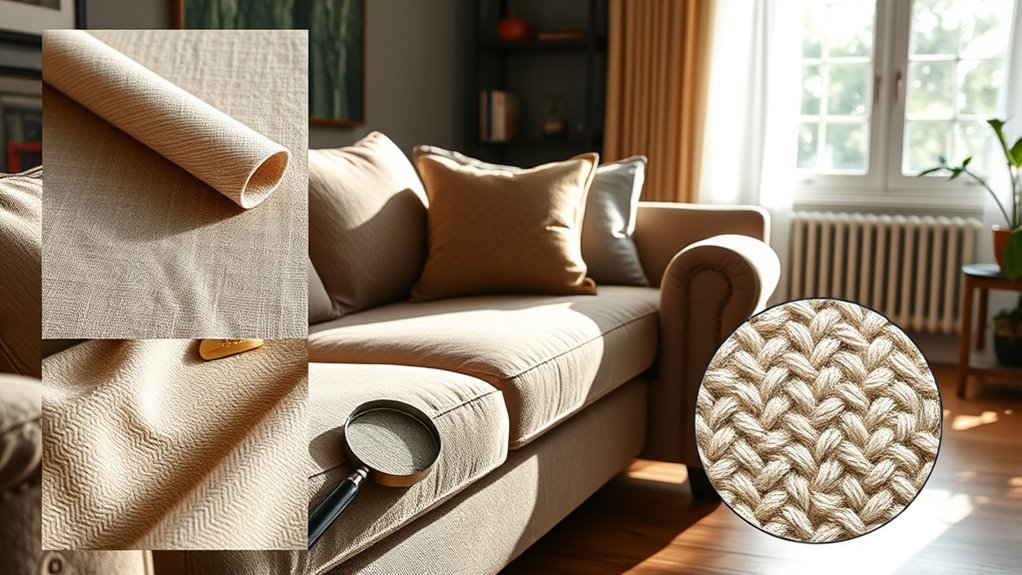
How do you know which cleaning method suits your sofa best? First, you need to identify the fabric types used in your upholstery. Different fabric types—like cotton, leather, microfiber, or synthetic blends—each have unique upholstery characteristics that affect how they respond to cleaning. Take a close look at the texture, weave, and feel of your sofa’s fabric. Some materials absorb moisture quickly, while others repel it. Also, consider any tags or manufacturer labels that specify the fabric and recommended cleaning methods. Understanding these upholstery characteristics empowers you to choose a cleaning approach that preserves your sofa’s look and freedom from damage. When you recognize your sofa’s fabric types, you’re better equipped to keep it fresh without risking costly mistakes.
Preparing Your Sofa for Cleaning
Before you plunge into cleaning your sofa upholstery, you’ll need to prepare the area and the sofa itself to guarantee the best results. Start by clearing the space around your sofa to give yourself freedom of movement. Remove cushions and any throws or covers. Check care labels for fabric protection tips to avoid damage during cleaning. Test a hidden spot with your cleaning solution to confirm it won’t discolor the fabric. This prep step is essential for effective upholstery maintenance and lasting fabric protection.
| Step | Action |
|---|---|
| 1. Clear Area | Remove obstacles around sofa |
| 2. Remove Cushions | Take off all removable parts |
| 3. Check Labels | Review fabric care instructions |
| 4. Test Cleaner | Spot-test cleaning solution |
| 5. Prepare Tools | Gather cleaning materials |
Vacuuming Techniques for Upholstery
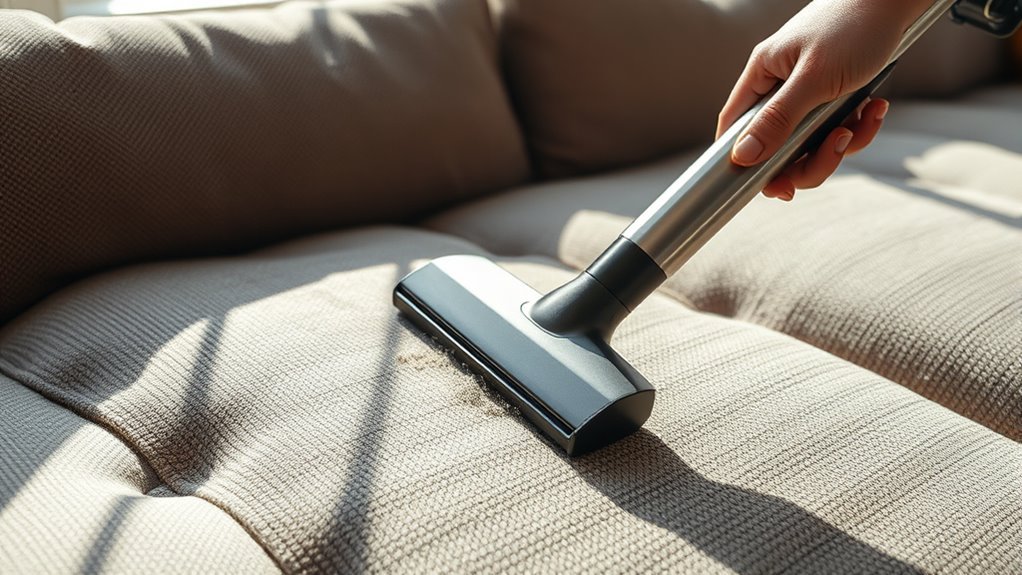
When vacuuming your sofa, start by choosing the right attachment to protect the fabric while removing dirt effectively. Use slow, overlapping strokes to guarantee you cover every inch without missing spots. For delicate fabrics, be gentle and avoid aggressive suction to prevent damage.
Choosing the Right Attachment
Although vacuuming is a key step in cleaning your sofa upholstery, choosing the right attachment can make all the difference in effectiveness and fabric care. Different attachment types suit various fabrics and dirt types, and adjusting your vacuum settings accordingly guarantees thorough yet gentle cleaning.
| Attachment Type | Best For | Recommended Vacuum Setting |
|---|---|---|
| Brush Tool | Delicate fabrics | Low suction |
| Crevice Tool | Tight corners, seams | Medium suction |
| Upholstery Nozzle | General surface cleaning | Medium to high suction |
Vacuuming Patterns and Coverage
Vacuuming your sofa efficiently requires a strategic approach to patterns and coverage to guarantee every inch is cleaned. To maintain your upholstery’s fresh look and extend its life, mastering vacuuming techniques is key. Instead of rushing, focus on thoroughness and consistency.
Here’s how to cover your sofa like a pro:
- Move the vacuum in slow, overlapping strokes to avoid missing spots.
- Follow a systematic pattern—start from the top cushions, then arms, backrest, and base.
- Pay special attention to seams and crevices where dirt hides.
Handling Delicate Fabrics
Since delicate fabrics can be easily damaged by harsh cleaning methods, you’ll need to adjust your vacuuming approach to protect their texture and appearance. When dealing with silk upholstery, avoid using a beater bar or rotating brush, as these can snag fibers. Instead, opt for a gentle suction setting and use a soft brush attachment to lift dust without roughing up the fabric. Velvet care requires a similar touch—vacuum slowly with a low-powered setting, following the nap’s direction to maintain its plush look. Don’t press down hard; let the vacuum do the work to prevent crushing the pile. By treating these delicate materials with care, you’ll keep your sofa looking fresh and free, giving you the freedom to relax without worry.
Homemade Cleaning Solutions for Fabric Sofas

When you want to freshen up your fabric sofa without harsh chemicals, homemade cleaning solutions offer an effective and gentle alternative. Using natural ingredients lets you control what touches your upholstery, giving you freedom from synthetic additives. Just be mindful of proper cleaning ratios to guarantee your mix cleans well without leaving residue.
Try these simple solutions:
- Mix one part white vinegar with two parts water for light stains.
- Combine a tablespoon of baking soda with a cup of warm water for deodorizing.
- Use a few drops of mild dish soap in a cup of water for tougher dirt.
Always test your solution on a hidden spot first. With these easy blends, you can keep your sofa fresh, clean, and chemical-free — your way.
Using Commercial Upholstery Cleaners Safely
While homemade solutions are great for gentle cleaning, some stains or heavy dirt might call for stronger products. When using commercial upholstery cleaners, always prioritize commercial cleaner safety by carefully reading and following the upholstery cleaner instructions. This guarantees you protect your sofa and yourself while enjoying the freedom of a fresh space.
| Step | What to Do | Why It Matters |
|---|---|---|
| Test First | Apply on hidden area | Avoid discoloration |
| Ventilate | Open windows, use fans | Prevent inhaling fumes |
| Use Gloves | Wear protective gloves | Protect your skin |
| Follow Timing | Adhere to product’s dwell time | Guarantee effective cleaning |
Stick to these tips, and you’ll keep your sofa clean without restrictions.
Spot Cleaning Stains and Spills
When you spot a stain or spill on your sofa, the first step is to identify the type of stain you’re dealing with. Different stains require different cleaning solutions to be effective without damaging your upholstery. Knowing this will help you choose the right method to tackle the problem quickly and safely.
Identifying Stain Types
How do you tell what kind of stain you’re dealing with on your sofa? Stain identification is the key to tackling common stains effectively and keeping your upholstery looking fresh. By recognizing the stain type, you gain the freedom to act confidently and avoid damage. Here are some typical stains you might encounter:
- Oil-based stains: Grease, makeup, or food oils that leave dark, slick spots.
- Water-based stains: Drinks like coffee, juice, or wine that soak into the fabric quickly.
- Protein stains: Blood, sweat, or dairy products that may have a stronger odor and need gentle care.
Knowing what stain you’re facing helps you respond swiftly and correctly. Don’t let stains limit your freedom—identify them right away to keep your sofa spotless.
Effective Cleaning Solutions
Because stains vary, you’ll need the right cleaning solution to tackle each one effectively. Using eco friendly cleaners not only protects your sofa but also keeps your space toxin-free, letting you breathe easier. For stubborn spots, a gentle approach with fabric protectants after cleaning helps repel future spills and keeps your freedom to relax intact.
| Stain Type | Recommended Cleaner |
|---|---|
| Oil-based | Mild detergent + warm water |
| Protein-based | Enzyme cleaner |
| Ink | Rubbing alcohol |
Always test any cleaner on a hidden spot first. With these solutions, you can confidently handle spills without harsh chemicals, maintaining your sofa’s look and your peace of mind.
Deep Cleaning Methods for Different Fabrics
Although each fabric type requires a unique approach, deep cleaning your sofa upholstery can be straightforward if you know the right methods. Understanding fabric care and cleaning frequency helps you keep your sofa fresh without damage. For example, natural fabrics like cotton or linen benefit from gentle steam cleaning, while synthetic fabrics handle stronger detergents. Leather demands special conditioners and minimal water to stay supple.
Here are some deep cleaning methods for different fabrics:
- Cotton/Linen: Use a steam cleaner or mild soap solution; vacuum afterward to lift dirt.
- Polyester/Microfiber: Spot clean with a mixture of water and dish soap; use a brush to lift fibers.
- Leather: Wipe with a damp cloth and apply leather conditioner to avoid cracking.
Drying and Airing Out Your Sofa
Once you’ve thoroughly cleaned your sofa, drying and airing it out properly is essential to prevent mold, odors, and fabric damage. Start by placing your sofa in a well-ventilated area where air circulation is strong. Open windows or use fans to speed up the drying process, helping moisture evaporate quickly. Avoid direct sunlight if your fabric is delicate, as it can fade colors. Keep cushions and covers separated to allow air to reach all surfaces, ensuring even drying. Moisture control is key—if your sofa stays damp too long, you risk mildew growth and unpleasant smells. By managing air circulation and moisture, you’ll keep your sofa fresh and ready for relaxing, with freedom from worry about hidden dampness or damage.
Preventative Measures to Keep Your Sofa Clean
Keeping your sofa dry and well-ventilated helps maintain its cleanliness, but taking steps to prevent dirt and stains from settling in the first place will save you time and effort. You want your sofa to stay fresh without constant scrubbing, so incorporating fabric protectors can shield against spills and grime. Regular maintenance, like quick vacuum sessions and spot cleaning, keeps dirt from embedding deep into the fibers. Here’s what you can do to enjoy a cleaner sofa with less hassle:
Prevent dirt and stains by keeping your sofa dry, ventilated, and using fabric protectors with regular maintenance.
- Apply fabric protectors to repel stains and spills effortlessly.
- Use washable slipcovers or throws to guard against everyday messes.
- Establish a routine of regular maintenance, including gentle vacuuming and prompt attention to spills.
These simple habits give you freedom from stubborn stains and extend your sofa’s life.
When to Seek Professional Upholstery Cleaning
How do you know when it’s time to call in a professional for upholstery cleaning? When stains resist your best efforts or the fabric looks dull despite regular upkeep, it’s a sign to seek professional assistance. You want your sofa to feel fresh without sacrificing your time or freedom. Professional cleaners have the right tools and expertise to deep clean without damaging your upholstery. If allergies flare up or odors linger, it’s another clue that expert care is needed. Remember, timely professional help complements your upholstery maintenance routine, extending your sofa’s life and keeping it inviting. Don’t hesitate to reach out—getting the right support guarantees your sofa stays comfortable and beautiful with less hassle on your part.
Frequently Asked Questions
Can I Use Steam Cleaning on All Types of Sofa Fabrics?
You can enjoy steam cleaning benefits like deep sanitizing and removing tough stains, but it’s not ideal for all fabrics. Some delicate materials, like silk or velvet, might get damaged because of heat and moisture. Always check fabric compatibility before you steam clean to avoid ruining your sofa. If you want the freedom to clean confidently, test a small hidden spot first or consult your sofa’s care label for the best results.
How Often Should I Clean My Sofa Upholstery to Maintain Hygiene?
Don’t you want your space to feel fresh and inviting all the time? Your cleaning frequency depends on how much you use your sofa, but a good rule is every 3-6 months for deep cleaning. Regular vacuuming once a week helps with upholstery maintenance, keeping dust and allergens at bay. By sticking to this routine, you’ll enjoy freedom from grime and a comfy, hygienic spot to relax anytime.
Are There Any Upholstery Materials That Should Never Be Cleaned With Water?
If you’ve got water sensitive fabrics like silk, velvet, or certain leathers, you’ll want to avoid using water—they can get damaged or stained easily. Instead, try cleaning alternatives like dry cleaning solvents or specialized upholstery cleaners made for those materials. Always test a small spot first to make sure it won’t ruin your freedom to enjoy your sofa. This way, you keep your furniture fresh without risking harm.
What Are the Best Storage Tips for Sofa Cushions During Cleaning?
When you’re tackling cushion storage during cleaning, you’ll want to keep them in a dry, well-ventilated space to prevent mold or mildew. Use breathable bags or covers instead of plastic to maintain airflow. Avoid stacking cushions too tightly so they keep their shape. Pair these storage tips with gentle cleaning techniques, and you’ll preserve your cushions’ comfort and look, giving you the freedom to enjoy your sofa without worry.
Can Pet Hair Damage Sofa Upholstery Over Time?
Pet hair might seem harmless, but it can be the straw that breaks the camel’s back for your sofa upholstery. If you don’t stay on top of upholstery care, pet hair can embed itself into fabric fibers, causing wear and even attracting dirt and allergens. To keep your freedom and comfort intact, regularly removing pet hair is key. This way, your sofa stays fresh and ready for those carefree moments you cherish.