
To clean germs effectively, choose eco-friendly products proven to kill specific germs and use clean or disposable cloths. Focus on high-touch areas like doorknobs and light switches, cleaning daily if busy. Always clean before disinfecting, letting solutions sit as directed. Don’t forget soft surfaces and launder cloths regularly. Keep good airflow to maintain a healthy space, and schedule deep cleans routinely. Keep these tips in mind to create a safer, germ-free environment you’ll feel confident about.
Use the Right Cleaning Products
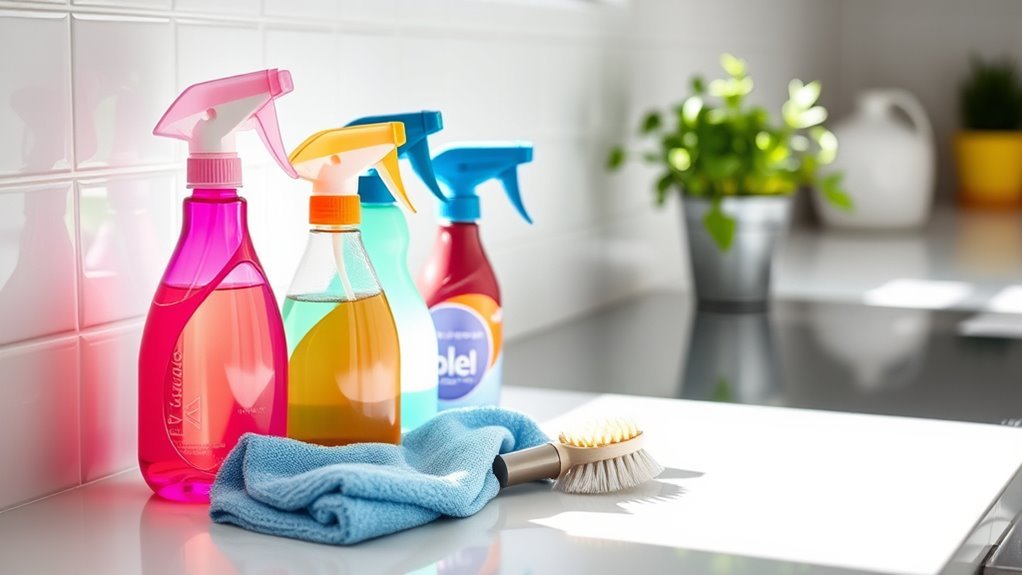
Although many cleaning products claim to kill germs, you need to choose ones proven effective against the specific bacteria or viruses you’re targeting. When you pick eco friendly products, you not only protect your health but also preserve the freedom of a clean environment. Multi surface cleaners are especially handy—they let you tackle different areas without juggling multiple bottles, saving you time and hassle. Make sure the label specifies the germs it combats; this way, you won’t waste effort on ineffective solutions. By selecting the right products, you gain control over your space, ensuring it’s both safe and sustainable. Embrace cleaning choices that align with your values and give you the freedom to live confidently in a germ-conscious world.
Focus on High-Touch Surfaces
Since germs tend to spread where hands often touch, focusing your cleaning efforts on high-touch surfaces is essential. You want to zero in on high touch items like doorknobs, light switches, remote controls, and faucet handles. These spots are breeding grounds for bacteria and viruses because they see constant contact throughout your day. Adjust your cleaning frequency based on how often these items are used; in busy spaces, daily wiping is smart. Keeping these surfaces clean helps you maintain control over your environment without feeling overwhelmed. By regularly targeting high-touch items, you reduce germ buildup and create a safer space that supports your freedom to live and move without worry. Prioritize these areas, and you’re well on your way to smarter, more effective cleaning habits.
Follow Proper Cleaning Techniques
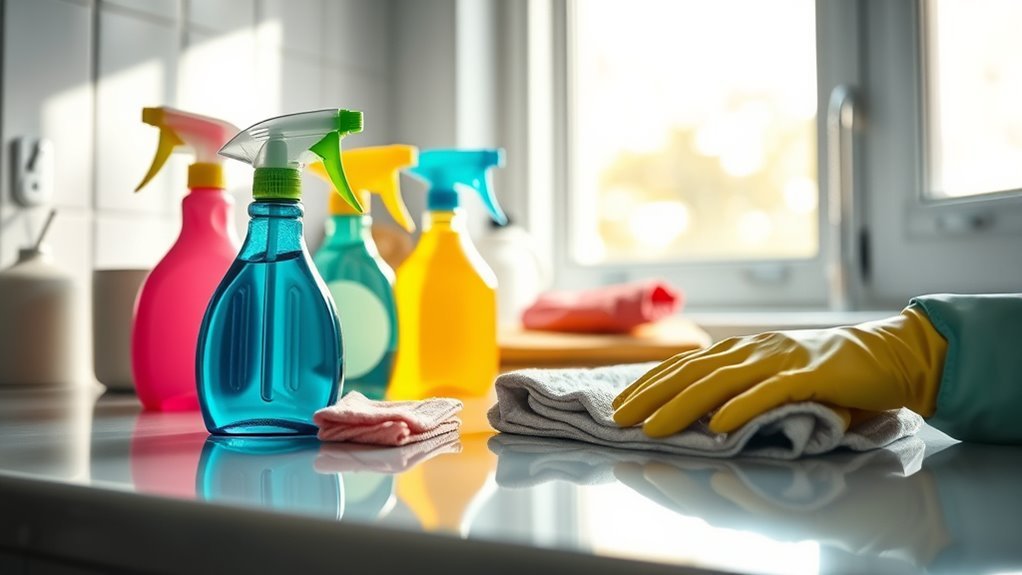
When you follow proper cleaning techniques, you guarantee that germs are effectively removed rather than just spread around. Start by using the right tools—clean cloths or disposable wipes work best. Always clean from the least dirty to the dirtiest areas to avoid contamination. Use enough cleaning solution to cover surfaces thoroughly, allowing it to break down dirt and germs. Don’t rush; let products sit for a moment if instructions say so. Change cloths or rinse frequently to prevent transferring germs back. These sanitation practices ensure that your efforts lead to true cleanliness. By sticking to effective cleaning methods, you take control of your environment and safeguard your freedom to live confidently in a germ-free space. It’s about being smart and intentional with every swipe.
Disinfect After Cleaning
After you’ve cleaned surfaces thoroughly, you need to disinfect them to kill any remaining germs. Disinfecting surfaces is a key step in your cleaning routines that helps keep your space truly safe and free. Don’t just stop at visible dirt—germs linger where you can’t see them. To stay efficient and free from worry, focus on these actions:
- Spray disinfectant evenly and let it sit for the recommended time.
- Target high-touch areas like doorknobs, light switches, and countertops.
- Use products approved for killing viruses and bacteria.
- Always follow label instructions for best results.
Use Disposable Cleaning Materials When Possible
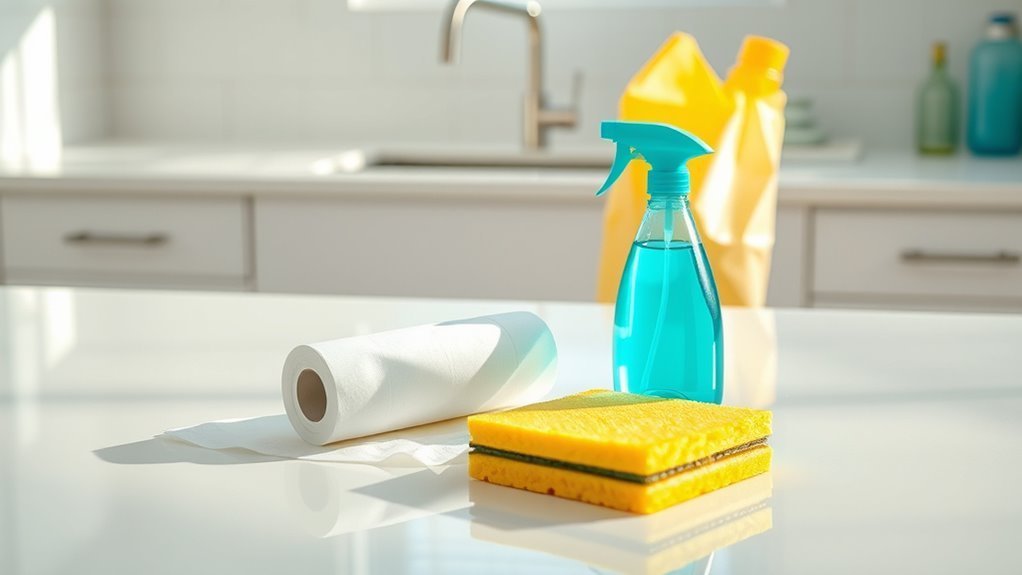
Disinfecting surfaces is an essential step, but the tools you use to clean can also impact germ control. Using disposable cleaning materials when possible helps you avoid spreading germs between areas. Opt for eco friendly options like biodegradable materials that break down naturally, so you’re not sacrificing the planet’s health for your own. These disposable wipes, cloths, or gloves let you clean efficiently and toss them without worrying about contamination lingering on your tools. By choosing biodegradable and eco friendly supplies, you maintain cleanliness while staying true to your values of freedom and responsibility. This approach simplifies your routine, reduces cross-contamination risks, and supports sustainable living—all without locking you into complicated or wasteful habits.
Wash Hands Frequently During Cleaning
You should wash your hands often while cleaning, especially after handling dirty items or switching tasks. Make sure to scrub with soap and water for at least 20 seconds to remove germs effectively. Keeping this habit helps prevent spreading bacteria and keeps you healthier.
When to Wash Hands
When should you wash your hands during cleaning? Maintaining the right handwashing frequency is key to staying germ-free without feeling tied down. You don’t have to scrub constantly, but knowing the moments to wash or use hand sanitizer lets you keep control and freedom while cleaning.
Remember to wash your hands or use hand sanitizer:
- After handling trash or dirty laundry
- Before switching to clean areas or surfaces
- After touching your face or phone
- When you finish using cleaning products
Proper Handwashing Technique
Mastering five simple steps can make your handwashing both effective and quick during cleaning. First, wet your hands with clean water. Then, apply enough soap to cover all surfaces. Next, rub your hands palm to palm, between fingers, and under nails for at least 20 seconds. Rinse thoroughly under running water, and finally, dry with a clean towel or air dry.
Understanding handwashing benefits helps you stay motivated—removing germs reduces illness and keeps your environment safe. Avoid common mistakes like skipping the scrub time or missing spots such as thumbs and wrists. Washing hands frequently during cleaning prevents cross-contamination and protects your freedom to live healthily and confidently. Stick to this technique, and you’ll make handwashing a powerful, quick habit without hassle.
Clean Soft Surfaces Thoroughly
Cleaning soft surfaces thoroughly is key to reducing germs that can hide in fabrics and cushions. You want to focus on soft surface materials like upholstery, curtains, and rugs, as they can harbor bacteria and viruses longer than hard surfaces. Pay attention to cleaning frequency—high-traffic areas need more frequent care to keep germs at bay. Use a vacuum with a HEPA filter to capture particles, and spot-clean stains promptly.
Thoroughly cleaning soft surfaces like upholstery and curtains helps reduce hidden germs and maintain a healthier home.
Here’s how to tackle soft surfaces effectively:
- Vacuum couches and chairs weekly, reaching into crevices
- Steam clean curtains every few months to kill microbes
- Spot-treat spills immediately with appropriate cleaners
- Rotate and air out cushions to prevent moisture buildup
Regularly Launder Cleaning Cloths and Towels
Keeping soft surfaces clean is just one part of reducing germs in your home. You also need to focus on regularly laundering your cleaning cloths and towels. The laundry frequency matters because leaving dirty cloths around lets germs multiply, undoing your hard work. Choose cloth materials that can withstand frequent washing at high temperatures, like cotton or microfiber, to guarantee thorough cleaning. Avoid delicate fabrics that trap bacteria or degrade quickly. Set a routine for washing these items—ideally after each major cleaning session—to maintain a fresh, germ-free environment. By treating your cloths and towels as part of your cleaning arsenal, you’ll keep your space healthier and enjoy the freedom of a truly clean home without unnecessary worry about hidden germs.
Maintain Proper Ventilation While Cleaning
Although it’s easy to overlook, proper ventilation plays an essential role in reducing germs and improving air quality while you clean. By managing airflow effectively, you guarantee that harmful particles and cleaning fumes don’t linger, letting you breathe freely and stay comfortable. Incorporate ventilation into your cleaning schedule to boost results and protect your well-being.
Proper ventilation reduces germs and fumes, ensuring cleaner air and a healthier, more comfortable space while you clean.
To maintain proper ventilation:
- Open windows and doors to create a revitalizing cross-breeze
- Use exhaust fans or air purifiers to circulate and filter air
- Avoid overcrowding rooms during cleaning to let air flow freely
- Take breaks outdoors to rejuvenate yourself and your space
Mastering airflow management helps you clean smarter, not harder, and keeps your environment healthier and more liberating.
Schedule Routine Deep Cleaning Sessions
Since germs can build up in hidden spots over time, scheduling routine deep cleaning sessions is key to maintaining a truly healthy environment. Setting up a cleaning schedule helps you stay on top of those overlooked areas, giving you freedom from constant worry about unseen bacteria. Deep cleaning isn’t just surface-level; it targets dirt and germs lurking in corners, vents, and upholstery.
| Task | Frequency | Benefits |
|---|---|---|
| Vacuum & Mop Floors | Weekly | Removes dust & allergens |
| Disinfect Surfaces | Twice a Week | Kills germs efficiently |
| Deep Clean Carpets | Monthly | Eliminates embedded dirt |
Frequently Asked Questions
Can UV Light Effectively Kill Germs on Household Surfaces?
You might be curious if UV light kills germs effectively on household surfaces. UV effectiveness in surface sanitization is pretty solid; it can zap many bacteria and viruses quickly. But you’ve gotta be cautious—UV light doesn’t clean dirt or grime, so surfaces need to be wiped first. Plus, direct exposure can be harmful, so use it wisely. It’s a great freedom-friendly way to boost cleanliness without harsh chemicals.
How Often Should Cleaning Tools Like Mops Be Replaced?
You should replace your mop based on its lifespan, which usually ranges from a few months to about a year, depending on use and care. Regular cleaning tool maintenance—like rinsing and drying your mop thoroughly after each use—can extend its life. Don’t let a worn-out mop hold you back; swapping it out when it looks frayed or smells bad keeps your space fresh and gives you the freedom to clean effectively without hassle.
Are Natural Cleaning Products as Effective as Chemical Disinfectants?
Think of natural cleaning products as gentle rain washing away dirt, while chemical disinfectants are like a fierce storm that obliterates germs. You’ll find natural ingredients offer decent cleaning efficacy, often enough for everyday messes, and they’re kinder to your space and health. But if you need to conquer stubborn pathogens, chemical disinfectants might be your best ally. Choosing between them depends on how much freedom you want from harsh chemicals versus powerful germ-fighting.
Can Germs Develop Resistance to Common Disinfectants?
Yes, germs can develop resistance to common disinfectants through germ mutations that reduce disinfectant efficacy. When you rely heavily on the same disinfectants, you’re basically encouraging these microbes to adapt and survive. To keep your space truly clean and maintain your freedom from harmful germs, it’s smart to switch up your cleaning methods and use a variety of disinfectants. That way, you’ll stay one step ahead and keep germs from winning.
What Temperature Is Best for Washing Clothes to Kill Germs?
When you’re deciding on washing temperatures, aim for at least 60°C (140°F) to effectively kill germs. Keep in mind, though, that not all fabric types can handle high heat—delicates might need cooler cycles to avoid damage. If you want to stay germ-free without sacrificing your favorite clothes, check the labels and choose the highest temperature they can tolerate. This way, you get clean clothes while enjoying the freedom to wear what you love.
