How to Clean Glass
To clean glass effectively, start with a soft, lint-free cloth and a quality glass cleaner or a DIY mix like equal parts vinegar and water. Dust off dirt first, then apply cleaner evenly, wiping in circular motions to lift grime, followed by vertical strokes to avoid streaks. For stubborn stains, use rubbing alcohol diluted with water and be gentle to prevent scratches. Dry immediately and polish with a dry cloth for shine. Keep going, and you’ll uncover even more handy tips and tricks.
Essential Tools and Materials for Glass Cleaning
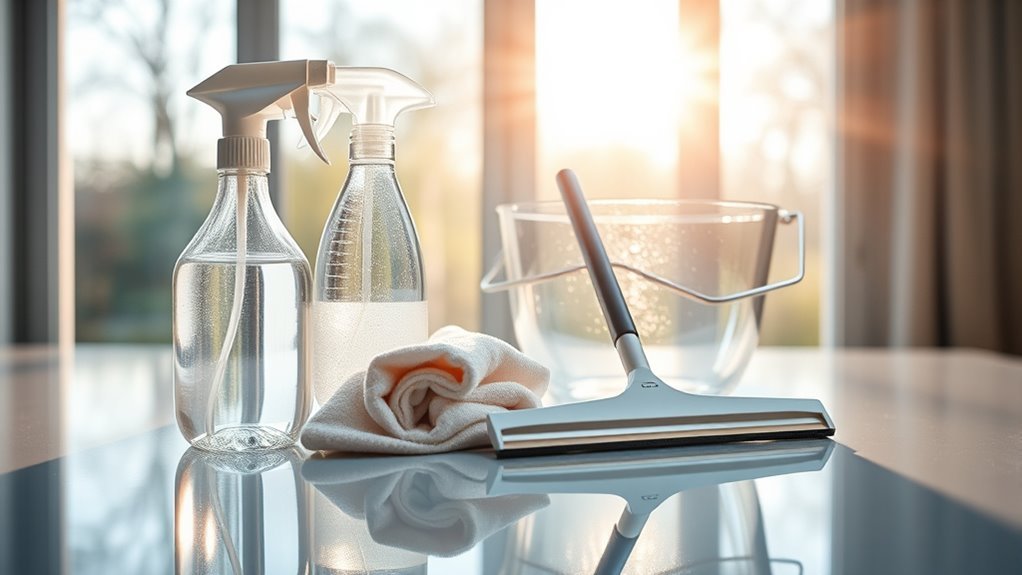
When it comes to cleaning glass, having the right tools and materials makes all the difference. You want freedom from streaks, smudges, and hours of frustration, so start with quality cleaning cloths that are soft and lint-free, ensuring a spotless finish without scratching. Glass scrapers are another essential item; they help you safely remove stubborn debris like paint or adhesive without damaging the surface. Opt for scrapers with ergonomic handles for ease of use, giving you control and precision. Together, these tools let you tackle any glass cleaning task efficiently, freeing you from the hassle of ineffective methods. When you equip yourself with the right gear, cleaning glass becomes a straightforward, satisfying process that saves time and effort.
Step-by-Step Guide to Cleaning Glass Surfaces
With the right tools at your disposal, you’re ready to tackle cleaning glass surfaces efficiently. Start by dusting off loose dirt with a microfiber cloth to avoid scratches. Next, apply a glass cleaner or a DIY solution evenly across the surface. Using circular motions, gently wipe the glass to loosen grime—this is one of the fundamental glass cleaning techniques. After that, switch to vertical strokes to remove streaks, ensuring clarity and shine. Once dry, use a dry microfiber cloth or a squeegee for glass polishing methods that enhance transparency and prevent residue. Finally, check the glass from different angles to spot missed spots. Following these steps gives you freedom from streaks and a crystal-clear finish every time.
Tips for Removing Stubborn Stains and Smudges
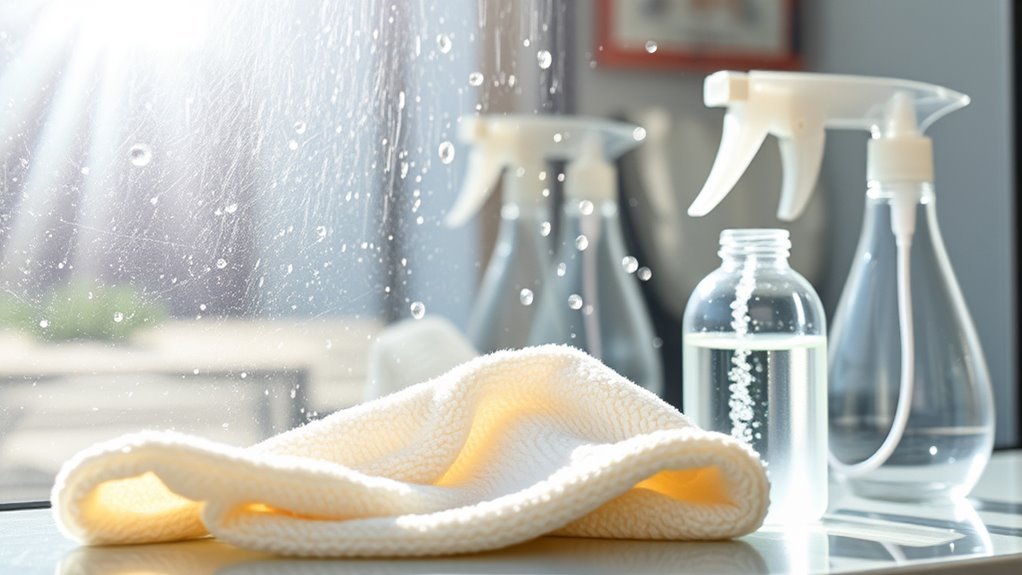
Although regular cleaning handles most grime, stubborn stains and smudges often demand extra care. When facing tough spots, start with a gentle smudge treatment—dab a microfiber cloth with a bit of glass cleaner and apply in circular motions. For serious stain removal, don’t hesitate to use a mixture of equal parts water and rubbing alcohol; it breaks down residues without harming your glass. Avoid harsh scrubbing, which can scratch surfaces, and always test solutions on a small area first. Patience is key—let the cleaner sit a moment, then wipe clean. With these tips, you’ll reclaim crystal-clear freedom on your glass, making smudges and stains a thing of the past without sacrificing ease or safety.
Homemade Solutions for Eco-Friendly Glass Cleaning
Tackling stubborn stains often means reaching for effective cleaners, but you don’t have to rely on commercial products to get your glass sparkling. With a simple vinegar solution—mix equal parts white vinegar and water—you can effortlessly remove grime and fingerprints while keeping things eco-friendly. If you want a fresh twist, try a citrus cleaner by adding a few drops of lemon or orange essential oils to the vinegar mix. These natural ingredients cut through dirt without harsh chemicals, giving you freedom from toxins and plastic waste. Just spray, wipe with a microfiber cloth, and enjoy streak-free shine. By choosing homemade cleaners, you take control of your cleaning routine and protect the planet, all while enjoying crystal-clear glass every time.
Preventing Streaks and Maintaining Sparkling Glass
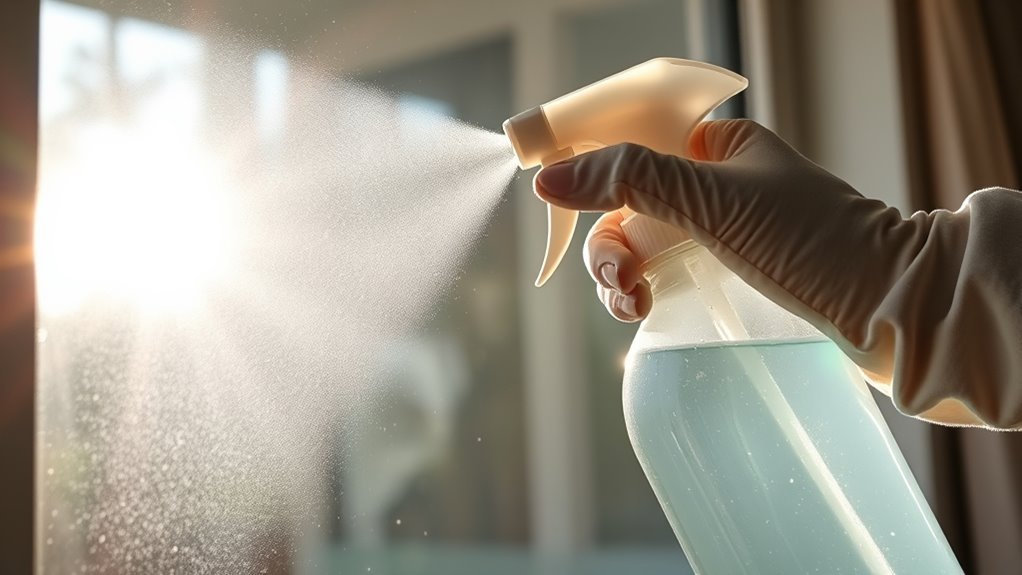
Even if you use the best cleaning solutions, streaks can still appear if the right techniques aren’t followed. To enjoy freedom from annoying marks, focus on streak free techniques and proper glass polishing. Use a microfiber cloth to avoid lint and wipe in a consistent pattern—horizontal or vertical. Avoid cleaning glass in direct sunlight, which causes faster drying and streaks.
| Step | Action |
|---|---|
| 1 | Choose microfiber cloth |
| 2 | Apply cleaning solution |
| 3 | Wipe in straight lines |
| 4 | Dry immediately |
| 5 | Polish with a dry cloth |
Master these steps, and you’ll maintain sparkling glass that feels like a clear window to freedom.
Frequently Asked Questions
Can I Use a Dishwasher to Clean Small Glass Items?
You can use a dishwasher to clean small glass items, but you’ll want to think about dishwasher safety first. Not all glass items are dishwasher safe, so check for any manufacturer guidelines before tossing them in. If they’re delicate or have decorative elements, hand washing might be a better choice. Using your dishwasher smartly gives you freedom from tedious cleaning, but always prioritize what’s safe for your glass to avoid damage.
How Often Should I Deep Clean Glass Windows?
You should deep clean your glass windows at least twice a year to keep up with proper window maintenance. However, if you live in a dusty or rainy area, increasing the cleaning frequency to every three months helps maintain clarity and extends their lifespan. Regular deep cleaning lets you enjoy clear views and keeps your space feeling fresh, giving you the freedom to relax without worrying about grime or streaks clouding your outlook.
Are There Specific Glass Types That Require Special Cleaners?
Just like a painter chooses brushes wisely, you’ve got to pick the right specialty glass cleaners for certain types of glass. Some panes, especially those with protective coatings, demand gentle, pH-balanced solutions to keep their magic intact. Using harsh chemicals might strip away their shield, leaving you less free to enjoy their clear beauty. So, choose your cleaners thoughtfully, and your glass will stay spotless and protected, letting light shine through unhindered.
Can Cleaning Glass Too Often Cause Damage?
You might worry that glass cleaning frequency could cause glass surface damage, but as long as you’re gentle and use the right products, you’re good. Over-cleaning with harsh chemicals or abrasive tools can wear down coatings or scratch the glass. So, don’t feel restricted—clean your glass as often as you want, just choose mild cleaners and soft cloths to keep your freedom to enjoy spotless, damage-free glass.
What Is the Best Way to Clean Antique Glass Safely?
When caring for antique glass, you’ll want to use gentle cleaning solutions specifically designed for delicate surfaces. Avoid harsh chemicals or abrasive materials that could damage the glass. Instead, mix a mild soap with warm water and use a soft cloth to wipe it down carefully. Remember, antique glass care means taking your time and respecting its age, so you can enjoy its beauty without risking any harm.