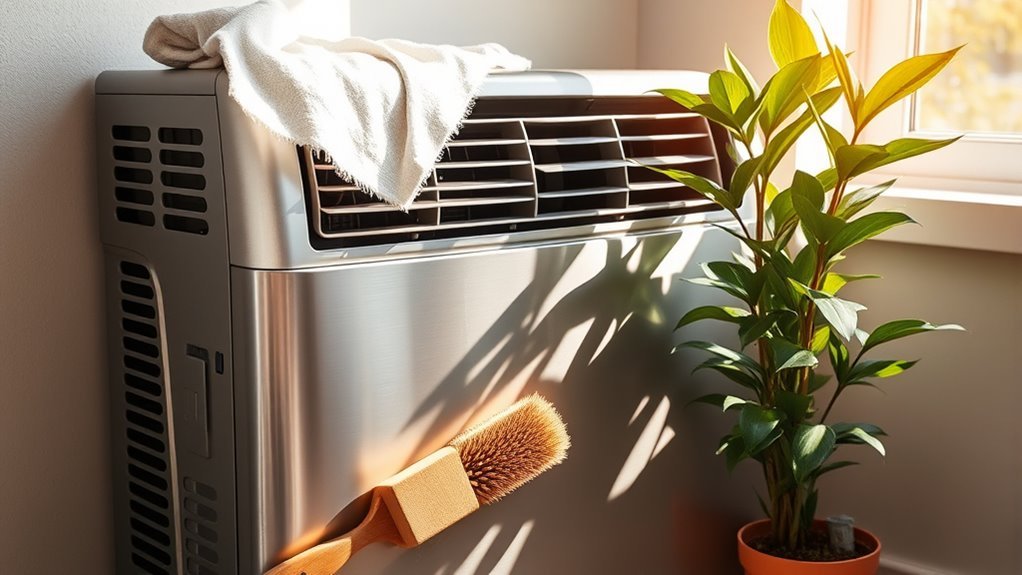
Preventing Dirt Buildup on AC
To prevent dirt buildup on your AC, regularly clean or replace the air filters every 1 to 3 months to maintain airflow and air quality. Keep the coils and fins free of dust using a soft brush and gentle spray. Make sure the outdoor unit has clear space around it, removing leaves and debris. Also, monitor drainage lines and schedule professional maintenance twice a year. Following these simple steps helps your AC run efficiently and saves you money—you’ll find even more ways to protect your system ahead.
Understanding the Impact of Dirt on AC Performance
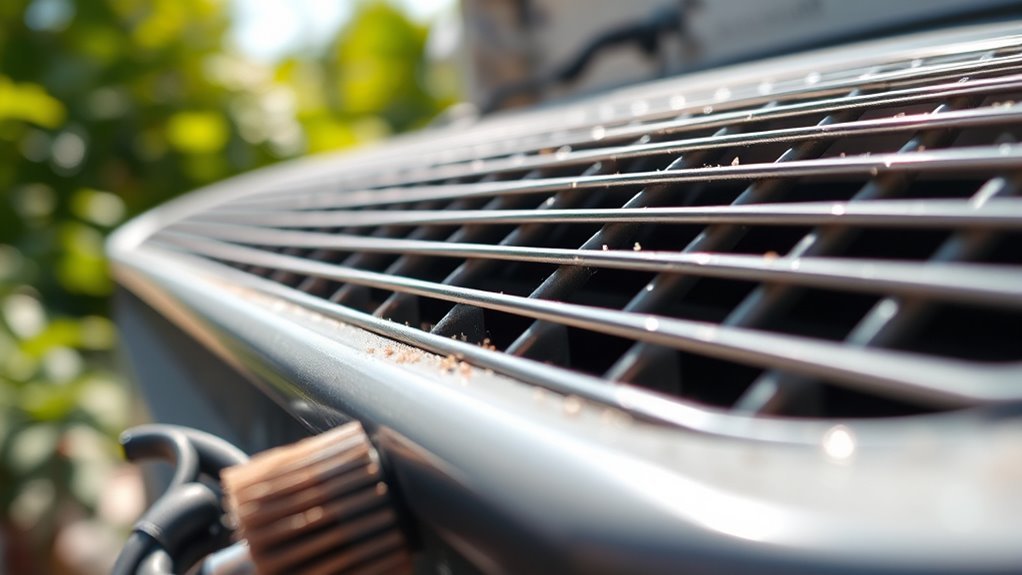
Although you might not notice it immediately, dirt buildup can considerably reduce your AC’s efficiency. When dirt accumulation clogs essential components like coils and fins, your unit has to work harder to cool your space. This extra effort wastes energy and drives up your utility bills, limiting your freedom from costly repairs. Over time, this strain can lead to breakdowns, leaving you stuck without comfort when you need it most. By understanding how dirt accumulation impacts AC efficiency, you can appreciate the importance of keeping your system clean. Taking control of your environment means preventing dirt from compromising your AC’s performance, so you enjoy consistent cooling without unexpected interruptions or expenses. You deserve an AC that runs smoothly, giving you the freedom to focus on what matters.
Regularly Replacing or Cleaning Air Filters
You’ll want to replace or clean your AC filters regularly, usually every 1 to 3 months, depending on use and environment. Clean filters help your system run efficiently and improve your indoor air quality. Keeping up with this simple task can prevent dirt buildup and extend your AC’s lifespan.
Filter Replacement Frequency
Changing or cleaning your air filters every 30 to 90 days is key to keeping your AC running efficiently and preventing dirt buildup. The exact filter lifespan depends on factors like your environment and usage, but staying within this range helps you avoid clogging. Keep an eye out for replacement signs—if you notice reduced airflow, increased dust, or a musty smell, it’s time to act. Don’t wait until your filter’s performance drops; remaining proactive lets you maintain control over your comfort and freedom from costly repairs. By sticking to a consistent replacement schedule, you guarantee your AC breathes easy, so you can enjoy clean air without restrictions. Remember, a simple switch or clean keeps your system running smoothly and your space dirt-free.
Benefits of Clean Filters
When you keep your air filters clean, your AC not only runs more efficiently but also improves the quality of the air you breathe. Clean filters maintain high filter efficiency, trapping dust, allergens, and pollutants, freeing you from stale, unhealthy air. This means better air quality inside your home and less strain on your system, translating to energy savings and longer AC life.
| Benefit | Impact |
|---|---|
| Improved filter efficiency | Captures more contaminants |
| Enhanced air quality | Healthier, fresher indoor air |
| Energy savings | Lowers utility bills |
| Longer AC lifespan | Fewer repairs, more freedom |
Cleaning the AC Coils and Fins
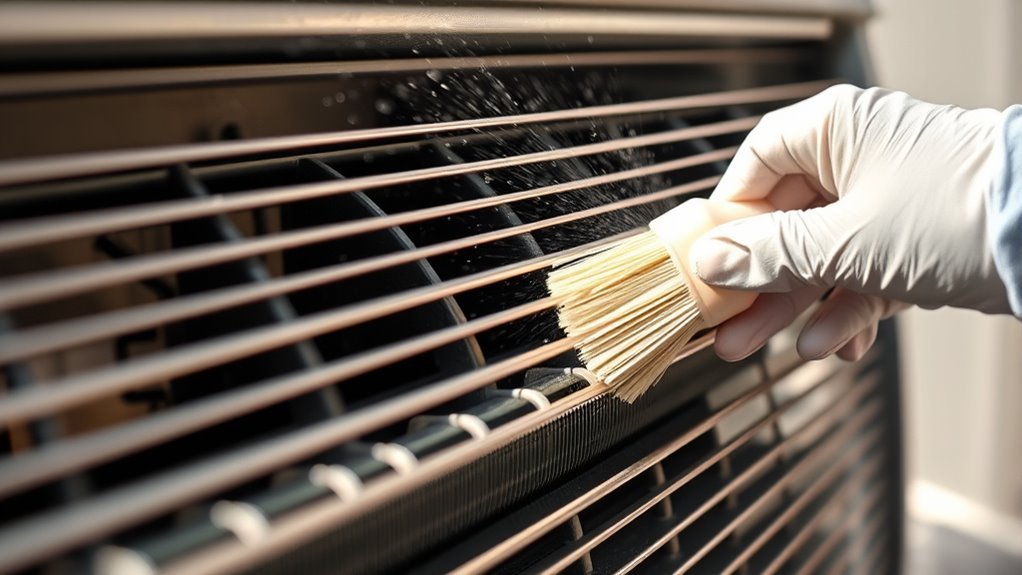
To keep your AC running efficiently, it’s important to clean the coils and fins regularly. You’ll need the right tools, like a soft brush and coil cleaner, to avoid damaging these delicate parts. Taking care when cleaning helps prevent bent fins, which can reduce airflow and cooling performance.
Importance of Regular Cleaning
Although it might seem like a minor task, regularly cleaning your AC coils and fins is vital to keeping your system running efficiently. Sticking to a proper cleaning frequency within your maintenance schedule guarantees you avoid costly breakdowns and keep your energy bills low. When dirt and debris accumulate, your AC has to work harder, limiting your freedom to enjoy comfort without worry.
Here’s why you shouldn’t skip regular cleaning:
- Improves airflow and cooling performance
- Prevents corrosion and damage to coils
- Extends the lifespan of your AC unit
- Reduces energy consumption and costs
- Keeps indoor air quality healthier
Make regular cleaning part of your routine, so your AC stays reliable and you stay free from unexpected problems.
Tools for Coil Maintenance
Keeping your AC coils and fins clean requires the right tools to get the job done effectively and safely. For coil cleaning, you’ll want a soft brush specifically designed to sweep away dirt without damaging delicate fins. A fin comb is another essential maintenance tool—it helps you straighten bent fins and improve airflow. Don’t forget a garden hose with a gentle spray nozzle to rinse off loosened debris without causing harm. You might also consider coil cleaner sprays, formulated to dissolve stubborn grime and enhance cooling efficiency. By using these maintenance tools, you’re not just cleaning—you’re preserving your AC’s freedom to perform at its best and last longer. With the right approach, coil cleaning becomes straightforward, allowing you to enjoy cool comfort without hassle.
Preventing Damage to Fins
When cleaning your AC coils and fins, you’ll want to handle them carefully since they’re delicate and easily bent. Proper fin cleaning is essential for maintaining airflow and efficiency, but damaging those thin fins can lead to costly repairs. To keep your fins in top shape while enjoying fin protection, follow these simple tips:
- Use a soft brush or fin comb to gently remove dirt.
- Avoid using high-pressure water that can bend fins.
- Always turn off power before cleaning to stay safe.
- Straighten bent fins carefully with a fin comb for better airflow.
- Apply a protective coating designed for fin protection to prevent future damage.
Maintaining a Clear Area Around the Outdoor Unit
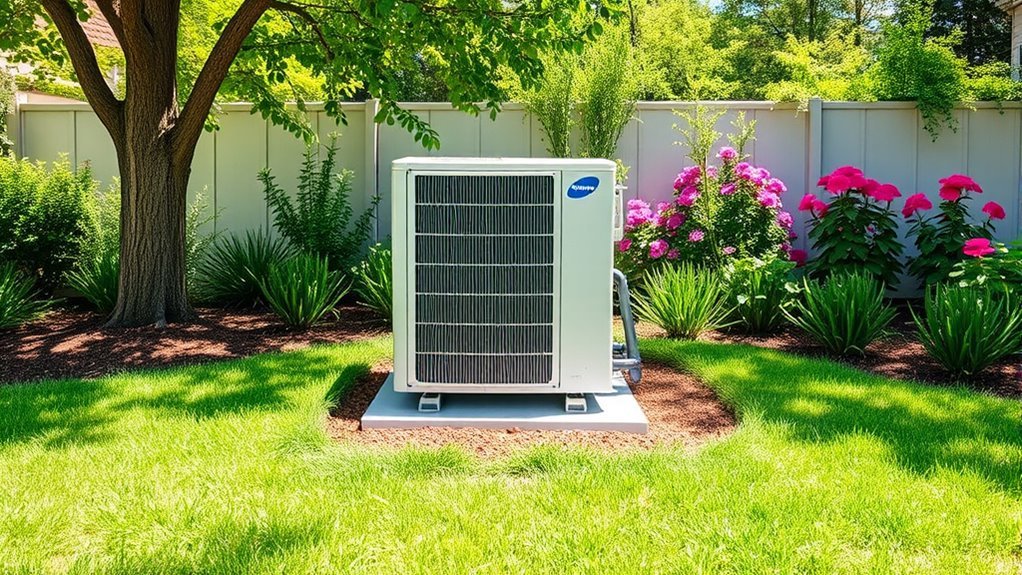
Since your outdoor AC unit relies on unobstructed airflow to function efficiently, you should always guarantee the surrounding area is free from debris, plants, and other objects. Thoughtful landscaping choices can help you avoid outdoor obstacles that block airflow or trap dirt. Keep at least two feet of clearance around the unit to promote freedom of movement and prevent buildup.
| Common Outdoor Obstacles | Why They Matter |
|---|---|
| Overgrown shrubs | Block airflow |
| Fallen leaves | Trap dirt and moisture |
| Garden tools | Cause physical damage |
| Trash and debris | Obstruct ventilation |
| Tall grass | Attract pests |
Using Protective Covers During Off-Season
Although your AC unit may not be in use during colder months, it’s important to protect it from dirt, debris, and harsh weather by using a suitable cover. Choosing the right protective materials guarantees your unit stays clean and damage-free throughout seasonal storage. A quality cover shields your AC from moisture, leaves, and pests, so you’re ready to enjoy cool air when freedom returns. When picking a cover, keep these tips in mind:
- Use breathable, waterproof protective materials
- Avoid plastic wraps that trap moisture
- Secure the cover tightly to prevent wind damage
- Remove the cover before turning the unit back on
- Store the cover in a dry place when not in use
This simple step keeps your AC in top shape without hassle.
Scheduling Professional AC Maintenance
Protective covers help keep your AC clean during the off-season, but regular professional maintenance guarantees it runs smoothly year-round. By sticking to a professional scheduling routine, you free yourself from unexpected breakdowns and costly repairs. Maintenance frequency typically depends on your AC’s usage and environment, but experts recommend at least twice a year. This ensures dirt buildup is minimized and components stay efficient.
| Maintenance Task | Recommended Frequency |
|---|---|
| Filter cleaning/replacement | Every 1-3 months |
| Coil inspection/cleaning | Twice a year |
| Refrigerant level check | Annually |
| Electrical connections | Annually |
| Overall system inspection | Twice a year |
Scheduling these checks keeps your AC reliable—giving you the freedom to enjoy your space without worry.
Ensuring Proper Drainage and Condensate Line Care
When your AC system doesn’t drain properly, water can back up and cause damage or mold growth. To keep your unit running smoothly and avoid costly repairs, focus on your drainage system and condensate maintenance. You’ve got the freedom to prevent issues by staying proactive. Here’s how to take care of it:
- Regularly inspect the condensate drain line for clogs or debris.
- Flush the drain line with a vinegar solution every few months to prevent buildup.
- Verify the drainage system’s slope allows water to flow away from the unit.
- Replace damaged or cracked drain lines promptly.
- Check the condensate pump (if you have one) to confirm it’s working correctly.
Monitoring and Managing Indoor Air Quality
Since the air inside your home circulates through your AC system, monitoring and managing indoor air quality is essential for your health and comfort. You can take control by keeping an eye on indoor pollutants like dust, pet dander, and volatile organic compounds that can accumulate and impact your air quality. Using air quality monitors helps you stay informed, so you can act when levels rise. Regularly changing your AC filters and ensuring proper ventilation reduces these pollutants, letting you breathe freely without restrictions. By managing indoor air quality proactively, you not only protect your system from dirt buildup but also create a healthier environment where you feel truly free in your own space. Keeping your air clean means your AC works smoother and your home feels fresher every day.
Implementing Preventive Habits for Long-Term AC Health
Although regular maintenance is essential, adopting simple preventive habits daily can greatly extend your AC’s lifespan. You don’t have to be an expert to keep your unit running smoothly and avoid dirt buildup that hampers performance. By making routine checks a habit, you catch small issues before they become costly repairs. Seasonal adjustments tailor your AC’s operation to different weather demands, enhancing efficiency and comfort.
Simple daily habits can extend your AC’s life and keep it running efficiently year-round.
Here’s what you can do:
- Inspect and replace air filters monthly
- Clean AC coils to prevent dust accumulation
- Clear debris around outdoor units regularly
- Schedule professional inspections twice a year
- Adjust thermostat settings seasonally for ideal use
These habits give you control, reducing breakdowns and maximizing your AC’s freedom to keep your space comfortable all year.
Frequently Asked Questions
Can Certain Plants Near the AC Unit Reduce Dirt Buildup?
You might wonder if certain plants near your AC unit can help reduce dirt buildup. With smart plant selection, you can create a natural barrier that traps dust and debris before they reach your unit. Landscaping tips suggest choosing low-maintenance plants that don’t shed much. Just make sure there’s enough space for airflow, so your AC runs smoothly. This way, you enjoy a cleaner unit without feeling confined by complicated yard work.
Does Using a UV Light Help Prevent Mold and Dirt in AC Systems?
You might find UV light effectiveness pretty impressive when it comes to mold prevention in AC systems. It works by killing mold spores and bacteria, helping keep your air fresh and clean. While it doesn’t directly prevent dirt buildup, it does reduce mold growth, which can cause odors and health issues. So, if you want a cleaner, healthier system, installing a UV light can give you that extra freedom from worries about mold.
How Do Pets Affect Dirt Accumulation in Air Conditioners?
You might feel like your pet hair could fill an entire stadium! When you’ve got furry friends around, their hair and dander can sneak into your air conditioner, causing dirt buildup and making allergy triggers worse. That means your AC has to work harder, and you could be breathing in more irritants. To keep your freedom from sneezing fits, regular cleaning and using good filters will help you enjoy fresh air without hassle.
Are There Specific Weather Conditions That Increase AC Dirt Buildup?
Yes, certain weather conditions can definitely increase AC dirt buildup. When humidity levels are high, moisture mixes with dust and dirt, making it stickier and easier to clog your system. Also, if you live in an area with frequent rainfall, dirt and debris can wash into your AC unit more often. So, you’ll want to check and clean your filters regularly to keep your freedom from unexpected breakdowns.
Can DIY Duct Cleaning Reduce Dirt Entering the AC Unit?
Think of your AC ducts like a bike chain—if you don’t clean it regularly with the right tools, dirt and grime build up, making everything run less smoothly. Using DIY tools for duct maintenance can definitely help reduce the dirt entering your AC unit, giving you more control and freedom over your home’s air quality. Just remember, thorough cleaning is key; otherwise, you might miss spots and not get the full benefit.