Washing Mold Without Damage
You can wash mold without damaging your clothes by brushing off loose mold outside first, then soaking the fabric in a solution of water and white vinegar or mild detergent. Use the hottest water safe for the material and avoid bleach on delicate items, opting for oxygen-based cleaners instead. Always dry thoroughly in sunlight to prevent mold from returning. Following these tips helps protect your belongings and health, and there’s more to learn about handling mold safely and effectively.
Understanding Mold and Its Effects
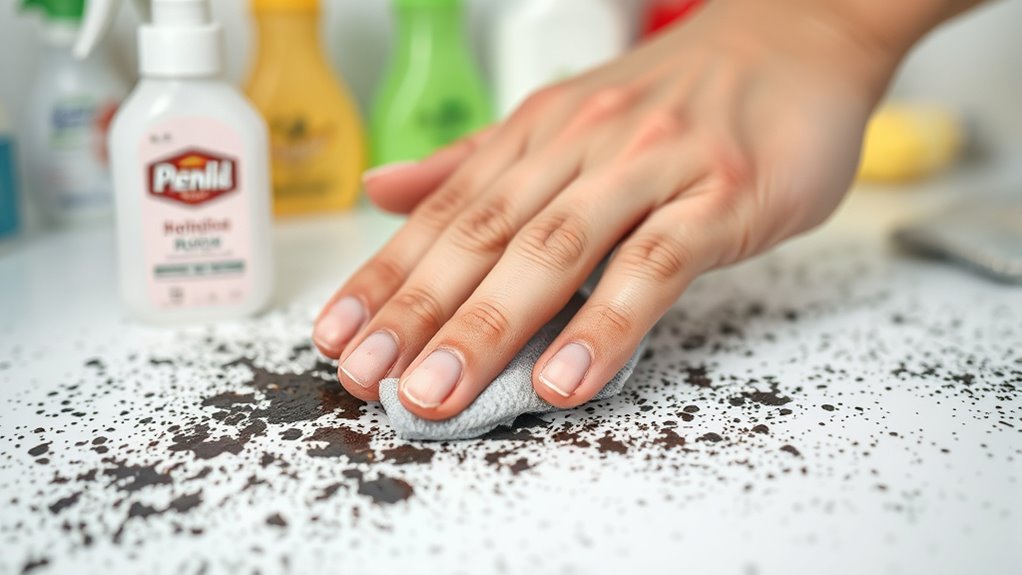
Mold is a type of fungus that thrives in damp, warm environments and can quickly spread if left unchecked. Understanding mold biology helps you see how it reproduces through spores that float in the air, settling on moist surfaces to grow. If you want to protect your space and health, knowing these basics is key. Mold isn’t just an eyesore—it poses real health risks, especially for those with allergies, asthma, or weakened immune systems. Exposure can cause respiratory issues, skin irritation, and other uncomfortable symptoms. By grasping how mold operates and the dangers it brings, you’re better equipped to tackle it effectively and maintain your freedom from its harmful effects. Staying informed empowers you to act decisively and keep your environment safe.
Identifying Different Types of Mold on Surfaces
Different mold species often show up with distinct colors and textures, so recognizing these traits can help you identify them quickly. For instance, black mold is notorious for its dark, almost slimy spots and is often labeled toxic mold due to its health risks. White mold typically appears powdery or fluffy, while green mold tends to be fuzzy and vibrant. Surface mold grows openly on materials, making it easier to spot compared to mold hidden beneath. It’s important to understand mildew differences, as mildew is a type of surface mold that’s usually less invasive and powdery. By knowing these basics, you can take control of your space, identifying which mold you’re dealing with before deciding how to wash mold without damage.
Essential Safety Precautions When Handling Mold
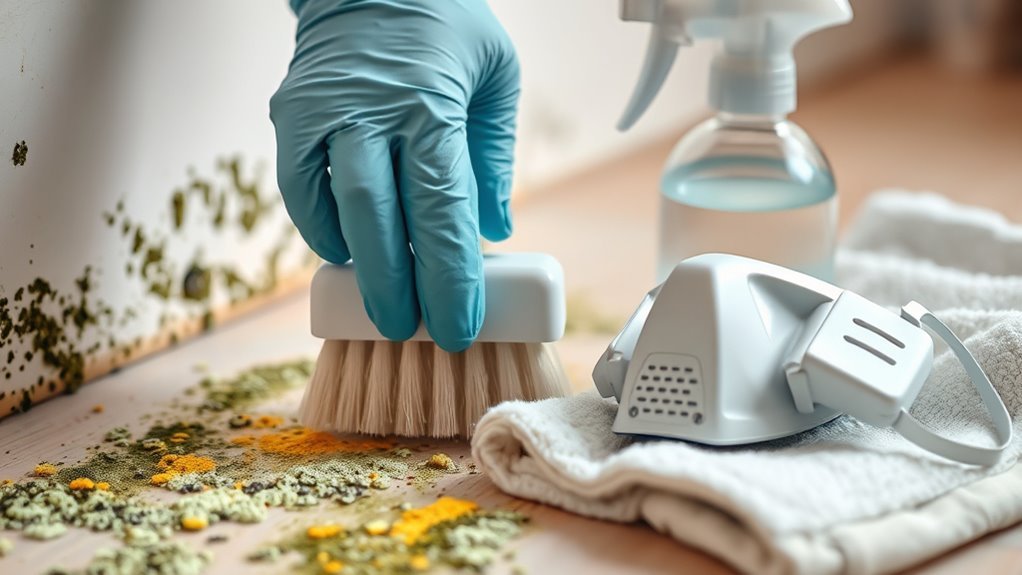
When handling mold, you need to wear protective gear like gloves and masks to keep yourself safe. It’s also vital to guarantee good ventilation and airflow in the area to prevent inhaling spores. Taking these precautions helps protect your health while you clean.
Protective Gear Importance
Although it might seem tedious, wearing the right protective gear is essential whenever you handle mold to prevent health risks. Mold exposure can lead to respiratory issues, skin irritation, and allergic reactions, so shielding yourself is non-negotiable. You’ll want to equip yourself with gloves, goggles, and a mask designed to filter out mold spores. This gear acts as a barrier, letting you tackle mold without compromising your health or freedom to breathe clean air. Skipping protective gear might seem like a shortcut but could cost you discomfort or illness later. Protecting yourself doesn’t limit your independence—it empowers you to manage mold safely and confidently. Remember, freedom includes the choice to stay healthy while caring for your space.
Ventilation and Airflow
Since mold spores can easily become airborne, ensuring proper ventilation is essential whenever you’re cleaning or handling mold. Good air circulation helps carry spores away, reducing your exposure and preventing them from settling back onto surfaces. Controlling humidity is another key step; mold thrives in damp environments, so keeping humidity low discourages its growth. Open windows, use fans, or run dehumidifiers to maintain fresh airflow and balanced moisture levels. Here’s a quick guide to help you manage ventilation and airflow effectively:
| Action | Benefit |
|---|---|
| Open windows | Enhances natural air circulation |
| Use exhaust fans | Removes stale, contaminated air |
| Control humidity | Limits mold growth environment |
Natural Cleaning Agents Effective Against Mold
You can tackle mold effectively using natural cleaning agents like vinegar and baking soda. Vinegar’s acidity helps break down mold, while baking soda works as a gentle abrasive and deodorizer. Let’s explore how these simple ingredients can clean mold without harming your surfaces.
Vinegar for Mold Removal
Vinegar is a powerful natural cleaner that works well for removing mold without causing damage. When you choose vinegar for mold removal, it’s important to take into account the vinegar concentration—white distilled vinegar at around 5% acidity is ideal. This strength is tough on mold but gentle enough to avoid harming most surfaces. For vinegar application, spray it directly onto the moldy area without diluting it. Let it sit for about an hour to penetrate and kill the mold spores effectively. Afterward, wipe the area clean with a damp cloth. Using vinegar gives you the freedom to clean mold safely and naturally, avoiding harsh chemicals while keeping your home fresh and mold-free. It’s a simple, effective method that respects both your space and health.
Baking Soda Benefits
While vinegar offers a natural way to tackle mold, baking soda is another effective option that’s gentle on surfaces and safe for your home. You’ll love how baking soda not only helps with mold removal but also deodorizes and absorbs moisture, preventing mold from coming back. Just mix baking soda with water to create a paste or a spray solution, then apply it to the affected area. After scrubbing gently, rinse and let the surface dry completely. Baking soda’s mild abrasiveness won’t damage your walls, fabrics, or wood, giving you freedom to clean without worry. Plus, it’s non-toxic, so you can breathe easy knowing you’re using a natural agent that’s safe for your family and pets. Baking soda truly makes mold removal simple and effective.
Using Vinegar and Baking Soda for Mold Removal
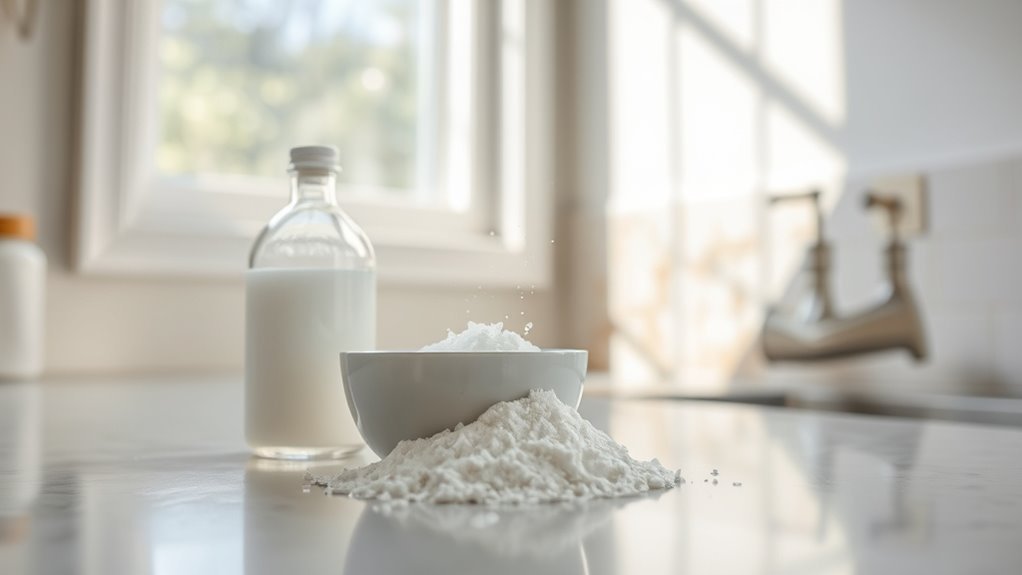
Although mold can be stubborn, using vinegar and baking soda together offers a natural and effective way to tackle it without harsh chemicals. Vinegar solutions break down mold spores, while baking soda neutralizes odors and lifts residue. This combo lets you reclaim control over your space safely and freely.
| Ingredient | Purpose | How to Use |
|---|---|---|
| Vinegar | Kills mold spores | Spray directly, wait 1 hour |
| Baking Soda | Deodorizes, cleans | Sprinkle on, scrub gently |
| Vinegar & Soda | Enhanced cleaning power | Apply baking soda, then vinegar |
| Safety | Non-toxic, eco-friendly | Safe for most surfaces |
| Freedom | Chemical-free choice | Avoid harsh cleaners |
Using these simple ingredients, you maintain your freedom from mold without damaging your belongings.
Proper Techniques for Washing Moldy Clothing
If your clothing has mold, you’ll want to tackle it carefully to prevent damage while fully removing the spores. Start by brushing off any loose mold outside to avoid spreading spores indoors. Pre-soak the fabrics in a solution of water and white vinegar or a mild detergent designed for mold removal techniques. When washing fabrics, use the hottest water safe for the material, as heat helps kill mold. Avoid bleach on delicate items—it can weaken fibers. Instead, opt for oxygen-based cleaners that are gentler yet effective. After washing, dry your clothes thoroughly in direct sunlight when possible; sunlight naturally inhibits mold growth. By following these proper techniques for washing moldy clothing, you’ll protect your fabrics and regain freedom from mold without risking damage.
Cleaning Mold From Walls and Hard Surfaces
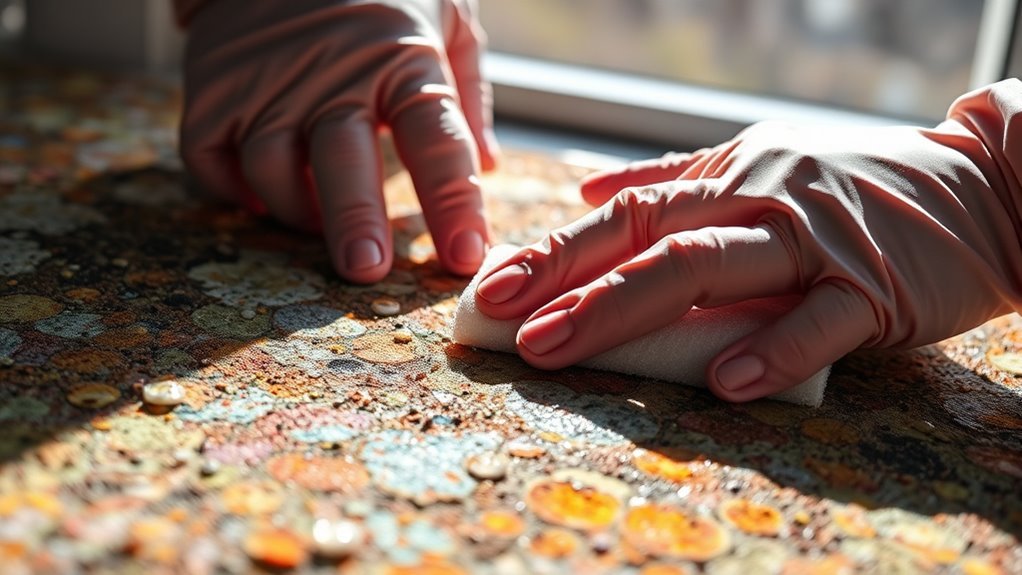
After handling mold on your clothing, the next step is to address mold growth on walls and hard surfaces. You want to take control without damaging your space. Start by wearing gloves and a mask to protect yourself during mold removal. Use a mixture of water and mild detergent or a commercial mold cleaner for surface cleaning. Gently scrub the affected area with a soft brush or sponge to lift the mold without harming the wall or surface finish. Avoid harsh chemicals or abrasive tools that can cause damage. After cleaning, wipe the area with a damp cloth and let it dry completely. This approach offers effective mold removal while preserving your freedom to maintain a safe, clean environment without unnecessary damage.
Preventing Mold Regrowth After Cleaning
To keep mold from coming back, you’ll need to focus on proper ventilation to reduce moisture buildup. Using effective mold-resistant treatments can also create a barrier against future growth. Let’s explore how these steps help maintain a mold-free environment.
Proper Ventilation Techniques
Although cleaning removes visible mold, proper ventilation is key to stopping it from coming back. You need to focus on airflow management to keep your space dry and mold-free. Effective ventilation systems reduce humidity, preventing mold from thriving. Here’s a quick guide to help you optimize your space:
| Ventilation Type | Best Use Case | Key Benefit |
|---|---|---|
| Exhaust Fans | Bathrooms, kitchens | Removes moist air |
| Air Vents | Basements, attics | Promotes natural flow |
| Dehumidifiers | All indoor spaces | Controls humidity |
Effective Mold-Resistant Treatments
Since mold can quickly return if conditions remain favorable, applying effective mold-resistant treatments is essential once you’ve cleaned the area. You want to choose mold treatment options that not only eliminate spores but also create a protective barrier to prevent regrowth. Mold resistant products such as specialized sprays, sealants, or paints work well on surfaces prone to moisture. These products inhibit moisture buildup, making it harder for mold to thrive again. Remember, selecting the right treatment depends on the surface and environment, so consider breathable solutions for walls and non-toxic options for living spaces. By using mold resistant products thoughtfully, you maintain your freedom from recurring mold issues and keep your space fresh and safe without constant worry.
When to Use Commercial Mold Removal Products
There are a few situations where you’ll want to reach for commercial mold removal products instead of homemade solutions. When mold covers a large area or stubbornly resists DIY methods, choosing the right commercial product becomes essential. Your freedom to tackle mold effectively depends on smart commercial product selection—look for products labeled for your specific surface and mold type. Once you pick the right one, applying it correctly is key. Follow effective application techniques like wearing protective gear, ensuring proper ventilation, and allowing the product to sit long enough to kill mold spores. Using commercial products wisely lets you regain control over your space without risking damage, giving you the confidence to handle tough mold situations with precision and ease.
Tips for Maintaining a Mold-Free Environment
To keep mold from returning, you need to control moisture and improve airflow in your space. Effective mold prevention strategies revolve around humidity control and regular cleaning. By reducing dampness, you break mold’s grip, giving you freedom from worry and discomfort.
| Challenge | Your Freedom Awaits |
|---|---|
| Excess Humidity | Use dehumidifiers daily |
| Poor Ventilation | Open windows, use fans |
| Water Leaks | Fix leaks promptly |
Stay vigilant—inspect areas prone to moisture and keep them dry. Embrace these mold prevention strategies, and you’ll enjoy a fresh, mold-free environment where you’re free to live without limits.
Frequently Asked Questions
Can Mold Cause Allergic Reactions in Pets?
Mold can affect your pet like a sneaky shadow, triggering pet allergies that might surprise you. You might notice mold symptoms such as sneezing, itching, or watery eyes in your furry friend. If your pet’s acting off, it’s worth checking for mold around your home. You deserve the freedom to enjoy your space without worrying about hidden allergens that can make your pet uncomfortable or sick.
How Does Humidity Affect Mold Growth in Basements?
When you’re dealing with basements, humidity levels play a huge role in mold growth. High humidity creates the perfect environment for mold to thrive, so you’ll want to keep those levels low for mold prevention. Using a dehumidifier or improving ventilation helps you maintain freedom from musty smells and damage. By controlling moisture, you’re taking charge of your space, preventing mold before it even starts, and keeping your basement fresh and safe.
Is Mold Harmful to Indoor Plants?
Imagine your favorite fern suddenly wilting despite your care—that’s what certain mold types can do to your indoor plants. You might think mold is harmless, but some molds release spores that harm plant health, causing root rot or leaf spots. To keep your green friends thriving, you’ll want to identify and manage mold early. Don’t let mold steal your freedom to enjoy a lush, healthy indoor garden!
Can Essential Oils Replace Bleach for Mold Cleaning?
You can use essential oils as a natural alternative to bleach for mold cleaning, but they might not be as powerful at killing mold spores. Oils like tea tree or eucalyptus have antimicrobial properties and can help with mold prevention, keeping your space fresh without harsh chemicals. If you want freedom from toxic cleaners, essential oils are a great choice, but be prepared to clean more often and combine with good ventilation for best results.
What Is the Best Way to Dispose of Moldy Materials?
When dealing with moldy materials, you want to focus on safe removal and proper mold disposal methods to protect your health and freedom. First, seal the moldy items in heavy-duty plastic bags to prevent spores from spreading. Then, dispose of them according to local regulations, often in outdoor trash bins. Wearing gloves and a mask during removal helps you stay safe, letting you handle the situation confidently without risking contamination.