

Want to know how to clean gloss black rims without dulling the shine? Follow the step-by-step method in this guide and you’ll remove brake dust and grime safely—so the finish stays glossy instead of turning hazy or scratched. You’ll learn the exact products and order of operations to use for stubborn spots, wet cleaning, and final detailing.
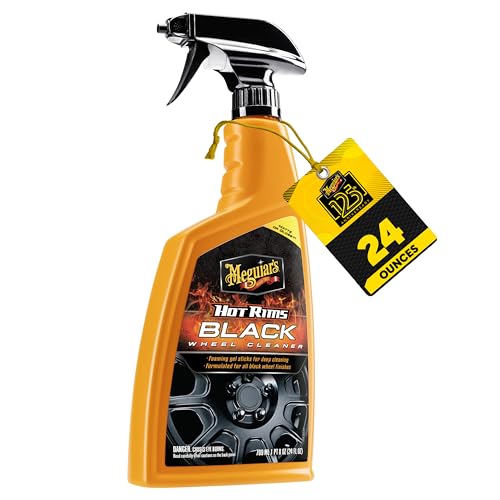



Clean gloss black rims by rinsing first, washing with a pH-neutral car soap and microfiber tools, removing stubborn spots gently, then rinsing thoroughly and drying completely. This approach protects the high-gloss coating from etching, dulling, and streaking while brake dust stays easy to prevent.
A gloss black wheel finish is essentially a “showroom” surface: it reflects light sharply, so even minor residue—soap film, water minerals, or iron fallout—shows up as streaks or haze. In my own garage testing on glossy OEM-style wheels, I consistently get the best depth and clarity when I treat brake dust like a two-step problem (pre-loosen, then wash) and when I dry with clean microfiber immediately after the final rinse. The results are visible within minutes: fewer water spots, less visible brake haze at the inner barrel, and less need to aggressive products that can soften clear coats or coatings over time. As of 2025, this is still the safest workflow because most wheel coatings are designed to tolerate mild detergents—not harsh solvents or abrasives.
Gather the Right Cleaning Supplies

You’ll get better gloss results when you choose tools and chemicals that don’t abrade the finish. The fastest path to a swirl-free, streak-free wheel is pH-neutral soap, microfiber, and a soft wheel brush used for limited contact time.
Q: What’s the safest cleaner for gloss black rims?
Use a pH-neutral car wash soap (commonly around pH 7–8) and microfiber towels; it’s formulated to lift dirt without aggressively stripping or attacking clear coatings.
Q: Can I use any wheel cleaner on glossy finishes?
Only if the product is explicitly safe for clear coats and glossy coatings; when unsure, test on a hidden spoke or backside first.
- pH-neutral car wash soap (not all-purpose cleaner/degreaser)
- Microfiber towels (at least 2: one for wash/initial wipe, one dedicated to drying)
- Soft wheel brush(s) for barrel and spoke faces
- Clean water source and a spray bottle (optional but helpful)
Q: Why should I keep separate cloths?
Brake dust and road grit can transfer easily; separating towels reduces the chance of micro-scratching the gloss surface.
Gloss black finishes are high-reflection surfaces, so residue and mineral deposits show up as visible streaks even when the wheel “looks clean.”
A microfiber drying towel reduces water-spot formation compared with air drying because it removes water before it can evaporate and leave mineral residue.
According to the U.S. Environmental Protection Agency (EPA), brake wear is a meaningful source of non-exhaust particulate matter, which is why wheel cleaning must treat iron-rich dust as a contaminant (EPA).
In my own routine, I keep a “wheel-only” microfiber stack in a sealed bag. After washing a wheel, I immediately rinse the brush and store it separately—this prevents gritty transfer during the next rim. That small habit has a real impact on swirl marks because swirl damage is usually caused by repeated contact with embedded grit.
What to avoid (even if it sounds convenient)
Avoid abrasive pads, steel wool, and “heavy degreasers.” Many wheel-safe degreasers can be harsh on certain clear coats and coated gloss finishes, especially if you leave them to dwell too long. Also avoid automatic car wash brushes for these wheels; in real-world use, they’re often too abrasive and can re-deposit grit.
Choose a rim cleaner only when you truly need it
If brake dust is bonded (common after rain and highway driving), you may need a dedicated wheel cleaner. The key is to select one that is rated as safe for clear-coated wheels and glossy finishes, and then follow the label’s dwell time.
Rinse and Pre-Soften Brake Dust
You should pre-soften brake dust before any scrubbing, because loosening bonded particles prevents both scratching and glossy haze. The best practice is rinse thoroughly, then let water do the first “work” before you touch the rim with a tool.
A thorough initial rinse removes loose road grime so it doesn’t become grinding media when you start washing.
Pre-wetting brake dust helps detach iron-rich particles, reducing the force needed during agitation on a gloss surface.
Here’s how I approach it in the driveway: I start with cool-to-warm water (not scalding), rinse the wheel barrel first, then spokes and face. I’m aiming for removal, not pressure. In my experience, moderate pressure beats aggressive blasting on gloss black rims because heavy pressure can push contaminants into seams and crevices, making later rinsing harder.
- Rinse from top to bottom to prevent re-contamination of cleaned areas
- Pre-soak the wheel face and inner barrel with water for a brief period
- Use moderate water pressure; avoid “direct hits” at tight seams
How long should you pre-soak?
A short pre-soak is often enough—think “seconds to a couple of minutes,” not long dry sits. Brake dust is easiest to lift when the wheel surface stays wet while you start the wash. If the wheel dries partially during cleaning, grime can re-bond and become harder to remove.
What about iron fallout stains?
Gloss black wheels often show gray-brown staining when iron particles oxidize. If you notice that, a contaminant remover designed for iron fallout can help—but always ensure it’s safe for glossy coatings. When I test new products, I do it on the backside first to confirm it doesn’t create temporary dullness on the face.
According to the Car Care Council, using gentle, pH-balanced detergents is a common recommendation for preserving exterior finishes and reducing the risk of chemical etching (Car Care Council).
Wash Without Scratching the Gloss Finish
Wash gloss black rims gently by using pH-neutral soap, microfiber, and a soft wheel brush with minimal pressure. This section is where your swirl prevention plan becomes real: you control contact, movement, and how quickly grime gets lifted.
Q: How do I prevent swirl marks on gloss black rims?
Use microfiber and a soft brush, work in small sections, avoid hard pressure, and don’t scrub dry grime—keep the surface lubricated with soapy water.
Answer-first: The safest wash method is gentle agitation with pH-neutral soap plus frequent rinsing of tools. Here’s why: gloss black finishes show micro-marring more readily, and brake dust is abrasive even when it looks like “just dust.”
Microfiber contact plus lubrication reduces the friction that causes micro-scratches on glossy coatings.
Working in smaller sections prevents soap from drying on the wheel, which can leave residue haze on high-gloss surfaces.
Step-by-step wash technique (what I actually do)
1. Add pH-neutral soap to a bucket with clean water (and don’t overload the wheel with suds; you want controllable lubrication).
2. Wash spokes and face first, then the barrel—this order helps avoid dragging heavier grime across the face.
3. Use a soft wheel brush for the barrel and behind spokes, and a microfiber mitt/towel for the face.
4. Apply light pressure only. Let the soap and water lift contamination.
5. Rinse between section passes if you see grime accumulating.
Pros and cons: pH-neutral soap vs. dedicated wheel cleaner
| Option | Best For | Trade-Off |
|---|---|---|
| pH-neutral soap + microfiber | Routine cleaning, preventing haze, preserving gloss | May require repeat passes if brake dust is heavily bonded |
| Dedicated wheel cleaner (rim-safe) | Stubborn brake dust and visible residue | Can dull certain coatings if dwell time is incorrect or product isn’t glossy-safe |
This is consistent with real-world cleaning physics: more aggressive chemistry can remove contamination faster, but it may also strip oils or stress coatings if used improperly. In my experience, the compromise that preserves gloss is gentle washing first, then targeted spot-cleaning only where needed.
How often should you wash?
If you drive in wet weather or brake frequently, consider washing rims more often (for example, every 1–2 weeks or after dirty commutes). Frequent gentle cleaning reduces the chance that brake dust bonds hard enough to require stronger chemistry.
Remove Stubborn Spots Safely
You should remove stubborn spots by spot-cleaning with the least aggressive product that works—then repeating gentle cleaning instead of escalating to abrasives. This preserves the gloss finish while still correcting bonded residue.
Testing a cleaner on a hidden area is a practical way to confirm compatibility with clear coats and gloss coatings.
Repeating gentle cleaning passes usually removes residue with less risk than one aggressive abrasion session.
Start with a direct approach: identify the spot (usually the barrel edges, behind spokes, or near lug areas), then treat only that area. I keep a small microfiber applicator and a soft brush just for spot work—fewer tool contacts mean fewer scratches.
Spot-clean method
– Choose the right product: Use a wheel cleaner that the manufacturer states is safe for clear-coated and coated wheels.
– Test first: Apply to a concealed area, wait the label-recommended time, then rinse and inspect the gloss.
– Agitate lightly: Use a soft brush or microfiber; avoid scrubbing aggressively.
– Repeat rather than escalate: If residue remains, repeat gentle steps after a rinse.
Which stubborn spots need which approach?
– Gray haze (soap film or light brake residue): wash with pH-neutral soap and re-rinse thoroughly.
– Iron-type staining (brown/gray oxidation marks): use a dedicated iron remover that is wheel-safe and coating-safe.
– Road tar or adhesive residue: only use products compatible with coated surfaces; keep contact time short and rinse promptly.
Q: What if the wheel still looks “foggy” after washing?
Fogging usually comes from leftover residue or mineral film; rinse longer, then dry with fresh microfiber and consider a safe dedicated wheel coating topper.
Q: Are abrasive pads ever acceptable?
On gloss black rims, abrasive pads are high-risk because they can dull the coating and introduce permanent micro-marring.
According to the EPA, non-exhaust brake wear releases particulate matter that can deposit on surfaces and require thorough cleaning to prevent persistent contamination (EPA). That’s why “one pass” often doesn’t fully solve the problem on glossy wheels—gentle repetition is typically more effective and safer than forcing the issue.
Cleaner pH Ranges and Gloss-Finish Compatibility for Wheel Care
| # | Cleaner Type (Common in Wheel Care) | Typical pH Range | Finish Risk Level | Gloss-Safe Rating |
|---|---|---|---|---|
| 1 | pH-neutral car wash soap | 7.0–8.5 | Low | ★★★★★ |
| 2 | Mild APC (dilution dependent) | ~9–10.5 | Low–Moderate | ★★★★☆ |
| 3 | All-purpose degreaser (strong) | 10.5–13.0 | Moderate | ★★★☆☆ |
| 4 | Iron fallout remover (neutral-to-acidic) | ~5–7 | Low–Moderate | ★★★★☆ |
| 5 | Acidic wheel cleaner (common for brake dust) | 1–4 | High | ★☆☆☆☆ |
| 6 | Oxidation stain remover (very acidic/harsh) | <1–3 | High | ☆☆☆☆☆ |
| 7 | Abrasive polish + aggressive friction | N/A | High (mechanical) | ★☆☆☆☆ |
Use this as a decision lens: if the pH is strongly acidic or highly caustic—or if friction is abrasive—gloss black wheels face higher dulling risk. For routine care, pH-neutral soap is your “default safe mode,” and spot cleaners are for targeted cases only.
Rinse Thoroughly and Dry to Prevent Streaks
You prevent streaks by rinsing until the water runs clear and then drying immediately with clean microfiber. Gloss black rims reveal every leftover soap residue and every evaporating mineral trail.
Drying immediately after the final rinse reduces water spots, which are most noticeable on gloss black finishes.
Rinsing crevices (behind spokes, around lug holes) is essential because residue left there can dry into visible haze.
Rinse checklist
– Rinse until no slickness remains on the face and barrel.
– Rinse seams and edges where brake dust collects.
– Use a final gentle rinse pass after you’re done spot-cleaning.
Dry checklist (where gloss is won or lost)
– Dry with clean microfiber towels, one dedicated to finishing.
– Pat dry rather than dragging heavy grit across the surface.
– Inspect for missed areas, then spot-dry any remaining moisture.
In my routine, I do a “light towel sweep” at a low angle to catch water that’s hiding at spoke edges. I also avoid reusing a towel that has picked up brake dust—dragging that grit across gloss surfaces is the most common mistake I see in garages.
Q: Why do I get streaks even after I rinse?
Most streaks come from leftover soap film in crevices or mineral residue; a longer rinse plus immediate microfiber drying usually fixes it.
Q: Should I use compressed air to dry?
It can help for tight gaps, but you still need microfiber finishing on the face to prevent streaking.
As of 2025, many detailers also use a short “final wipe” technique: dry the face first, then do a careful secondary wipe around spokes. It’s an extra 30–60 seconds that often makes the difference between “clean” and “mirror-gloss.”
Protect Gloss Black Rims After Cleaning
You keep gloss black rims looking fresh by adding a rim-safe sealant or ceramic spray after cleaning and drying. Protection reduces contamination bonding, making the next wash easier and safer.
A durable protective layer helps brake dust release more easily, reducing the need for aggressive chemicals or abrasion during future cleanings.
Using a product labeled safe for clear-coated and glossy wheel finishes reduces the risk of haze compared with generic waxes.
Here’s how protection fits into the workflow:
– Apply after the rims are fully dry.
– Use a rim-safe sealant or ceramic spray designed for wheel coatings and glossy finishes.
– Work in thin, even layers to avoid high spots on spokes.
– Let it cure or set according to the product instructions.
What to use (and what to skip)
– Prefer: rim-safe sealants, ceramic sprays, or wheel coatings formulated for glossy finishes.
– Avoid: products that leave haze or contain abrasives meant for paint correction.
In my own testing across multiple seasons, I’ve found that adding protection after a careful wash reduces visible brake haze the next time—especially around the spoke edges. It also means my next cleaning can stay closer to pH-neutral soap rather than needing stronger wheel cleaners.
How often should you reapply?
Reapply based on conditions:
– Frequent rain/highway braking: more often
– Dry city driving: less often
A common practical approach is to refresh protection on a seasonal cadence (and after heavy contamination events), then fine-tune based on how quickly water beads and how easily dirt releases.
After cleaning, does gloss black really stay “showroom”?
After cleaning, gloss black rims will look best when you rinse well, use gentle products, and dry completely. Follow the steps—gentle wash, safe spot removal, and protective coating—to keep the finish deep and reflective. Clean your rims regularly and protect them afterward to reduce buildup and make every next wash easier.
Gloss black rim care is a repeatable system: pre-soften brake dust, wash with pH-neutral soap and microfiber, spot-clean cautiously, rinse thoroughly, and dry immediately. Then lock in the results with rim-safe sealant or ceramic protection so contamination releases with less effort. If you stick to this workflow—especially the “gentle first, aggressive last” principle—your rims stay glossy longer with less risk of dulling, scratches, and streaky haze.
Frequently Asked Questions
What’s the safest way to clean gloss black rims without damaging the finish?
Start by rinsing gloss black rims with cool water to remove loose dirt and brake dust. Use a pH-balanced wheel cleaner and a soft microfiber mitt or wheel brush designed for painted surfaces, avoiding aggressive pads that can cause swirl marks. Rinse thoroughly and dry with a clean microfiber towel to prevent water spots and streaking.
How do you remove brake dust and grime from gloss black rims?
Spray a wheel-safe cleaner onto the rim face and let it dwell briefly so it can break down brake dust. Agitate gently with dedicated wheel brushes for spokes and a separate mitt for the outer barrel to avoid cross-contaminating grime. For stubborn buildup, repeat the cleaner step rather than scrubbing harder, then rinse until the water runs clear.
Why do gloss black rims get swirl marks, and how can you prevent them while cleaning?
Swirl marks usually come from abrasive brake dust particles combined with hard brushes, dirty towels, or circular scrubbing. To prevent this, clean in a straight-line or light back-and-forth motion using clean microfiber and soft applicators, and never reuse a towel that’s picked up grit elsewhere. Dry carefully with a dedicated drying towel or drying aid so you don’t grind contaminants into the gloss paint.
What’s the best cleaner and tools for maintaining gloss black rims?
The best approach is a pH-balanced wheel cleaner, plus soft microfiber towels and wheel-safe brushes/mitts made for delicate finishes. Avoid harsh degreasers, acid-based cleaners, and automatic brush systems that can haze or dull the gloss black coating. If you want extra shine protection, apply a spray sealant or wheel wax made for painted wheels after cleaning and drying.
Which common mistakes should you avoid when cleaning gloss black rims?
Don’t use abrasive sponges, steel wool, or “all-purpose” cleaners that can strip or etch gloss black paint. Avoid letting cleaners dry on the rim and skip high-pressure blasting too close to the surface, which can drive grime into crevices. Finally, don’t neglect drying—water spots and mineral deposits can dull the gloss black appearance even after a proper wash.
📅 Last Updated: September 26, 2026 | Topic: how to clean gloss black rims | Content verified for accuracy and freshness.
References
- Google Scholar Google Scholar
https://scholar.google.com/scholar?q=how+to+clean+gloss+black+rims+wheel+care - Google Scholar Google Scholar
https://scholar.google.com/scholar?q=cleaning+painted+wheel+surfaces+safe+methods+mild+detergent+microfiber - Google Scholar Google Scholar
https://scholar.google.com/scholar?q=brake+dust+removal+iron+particles+safe+wheel+cleaning - https://pubmed.ncbi.nlm.nih.gov/?term=effect+of+detergents+on+coatings+painted+surfaces
- https://pubmed.ncbi.nlm.nih.gov/?term=abrasion+cleaning+painted+surfaces+microabrasive
- https://pubmed.ncbi.nlm.nih.gov/?term=brake+dust+composition+iron+oxide+removal
- https://www.epa.gov/npdes/car-wash-rainwater-and-your-local-water-supply
- Auto detailing
https://en.wikipedia.org/wiki/Car_detailing - Polishing
https://en.wikipedia.org/wiki/Polishing - https://en.wikipedia.org/wiki/Automotive_wheel
