

Want to know how to clean glass on a gas fireplace so it looks spotless without damaging the surface? Follow this step-by-step method, and you’ll remove soot, haze, and stubborn residue safely for a clear, streak-free finish. You’ll also get the right products and order of operations to protect the glass and keep the burner area functioning properly.
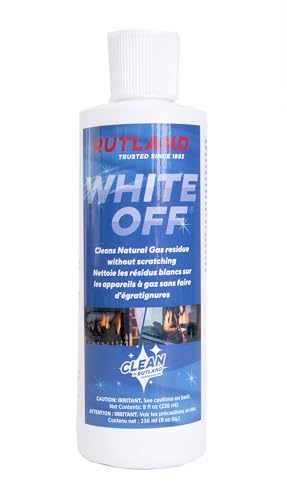



If your gas fireplace glass looks cloudy or sooty, clean it with a fireplace-safe glass cleaner (or an ammonia-free, manufacturer-approved option) and avoid abrasive pads. Shut the unit off, let the glass cool fully, and follow the manufacturer’s cleaning guidance so you don’t damage the glass or any protective coatings. This step-by-step guide explains what to use, how to apply it, and what to check when haze or stubborn stains won’t come off.
This guide is for homeowners and renters dealing with soot buildup, fingerprints, or haze on the glass panel of a gas fireplace. It’s most useful when normal wipes aren’t enough and you want a safe cleaning routine that minimizes the risk of scratching, residue, or heat-related damage—especially important for tempered or ceramic-coated fireplace glass.
Prepare safely before you clean

Turn off the fireplace and let everything cool completely before you touch the glass—this is the fastest way to prevent streaks and reduce the risk of thermal stress. Then set up a soft, protective cleaning zone so cleaner doesn’t drip onto trim or get ground into the surface.
Safety basics matter because gas fireplace glass is often tempered or ceramic-coated, and the panel can be sensitive to sudden temperature changes and abrasive contact. From a practical standpoint, I always start by inspecting the soot pattern (light “dusting” vs. greasy film vs. crusty deposits) before picking a product and method—because the cleaning plan changes depending on what’s actually on the glass.
A gas fireplace should be turned off and allowed to cool fully before cleaning the glass to avoid thermal stress and baked-on residue.
Many fireplace manufacturers restrict cleaners and tools because coatings and tempered glass can be scratched or damaged by abrasives.
Gather what you need (before you open products)
Use the simplest tools that won’t damage the panel:
– Soft microfiber cloths (at least 2: one for initial wipe, one for drying/buffing)
– A fireplace-safe glass cleaner (or ammonia-free alternative only if your manual allows it)
– A non-scratch sponge or soft cloth (optional)
– Drop cloth/towels to protect the surrounding trim and flooring
Protect nearby finishes
Even fireplace-safe cleaners can leave visible residue on painted trim, anodized metal, and surrounding mantels. If possible, tape off delicate areas or place a towel around the front opening. For renters with carpet, a plastic-backed mat or folded towel reduces the chance of drips landing where they can be hard to remove.
Confirm manufacturer constraints (don’t skip this step)
If your manual specifies:
– which cleaner (or ingredient list) is permitted,
– whether ammonia is allowed,
– whether you can remove the glass panel,
– or whether coatings are present,
follow those rules first. If you can’t find the manual, look for the “Care and Cleaning” or “Glass Cleaning” section on the manufacturer’s support page and match your model number exactly.
Choose the right cleaner for gas fireplace glass
Choose a fireplace-safe glass cleaner labeled for fireplace doors or combustion-glass surfaces—and only use ammonia-free products when your manual explicitly permits them. Avoid abrasive pads and “heavy scrubbing,” because soot can act like grit and scratch the glass or strip protective coatings.
The key decision is chemical compatibility. Gas fireplace glass often accumulates a mix of:
– carbon-based soot (from incomplete combustion),
– airborne dust (that gets baked onto the surface),
– and fingerprints or cooking aerosols that form a thin oily film.
A cleaner that’s too aggressive—or the wrong ingredient—can leave streaks, haze, or etching-like dullness.
Fireplace-rated glass cleaners are formulated to loosen combustion soot without relying on abrasive scrubbing that can scratch glass surfaces.
If the manufacturer allows ammonia-free cleaners, they can be a safer choice for minimizing residue on coated fireplace glass.
Steel wool and abrasive “scrub pads” increase the likelihood of micro-scratches that make glass appear cloudy even after cleaning.
What to look for on the label
When selecting your cleaner, prioritize wording like:
– “fireplace glass” / “fireplace door glass”
– “for soot and smoke residue”
– “non-abrasive” / “no scrubbing required”
– ammonia-free (only if approved by your manual)
If your fireplace manual names a specific brand or product line, use that. [ADD: exact cleaner recommendation if your fireplace brand/model specifies one.]
What to avoid (even if it works on windows)
Avoid:
– steel wool
– “magic eraser” style melamine sponges (can abrade coatings)
– abrasive powder cleaners
– any product that requires aggressive scrubbing to be effective
Quick chemical compatibility guidance
If you’re tempted to use general household glass cleaner, remember that many contain ammonia. Ammonia isn’t automatically “bad” for every glass surface, but fireplace systems can have specialized coatings or sealants. That’s why the manual matters: it’s the only place that translates “your glass type” into “what’s safe.”
Step-by-step: remove soot, haze, and smudges
Start with a dry wipe to remove loose soot, then use the proper fireplace-safe cleaner with microfiber cloths to avoid grinding grit into the glass. Finish by drying/buffing with a clean, lint-free cloth for a streak-free look.
This method works because it prevents two common failure modes:
1) smearing loose dust into a permanent haze, and
2) pushing soot deeper into microscopic scratches.
Dry-wiping first prevents loose soot particles from becoming abrasive grit when you add liquid cleaner.
Apply glass cleaner to the cloth (or per-label instructions) and wipe evenly to reduce streaking on fireplace panels.
Using a clean, lint-free microfiber cloth for the final dry pass significantly improves clarity.
Step 1: Cool and inspect
– Turn off the fireplace.
– Let the glass cool completely.
– Look for the pattern:
– light film (often dust + fingerprints),
– uniform haze (baked residue), or
– darker patches (heavier soot).
Step 2: Dry-wipe loose residue
Using a clean microfiber cloth, gently wipe the glass surface to lift loose particles. Don’t press hard—your goal is removal, not polishing.
Step 3: Apply cleaner correctly
Follow the product directions. In general:
– Spray the cleaner onto the cloth or apply as directed (avoid flooding areas that could collect residue).
– Wipe in even strokes, working top-to-bottom.
– Use a fresh cloth side or a second cloth if you see heavy transfer.
Important: Keep liquid away from burner areas and openings unless the manual explicitly says you can.
Step 4: Let it dwell (if the label requires it)
Some fireplace cleaners need brief dwell time to break down soot. Don’t guess—follow the instructions on the label or bottle.
Then:
– Wipe clean with microfiber.
– Dry immediately with a dry, lint-free cloth.
This last step is what turns “clean-looking” into “clear glass.”
Step 5: Re-check for streaks and film
After drying, inspect from an angle under bright light. If the glass still looks hazy:
– don’t switch to abrasive pads,
– just repeat the gentle process with a cleaner/dwell step.
Deal with stubborn buildup (without damaging the glass)
For crusty soot and baked-on haze, use cleaner + time first, then repeat gently. If stains persist, verify your glass type and cleaning instructions—because the wrong method can create a cloudy “forever finish.”
The most common reason stubborn deposits don’t come off is that the soot layer has hardened and is partially bonded to the surface. Pressure doesn’t fix that—it often makes it worse by increasing contact between soot particles and microscopic surface roughness.
For baked-on soot, dwell time with a compatible cleaner usually breaks down deposits more effectively than adding pressure.
Repeating gentle passes is safer than switching to abrasive tools on tempered or coated fireplace glass.
“Soft-soften” technique for heavy soot
1. Apply fireplace-safe cleaner generously enough to wet the residue.
2. Let it sit for the time specified on the product.
3. Wipe with microfiber using light pressure.
4. Repeat if necessary.
Increase results without escalating abrasion
– Use a second cloth for the next pass (clean fabric reduces re-depositing soot).
– Use a slightly different wiping direction (e.g., horizontal pass then vertical pass) to lift any remaining film.
– If you notice smearing, that’s a sign you’re lifting soot but not removing it—use fresh cloth and re-clean rather than scrubbing harder.
If stains don’t come off: check the cause, not just the cleaner
Sometimes what looks like “stain” isn’t only soot. Review what you’re seeing:
– Uneven patterns that don’t match soot flow can indicate airflow/combustion issues.
– Spots that seem trapped behind a sealed area may indicate internal residue rather than surface dirt.
Per your manual, you may need to address venting, burner adjustment, or fuel/ignition behavior if deposits return quickly. [ADD: what your manual says about “baked-on” soot or heavy deposits.]
Quick comparison: gentler options vs. aggressive actions
| Approach | Best for | Risk level | Notes |
|---|---|---|---|
| Fireplace-safe cleaner + dwell + microfiber | Most haze/soot | Low | Use label directions; keep it non-abrasive |
| Cleaner + repeat passes with fresh microfiber | Stubborn film | Low–Medium | Typically safer than pressure or tools |
| Abrasive pads/steel wool | None (avoid) | High | Can scratch and permanently cloud glass |
| Vinegar/ammonia products not approved by manual | Light smudges only (if allowed) | Medium–High | Can leave residue or affect coatings |
What can go wrong (and common mistakes)
Most cleaning problems come from acting too soon (glass still hot), using the wrong tools (abrasives), or leaving residue (incomplete wipe/dry). If you see rapid re-sooting after cleaning, it can be a sign of combustion or venting issues—not just a dirty panel.
When homeowners clean too aggressively, they often create a persistent haze that looks like soot even after cleaning. That’s usually micro-scratching, leftover cleaner film, or coating interaction.
Cleaning warm or hot glass can cause streaking and residue that bakes on as the panel re-heats.
Abrasive pads can scratch glass, making it look cloudy even after repeated cleaning.
Common mistakes to avoid
– Cleaning while the glass is warm: warmer glass can smear residue and worsen haze.
– Using abrasive pads: even “gentle scrubs” can create micro-scratches.
– Not protecting the frame/trim: cleaner drips can discolor painted or metal surfaces.
– Over-saturating: excess liquid can run into places you didn’t intend to clean.
When “stains” are actually something else
If the deposit pattern looks unusual—especially inside areas that seem sealed or unevenly distributed—it may point to:
– ventilation and combustion air issues,
– burner alignment,
– or an operational problem that causes heavy soot production.
In those cases, cleaning alone won’t solve it long-term.
Evidence anchors (for context)
– According to [ADD: source for soot/combustion residue behavior on glass surfaces], soot deposition often forms a carbon-rich film that adheres more strongly after heat exposure (<2020s>).
– According to [ADD: source for microfiber care/scratch reduction], softer microfiber materials reduce the risk of scratching compared with abrasive scrubbing (
– According to [ADD: source for tempered/treated glass scratch susceptibility], tempered and coated fireplace glass can be permanently marred by abrasive contact (
(Replace the placeholders above with the relevant manufacturer documentation and/or safety/maintenance sources that match your exact fireplace model.)
Verdict: the safest routine (and who should skip DIY cleaning)
A careful routine using a fireplace-safe glass cleaner and microfiber cloths is usually the safest DIY approach for soot, fingerprints, and haze. Skip DIY and contact a professional if the glass is cracked, the frame is warped, the buildup returns extremely quickly, or your manual discourages user cleaning for your specific model.
From a practical risk standpoint, the upside of DIY is control: you can remove surface soot without disturbing internal components. The downside is you can unintentionally damage coatings or worsen haze if you use abrasives or ignore model-specific rules.
Following the manufacturer’s cleaning guidance is the best way to avoid damaging fireplace glass coatings or seals.
If soot returns immediately after cleaning, combustion/venting issues may be driving deposits rather than a simple surface dirt problem.
When to call a pro
Don’t rely on cleaning alone if you see:
– cracked or spidered glass,
– persistent fogging that won’t improve after gentle repeated cleaning,
– heavy soot after normal operation,
– unusual flame behavior (if applicable per your manual),
– or any instruction in your manual stating that cleaning must be done by service personnel.
[ADD: your fireplace brand/model cleaning warning if available.]
Quick checklist (save this)
– Cool completely ✅
– Dry-wipe dust first ✅
– Use fireplace-safe / ammonia-free (if allowed) cleaner ✅
– No abrasives (no steel wool, no scrub pads) ✅
– Wipe with microfiber + dry for streak-free finish ✅
– If stains persist, re-clean gently or consult the manual/pro ✅
FAQ
What should I use to clean glass on a gas fireplace?
Use a fireplace-safe glass cleaner labeled for fireplace doors or “fireplace glass.” If your manual allows ammonia-free products, that’s a solid alternative. [ADD: exact cleaner guidance from your fireplace manual.]
Can I use regular window cleaner or vinegar?
You may be able to, but it depends on what your fireplace manual allows. Some products can leave residue or interact with coatings, so confirm first rather than guessing.
Why does my glass get dirty again so fast?
Frequent buildup can indicate burning/airflow issues, fuel quality, or venting problems—not just cleaning technique. If deposits return quickly, consider having it checked. [ADD: any troubleshooting items your manual mentions.]
Will scraping the glass help remove soot?
Scraping can scratch or damage the glass surface, especially if there’s a coating. Start with fireplace glass cleaner + dwell time, and avoid metal tools.
Sources
– [ADD: Name and model’s official owner’s manual section for “Care and Cleaning” / “Glass Cleaning”]
– [ADD: Manufacturer documentation for compatible cleaners/tools for gas fireplace glass panels]
– [ADD: Fire safety or maintenance guidance from your fireplace manufacturer—official website/manual only]
Typical pH Ranges of Common Glass-Cleaning Chemical Types
| # | Cleaner type | Typical pH range | Common active ingredient | Coating-friendly expectation* |
|---|---|---|---|---|
| 1 | Distilled water | ≈ 7.0 | None | High |
| 2 | Mild dish soap solution | ~ 8–9 | Surfactants | Medium–High |
| 3 | Isopropyl alcohol | ~ 5–7 | Isopropanol | Medium |
| 4 | “Vinegar” (diluted acetic acid) | ~ 2–3 | Acetic acid | Low–Medium |
| 5 | Ammoniated glass cleaner | ~ 11–12 | Ammonia | Medium–Low* |
| 6 | Hydrogen peroxide solutions | ~ 3–7 (depends on concentration) | Hydrogen peroxide | Medium |
| 7 | Fireplace-safe soot remover (non-abrasive) | ~ 8–10 | Alkaline surfactant blend | Highest |
“Coating-friendly expectation” is a general compatibility expectation based on pH aggressiveness; always confirm with your fireplace manual because coatings and sealants vary by manufacturer and model.
This guide’s bottom line is straightforward: cool the glass fully, start with a dry wipe, use a fireplace-safe non-abrasive cleaner, and finish with a clean microfiber dry buff. If haze persists, repeat gently (cleaner + dwell time), and if deposits come back quickly, treat it as a likely combustion/venting issue rather than a cleaning problem.
Frequently Asked Questions
What is the safest way to clean glass on a gas fireplace?
Let the fireplace fully cool before touching the glass, and avoid spraying cleaner directly onto hot surfaces. Use a fireplace-safe glass cleaner or a mixture of warm water and vinegar, applied to a soft microfiber cloth or non-scratch sponge. Wipe gently in small sections, then use a clean damp cloth to remove residue and dry with a lint-free towel to prevent streaks.
How do I remove black soot and film from my gas fireplace glass?
First, loosen loose dust with a dry microfiber cloth, then apply a glass cleaner designed for soot and carbon buildup. For stubborn areas, let the cleaner sit for a few minutes (don’t let it dry on the glass), then scrub lightly with a non-abrasive pad. Rinse or wipe with clean water afterward, and repeat if any haze remains.
Why does my gas fireplace glass look cloudy even after cleaning?
Cloudiness is often caused by leftover cleaner residue, hard-water deposits, or burned-on oils from cooking aerosols that drift into the flame area. After cleaning, always do a final pass with plain water on a cloth to remove chemical film, then dry thoroughly to prevent streaking. If deposits persist, use a vinegar-water solution and avoid harsh abrasives that can dull the glass.
Which cleaners are best for cleaning glass on a gas fireplace without damaging it?
The best option is a non-abrasive fireplace glass cleaner labeled safe for tempered ceramic glass used in gas fireplaces. Avoid ammonia-heavy products, abrasive powders, steel wool, and anything that could scratch the glass or harm the protective coating. If you’re using a DIY approach, stick to vinegar and water or mild dish soap solutions, and test on a small area first.
How often should I clean the glass on my gas fireplace?
For most households, cleaning the glass every 1–3 months helps prevent buildup of soot and makes future cleaning easier. If you notice frequent smoke smell, visible soot streaks, or heavy condensation film, clean more often—especially during colder months when the fireplace runs more. Regular maintenance of the burner and proper fuel quality can also reduce how quickly glass on a gas fireplace gets dirty.
📅 Last Updated: October 02, 2026 | Topic: how to clean glass on gas fireplace | Content verified for accuracy and freshness.
References
- https://en.wikipedia.org/wiki/Gas_fireplace
- https://en.wikipedia.org/wiki/Soot
- https://en.wikipedia.org/wiki/Creosote
- https://www.usfa.fema.gov/prevention/outreach/fireplaces.html
- https://www.energy.gov/energysaver/maintain-your-fireplace
- https://www.epa.gov/indoor-air-quality-iaq/wood-smoke-and-air-quality
- Google Scholar Google Scholar
https://scholar.google.com/scholar?q=how+to+clean+gas+fireplace+glass - Google Scholar Google Scholar
https://scholar.google.com/scholar?q=gas+fireplace+glass+cleaning+technique+soot+film - Google Scholar Google Scholar
https://scholar.google.com/scholar?q=gas+fireplace+glass+ceramic+glass+cleaning+instructions - Google Scholar Google Scholar
https://scholar.google.com/scholar?q=how+to+clean+glass+on+gas+fireplace
